Winter Garland Ideas
Cold January days make a home feel bare once the bright decorations come down and the walls look empty again. Rooms lose their glow just when the evenings stay longest, and plain mantels, stairs and doorways can make the whole house feel unfinished and a little sad.
Garlands fix that empty feeling in a simple and gentle way, because one soft line of greenery or paper brings shape and colour back without crowding a room. Neutral winter styling suits the quiet weeks after the holidays, when most people want calm rather than sparkle.
Choosing natural materials keeps the look restful and honest, with evergreen branches, pinecones, dried flowers, wool and paper doing most of the work. Every idea in this guide uses things you can gather, reuse or make at home, so the house feels dressed again without a big spend.
What Are the Best Winter Garland Ideas for a Cosy Home?
Short answer first, the best winter garland ideas mix one natural green base with soft texture and gentle light. Evergreen or eucalyptus gives the shape, pinecones or felt add warmth, and battery candles or fairy lights nearby add the glow that winter rooms miss most.
Placement matters as much as the garland itself, because a mantel, a staircase and a doorway each frame a room in a different way. Long spaces take long swags, small shelves take short strands, and doorways look best with one simple line that stays clear of the door swing.
Fresh greenery lasts for weeks in a cool room, while dried and fabric garlands can return every winter from one storage box. Mixing one fresh piece with a few lasting ones gives you scent and colour now, plus easy decorating in the years that follow.
Fresh Evergreen Garland on the Mantel
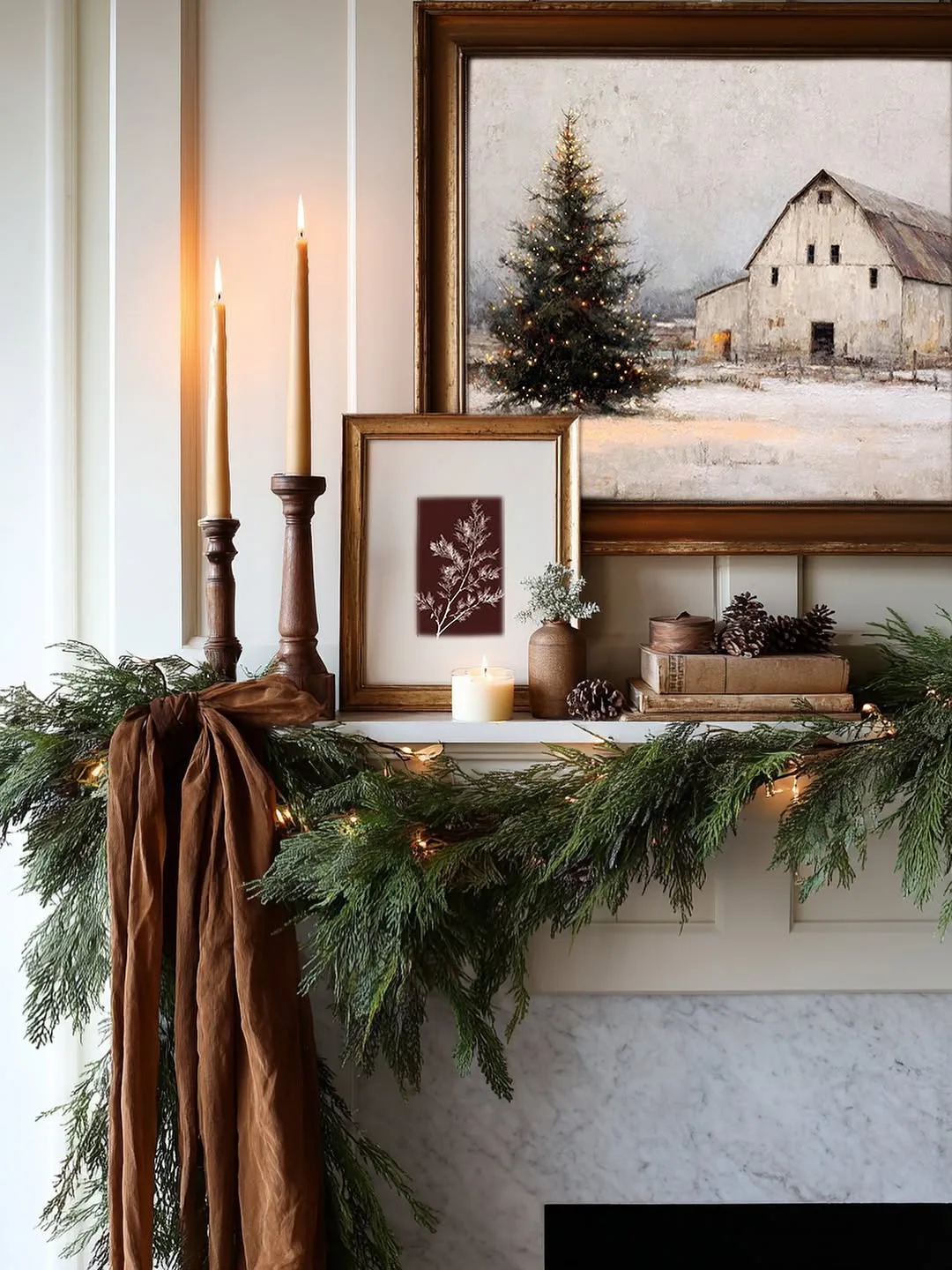
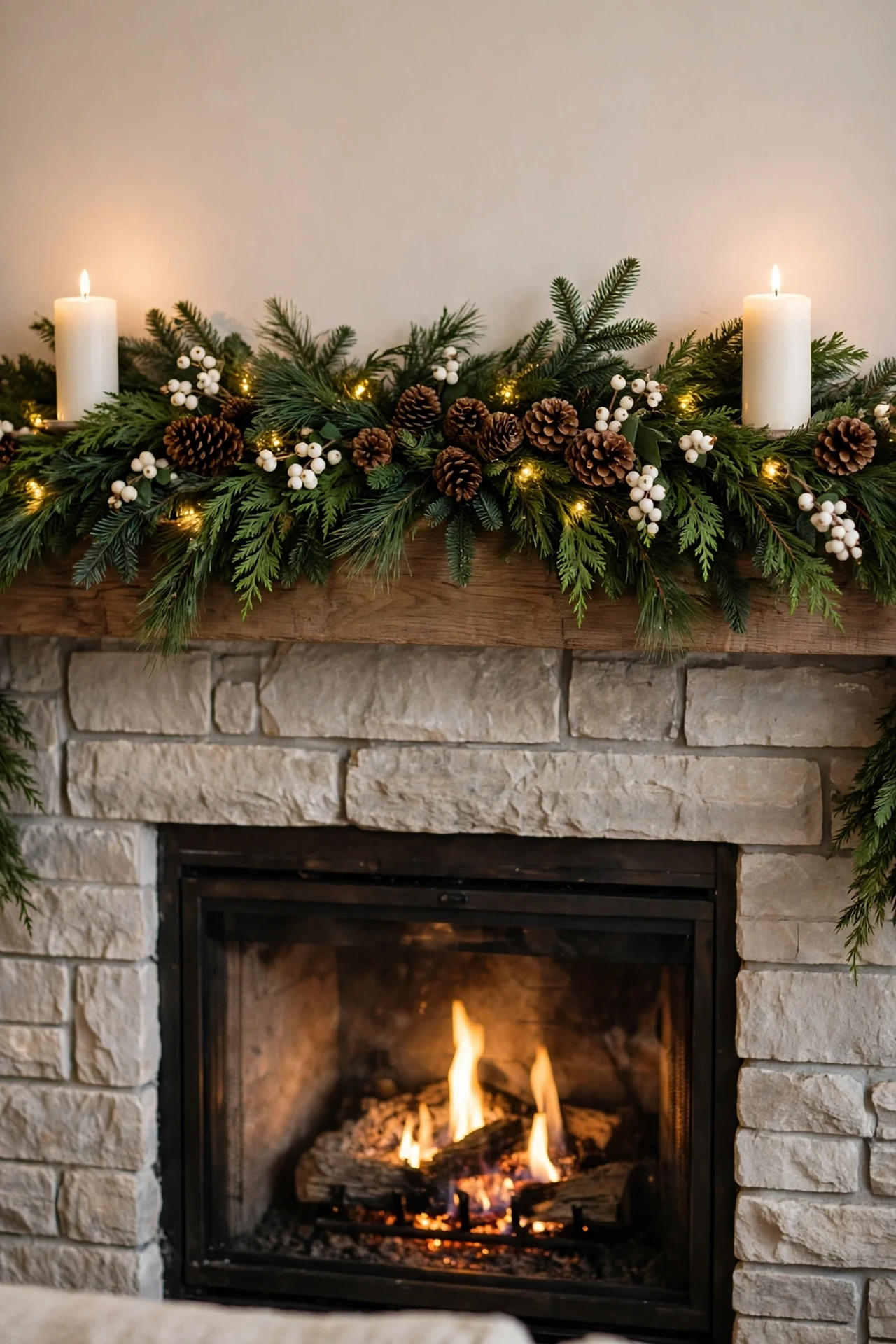
Real evergreen brings scent, deep colour and a calm shape to the mantel, which is often the first place guests look in a living room. Fir, pine and cedar branches layered together look full and natural, and the green reads as winter rather than festive when you skip shiny extras.
Lay the longest branches along the mantel first to set the length, then tuck shorter pieces on top to build depth in the middle. Secure the ends with clear hooks or tuck them behind heavy candle holders, and keep every branch well away from open flames.
Living rooms with a fireplace suit this garland best, though a wide shelf or the top of a bookcase carries the same swag happily. Homes that host winter birthdays or quiet dinners gain a ready made backdrop that looks good in photos without any extra styling.
Mist the branches lightly with water every few days and keep the room as cool as you can at night, because warmth dries needles quickly. Turning the garland once a week also helps, since the underside stays fresher than the side facing the room.
Buying one very long garland for a short mantel is the common mistake, because the ends bunch up and shed needles over the floor. Measure the mantel first, add a little extra for a gentle dip in the middle, and trim spare branches for smaller spots.
Dried Orange and Spice Garland for the Kitchen

Dried orange slices glow like little windows when the light catches them, and their colour warms a plain kitchen in seconds. Cinnamon sticks and star anise threaded between the slices add gentle scent, so the garland works as decoration and as a soft natural fragrance near the cooking space.
Thread a large needle with strong twine and push it through the top of each dried slice, spacing the pieces with small knots. Hang the strand along a shelf edge, a window frame or the front of a dresser where the light can reach the fruit.
Kitchens suit this garland best because the colours match wood, copper and cream tiles so easily. Small flats also benefit, since one short strand over the kitchen window brings winter cheer to a room that rarely gets decorated at all.
Dry the slices slowly in a low oven or near a radiator until they feel firm and light, because soft slices mould within days. Fully dried fruit keeps for months in a sealed jar, ready to thread again whenever the kitchen needs a lift.
Rushing the drying is the mistake that ruins the whole strand, since trapped moisture turns the fruit dark and sticky on the string. Give the slices proper time, check them before threading, and throw away any piece that still bends like fresh fruit.
Paper Snowflake Garland in the Window
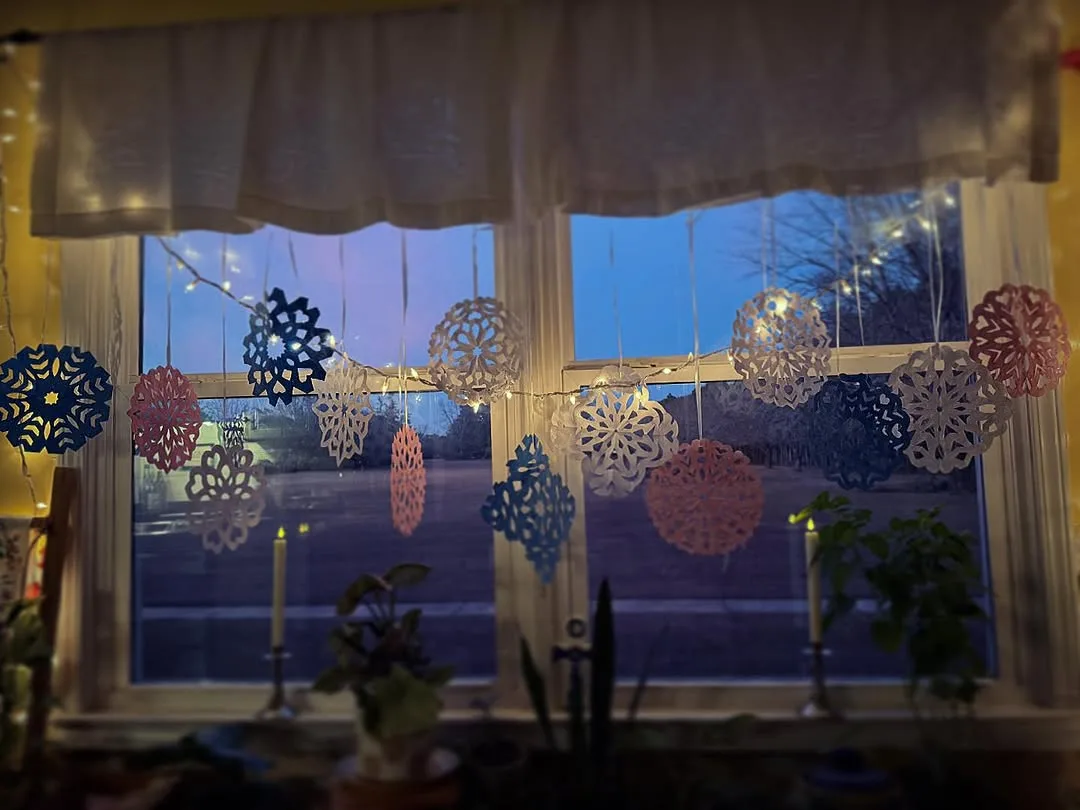
Paper snowflakes cost almost nothing and catch the winter light beautifully when they hang in a window. White and cream card gives a soft frosty look, and each flake shows a different pattern, so a simple strand feels handmade and personal rather than bought.
Fold each square of paper into a neat triangle, snip small shapes along the edges, then open it gently and press it flat under a book. Thread the finished flakes along fine cotton or clear thread, leaving small gaps so every shape reads clearly from the street.
Bedrooms and children’s rooms suit a window garland because the flakes move gently in warm air and soften plain glass. Homes on grey streets gain the most, since the white shapes brighten the view from inside and look cheerful to anyone passing outside.
Mixing two or three flake sizes along one strand looks richer than a row of identical shapes, and a few cream flakes among the white ones add warmth. Hanging two shorter strands at different heights also fills a tall window better than one long line.
Using thin printer paper for a long strand is the usual mistake, because the flakes tear at the thread holes and curl in the window warmth. Card or thick paper holds its shape for weeks, and storing the flakes flat between book pages keeps them ready for next winter.
Felt Ball Garland in Soft Winter Colours
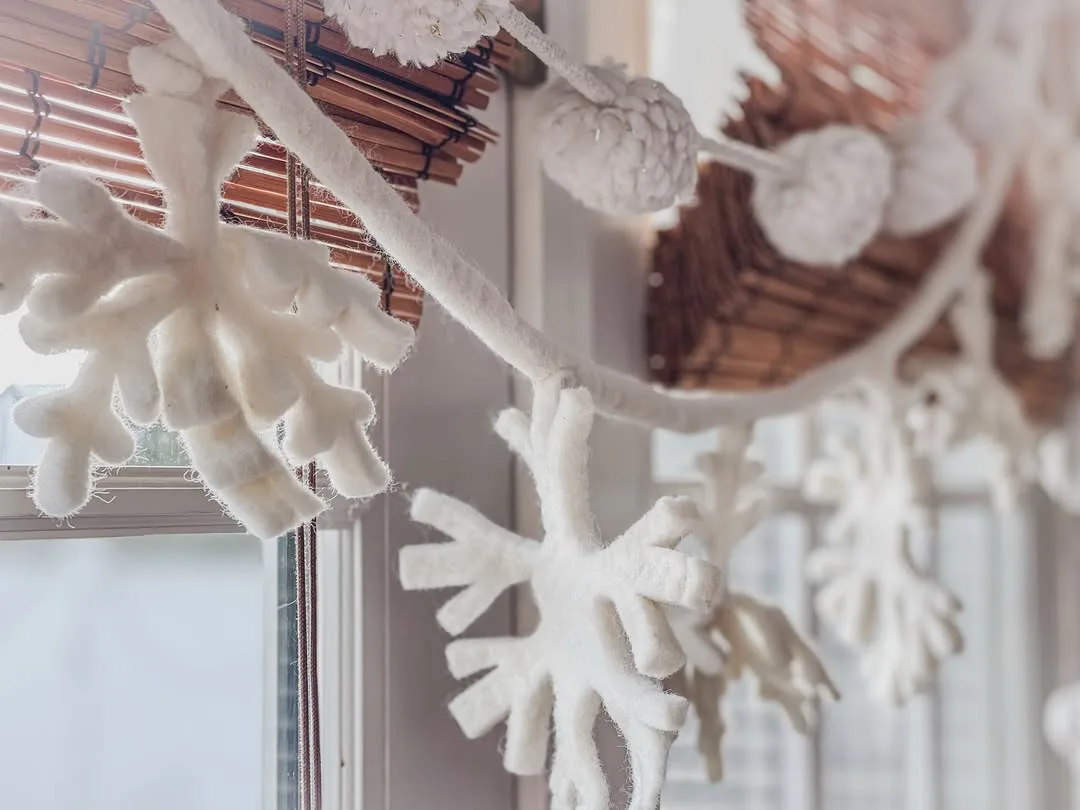
Felt balls in cream, grey, soft blue and pale rust bring gentle colour to a room without any shine or sparkle. Strung along a mantel, a headboard or a nursery shelf, the soft spheres feel playful yet calm, which suits the slow pace of winter days.
Push a long needle threaded with strong cotton through the centre of each ball, sliding the balls along until they sit in an even pattern. Knot the thread at both ends, or tie small loops so the garland can hang from hooks, knobs or picture nails.
Nurseries, children’s bedrooms and cosy reading corners suit felt garlands best, because the texture invites touch and the colours stay gentle. Families who decorate often also love them, since the strand folds into a small bag and comes out again for birthdays and parties.
Repeat one colour more often than the others to give the strand a clear rhythm, such as two cream balls to every grey or blue one. Odd numbers in each colour group look relaxed and natural, while strict patterns can feel stiff on a soft garland.
Spacing the balls too far apart is the common mistake, because the thread shows in long bare stretches and the garland looks unfinished. Slide the balls closer until the strand reads as one soft line, and step back to check the pattern from the doorway.
Pinecone Garland Along the Staircase
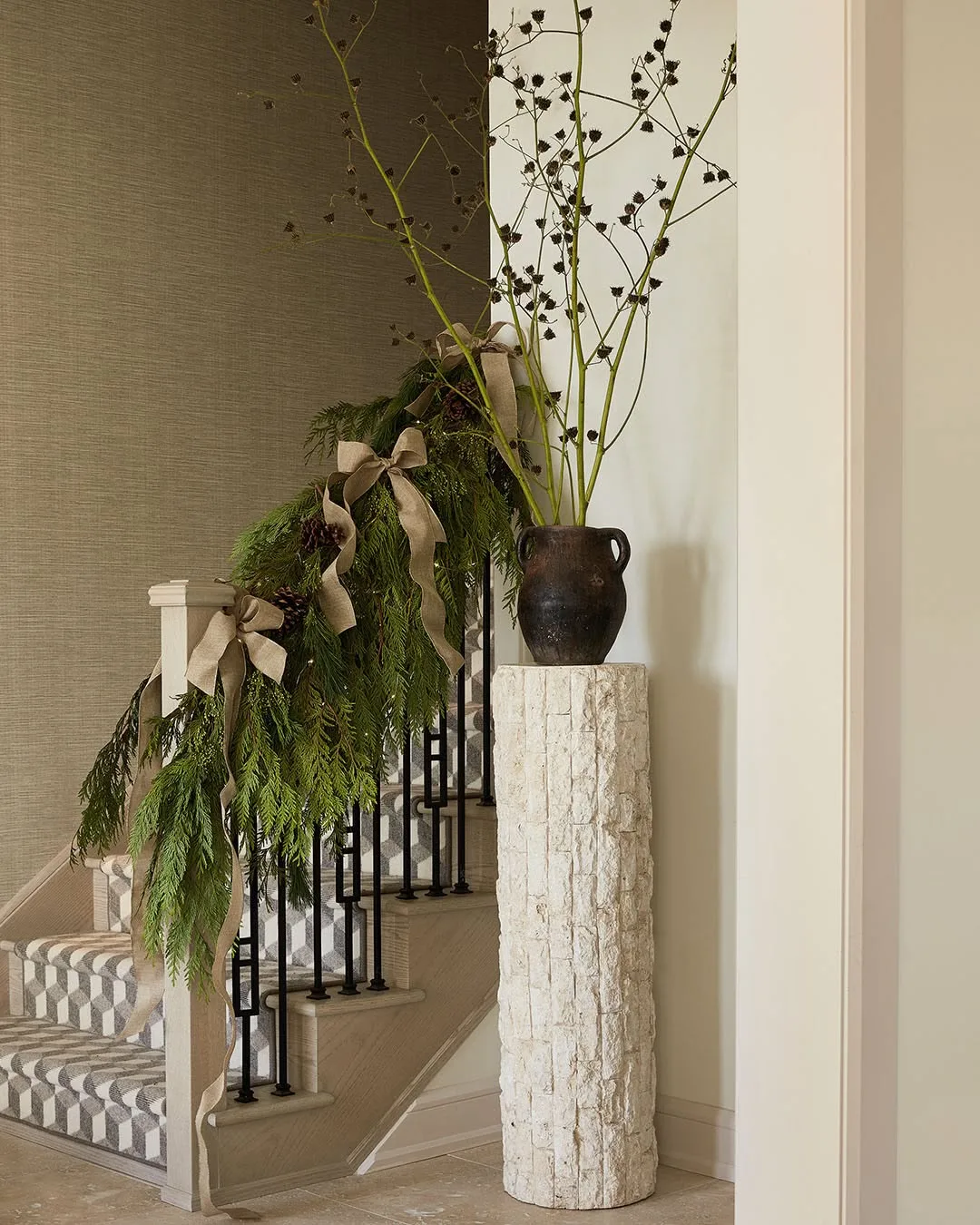
Pinecones bring the shape of winter woods indoors for free, and a staircase gives them the long line they need to look their best. Brown cones against a pale wall or a white banister read as calm pattern, especially when the sizes vary along the strand.
Tie each cone firmly to a length of twine or thin rope with a short loop of wire or strong thread around its top scales. Fix the finished garland along the banister with soft ties at every third post, keeping it clear of the handrail grip.
Staircases in hallways suit this garland because the hall often has few other chances for decoration. Country style homes carry the look easily, though a simple cone strand also warms a plain modern stairwell when the twine stays neat and the cones stay clean.
Collect cones on winter walks and bake them briefly on a low heat to dry them and clear out any insects before you start. Many winter garland ideas begin with a free walk like this one, and a basket of spare cones also fills bowls and jars around the house.
Leaving the garland loose at the top of the stairs is the mistake to avoid, because a swinging strand catches sleeves and bags on a busy route. Fix both ends firmly, keep the swag shallow, and check the ties whenever children run up and down all day.
Eucalyptus Garland Over the Doorway
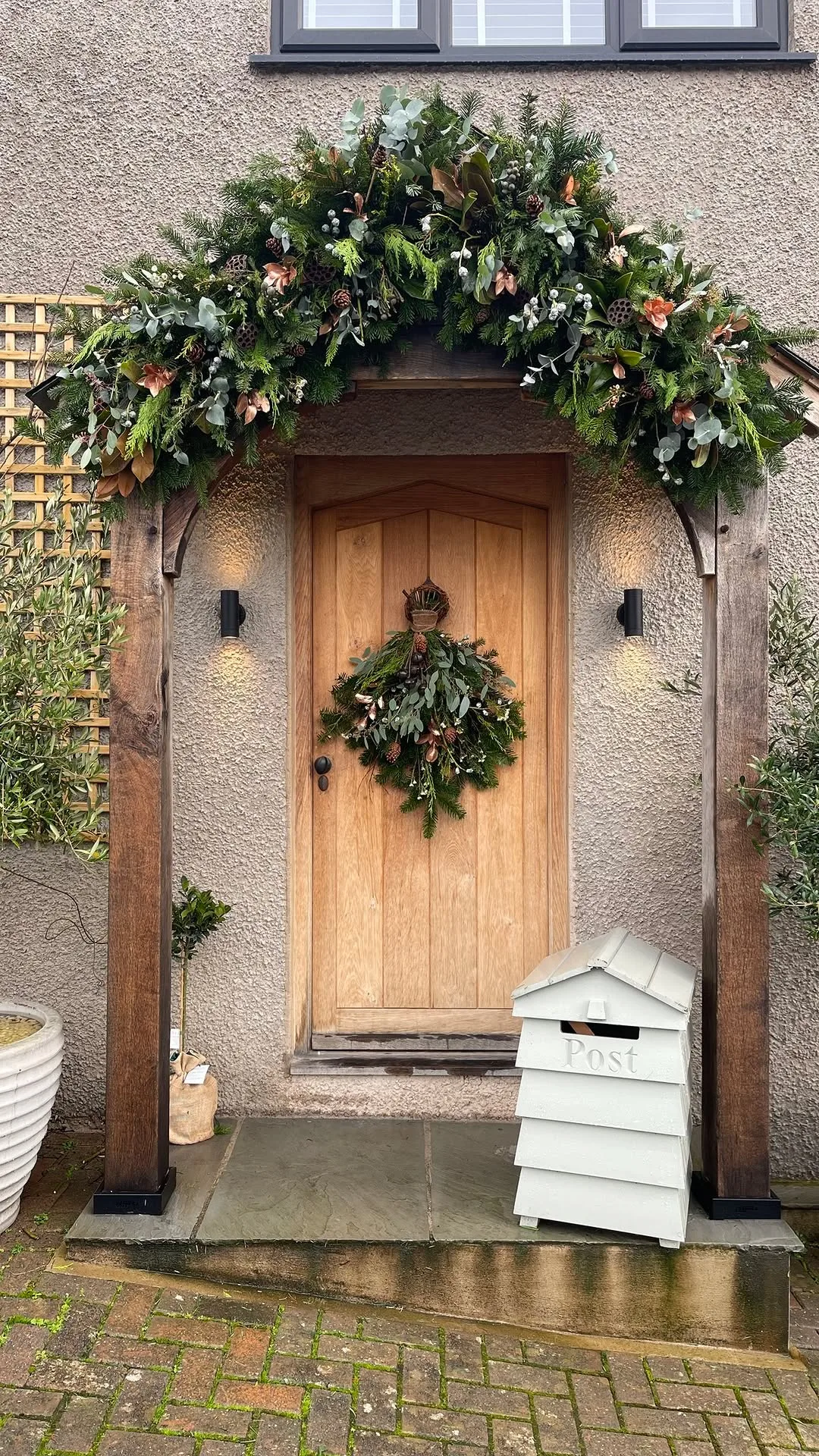
Eucalyptus leaves carry a soft grey green colour that calms bright rooms and suits winter light beautifully. Draped over a doorway, the trailing stems frame the opening like a quiet arch, and the leaves release a clean scent whenever people pass underneath.
Drape two shorter strands from the top corners of the door frame so they meet softly in the middle, or fix one long strand in a shallow swag. Small clear hooks hold the stems without nails, and a thin wire base helps fresh stems keep their curve.
Hallways and open plan doorways suit this garland, since the frame already draws the eye and the greenery simply softens it. Homes with white or pale walls gain the most contrast, while darker walls look better with the silvery side of the leaves facing out.
Dried eucalyptus keeps its shape and colour for months, so one bunch can dress the doorway all winter and move to a vase in spring. Fresh stems also dry in place quite happily, curling only slightly as the weeks pass in a cool hall.
Blocking the door swing is the mistake that tears leaves and annoys everyone, because a thick swag hung too low brushes heads and catches on the door edge. Keep the garland slim, fix it above head height, and test the door several times before you finish.
Woollen Pom Pom Garland for the Bedroom
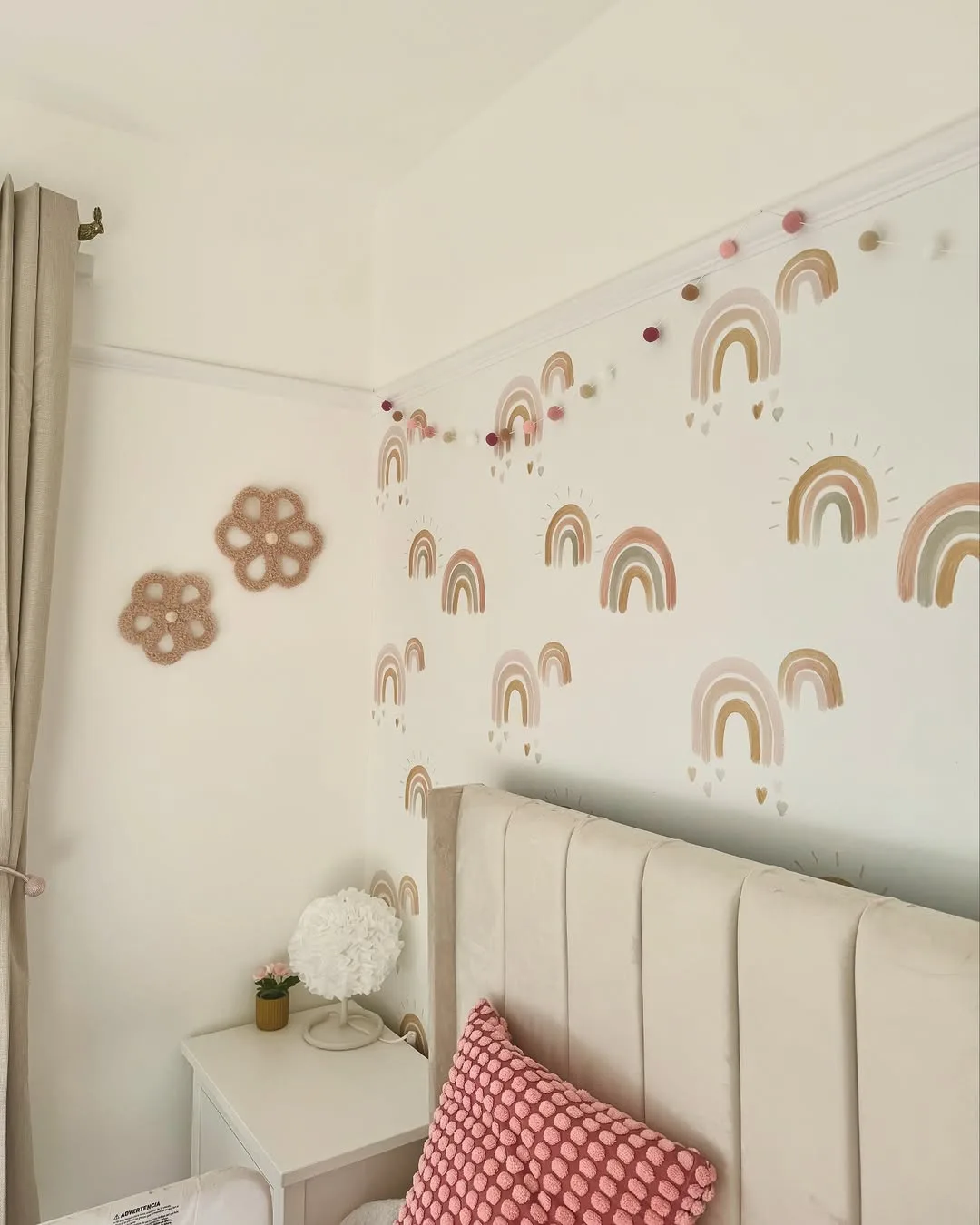
Soft pom poms made from leftover wool turn a bedroom garland into the cosiest strand in the house. Cream, oatmeal and gentle grey balls suit winter bedding, and the handmade texture pairs well with knitted throws, linen and warm lamplight on dark evenings.
Wind wool around a fork or a small cardboard ring until the bundle looks plump, tie it tightly in the middle, then cut the loops and trim the ball round. Thread the finished pom poms onto twine with a large needle, spacing them by eye.
Bedrooms suit pom pom garlands because the softness matches pillows and blankets already in the room. Teenagers enjoy making them for their own shelves, and a short strand over a mirror or a headboard adds warmth without taking any surface space.
Leftover wool from knitting projects keeps the cost at almost nothing, and mixing two yarn weights gives the balls a pleasant variety. Thicker yarn makes bigger, faster pom poms, while finer yarn gives a neater finish for strands that hang close to eye level.
Trimming too little is the common mistake, because uneven pom poms look scruffy and shed loose fibres over the bed. Trim each ball firmly into a round shape, shake it hard to free loose strands, and only then thread it onto the garland.
Burlap and Ribbon Garland on the Shelf
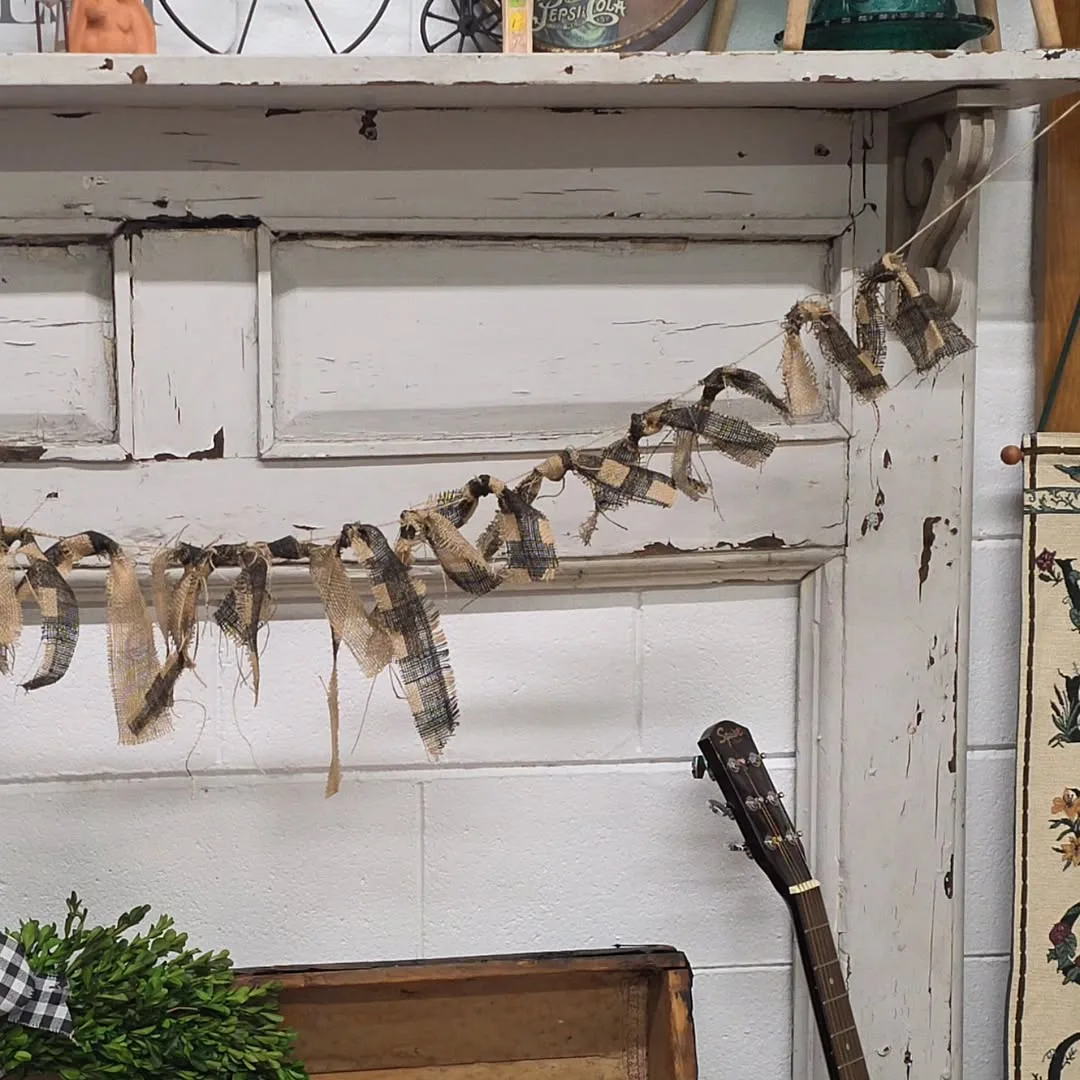
Burlap in its natural sandy tone brings a rustic warmth that suits winter shelves full of books, jars and candles. Strips of the fabric tied along twine make a simple garland with soft movement, and a few ribbon tails in cream or deep green add polish.
Cut the burlap into even strips, fold each strip over the twine and tie a loose knot so the ends hang like small flags. Alternate plain strips with ribbon pieces, keep the spacing regular, and iron the fabric first if it arrives creased from the roll.
Shelves in kitchens, hallways and living rooms suit this garland because the flat flags hang neatly against books and storage boxes. Farmhouse style homes carry it naturally, though one short strand also softens a plain white shelf in a modern room.
Fraying edges are part of the charm here, but sealing the cut ends with a tiny line of clear glue stops the strips unravelling over the season. Glue also helps when children handle the garland, since the flags stay tidy through plenty of touching.
Choosing ribbon that is too shiny is the mistake that breaks the calm mood, because satin glare fights with the rough burlap texture. Matte cotton or linen ribbon blends far better, and one colour repeated along the strand looks calmer than a mix of many.
Dried Flower and Herb Garland for the Hallway

Dried flowers and herbs bring faded colour and gentle scent to a hallway that often gets no decoration at all. Among winter garland ideas, this one feels the most personal, because lavender, gypsophila, dried grasses and rosemary each carry a memory of the garden they came from.
Bind small bunches of stems together with florist wire, then wire each bunch along a twine or vine base so the heads overlap in one direction. Work slowly, because dried stems snap easily, and keep a few spare bunches ready to fill any gaps.
Hallways suit a dried garland because people pass slowly enough to notice the colours and catch the scent. Homes with a cottage or vintage feel carry it best, though a slim strand of plain grasses also suits a calm, simple entrance.
Hang the finished garland away from radiators and damp walls, since heat makes petals brittle and moisture fades the colours. Shaded spots above a mirror or along a picture rail keep the flowers looking gentle for months rather than weeks.
Making the garland too thick is the common mistake, because heavy bunches pull the base out of shape and shed petals with every passing draught. Slim bunches wired tightly look neater, last longer and leave the hallway feeling light instead of cluttered.
White Berry and Twig Garland as a Table Runner
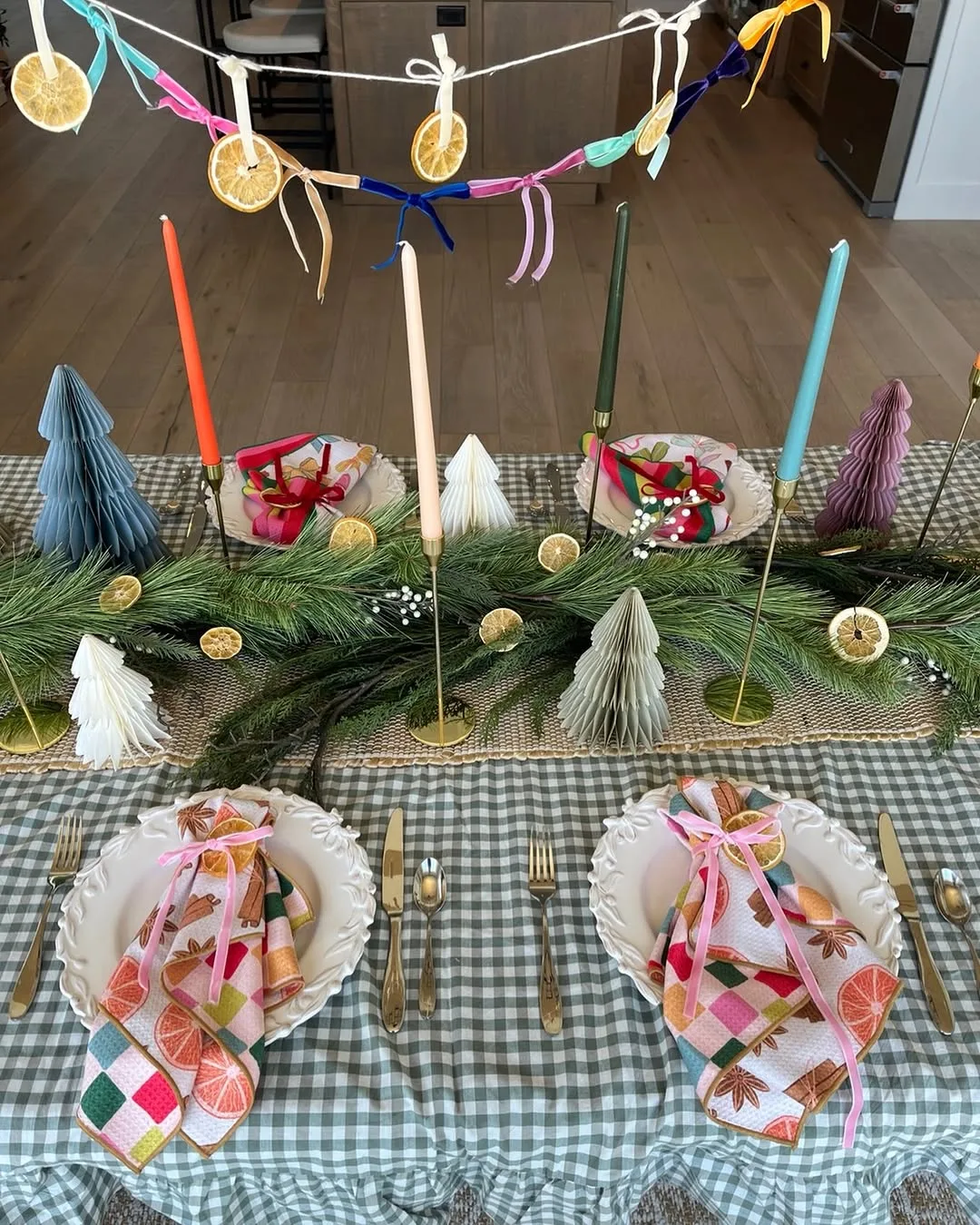
White berries and bare twigs laid along the centre of a table make a garland that doubles as a calm winter runner. Pale berries catch candlelight softly, and the twigs bring the bare branch shapes of the season indoors without any fuss or cost.
Lay a base of twigs or a plain greenery strand down the middle of the table first, then tuck berry stems along it at gentle angles. Keep the arrangement low and narrow so plates, glasses and serving dishes still pass easily on both sides.
Dining tables suit this garland best, though a sideboard or a coffee table carries a shorter version well. Hosts who cook for friends through winter gain a centrepiece that stays in place for weeks and needs only a quick dust between meals.
Battery tea lights tucked along the twigs add the glow that white berries love, and flameless candles stay safe beside dry stems and paper napkins. Three lights spaced unevenly look more natural than a strict row, and warm white bulbs flatter the food.
Building the runner too wide is the mistake that crowds the table and ends with berries in the gravy. Keep the garland inside the middle third of the table, test the space with your largest serving dish, and trim stray twigs before guests sit down.
Knitted Mini Garland for Frames and Shelves

Small knitted or crocheted shapes strung on fine twine bring handmade charm to picture frames, mirrors and shelf edges. Tiny stars, hearts or simple leaf shapes in cream and grey wool suit winter without shouting about any festival, and each shape takes only minutes to make.
Knit or crochet a set of small flat shapes in one or two colours, block them gently so they lie flat, then stitch or thread them onto twine. Short strands of five to seven shapes suit a single frame, while longer ones can edge a whole shelf.
Reading corners, desks and nursery shelves suit mini garlands because the scale matches books, frames and small plants. Crafters with a box of wool scraps gain the most, since every shape uses only a few metres of yarn and nothing goes to waste.
Mixing one metallic thread through a few shapes adds a whisper of light for evening, while the rest stay plain and calm. Hanging a mini garland across a mirror also doubles the effect, because the shapes and the lamplight reflect together.
Stretching a mini garland too tight across a frame is the common mistake, because the shapes bunch at the corners and the twine cuts into the wool. Leave a soft curve in the strand, fix the ends with small hooks, and let the shapes hang freely.
Book Page Garland for a Reading Corner
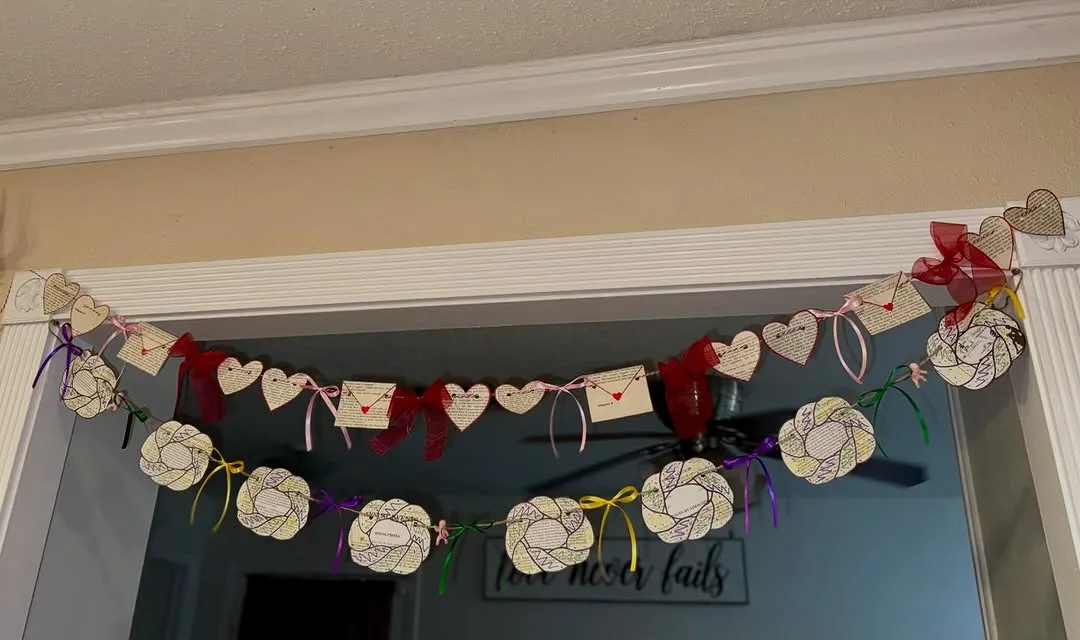
Old book pages with gentle cream tones make a garland full of quiet character for a reading corner. Folded paper shapes, simple hearts or small flags cut from damaged books cost nothing, and the printed words add texture that plain paper cannot match.
Cut even shapes from the pages, fold each one over a length of twine and glue or stitch the fold closed so the pieces hang in a neat row. Pages from a book that is already falling apart work best, so no loved story gets harmed.
Cosy corners beside an armchair suit this garland best, and home desks or student rooms carry it happily too. Paper garlands weigh almost nothing, so they hang from tiny hooks and leave walls unmarked after the season ends.
Seal the finished shapes with a light brush of diluted glue if the corner sits near a steamy kettle or a bathroom door, because bare paper softens in damp air. Sealed shapes also dust more easily and keep their folds through the whole season.
Choosing a favourite book in good condition is the mistake that causes real regret once the scissors come out. Charity shops sell damaged novels for pennies, and music sheets or old maps from the same shelves make equally lovely garlands.
Greenery and Lantern Garland on the Porch

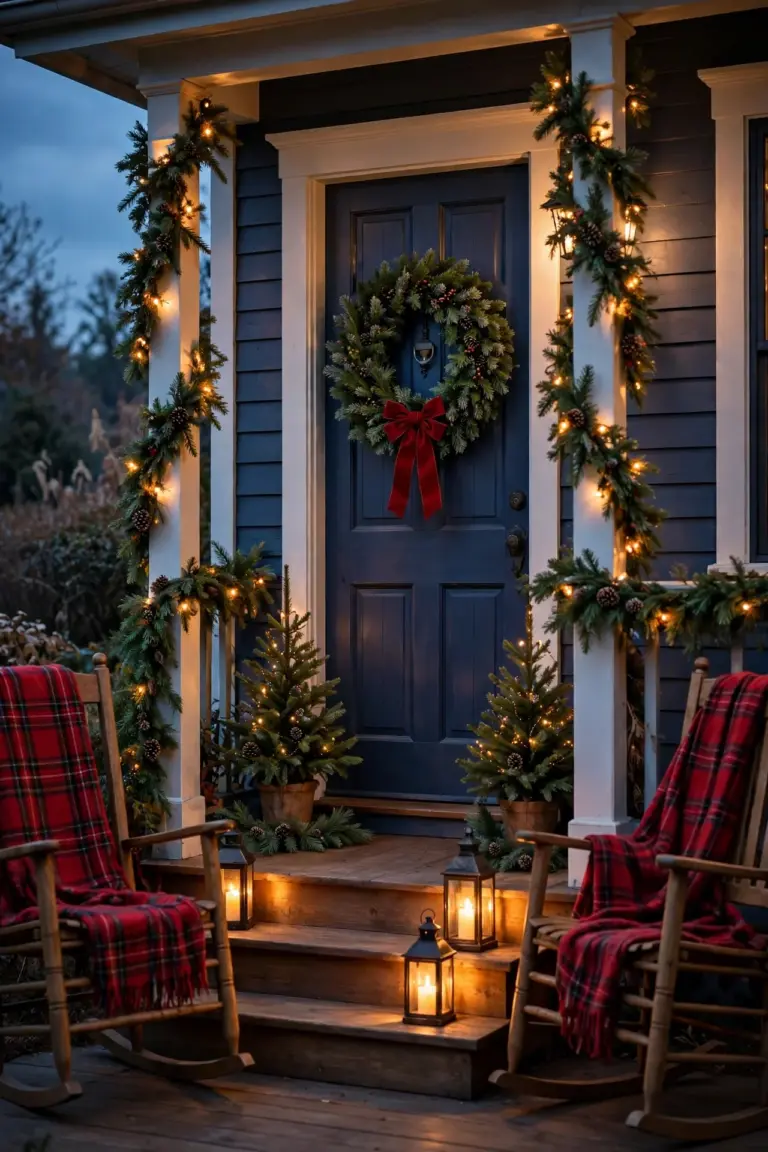
Porch garlands greet everyone before the front door even opens, and greenery mixed with small lanterns gives the welcome both colour and light. Evergreen stems, pinecones and battery lanterns cope well with cold air and make dark January evenings feel kinder.
Fix a sturdy greenery strand along the porch rail or around the door frame with outdoor ties, then hang two or three small lanterns at uneven heights. Battery candles on timers work best outside, since real flames blow out and glass grows cold and brittle.
Houses with a porch or a covered step suit this garland, though a simple strand around the door frame works for flats with a small balcony too. Homes on dark lanes gain the most, because the lantern glow guides visitors safely to the door.
Check the ties after every storm, because winter wind works loose ends free and a fallen garland blocks the step. Weatherproof materials matter here, so save delicate paper or fabric strands for indoor spots and keep the porch set sturdy.
Using indoor fairy lights outside is the mistake that risks damaged wires and dead bulbs in the first week of rain. Choose lights and lanterns made for outdoor use, keep battery packs under cover, and bring the greenery in only when it finally fades.
Frosted Pine and Cotton Garland on the Sideboard
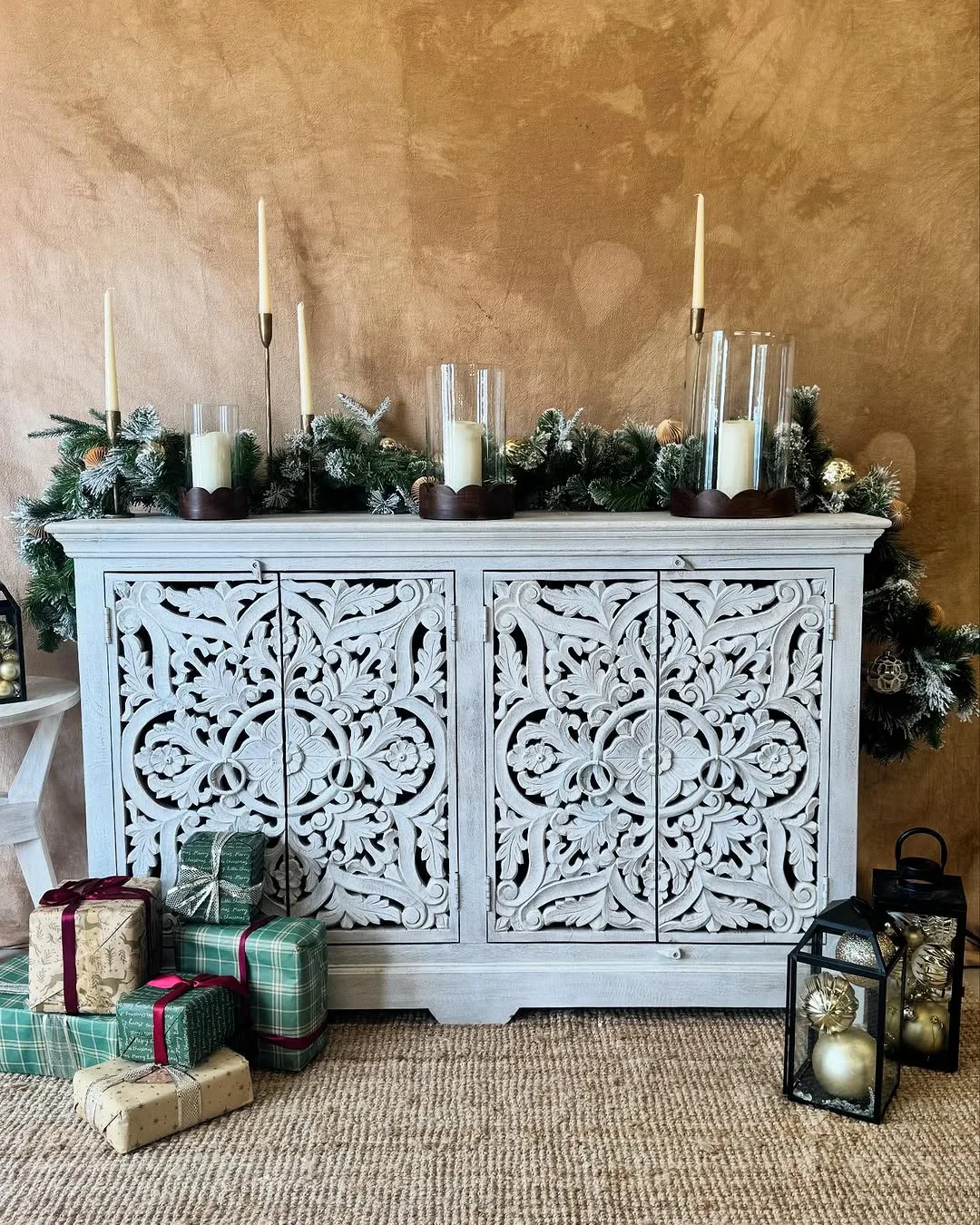
Frosted pine branches dusted with white, mixed with soft cotton bolls, give a sideboard garland a snowy woodland feel. Pale tones suit the low light of January, and the mix of spiky cones, soft cotton and dark green needles keeps the strand interesting up close.
Arrange the frosted branches along the sideboard top first, letting a few stems trail softly over the front edge. Tuck cotton bolls and plain pinecones between the branches, step back often, and keep the back of the surface clear for lamps and frames.
Sideboards in dining rooms and living rooms suit this garland because the wide flat top shows the layers properly. Homes decorated in pale, calm colours gain the most, since the white dusting blends with cream walls, light wood and linen.
Flocking powder from craft shops can frost plain branches at home for very little money, brushed on with glue over the needle tips. Working outdoors or over newspaper keeps the white dust off the floor, and gloves protect your hands from sticky stems.
Overdoing the white dusting is the common mistake, because branches caked in flocking look plastic and shed white powder over the furniture. A light touch on the tips looks like real frost, while heavy coats hide the green the garland needs.
Candlelit Greenery Garland for the Dining Table
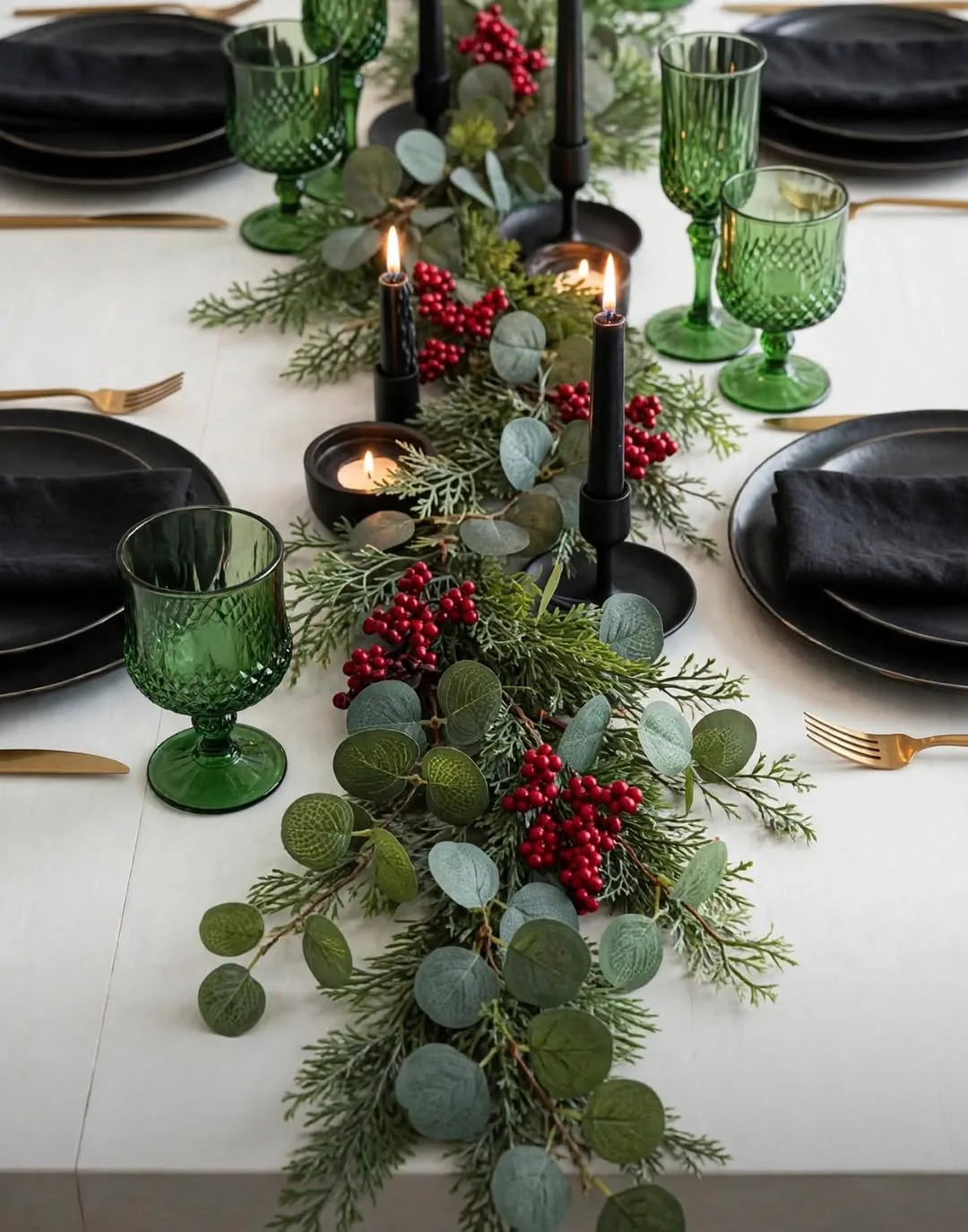
Greenery wound loosely around battery candles makes a dining table garland that glows through long winter dinners. Eucalyptus, fir offcuts or even plain ivy from the garden form the base, and the soft light flatters faces, food and the whole room.
Wind short greenery stems around a simple wire or twine base in one direction, keeping the strand slim enough to sit between place settings. Stand battery candles in small glass holders along the garland rather than directly on the leaves, so heat and wax stay contained.
Dinner parties and slow Sunday meals suit this garland, since the table stays set for hours and the glow earns its place. Couples marking a winter anniversary at home also love it, because the light makes a simple meal feel like an occasion.
Timers on the candles mean the table glows before guests even sit down, and nobody has to reach across plates to switch lights on. Spare batteries in a drawer nearby solve any fading candle in seconds, without breaking the mood of the meal.
Placing real candles inside dry greenery is the mistake that risks a spoiled evening or far worse, because leaves dry out quickly in a warm room. Battery candles give the same warm colour with no flame, so the garland stays safe through the longest dinner.
Common Mistakes
Treating every room with the same garland is the first mistake, because a strand that suits a mantel will swamp a small shelf or vanish on a staircase. Match the length, weight and material to each spot, and let every room keep its own quiet version of the theme.
Hanging garlands where doors, drawers and busy hands pass every day tears leaves, snaps paper and pulls fixings loose within a week. Walk the route yourself before fixing anything, keep strands clear of swings and edges, and choose sturdier materials for busy places.
Forgetting to plan the fixings is where many winter garland ideas quietly fail, since heavy greenery on weak hooks ends up on the floor by morning. Test each hook with a similar weight first, use two fixings for long swags, and keep spare hooks in the storage box.
Mixing too many materials in one strand makes the garland look busy instead of calm, with berries, bows, lights and glitter all fighting for attention. Two or three linked materials repeated along the strand look richer and let each texture show properly.
Leaving fresh garlands up until they turn brown and crisp spoils the whole effect, because tired greenery makes a room feel neglected. Refresh or remove fresh strands after a few weeks, and let the dried and fabric ones carry the rest of the season.
Budget Friendly Winter Garland Ideas You Can Make at Home
Garden clippings form the cheapest garlands of all, because fir, pine, ivy and eucalyptus often grow a few steps from the door. One basket gathered after a winter tidy gives enough greenery for a mantel strand, a table runner and a small doorway swag.
Paper costs pennies and carries plenty of winter garland ideas on its own, from snowflakes and book page flags to simple folded chains in cream and white. One quiet evening of cutting with family or friends turns a small stack of card into decorations for several rooms.
Secondhand shops sell wool, ribbon, fabric and old sheet music for very little, and each find becomes garland material with a wash and a little trimming. Shopping slowly through winter also spreads the cost, so the storage box grows richer every year without one big spend.
Sharing materials with neighbours stretches every budget further, because one garden may overflow with pinecones while another has spare eucalyptus or dried flowers. Swapping a basket of each gives both homes more variety than either could gather alone, and the exchange costs nothing at all.
Storing garlands properly protects next year’s budget, since dried, felt and paper strands survive for seasons when they rest flat in a labelled box. Fresh greenery is the only yearly cost, and even that disappears when a garden or a friendly neighbour provides the clippings.
Tips for Garlands That Stay Fresh and Tidy
Cut fresh stems at an angle and rest them in water for an hour before you build the garland, because thirsty branches dry out days sooner. Cool rooms help greatly too, so keep fresh strands away from radiators and direct sun through glass.
Build garlands in short sections joined on the spot rather than in one long piece at the table, because shorter lengths are easier to carry, fix and adjust. Sections also store better, and a damaged piece can be replaced without remaking the whole strand.
Keep a small repair kit with the decorations, holding spare wire, twine, hooks and a few felt balls or paper shapes. Quick repairs take minutes during the season, and a garland that gets mended stays looking cared for instead of slowly falling apart.
Photograph each finished garland before you take it down, because pictures remind you next year which winter garland ideas worked in which room. Notes on lengths and fixing points save even more time, turning next year’s decorating into a calm hour rather than a puzzle.
Rotate one garland between rooms every few weeks if the house starts to feel stale, since a strand moved from the hall to the bedroom feels new again. Small changes like this refresh the home through the long season without buying anything extra.
Trust your eye over any photograph in a magazine, because your rooms hold different light, furniture and family habits than a styled set. Borrow the colour palette and one or two shapes, then adapt the rest so the garland belongs to your home.
Frequently Asked Questions
How long does a fresh evergreen garland last indoors?
Most fresh evergreen garlands stay green for three to five weeks indoors when the room stays cool and the branches get a light misting every few days. Fir and pine last longest, while softer greenery fades sooner near radiators or in rooms heated all day.
Can I hang a garland without nails or screws?
Yes, clear adhesive hooks, over door hooks and soft ties all hold light garlands without marking walls or woodwork. Heavier fresh swags need stronger fixings, so test the hook with a similar weight first and use two hooks for any long or heavy strand.
Which garlands are safest around children and pets?
Fabric, felt and paper garlands are the safest choices, because they hold no berries to swallow, no needles to shed and no glass to break. Keep battery candles inside holders, fix strands above toddler reach, and check ties often in busy family rooms.
How do I stop a fresh garland shedding needles?
Cool air and regular misting slow needle drop more than anything else, so site the garland away from heat and spray it lightly every few days. Shaking loose needles outside before hanging also helps, and a sheet under the work area catches the rest.
Can garlands work in a small flat?
Short garlands suit small flats beautifully, because one slim strand over a door, a shelf edge or a window adds shape without taking any floor space. Mini knitted, felt or paper versions keep the scale right, and mirrors nearby bounce the effect further.
When should I take winter garlands down?
Fresh greenery comes down when it turns dry and brown, usually after three to five weeks, while dried and fabric garlands can stay until spring feels close. Many homes refresh the fresh pieces once in late January and enjoy a second round.
More Ideas to Explore
Hang a seasonal welcome with winter wreath ideas, dress the fireplace with winter mantel decor ideas, style the table with winter centerpiece ideas, and add soft glow with winter candle decor ideas.
Conclusion
Garlands give winter homes their shape back after the festive clutter clears, using little more than greenery, paper, wool and light. One calm strand on the mantel or stairs changes how a room feels every time you walk into it.
Pick the winter garland ideas that suit your rooms and your habits, whether that means fresh evergreen by the fire or paper snowflakes in a child’s window. Homes look best when decorations match real life inside them, not when they copy a showroom shelf.
Start with one spot, hang one garland well, and live with it for a few days before adding more. Small steps keep the look calm, the budget safe and the work enjoyable, which matters in a season that already asks plenty of everyone.
Enjoy the making as much as the finished rooms, because cutting snowflakes, threading oranges and wiring pinecones are part of winter’s quiet pleasures. Care shows in small handmade touches, and a home dressed gently says welcome better than any grand display. Handmade winter garland ideas like these bring soft colour and texture to every corner of the home.