Winter Fireplace Decor
Cold afternoons make the fireplace the natural heart of the home, and thoughtful winter fireplace decor turns that corner into the warmest seat in the house. Logs, soft light and layered textures around the hearth invite people to linger long after the flames settle into embers.
Families tend to gather where the warmth is, so the area around the fire works harder in winter than any other part of the room. Chairs drift closer, rugs come out of storage and the hearth slowly collects the baskets, blankets and books of everyday life.
Planning the whole fireplace area rather than only the mantel gives a calmer and more useful result. Hearth, firebox, log storage, seating and light all play a part, and small changes in each one add up to a corner that feels cared for all season.
What Makes Good Winter Fireplace Decor for a Cosy Home?
Short answer first, good winter fireplace decor layers warmth, texture and gentle light around the whole hearth rather than piling ornaments onto the mantel alone. Logs within reach, a clear and safe hearth, soft seating nearby and candlelight or lamplight after dark cover nearly everything that matters.
Warmth comes first, because a fireplace corner that feels cold fails no matter how tidy it looks. Keep the fire laid ready, store fuel close by and add textiles where people actually sit, since comfort always reads as more welcoming than decoration alone.
Small details hold the look together, including clean stone or brick, swept ash, polished tools and one or two natural touches such as pinecones or plain greenery. Restraint suits winter best, because the fire itself provides colour, movement and sound without any help.
Layered Hearth With Logs and Lanterns
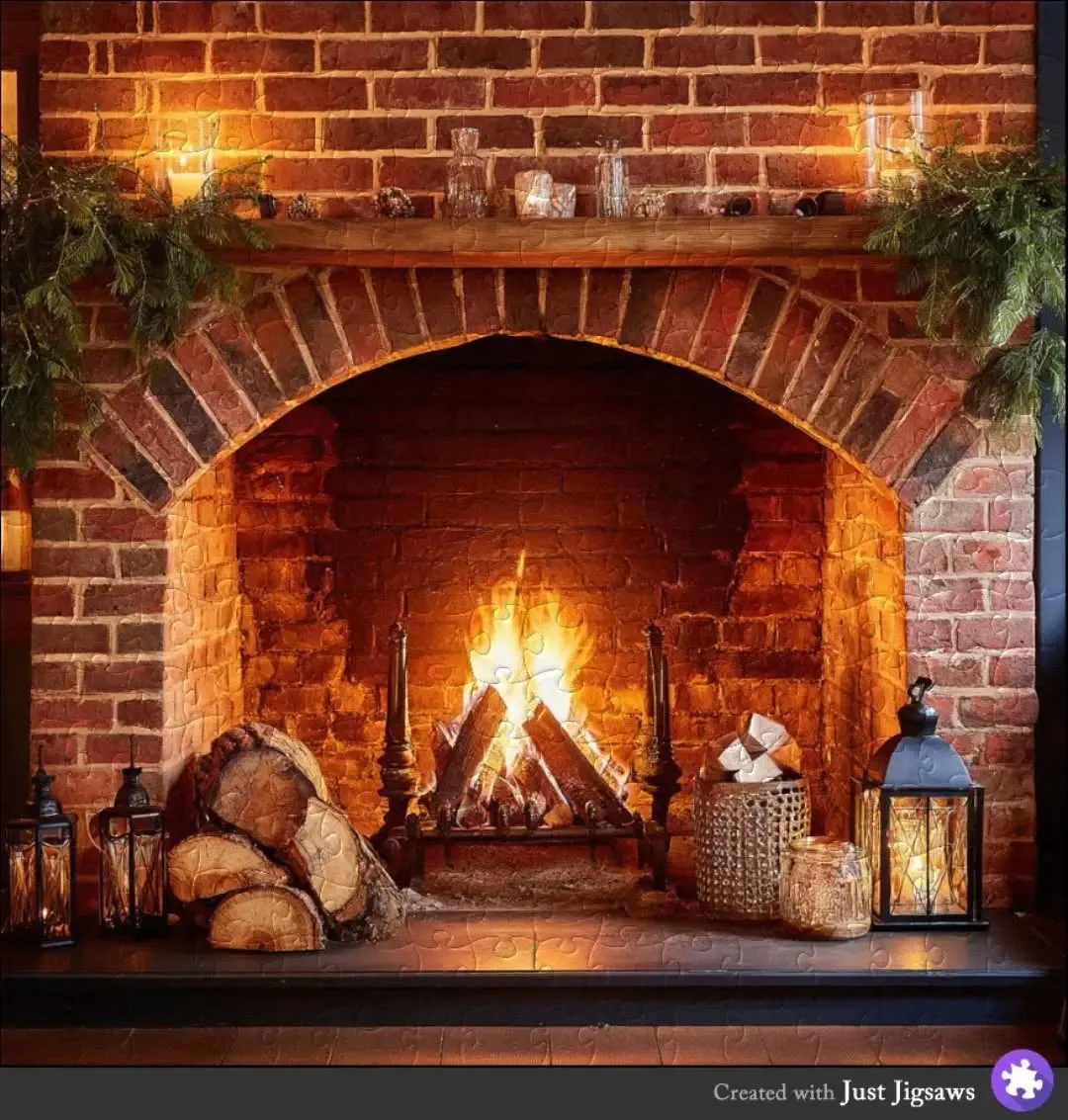
Stacked logs and a pair of lanterns layered along the hearth give the fireplace a full and grounded base even before the fire is lit. Bark, cut ends and dark metal bring natural texture at floor level, where styling often gets forgotten entirely.
Build the arrangement in low layers, with the log pile or basket on one side and lanterns of different heights on the other. Leave the centre of the hearth clear for ash, tools and safe access, and keep every item back from the fire opening.
Households with a working fire suit this idea well, because the logs are genuinely needed and the lanterns earn their place on evenings when the fire stays unlit. Busy families also gain, since the arrangement takes minutes and survives everyday use without fuss.
Try placing one lantern inside the firebox on nights when no fire is planned, because the glow through the glass or opening suggests flames without any heat. Battery candles inside lanterns give the same effect with no wax and no worry.
Piling logs and lanterns across the whole hearth is the mistake that blocks sweeping, ash removal and safe fire lighting. Keep the display to the edges, respect the clear working space in the middle and the corner stays practical as well as pretty.
Stone Hearth Styled With Woven Baskets
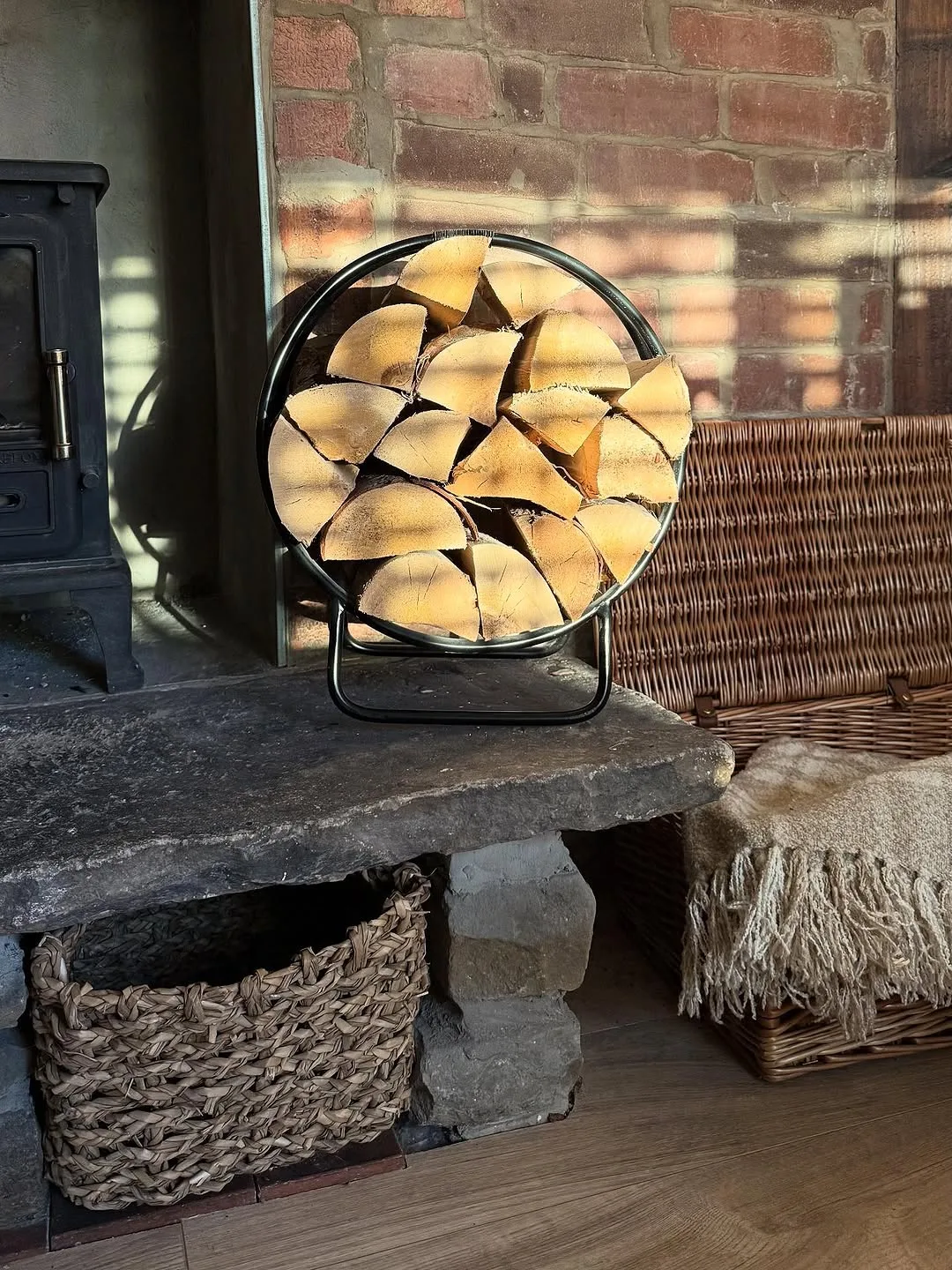
Woven baskets soften a hard stone hearth and bring warm natural colour to the coldest looking part of the fireplace. Willow, seagrass and rattan tones sit happily beside grey stone, black iron and pale brick, and the texture contrasts gently with smooth floors.
Place one large basket for logs on one side of the hearth and a smaller one opposite for kindling, pinecones or a folded throw. Matching shapes in different sizes look planned rather than random, and handles make both baskets easy to carry.
Anyone whose fireplace feels stark or echoing suits this idea, because baskets absorb the hardness of stone and metal at very little cost. Country style homes take to it naturally, though plain baskets also calm a modern room with too many hard surfaces.
Fill the smaller basket with foraged pinecones gathered on winter walks, because free texture beats bought ornaments every time. Cones also work as natural fire starters, so the basket earns its keep in two ways across the whole season.
Overfilling baskets until logs spill onto the hearth is the mistake that turns storage into clutter within a week. Fill to a comfortable level, shake out bark dust outdoors now and then and keep one basket partly empty for daily bits and pieces.
Firebox Display With Candles When Cold
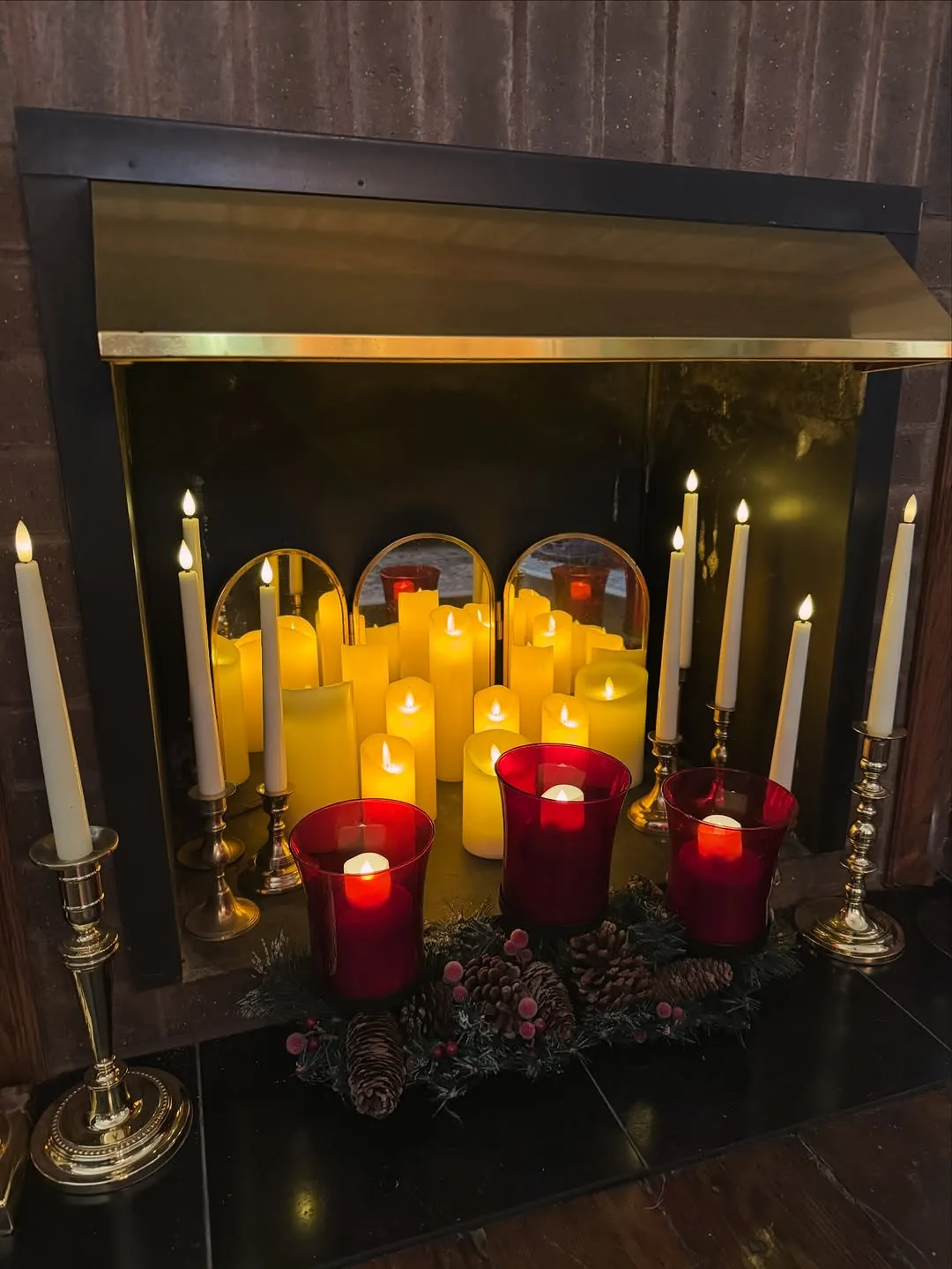
When the fire stays unlit for weeks, the empty firebox can hold a calm cluster of candles that echoes real flames. Candlelight glowing inside dark brick or iron gives winter fireplace decor a soft centre, and the blackened interior makes every flame look brighter.
Group candles of different heights on a tray or a flat piece of slate so wax stays contained and the display lifts out in one move. Odd numbers look natural, and pillars suit the scale of a firebox better than thin tapers.
Homes with a blocked, broken or simply unused fireplace suit this idea best, because the firebox becomes a feature instead of a dark hole. Flats with decorative fireplaces also gain a glow that needs no chimney, no fuel and no sweeping.
Battery candles on a timer make the display effortless, switching on at dusk and off at bedtime without anyone remembering. Modern versions flicker convincingly, cost little to run and can stay in place safely through the whole winter season.
Leaving real candles burning inside an unlined or dirty firebox is the mistake to avoid, because soot, dust and old ash spoil wax and air quickly. Clean the firebox first, use sturdy holders and never leave any real flame burning unattended.
Log Store Built Beside the Fireplace
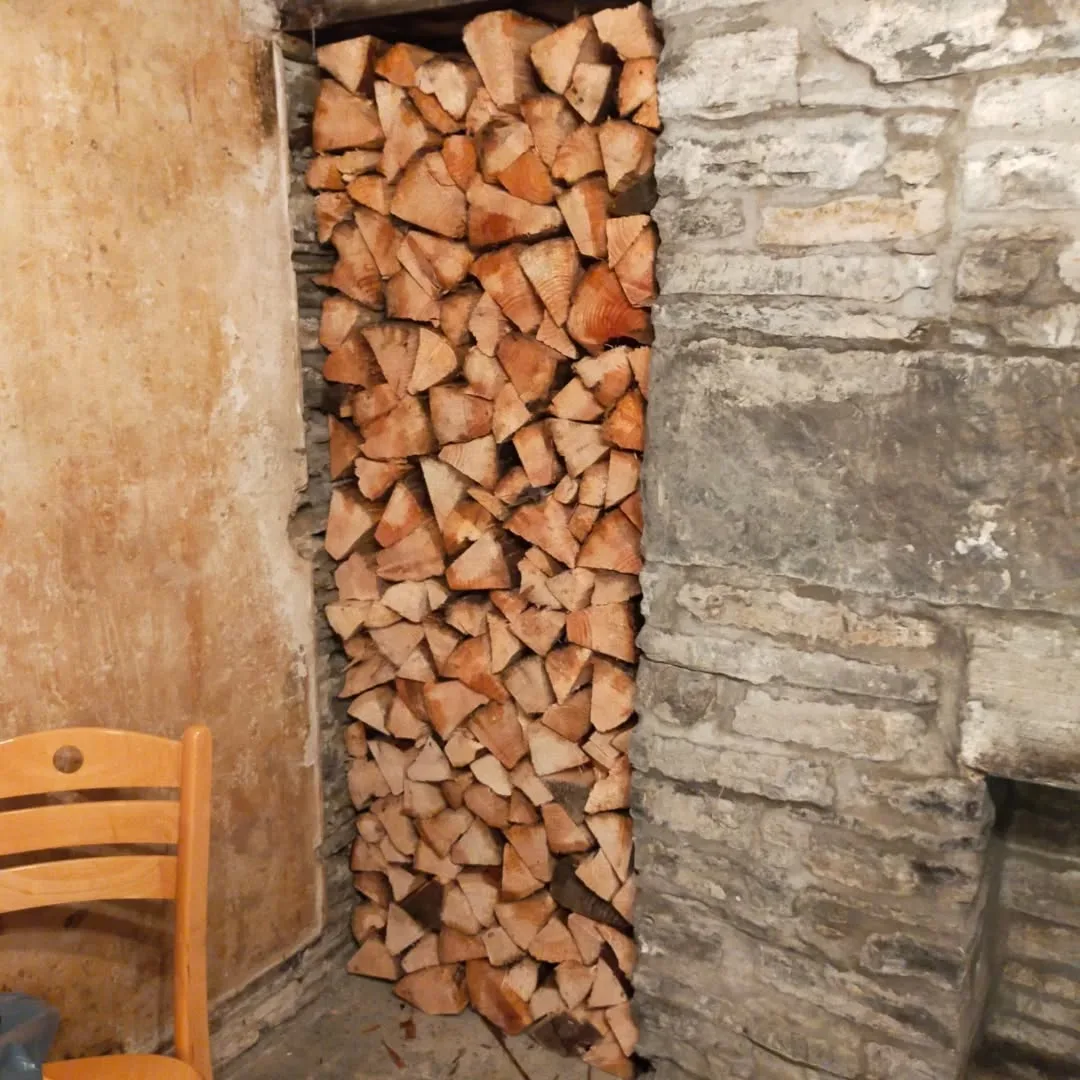
Neatly stacked logs stored beside the fireplace turn fuel into part of the decoration, filling a plain alcove with pattern, colour and scent. Cut ends facing outward create a natural mosaic that changes slowly as the pile is used and rebuilt.
Stack logs in a recess, a tall basket or a simple open rack, keeping the pile stable and off painted walls. Store only a few days of wood indoors and top up from the main outdoor pile, which keeps insects and damp outside.
People who burn wood daily suit a proper log store best, because armfuls carried through the house in the dark quickly lose their charm. Keen fire lovers also enjoy the ritual of building a tidy stack that shows the season supply at a glance.
Line the base of the store with a washable mat or a sheet of slate, because bark crumbs and dust fall every time a log moves. One quick shake outdoors each week keeps the corner clean without any real effort.
Stacking green or damp wood indoors is the mistake that brings musty smells and disappointing fires that hiss instead of burn. Bring logs in only when they feel dry and light, and leave doubtful pieces outside until the following season.
Brass Fire Tools on a Simple Stand
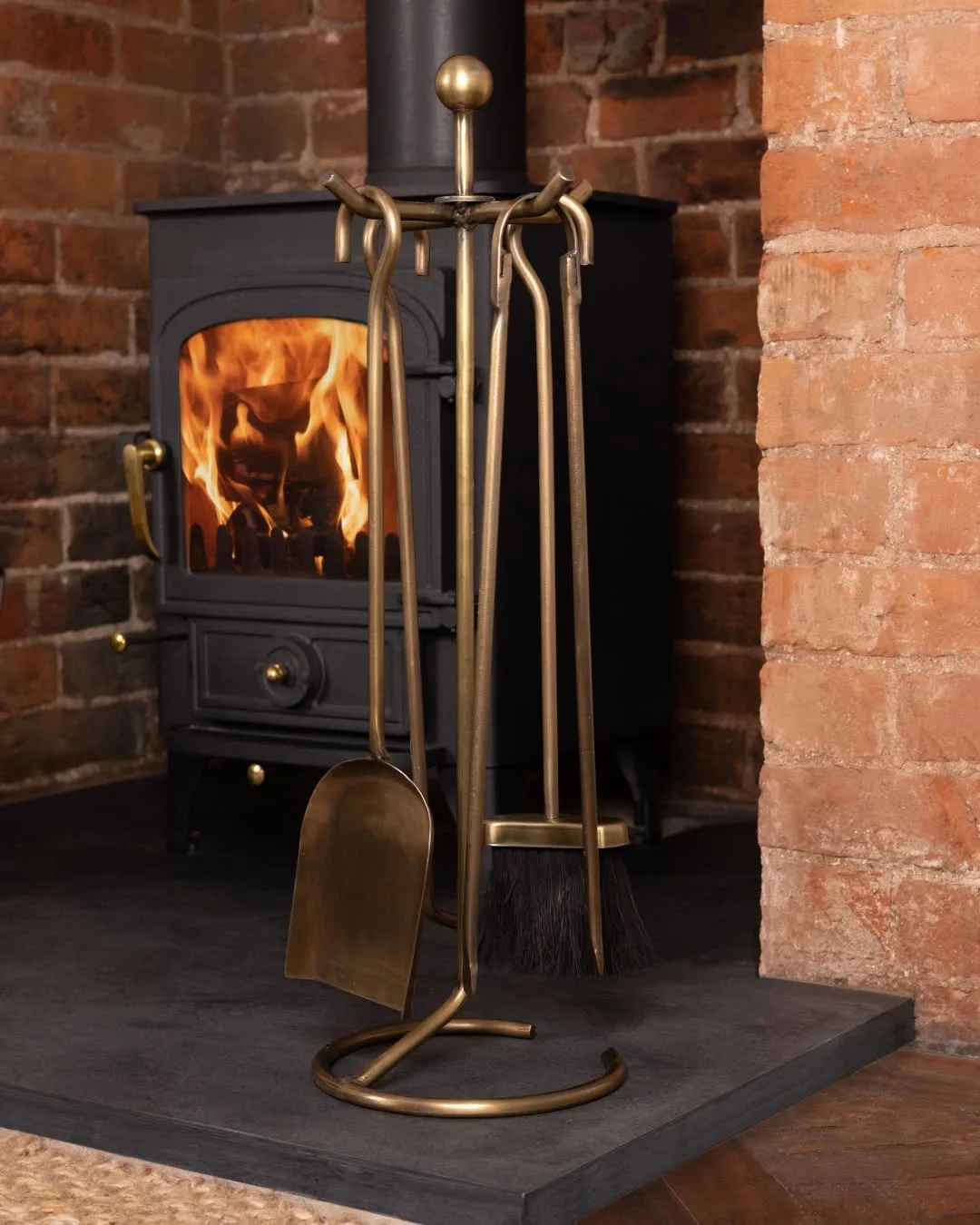
Simple brass tools on a stand bring a quiet shine to the hearth and remind everyone that the fire is a working part of the home. Poker, brush, shovel and tongs standing in a row look orderly and stay ready for daily use.
Stand the set on the side of the hearth where the fire tender naturally works, usually opposite the log store for balance. Choose a stand with a solid heavy base, because tools get knocked during sweeping and a wobbling stand soon annoys everyone.
Anyone with a real fire suits a proper tool set, since ash and embers need daily attention through the winter months. Traditional rooms wear brass happily, while brushed or blackened finishes suit plainer rooms that find bright brass too formal.
Polish the brass once at the start of the season and let a soft patina build afterwards, because tools that look gently used suit a fireside better than a showroom shine. One cloth kept in the log basket makes quick touch ups easy.
Buying a decorative tool set with thin handles and a flimsy stand is the mistake that wastes money and patience together. Tools take real work and real heat, so choose weight and balance over ornament and the set will serve for decades.
Classic Fireguard Screen in Black Iron
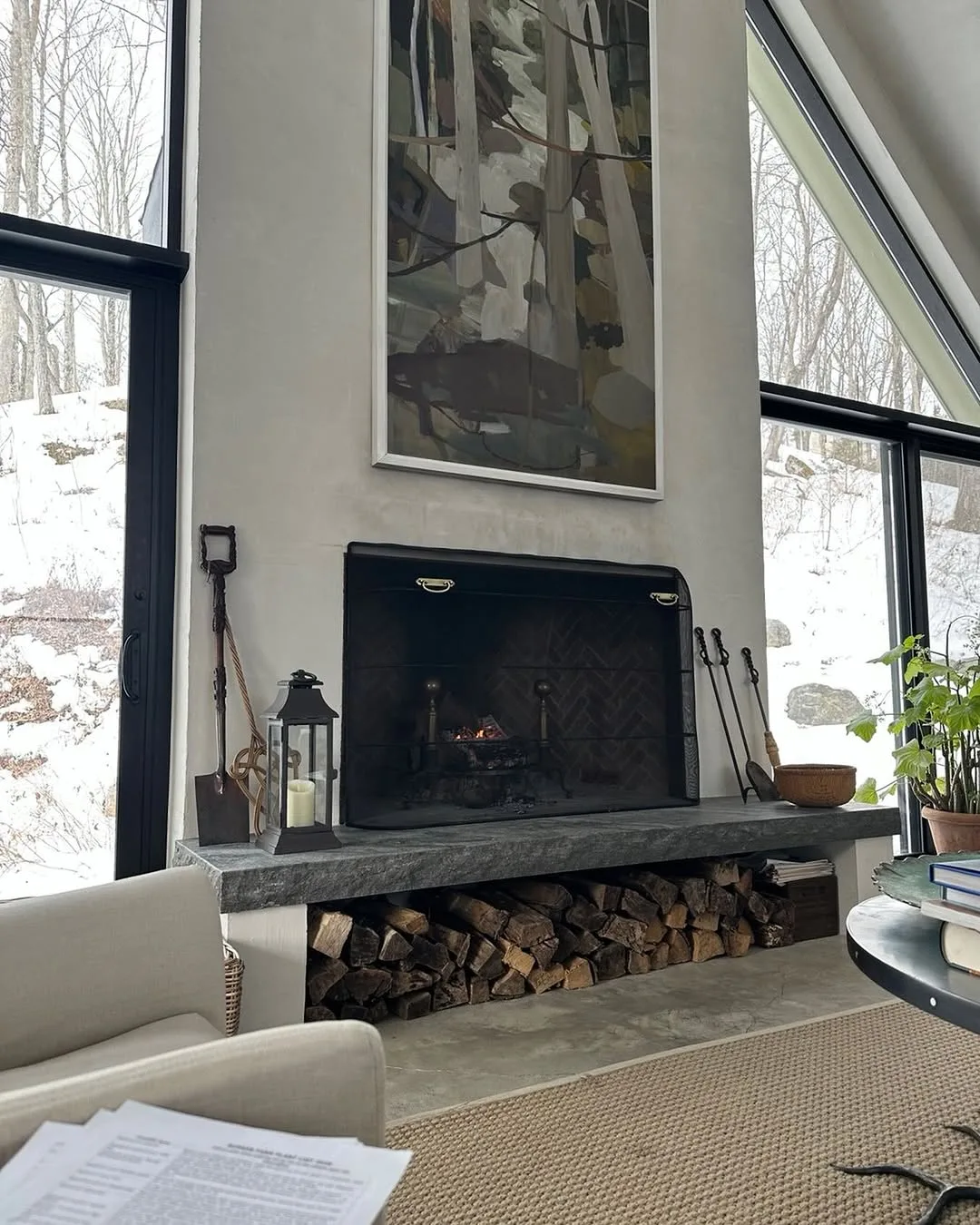
Plain black iron fireguards protect the room while framing the flames in a clean and honest way. Mesh or barred designs guard against sparks and rolling logs, and the dark metal disappears visually so the fire itself stays the centre of attention.
Choose a guard wide enough to cover the opening with room to spare and tall enough to catch sparks from a lively fire. Curved or three panel designs stand steadily on uneven hearths and fold flat for storage when spring arrives.
Families with young children or lively dogs suit a fixed guard best, because a sturdy barrier keeps small hands and paws at a safe distance. Households with open fires and thick rugs also gain real protection against stray sparks on winter evenings.
Screens with a small door or a lift away panel make daily tending far easier, since nobody has to drag the whole guard aside to add a log. Test the fit with the fire tools in hand before the first cold night arrives.
Picking a guard that only just covers the opening is the mistake that leaves gaps exactly where sparks escape. Measure the firebox and hearth first, allow generous overlap on both sides and check the guard stands firm when brushed in passing.
Chunky Knit Throw Over a Fireside Chair
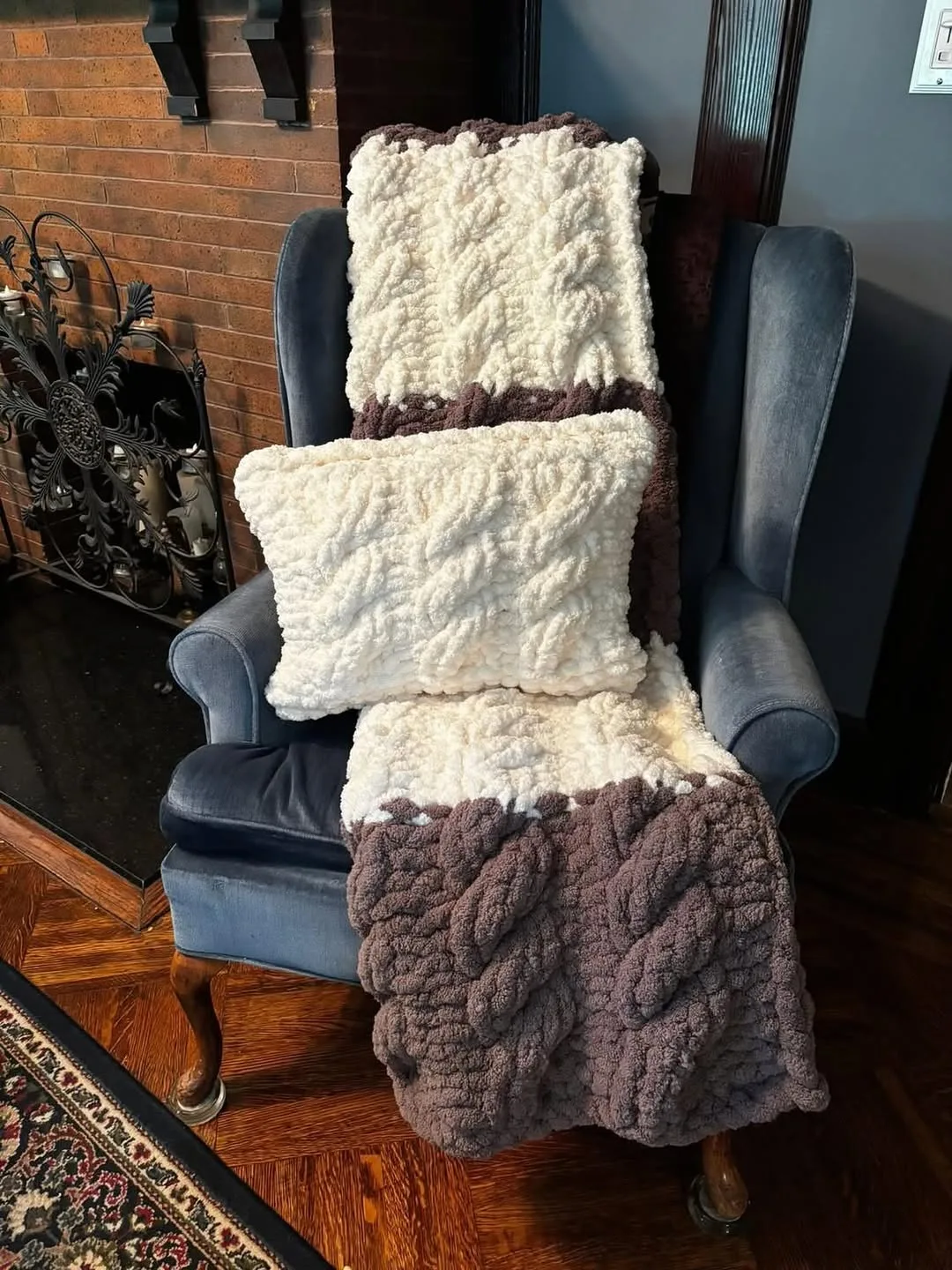
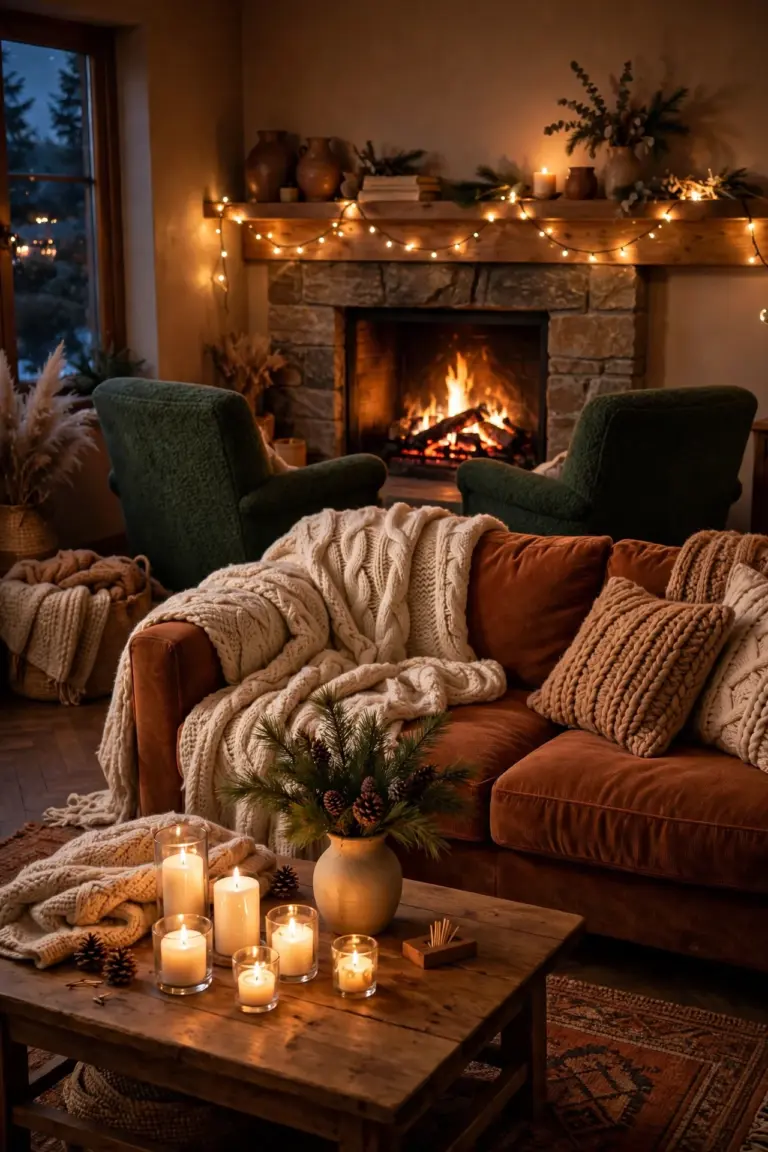
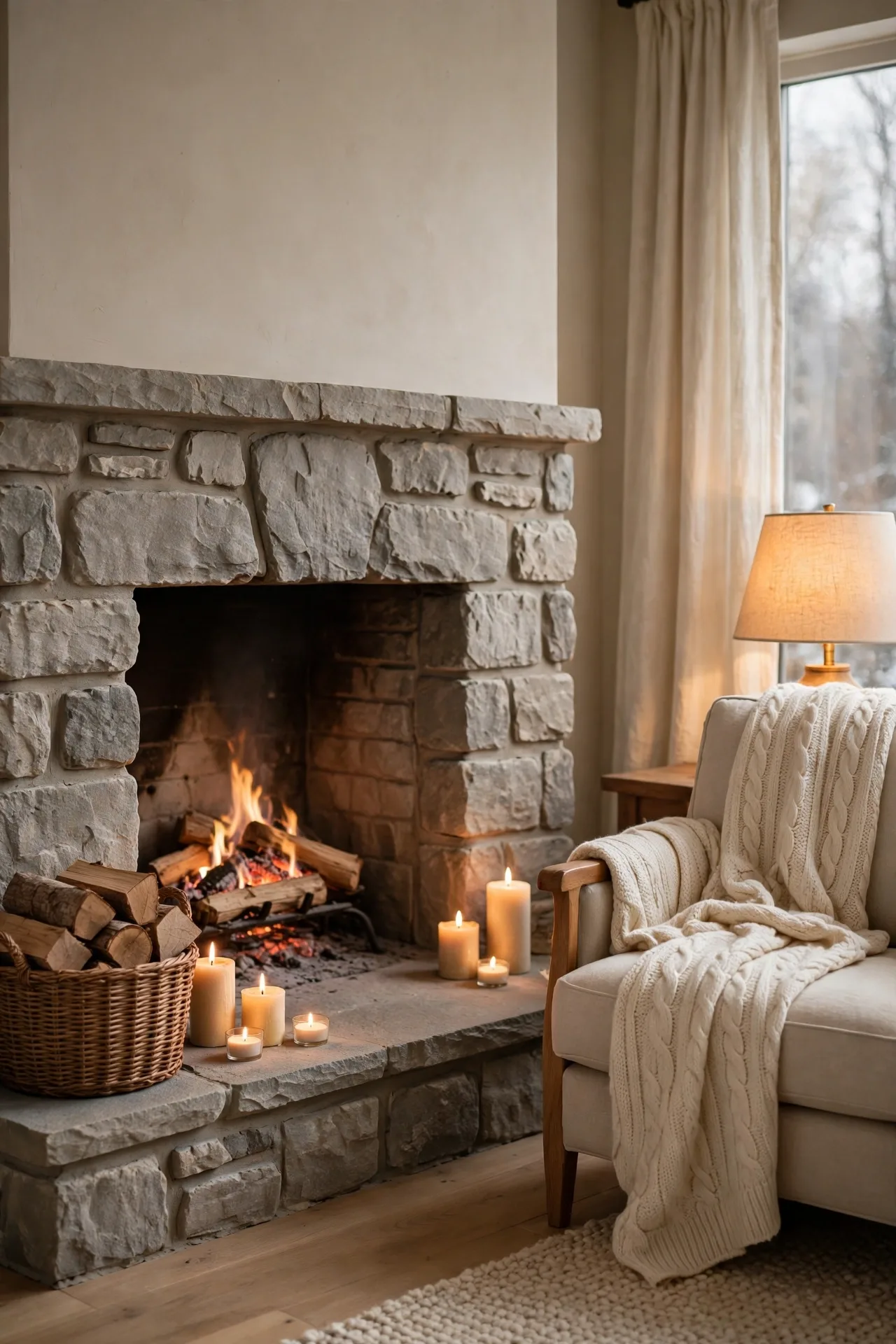
Soft chunky knit throws draped over the fireside chair invite people to sit down and stay a while. Cream, oatmeal and warm grey knits echo the colours of stone and ash, and the heavy texture makes the whole corner feel slower and calmer.
Drape the throw over one arm or the back of the chair rather than folding it away in a cupboard, because visible softness does the styling work. Keep the fabric well clear of the hearth and flames, since textiles and open fire must never meet.
Anyone who reads, knits or naps beside the fire suits a throw within reach, because winter evenings stretch longer when shoulders stay warm. Guests also read the throw as an invitation, and the best chair stops feeling reserved for one person only.
Fold a second smaller throw into the log basket or onto a stool so two people can share the warmth without negotiation. Matching tones rather than matching patterns keep the corner calm, and both throws wash easily when the season ends.
Leaving throws piled on the hearth itself is the mistake that risks scorching and fills the fabric with ash and dust. Keep textiles on chairs and stools at a safe distance, and shake them outdoors weekly to keep the corner fresh.
Reading Corner Beside the Fire

One good chair, a small table and a lamp turn the space beside the fireplace into a reading corner that gets used every single day. Warmth from the fire, light on the page and a drink within reach create a small daily luxury.
Place the chair at an angle to the fire rather than squarely in front, because angled seating catches warmth without roasting one side. Leave walking space behind the chair and keep the table on the side away from the flames for safety.
Readers of every age suit a fireside corner, from children with picture books after tea to grandparents with the morning paper. Households short on space gain the most, since one well planned corner replaces a whole separate reading room.
Keep a small stack of current books on the table and return finished ones to the shelves weekly, because a tidy pile invites reading while a teetering tower invites ignoring. One bookmark and reading glasses living on the table complete the setup.
Cramming the corner with extra cushions, side tables and ornaments is the mistake that makes it feel like storage instead of a retreat. Keep the elements few and useful, and the chair stays the first seat everyone chooses on cold evenings.
Wool Rug Layered in Front of the Hearth
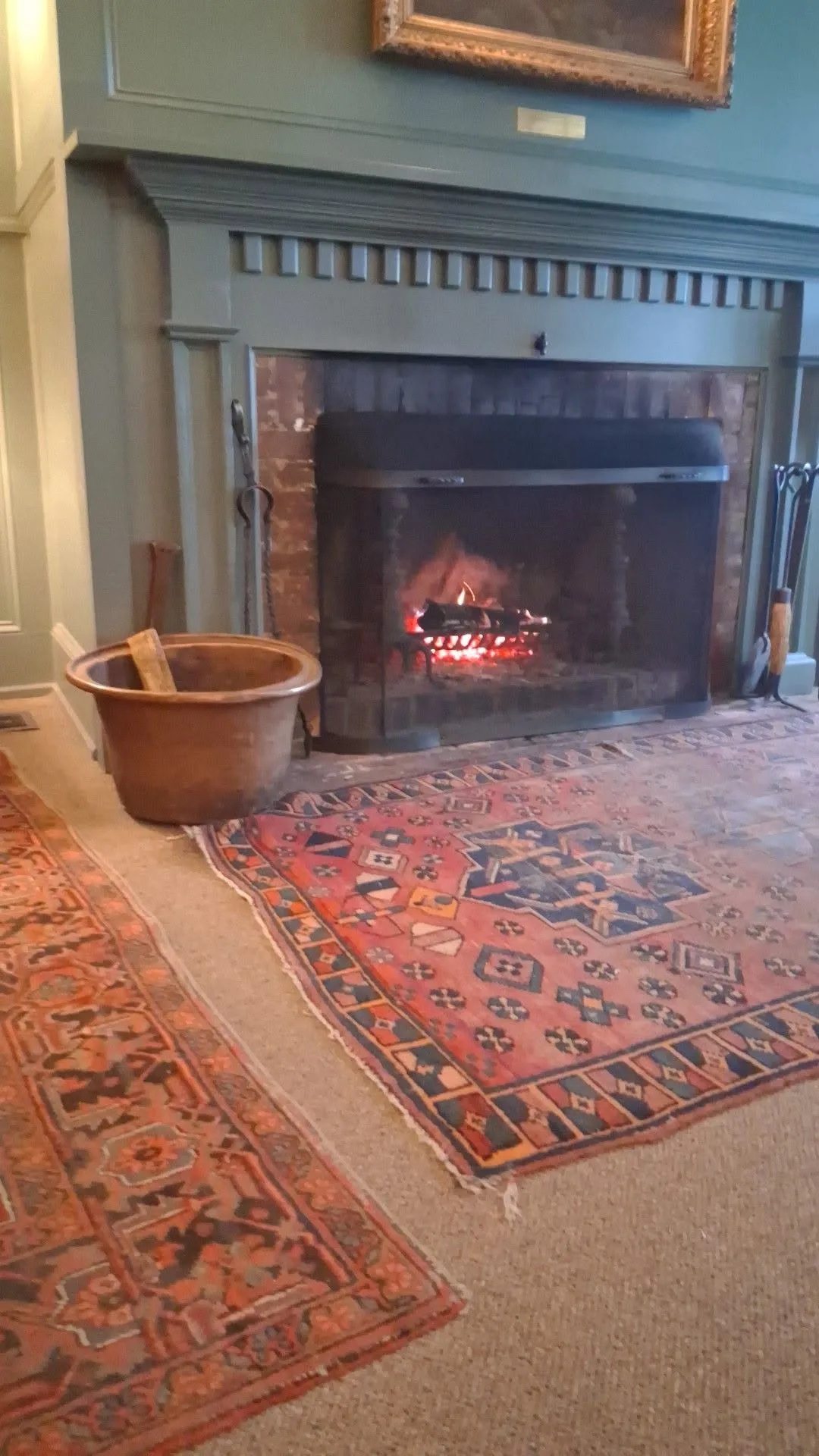
Thick wool rugs layered in front of the hearth soften hard floors and give bare feet a warm landing on cold mornings. Natural fibres handle the dust and ash of a fireside better than pale synthetics, and deep tones hide winter marks kindly.
Lay the rug so its edge sits a safe distance from the fire opening, with room for the guard and the ash bucket to stand on bare hearth. Wool resists sparks better than most fibres, though no rug belongs within reach of rolling logs.
Homes with stone, tile or wooden floors suit a hearth rug best, because the contrast between cold floor and warm rug defines the fireside zone. Open plan rooms also gain, since the rug quietly marks where the sitting area begins and ends.
Layer a smaller patterned rug over a larger plain one when the main rug looks tired, because layering hides worn patches and adds depth for very little money. Charity shops and spare bedrooms often hold the second rug already, free for the borrowing.
Choosing a pale fluffy rug for a working fireplace is the mistake that guarantees a grey and singed disappointment by midwinter. Pick dense wool in forgiving tones, shake it outdoors often and let the hearth end take the wear it was made for.
Candle Cluster on the Hearth Edge
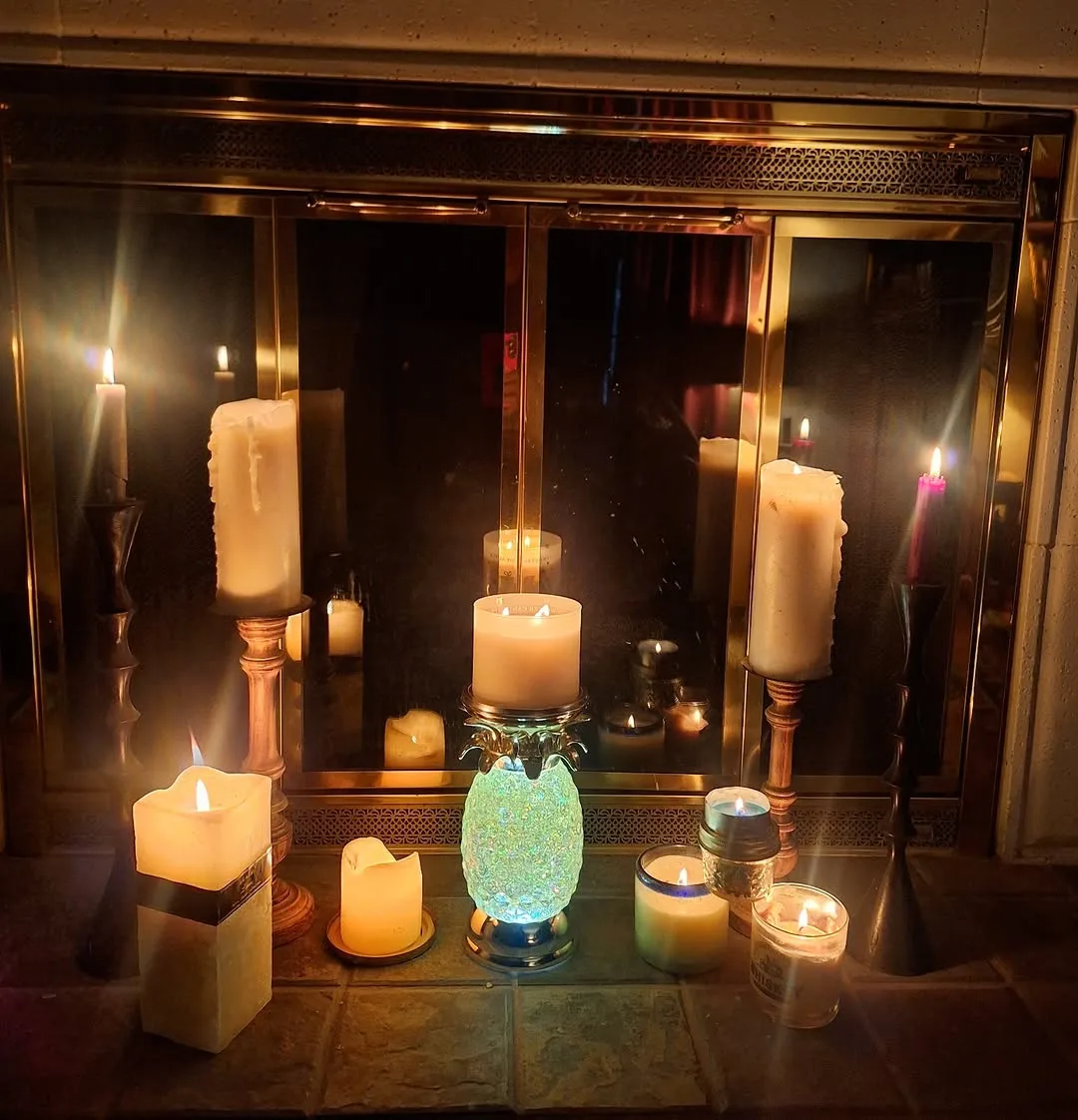
Grouped candles along the hearth edge bring winter fireplace decor a second layer of light on evenings when the fire burns low or stays unlit. Flames at floor level reflect on stone and tile, and the whole fireplace gains depth after dark.
Set candles in sturdy holders on the side of the hearth away from the fire opening, grouped in threes with varied heights. Keep them well away from logs, throws and paper, and choose wide stable bases that cannot tip when brushed past.
Couples who eat beside the fire or share a quiet drink after supper suit hearth candles well, because low light flatters the room and slows the evening down. Hosts also gain an easy glow for guests without lighting a full fire on mild nights.
Vary the holders rather than the candles, mixing glass, iron and ceramic around plain cream pillars for a collected look. Plain candles cost less than scented ones, and unscented flames suit a room where food and drink are part of the evening.
Crowding candles along the entire hearth is the mistake that blocks sweeping and invites accidents when the fire is lit. Keep the cluster small and to one side, light candles only when the fire is out or well guarded and blow them out before bed.
Low Bookshelf Flanking the Chimney Breast
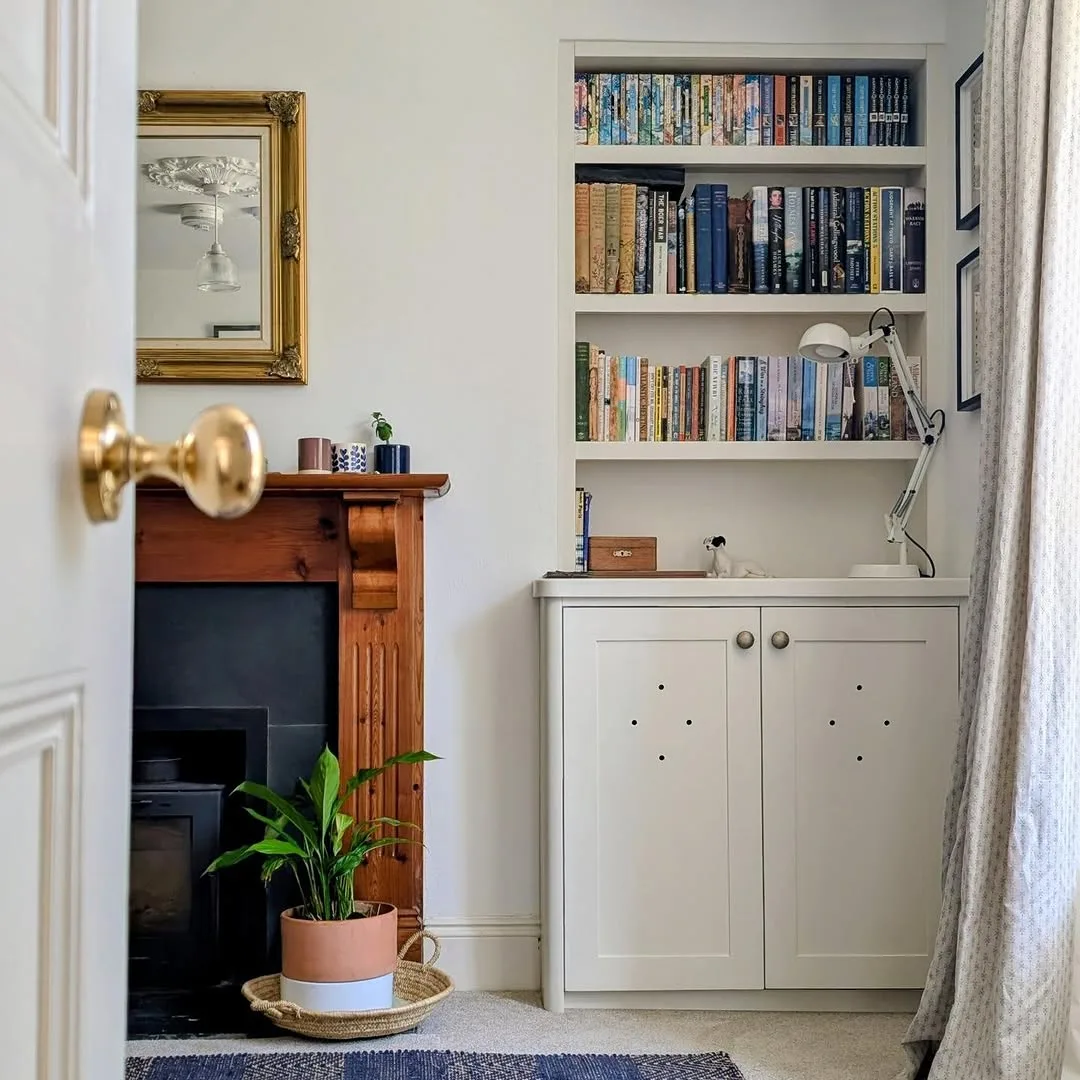
Books stacked on a low shelf beside the chimney breast fill an awkward alcove with colour and quiet character. Rows of well loved spines suit the slower pace of fireside evenings, and the shelf gives the fireplace wall a balanced and finished feel.
Fill the lower shelves with heavier books and keep the top surface clear for a lamp, a plant or a small stack of current reading. Leave breathing room on each shelf, because tightly packed rows look like storage rather than a display.
Keen readers suit flanking shelves best, though any household with books in boxes gains a home for them beside the fire. Families also enjoy swapping one shelf to board games and puzzles, which suit long winter evenings just as well as reading.
Leave one shelf partly empty with a small framed picture or a bowl resting on its side, because gaps rest the eye and make the full shelves look richer. Restraint on one shelf lifts the whole arrangement more than extra ornaments would.
Packing shelves right up to the fireplace opening is the mistake that exposes books to heat, sparks and ash dust. Keep the shelf a clear distance from the firebox, dust the spines weekly and move paperbacks away on nights with a roaring fire.
Pair of Armchairs Angled Toward the Flames
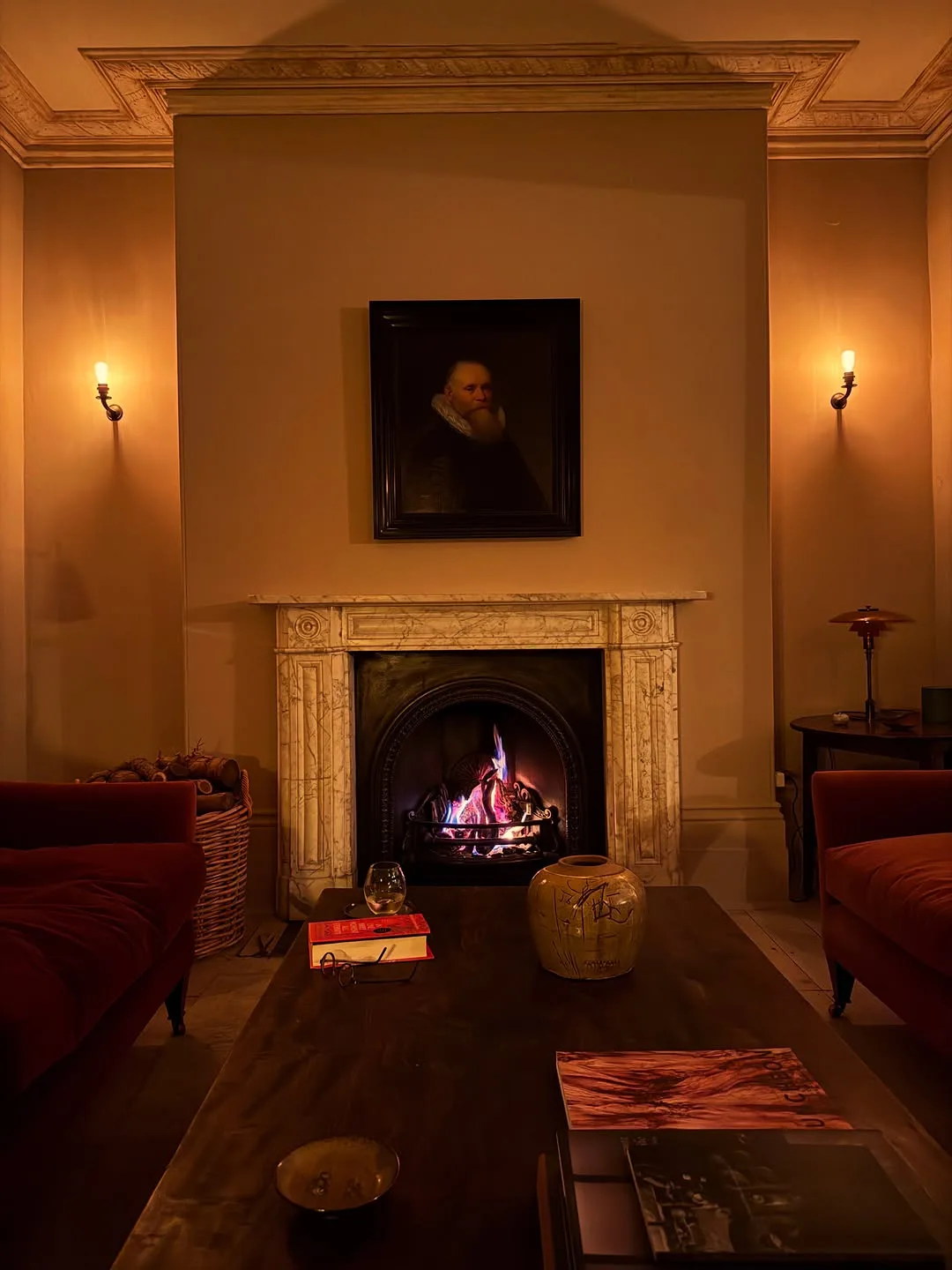
Two armchairs angled toward the flames make the fireplace a place for conversation rather than a backdrop behind the television. Facing seats invite long talks, card games and shared drinks, and the arrangement gives the room a natural centre all winter.
Angle each chair inward at roughly forty five degrees, close enough to share the warmth and far enough back for comfort and safety. Test both seats with the fire lit, because heat that feels gentle for ten minutes can overwhelm after an hour.
Hosts who entertain through the winter suit paired chairs well, because guests settle into a ready made conversation spot without moving furniture. Couples also claim the chairs nightly, and the pair quickly becomes the most contested seats in the house.
Add one shared footstool or a small table between the chairs to hold drinks, books and the remote control nobody admits to using. Shared pieces tie the pair together, and a single lamp behind one chair serves both readers kindly.
Pushing armchairs as close to the hearth as they will go is the mistake that scorches fabric and frazzles guests. Keep a clear and comfortable distance, respect the guard line and let people pull a footstool closer instead of the whole chair.
Mantel Kept Simple With Greenery and Candles
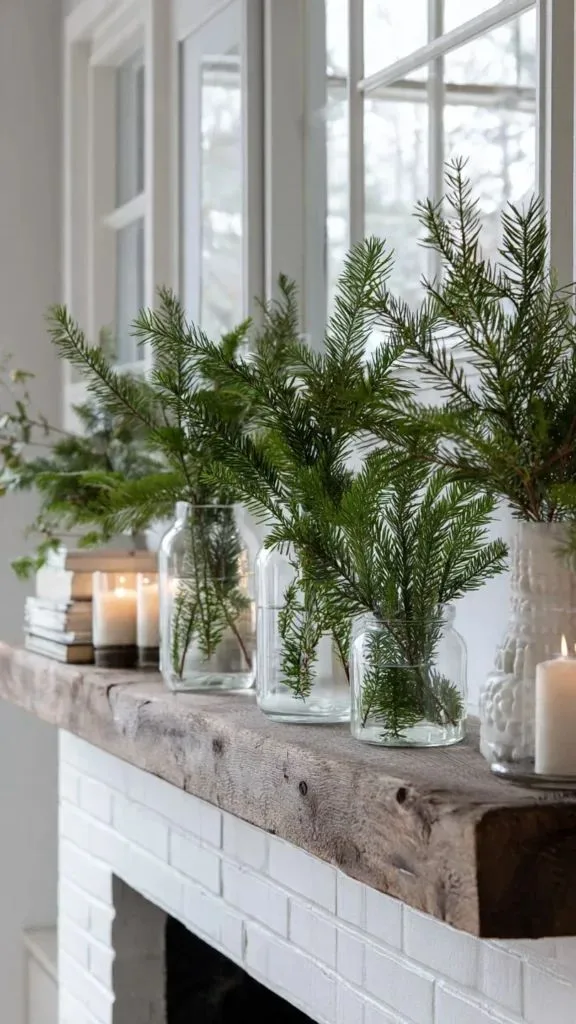
Plain greenery and a few candles keep the mantel calm while the wider fireplace area does the heavy styling work. Eucalyptus, ivy or bare branches in a jug bring winter life without baubles, ribbons or any festive colour at all.
Keep the arrangement low and loose, with greenery laid along one side and candles grouped at the other rather than a stiff row across the whole shelf. Leave the middle breathing space empty, because restraint makes the ends look deliberate and elegant.
Busy households suit a simple mantel best, because greenery lasts for weeks and asks only for fresh water and the odd fallen leaf removed. Anyone tired of seasonal clutter also gains a mantel that suits January as happily as December.
Try bare twisted branches in a tall jug when greenery feels too soft, because sculptural twigs suit stone fireplaces and cost nothing from the garden. One branch arrangement can last the whole winter and still look right when spring arrives.
Filling every centimetre of the mantel is the mistake that makes the whole fireplace feel top heavy and fussy. Edit down to two or three elements, step back and remove one more, and the shelf will finally look as calm as intended.
Warm Lamp Light Around the Fireplace Corner
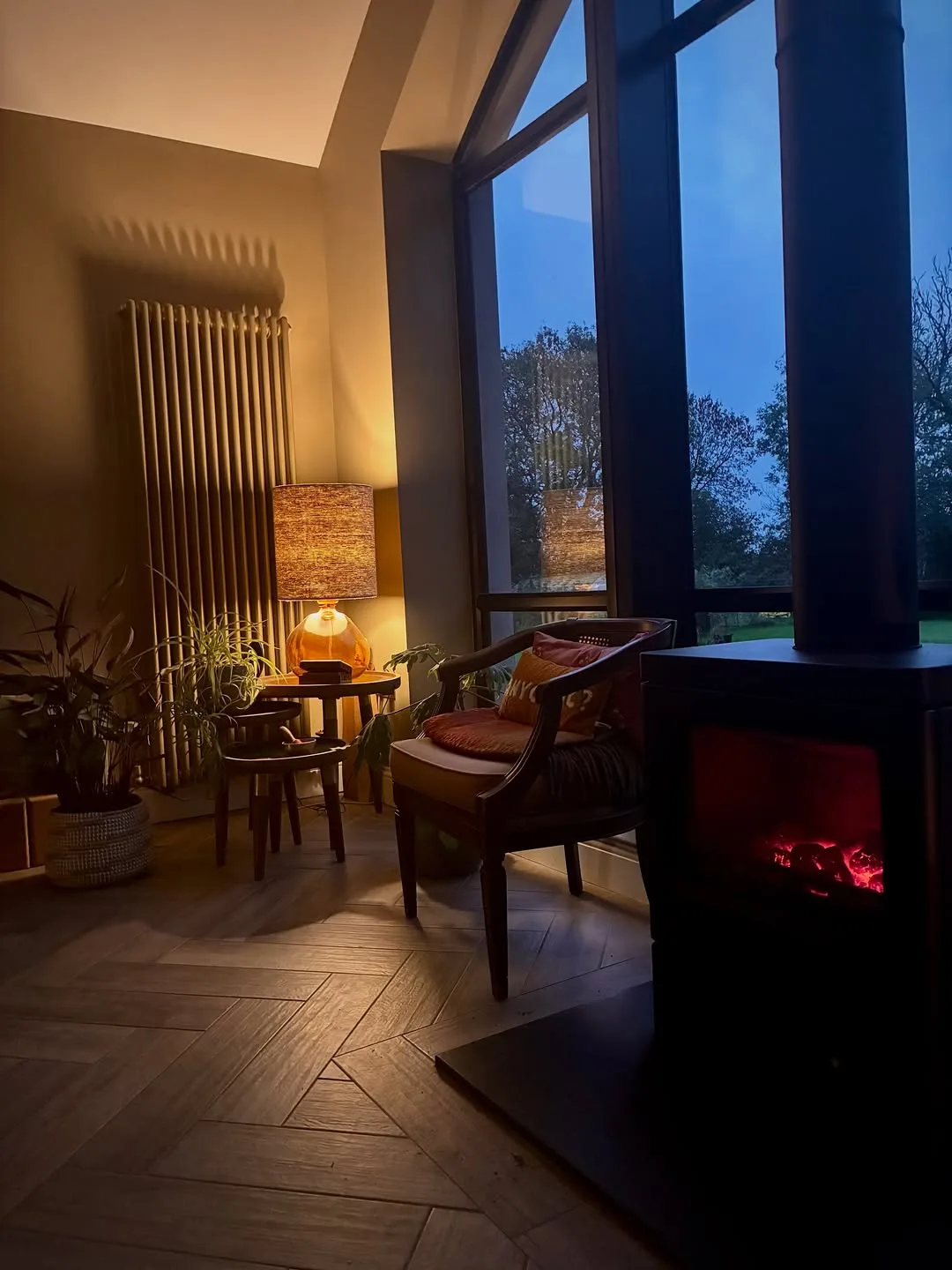
Lamplight completes the fireplace corner on evenings when flames alone leave the edges of the room in gloom. Warm bulbs at chair height flatter faces, soften shadows on stone and brick and make the fireside feel enclosed and private.
Position one lamp beside the main chair and consider a second small lamp on the bookshelf or side table to balance the glow. Avoid bright ceiling lights after dark, because overhead glare flattens the firelight that everyone gathered to enjoy.
Rooms where the fireplace sits in a corner or alcove suit layered lamplight best, because side light reaches where firelight fades. Dark painted rooms also gain, since lamps pick out texture in brick and wood that daylight never shows.
Warm white bulbs with a soft shade give the kindest light, and a dimmer or a low wattage bulb keeps the level gentle. Test the corner after dark and adjust until faces look relaxed rather than lit for a photograph.
Relying on the fire as the only light source is the mistake that leaves readers squinting and guests tripping over the hearth rug. Flames flicker and fade, so steady lamplight must carry the practical light while the fire carries the mood.
Natural Stone and Wood Hearth Styling
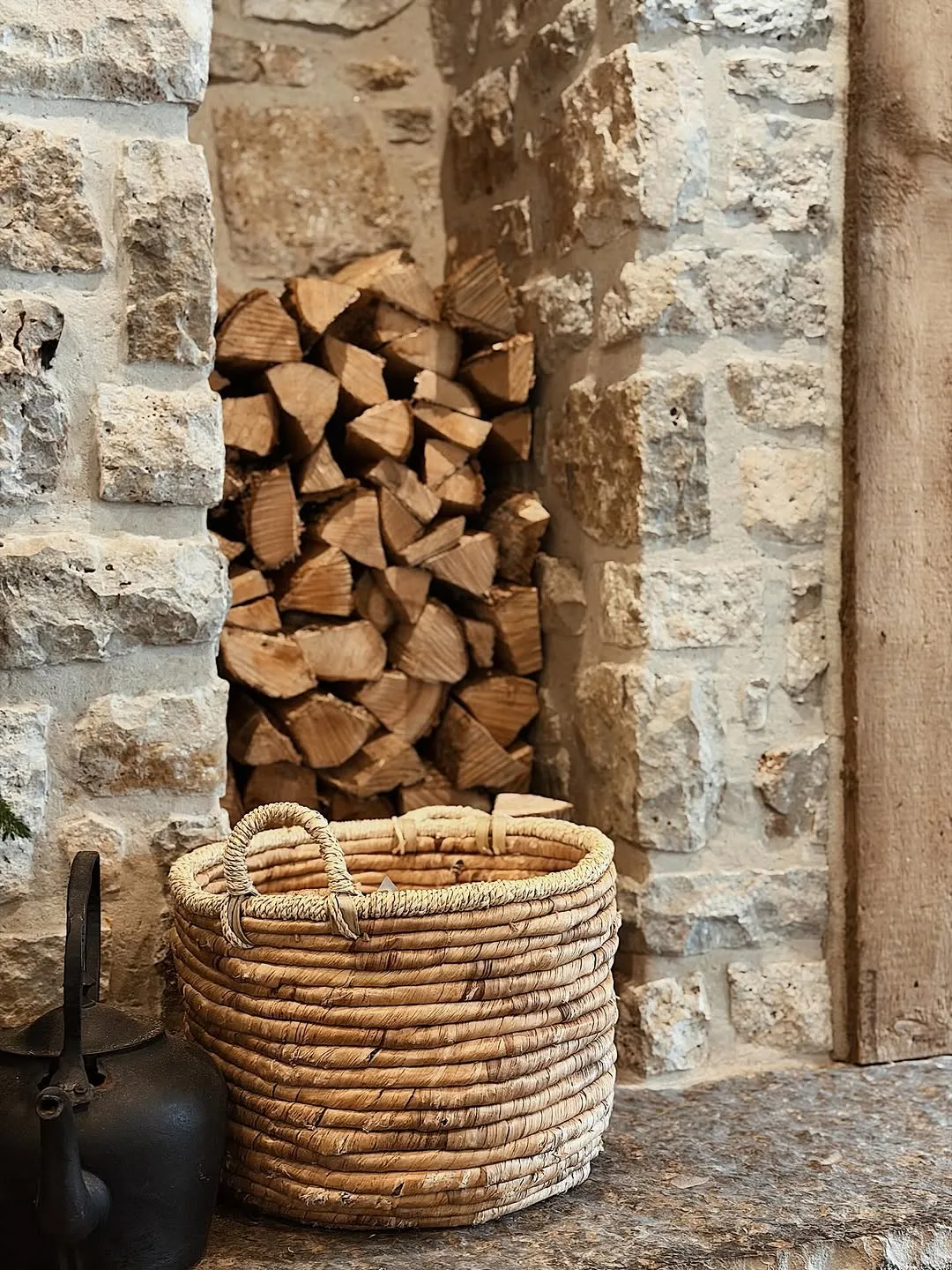
Stone, wood and iron in their natural finishes give a fireplace honest character that needs no seasonal decoration at all. Rough hearth stone, a worn wooden beam and blackened metal carry the whole look, and every mark tells a story of real use.
Mix textures rather than colours, pairing smooth slate with rough bark, brushed iron with soft wool and glazed pottery with raw wood. Limited colours keep the corner calm while the textures provide all the interest the eye could want.
Anyone drawn to simple, natural homes suits this approach, because the styling grows from the building itself rather than from bought themes. Older houses shine here, though one beam, one stone slab and honest materials can ground a newer room too.
Bring in one handmade or natural object each month of winter, such as a carved bowl, a basket of cones or a woollen cushion cover. Slow additions keep the corner personal and stop the styling from ever feeling bought in one afternoon.
Scrubbing every soot mark and polishing every surface is the mistake that makes a working fireplace look like a showroom nobody uses. Clean what hygiene demands, leave the honest patina of smoke and ash and let the fireplace show its real life.
Common Mistakes
Crowding every surface with ornaments leaves the fire itself fighting for attention among candles, frames, plants and pottery. Winter styling works through restraint, so choose a few strong elements for the hearth area and store the rest until spring.
Ignoring safe clearances undermines even the prettiest winter fireplace decor, because throws, rugs, paper and candles all need real distance from flames and sparks. Style around the guard line, keep the hearth working space clear and beauty never has to compete with safety.
Buying a whole matching set of fireplace accessories in one afternoon creates a corner that looks staged rather than lived in. Pieces gathered slowly, some new, some inherited and some found, give the fireside a warmth that no single shopping trip can copy.
Letting ash, soot and bark dust build up quietly dulls every other effort, because a dirty hearth makes even good styling look neglected. Five minutes with the brush after each fire keeps stone, tools and baskets looking cared for all season.
Matching every textile and finish to one strict scheme flattens the corner into something forgettable by the middle of winter. Small clashes of tone and texture, an old chair beside a new rug, keep the fireside feeling human and genuinely welcoming.
Budget Friendly Winter Fireplace Decor From What You Own
Logs, branches and pinecones gathered from gardens and winter walks decorate the hearth for nothing at all. Nature provides the most convincing winter texture, and a basket filled on a Sunday walk looks better than most shop bought displays costing real money.
Secondhand shops regularly hold brass tools, iron guards, baskets and sturdy candle holders at a fraction of new prices. Fireside pieces were built to last generations, so older examples often outclass modern versions while costing far less money.
Candles already waiting in cupboards can carry winter fireplace decor through the whole season when they are grouped with intention. Plain pillars and leftover ends burn just as warmly as new scented jars, and holders borrowed from the dining table complete the display for free.
Moving furniture costs nothing and changes the fireplace corner more than any purchase could manage. Pulling chairs closer, swapping a rug from another room or clearing a cluttered alcove refreshes the whole area in one afternoon without spending a single coin.
One modest purchase made carefully beats a trolley of cheap ornaments every time, whether that purchase is a sound fireguard, a warm rug or a proper log basket. Spend where safety and daily use demand quality, and let everything else arrive slowly and cheaply.
Tips for Styling the Fireplace Area All Winter
Clean the firebox, hearth and chimney breast before styling anything, because fresh decoration on a dirty base never looks finished. Swept stone and a clear ash bed make every log, candle and basket placed afterwards look twice as deliberate.
Test every seat and sightline with the fire lit before guests arrive, since heat, smoke behaviour and light levels only reveal themselves in real conditions. Ten minutes of checking saves an evening of shuffling chairs and apologising for smoky corners.
Rotate one or two elements each month, swapping a throw, moving the candle cluster or restyling the firebox display as winter deepens. Small changes keep the corner feeling alive from the first cold night through to the last frost.
Leave the tools, guard and ash bucket looking as cared for as the decorative pieces, because working items sit in full view all season. Clean tools on a tidy stand read as part of the styling rather than as clutter.
Group related items together instead of scattering single ornaments across the whole fireplace wall, since clusters read as deliberate design while scattered pieces read as leftovers. Baskets together, candles together and books together give the eye clear places to rest.
Check the chimney and flue are swept and sound before the heavy burning season, and keep a working smoke alarm near the room as plain common sense. Safe fires burn better, draw cleaner and let everyone relax into the styling without worry.
Frequently Asked Questions
How do I decorate around a fireplace I use every day?
Daily use calls for styling that lives at the edges, with logs, baskets and tools arranged for work first and looks second. Keep the hearth centre clear, choose displays that move in seconds and let the fire itself provide most of the decoration.
What can I put in a fireplace that is never used?
Empty fireboxes welcome candle clusters, a neat stack of logs, a basket of pinecones or a large plant in a sturdy pot. Clean the interior first, line the base if the brick crumbles and the dark opening becomes a display instead of a gap.
How far should furniture sit from the fire?
Chairs and sofas should sit far enough back that fabrics stay cool to the touch and people can pass comfortably between seat and guard. Follow the guard maker guidance for clearances, and never let throws, cushions or rugs creep within reach of sparks.
Which colours suit a winter fireplace without looking festive?
Neutral winter palettes of cream, oatmeal, warm grey, natural wood and black iron suit fireplaces that must look right from November to March. Stone and brick provide the colour, while textiles in soft earthy tones add warmth without a hint of celebration.
How do I style a very small fireplace?
Small fireplaces respond best to fewer and larger pieces, such as one generous log basket, one strong candle group and a single chair pulled close. Clear the hearth completely first, then add pieces back one at a time until the corner feels balanced.
How often should I refresh the styling?
Most fireplace corners stay fresh with one small change each month plus weekly tidying of ash, dust and spent candles. Deep restyling belongs to the start of the season, when a clean base and a clear plan set up months of easy evenings.
More Ideas to Explore
The fireside connects with the rest of a calm winter home in a few natural ways. Focused winter mantel decor ideas take the shelf above the fire further, while festive christmas mantel decor ideas cover the holiday weeks. Soft light spreads the mood with gentle winter candle decor ideas for shelves and tables, and restful winter bedroom decor ideas carry the same cosy feeling into the room where the day ends.
Conclusion
Winter asks little of a fireplace beyond cleanliness, warmth and a few honest materials arranged with care. Logs ready, tools standing by, soft seats pulled close and gentle light at the edges already create the corner everyone in the house migrates toward.
Pick the ideas that suit your fire, whether that means a candle filled firebox in a flat or a full log store in a farmhouse kitchen. Real homes differ, and styling that respects daily use always outlasts styling copied from a photograph.
Keep the mantel quiet, the hearth clear and the seating comfortable, and let texture do the decorating work through wood, wool, stone and iron. Small habits, swept ash, stacked logs and one lit candle, hold the look together far better than spending.
Gather the people you love into the warmest corner of the house and let simple winter fireplace decor do the rest without fuss or expense. Evenings built around a cared for fire become the memories that carry a household through the coldest weeks of the year. Calm winter fireplace decor like this keeps the hearth feeling welcoming long after the fire dies down.