Winter Entryway Decor Ideas
January brings a quieter kind of welcome, and the entrance sets the tone for the whole home. Once the bright decorations come down, the hallway can feel bare and a little cold, especially on dark evenings when everyone arrives home in heavy coats and muddy boots.
Once you see the space clearly, simple winter entryway decor ideas can fill the gap with warmth instead of clutter. Evergreen, natural wood, soft wool and gentle candlelight suit the season far better than glitter, and every piece can earn its place by being useful as well as pretty.
Boots need a dry corner, scarves need a hook and keys need a home, or the entrance turns into a daily scramble. Styling that solves those small problems first will always look better than styling that only decorates, because order reads as calm the moment the door opens.
What Are the Best Winter Entryway Decor Ideas After Christmas?
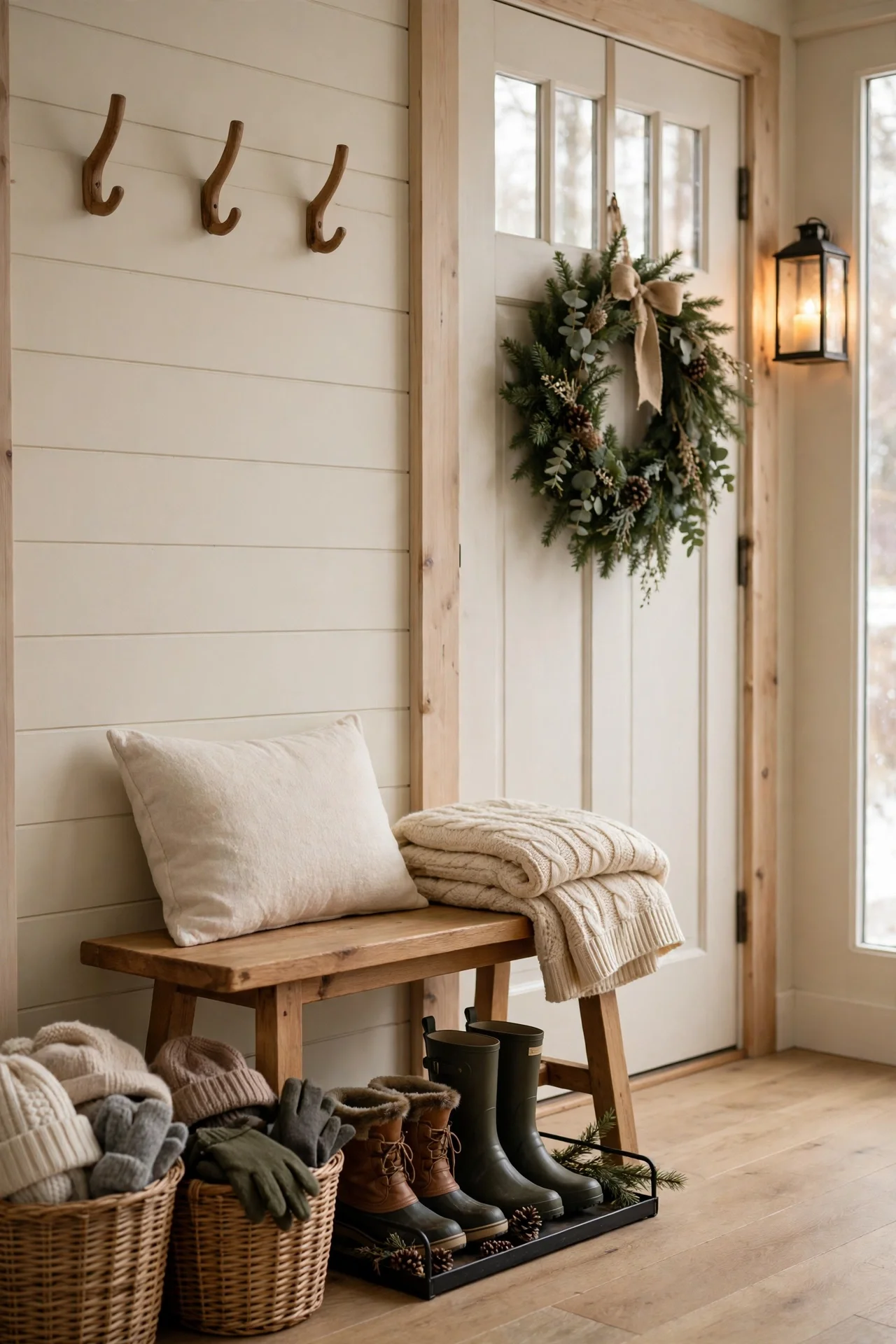
Short answer first, the calmest winter entryway decor ideas combine three things in balance, which are storage, softness and light. Storage hides the clutter of cold weather, softness makes the space feel kind, and light lifts the gloom of early darkness for everyone coming home.
Storage does the heavy lifting, so begin with baskets, hooks, a boot tray and a small cabinet or bench. Giving every glove, hat and pair of boots a set place stops piles forming on the floor, keeps the doorway clear and makes busy mornings run far more smoothly.
Warmth comes next through texture and colour rather than through more objects on the walls. Cream, warm white, natural wood, deep green and soft grey all feel wintry without shouting, and layered textiles in those tones make even a narrow hall feel sheltered and welcoming.
Woven Basket for Hats and Gloves
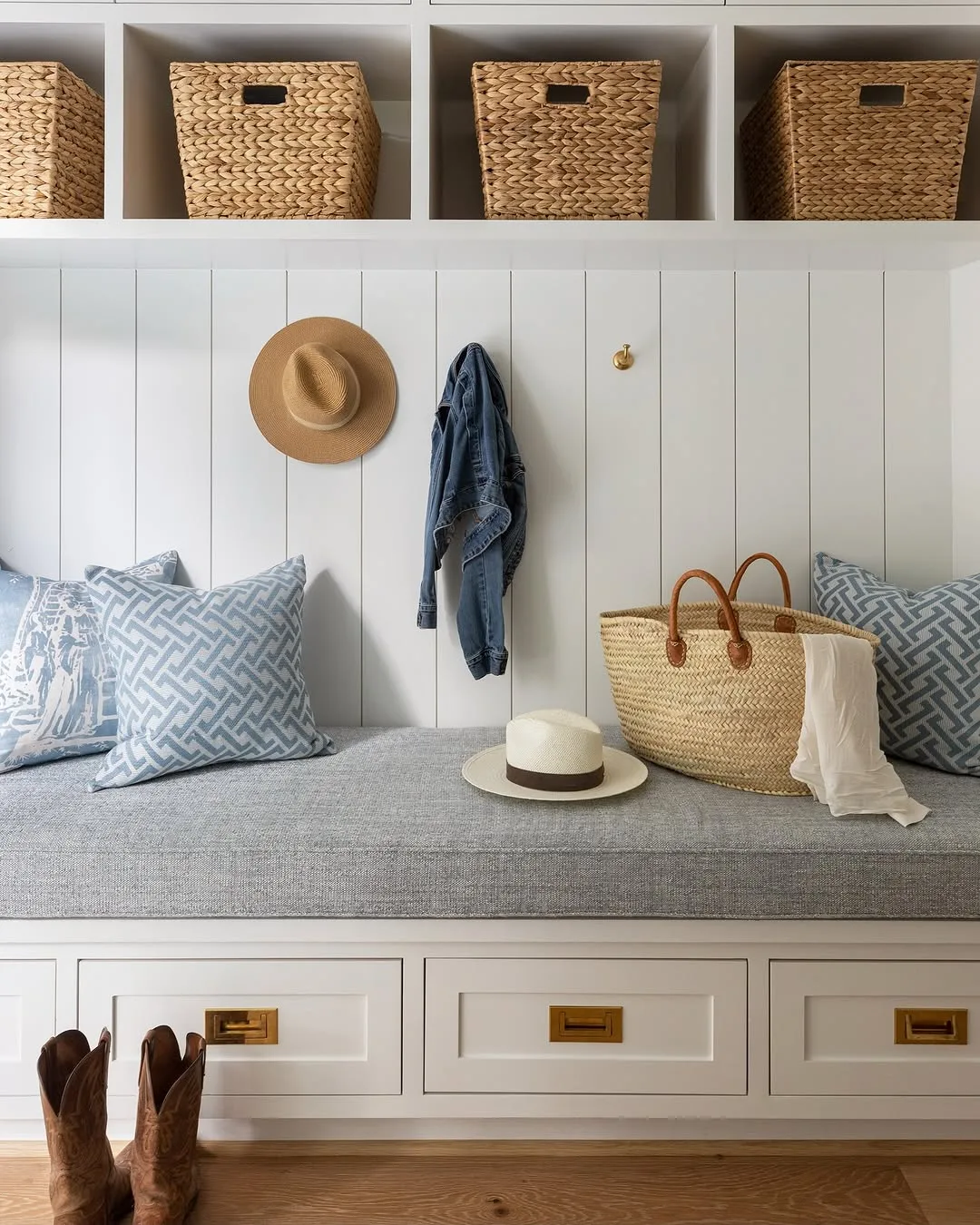
Cold weather brings a small crowd of hats, gloves and scarves that all land somewhere near the door. One generous woven basket gathers the whole crowd in a single spot, and the natural fibres add texture and warmth that suit the season perfectly.
Place the basket on the floor beside the bench or tuck it under a console table where hands can reach it without bending far. Roll each scarf loosely and stand gloves in pairs, and the contents stay visible and quick to grab in the morning rush.
Families with school age children gain the most, because small hands can toss their own things in without help. Homes with dogs also benefit, since leads, towels and a spare ball can share the basket and stay off the floor instead of trailing across the hall.
Try giving each person a small inner pouch or a rolled cuff in a different colour inside the shared basket. Morning searches shrink to seconds, arguments over missing gloves fade, and the basket stays tidy for weeks instead of turning into a lucky dip.
Overfilling is the usual mistake, because a basket stuffed to the brim hides everything and looks messy within days. Edit the contents weekly, move spare pairs to a bedroom drawer, and keep only the pieces everyone wears most often during the coldest weeks.
Wooden Bench With a Cosy Cushion
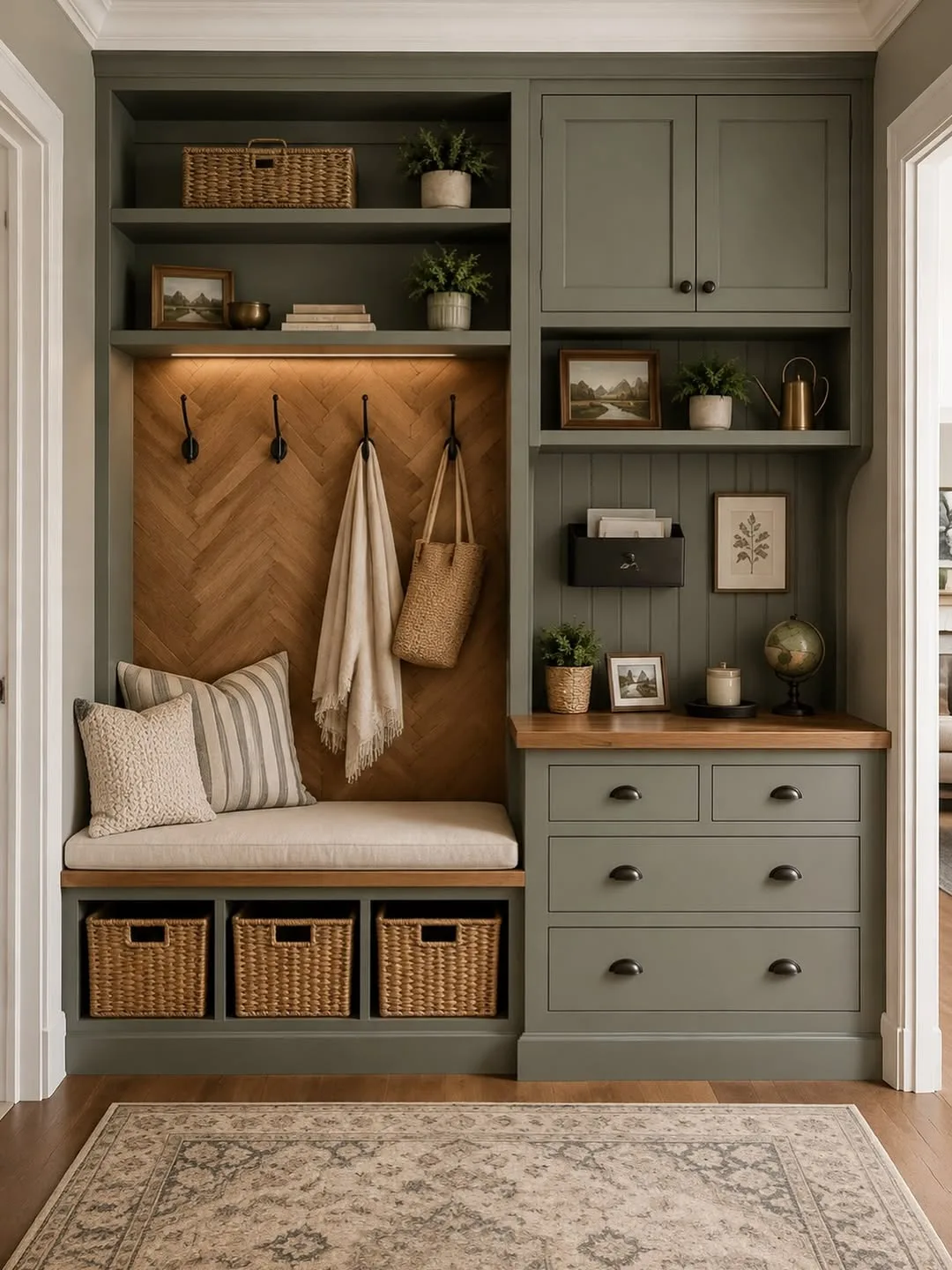
Seating changes an entryway from a passage into a small room with a purpose. One sturdy wooden bench gives everyone a place to sit while pulling boots on or off, and a thick cushion softens the wood and keeps the seat comfortable through the cold months.
Set the bench along the longest clear wall and leave walking space in front of it for bags and prams. Choose a cushion cover in a washable wool look fabric, because winter brings mud, damp hems and the odd splash of slush through the door.
Hallways in older houses suit a bench especially well, since the proportions welcome a solid piece of furniture. Narrow modern halls can still fit a slim bench, and the seat doubles as a handy shelf for parcels, post and bags during the day.
Choose cushion colours from the rug and the door wreath so the corner feels planned rather than gathered by chance. One folded throw over the bench back adds a second layer of softness and waits ready for chilly shoulders on cold evenings.
Leaving the bench to collect clutter is the mistake that spoils it, because coats, bags and unopened post soon bury the cushion completely. Clear the seat every evening as part of the closing routine, and the bench stays inviting for the next morning.
Boot Tray With River Stones
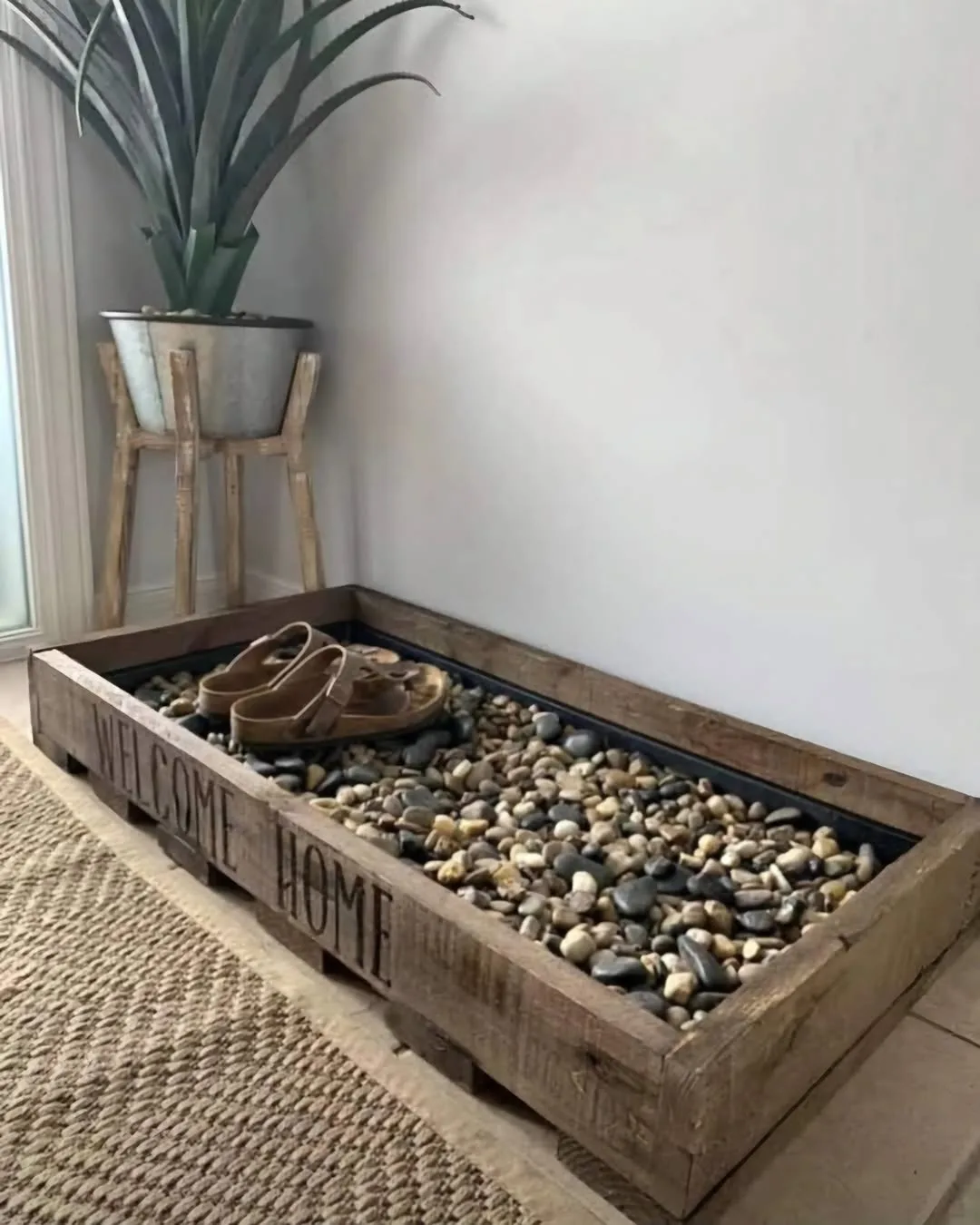
Wet boots carry meltwater, grit and mud across the floor all winter, and a proper tray catches the mess right at the door. Smooth river stones inside the tray lift boots above the puddles so soles dry faster, smell less and last longer.
Fill a low metal or sturdy plastic tray with one even layer of washed stones from a garden centre. Stand boots in pairs on top, heaviest pairs near the wall, and shake loose grit into the tray rather than across the hall floor.
Homes on country lanes and busy town streets both benefit, because both track in plenty of winter dirt every single day. Walkers, dog owners and anyone with a school run will notice cleaner floors within the first week of using one.
Rinse the stones under the tap once a month and let the tray dry fully before the boots go back. Small habits like this keep winter entryway decor ideas working hard, because the practical pieces stay clean enough to look good as well as useful.
Skipping the stones and using a flat tray alone is the common slip, since boots then sit in their own meltwater all day. Soggy soles, watermarks on leather and a sour smell follow quickly, and the whole tray starts to look neglected.
Evergreen Wreath on the Inside Door
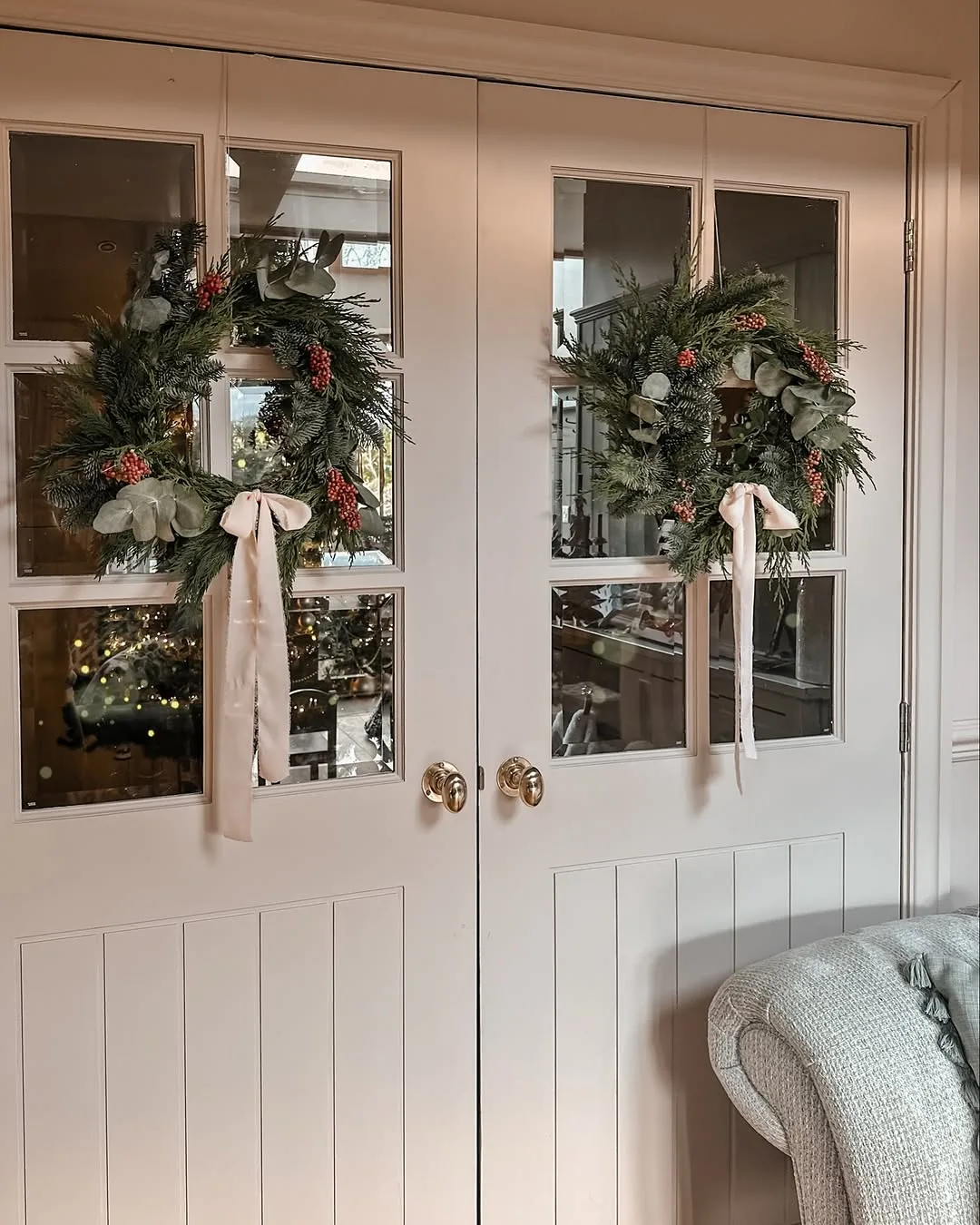
Greenery belongs indoors through the whole of winter, not only during the festive weeks at the end of the year. One plain evergreen wreath on the inside of the front door greets you on the way in, and the deep green reads calm against painted wood.
Hang the wreath from a simple ribbon loop over the top of the door or from a small hook fixed at eye level. Keep the shape full but plain, with a few pinecones or dried berries worked in if you like a gentle detail.
Doors with panels suit a wreath best, because the round shape sits neatly inside the moulding and looks made to measure. Glazed doors work too, since the wreath frames the glass and softens the view of a grey street outside.
Fresh branches from the garden cost nothing and can replace a tired wreath in minutes whenever it fades. Fir, pine, eucalyptus and ivy all hold their colour indoors for weeks, and a quick mist of water keeps the leaves from drying too early.
Choosing a wreath covered in baubles and glitter is the mistake here, because the entrance then looks like the decorations were simply forgotten. Plain greenery with natural texture keeps the mood wintry and restful instead of festive and busy.
Basket of Folded Throws by the Door
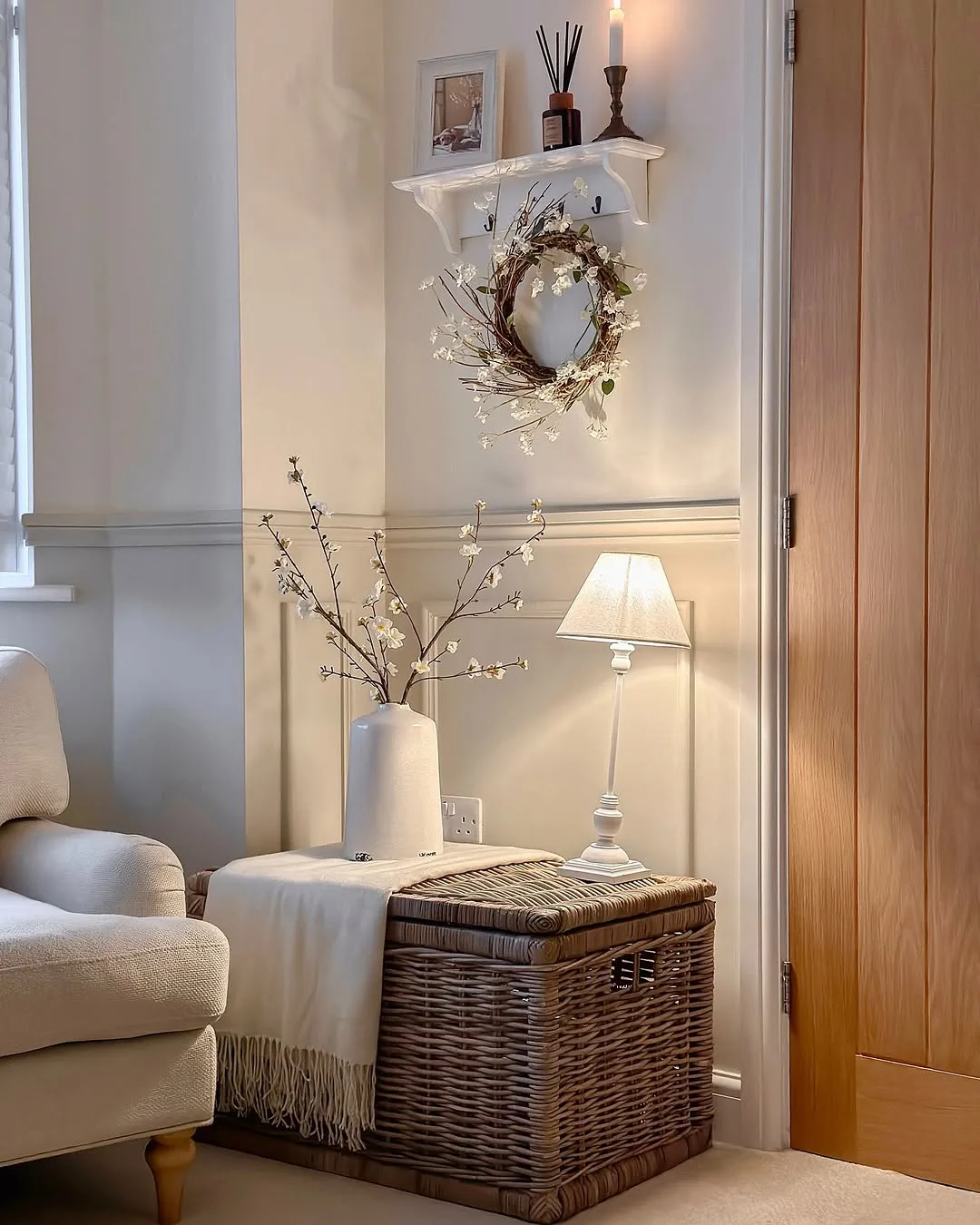
Softness near the door changes how a home feels in the first three seconds of walking in from the cold. One basket of folded throws in cream, oatmeal and soft grey promises warmth before anyone even reaches the living room sofa.
Roll each throw into a loose sausage shape and stand the rolls upright so the colours show like a small display. Wool and fleece both work well, and two or three throws are plenty for most households and the guests who visit them.
Anyone who feels the cold will love reaching for a throw on the way to an armchair or a desk. Homes with draughty doors gain twice, because a throw over knees solves in seconds what extra heating solves slowly and at far more cost.
Wash the throws on a gentle cycle every few weeks through winter, since door baskets collect dust and outdoor smells over time. Shaking them outside on a dry morning between washes keeps the wool fresh and the basket pleasant to open.
Piling unfolded blankets into the basket is the slip to avoid, because the heap looks untidy and the throws tangle together in a knot. Folding or rolling takes a minute, and the neat shapes turn plain storage into part of the styling.
Mirror With a Frosted Winter Swag
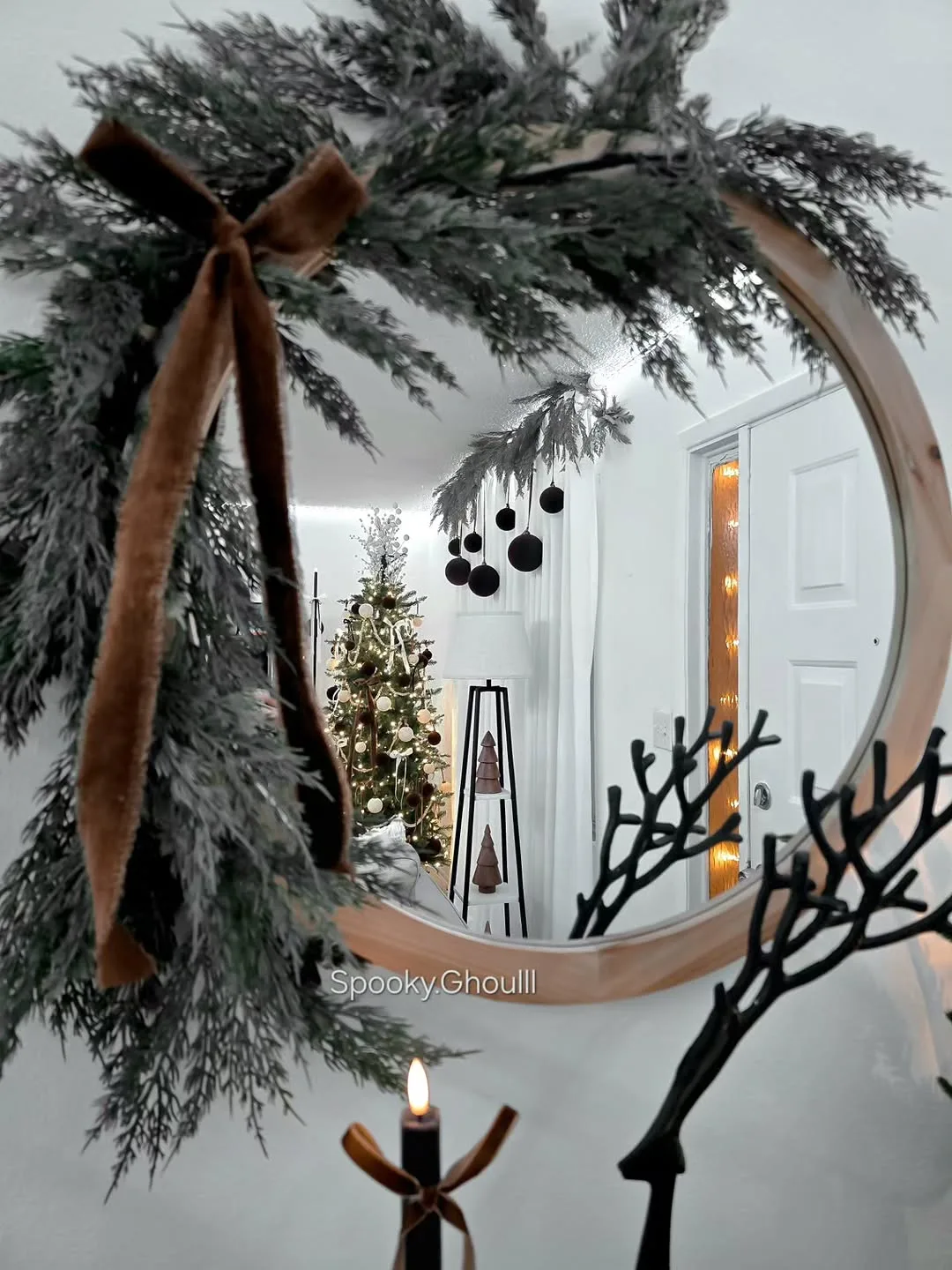
Light is scarce in winter, and a mirror near the door doubles whatever daylight and lamplight the hall receives. One generous mirror also gives everyone a final check of hats, scarves and collars before stepping out into the cold morning air.
Position the mirror opposite a window or beside the door where it catches light from the porch or the hall lamp. Drape a small swag of frosted greenery along the top edge only, so the glass itself stays clear and useful every day.
Small and narrow entryways gain the most, because a mirror makes tight walls feel wider and brighter without taking any floor space. Dark halls with no window benefit too, since the glass bounces lamplight into corners that usually stay gloomy all day.
Dust the frame and polish the glass weekly, because winter light shows every smudge and fingerprint near the door. Clean glass keeps the swag looking fresh and stops the whole corner from feeling tired and neglected by the middle of February.
Hanging the mirror too high is the common mistake, because then it reflects the ceiling instead of faces and light. Centre the glass at eye level for the adults in the house, and check the view carefully from the doorway before fixing it.
Lanterns With Battery Candles by the Steps
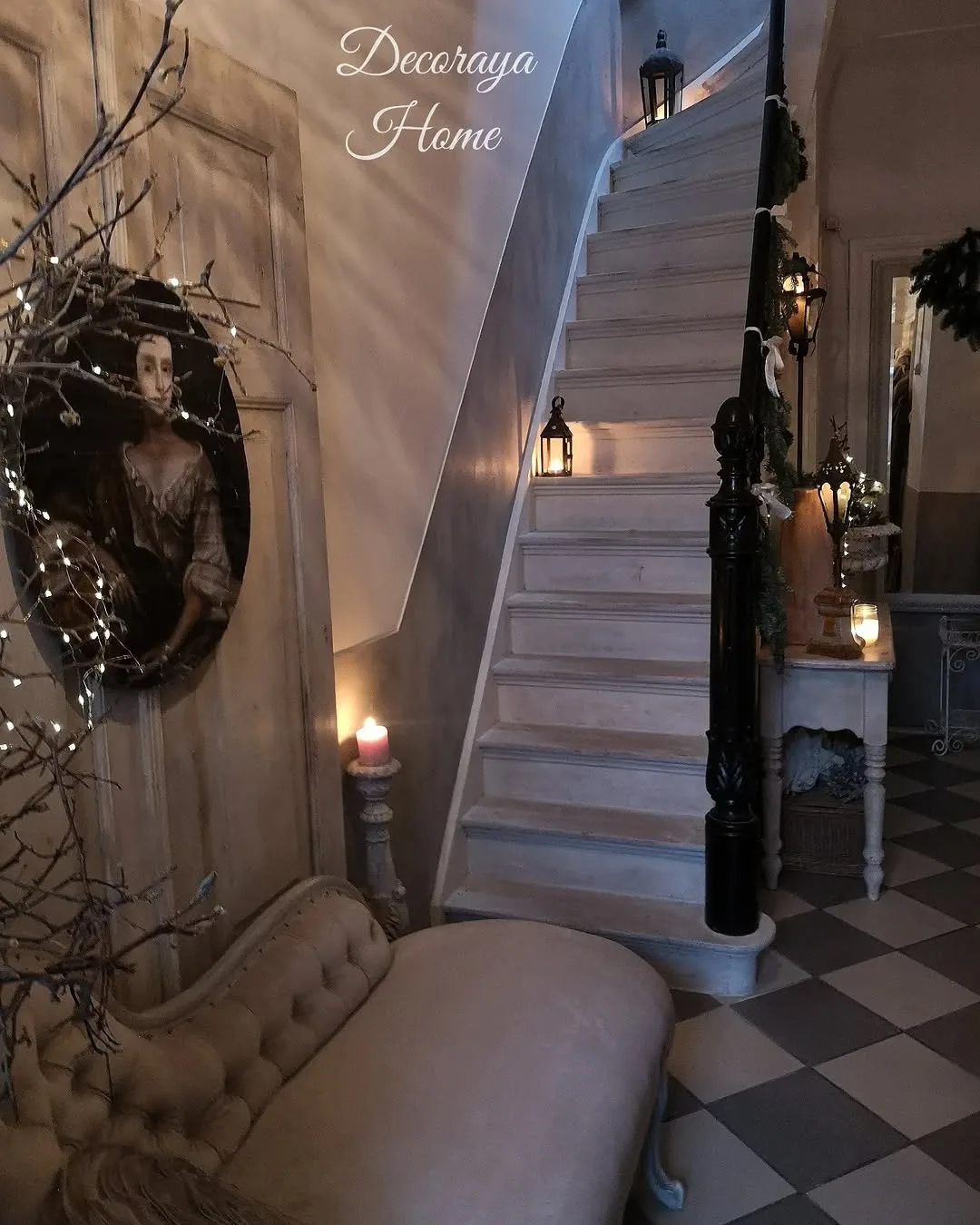
Candlelight softens the hardest part of a winter day, which is coming home in the dark after work or school. Two or three lanterns with battery candles by the inside steps or along the hall floor make the entrance glow without any flame at all.
Group lanterns in odd numbers and vary the heights so the light feels gathered rather than lined up in a row. Metal, wood and glass lanterns all suit winter, and warm white bulbs give the closest match to the glow of real candles.
Steps, porch corners and the space beside the door all suit lanterns, because the light pools exactly where feet need to land. Homes with children and pets gain the safety of flameless light while keeping the same cosy effect in the evening.
Timers turn the lanterns on before anyone gets home, which makes the welcome feel planned and kind every single day. Set them for the late afternoon, keep spare batteries in the key bowl, and the glow will never fail on a dark evening.
Real flames near coats, scarves and paper post are the mistake to avoid, because one knock can send a candle across the floor. Battery candles remove the risk completely and still give the soft flicker and warm colour that everyone loves.
Hooks With Hanging Scarves and Totes
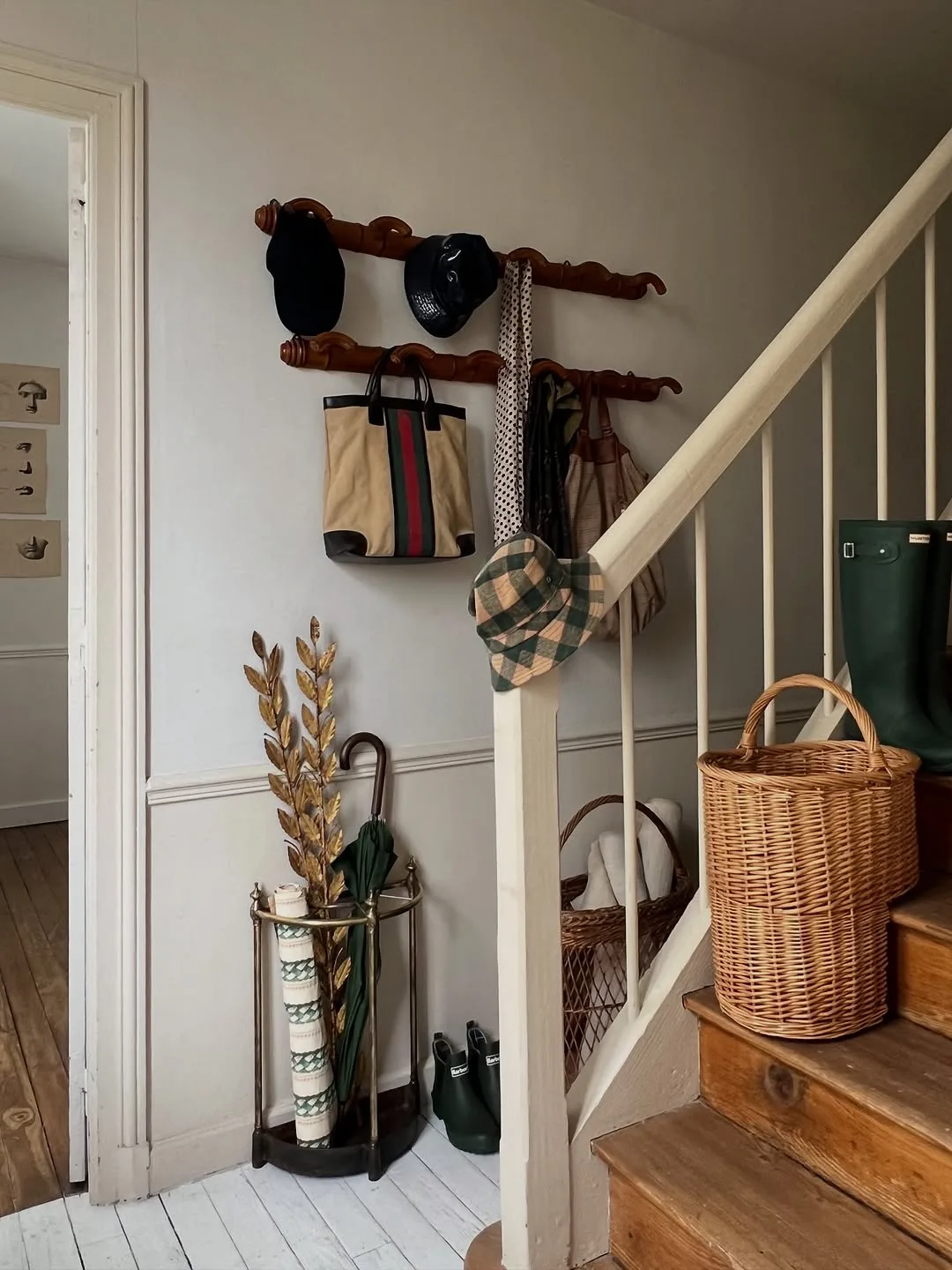
Hooks turn one blank wall into working storage, and they sit at the heart of many winter entryway decor ideas because coats and scarves multiply all season long. Colourful wool scarves and canvas totes hanging in a neat row also act as the decoration.
Space the hooks evenly along a rail or a painted board fixed firmly into the wall studs or solid brick. Leave enough room between hooks for bulky coats, and add one lower row at child height if small people use the door daily.
Sturdy metal or wooden hooks suit busy family doors best, where five or six heavy coats compete for the same wall. Smaller households can manage with three or four hooks and keep the row looking calm and deliberate rather than crowded and chaotic.
Measure coat lengths before fixing the rail, because long coats should clear the bench or the floor by a few centimetres. Mark the positions in pencil, step back into the doorway, and check the spacing from a distance before drilling anything.
Weak hooks that bend or pull out are the mistake that ruins the whole idea, since a fallen rail dumps every coat onto the floor. Use proper wall plugs for your wall type and test each hook with a heavy bag first.
Layered Doormats in Neutral Tones
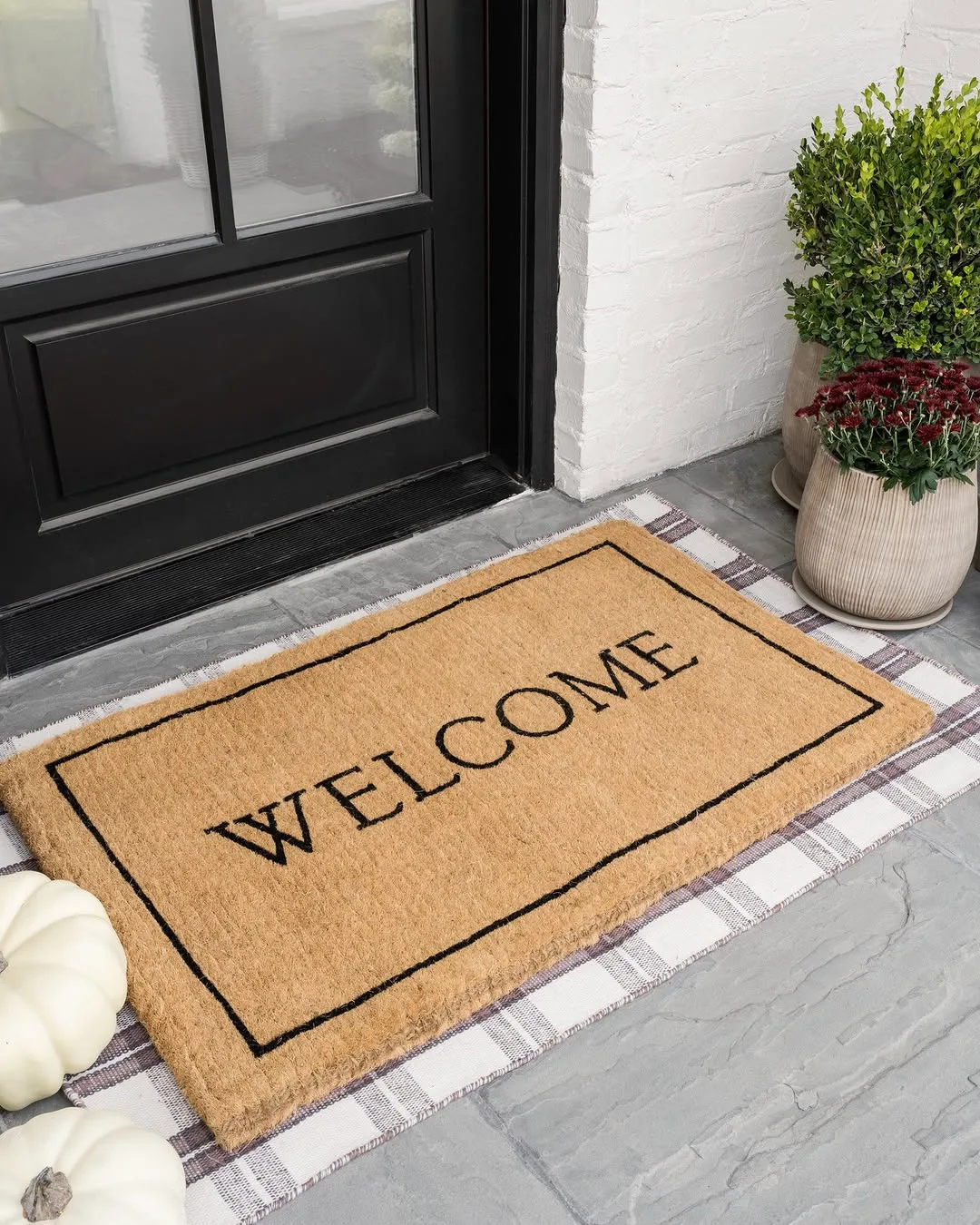
Two mats do the work of three when you layer them with a little care and thought. One large flat mat in a neutral tone sits under a smaller coir mat, and the pair traps grit and meltwater while looking calm and planned.
Start with the larger mat as the base, in warm grey, natural jute or soft brown, and centre the smaller brushing mat on top. Both mats should sit flat with no curled corners, because curled edges trip tired feet in the dark.
Busy doors with children, dogs and delivery drivers benefit most, because the double layer handles heavy traffic without looking worn within a month. Homes with light coloured hall floors gain too, since the mats catch dirt before it travels indoors.
Shake both mats outside twice a week and beat the coir mat against a wall to clear the trapped grit. Washing the base mat monthly keeps the colours true and stops the layered look from turning dull and dusty by spring.
Rubber backed mats on polished wood are the slip to watch, because some backings mark pale floors over time without you noticing. Test the mat in a corner first, lift it weekly to check the floor beneath, and add a thin underlay if needed.
Small Table With a Bowl for Keys
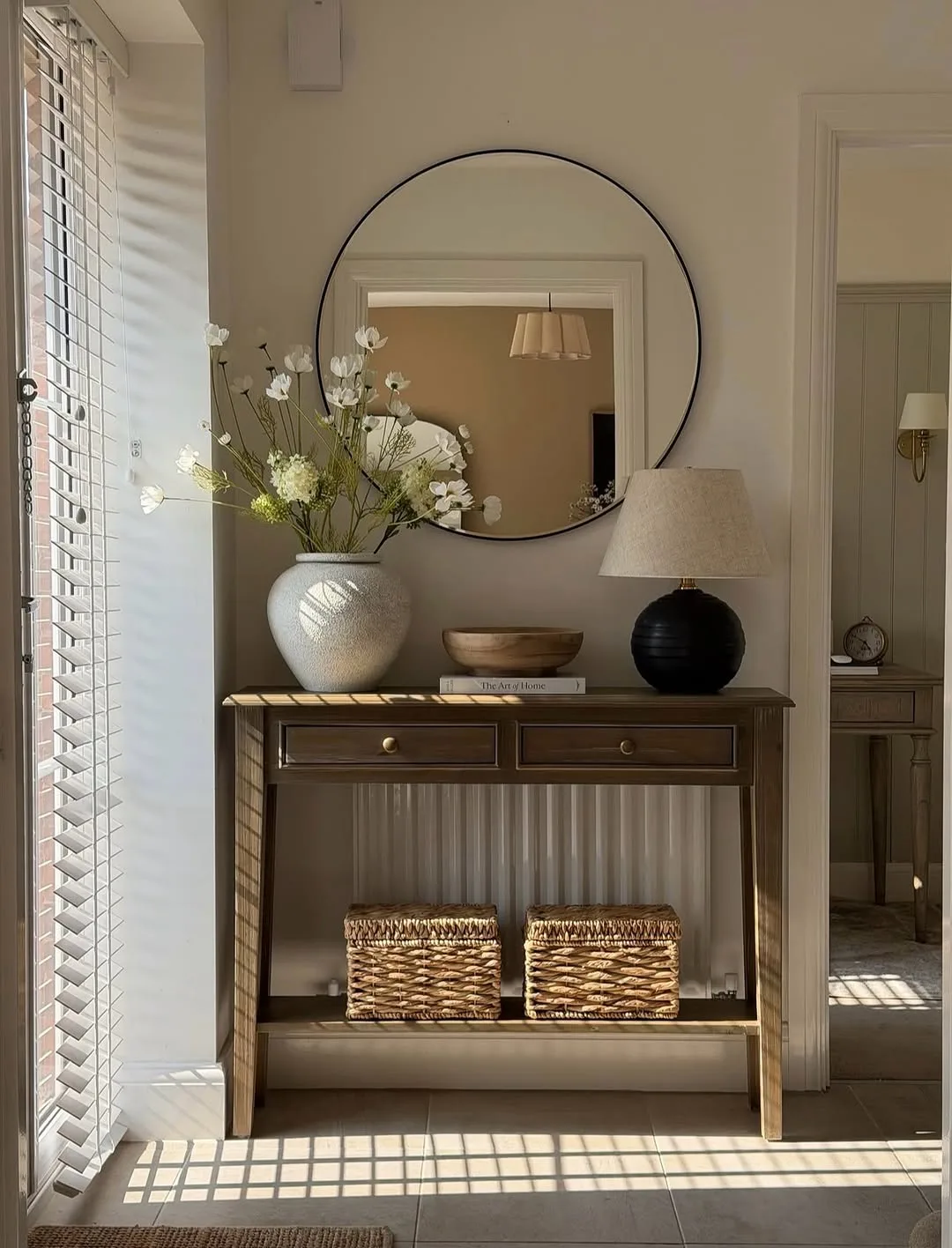
Keys, coins and sunglasses all need one landing place, or they scatter across every surface near the door within a week. One small table with a wide bowl gives those bits a proper home and turns a daily habit into a tidy ritual.
Pick a table narrow enough to leave the walkway clear and tall enough to use without stooping down. Wooden, ceramic or woven bowls all work well, and a heavier bowl stays put when keys land in it from a small height.
Narrow halls suit a slim console or a wall mounted shelf with the bowl on top, since both give the landing place without eating floor space. Wider entryways can carry a small round table that softens the corners of the room nicely.
Keep only daily essentials in the bowl and move receipts, spare change and old keys to a drawer every Sunday evening. One small tray beside the bowl can hold post for one day only, which stops paper piles from growing on the table.
Blocking the table with ornaments is the mistake that defeats the purpose, because the bowl then hides behind vases and picture frames. Leave clear space around the bowl so tired hands can find it without looking or thinking at all.
Dried Branch Arrangement in a Tall Vase
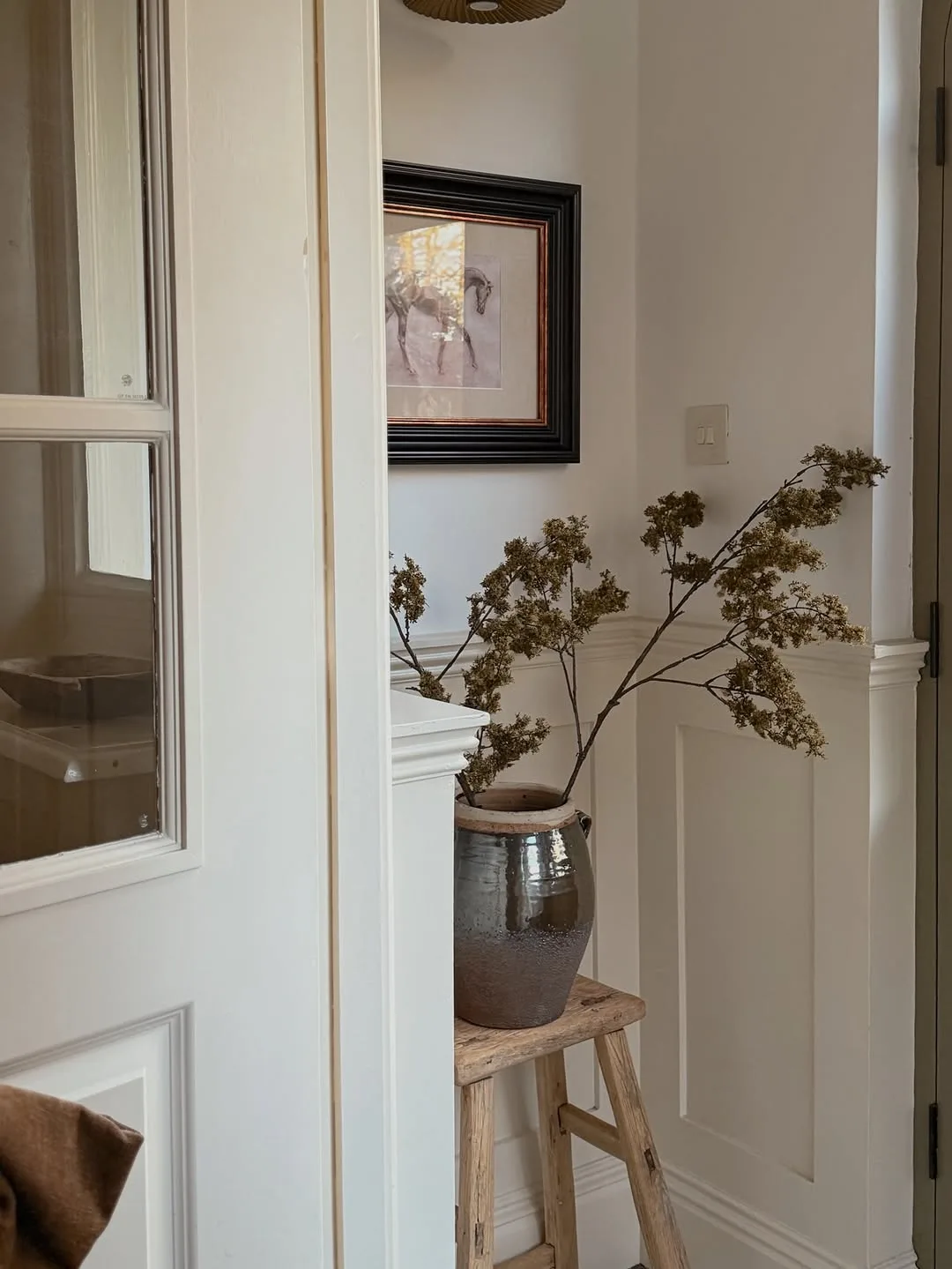
Branches bring height and a sculptural shape to an entrance without costing much money or needing any care at all. Bare twigs, dried grasses and a few stems of pussy willow in a tall vase echo the winter garden outside the door.
Anchor the vase in a corner or beside the bench where it cannot be knocked by bags, elbows and passing dogs. Add stones or sand at the base for weight, then arrange the tallest stems first and fill the gaps with shorter ones.
Corners and the space beside a staircase suit tall arrangements best, because the height fills dead air without blocking the walkway. Plain painted halls gain the most, since the branches give the eye something gentle and natural to rest on.
Collect fallen branches on winter walks and dry them indoors for a few days before arranging them in the vase. Free material from the garden or the park keeps the display honest, seasonal and easy to refresh when stems snap or fade.
Tall arrangements placed in the walkway are the mistake to avoid, because sleeves and bag straps catch the stems and pull the vase over. Keep the display against a wall, trim stray twigs at face height, and check the balance weekly.
Shoe Cabinet With a Styled Top
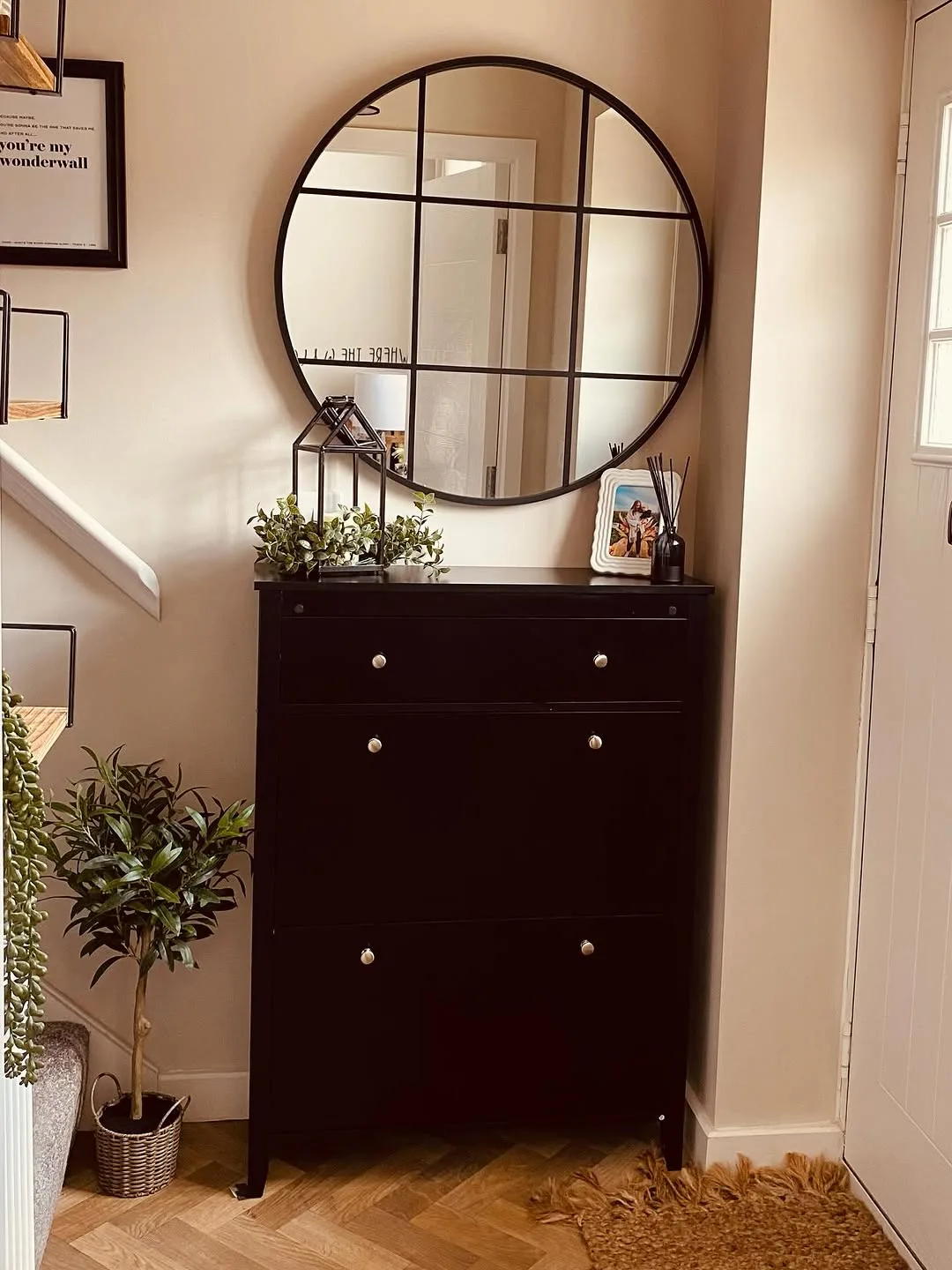
Closed storage calms an entryway faster than almost anything else you can buy for the space. One slim shoe cabinet hides every pair behind doors, and the flat top becomes a small styling surface for a lamp, a plant or a stack of books.
Style the top with just two or three pieces at different heights, such as a small lamp, a framed print and a bowl or basket. Leave the front half clear so the surface still works as a landing place for bags and post.
Compact homes and flats gain the most, because the cabinet holds many pairs within the footprint of just one piece of furniture. Hallways without any cupboard space also benefit, since the doors hide the visual noise of trainers, boots and school shoes.
Ventilation matters inside the cabinet, so leave the doors ajar for an hour after wet shoes go in, or choose a design with slatted doors. Dry shoes smell sweeter, last longer and keep the whole entrance feeling fresh for guests.
Cramming too many pairs into each compartment is the mistake that breaks hinges and crushes soft leather out of shape. Keep one pair per slot where you can, store summer shoes elsewhere, and wipe mud off before pairs go inside.
Warm Runner Rug in a Winter Pattern
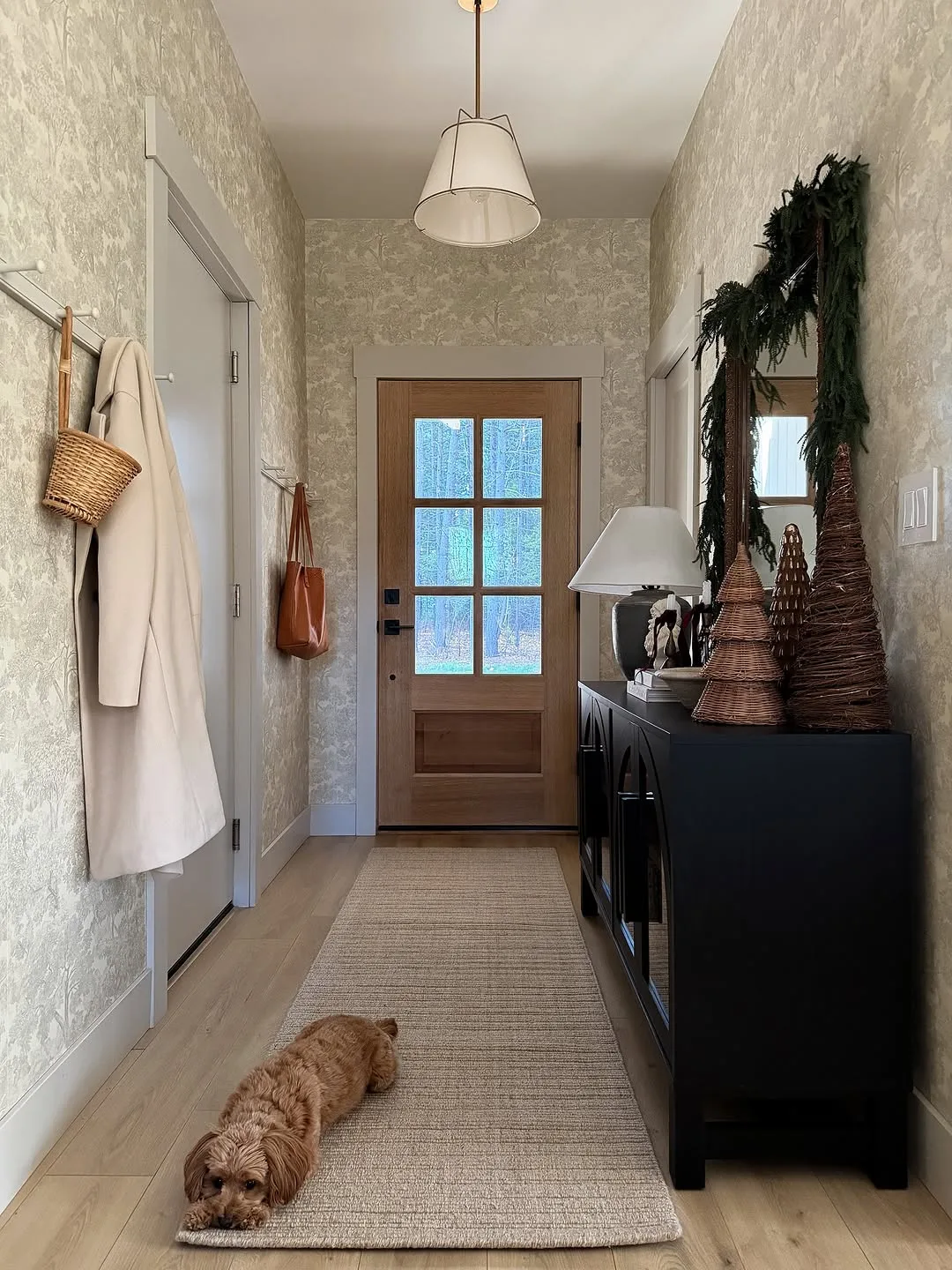
Pattern underfoot brings warmth to a hall before any other change is even felt by the family. One long runner in a winter pattern of soft checks, gentle stripes or faded traditional motifs covers cold tiles and guides guests into the home.
Size the runner to leave a border of floor showing on both sides, which makes the hall look wider and the rug look properly chosen. Measure the space with the door fully open, because a rug caught under the door will bunch and wear.
Long narrow halls suit runners best, since the shape follows the room and softens every step on hard floors. Open plan entrances can use a shorter runner to mark the door zone and separate it from the living space beyond the hall.
Washable low pile rugs handle winter best, because muddy paw prints and gritty marks lift out without any fuss at all. Choose fibres that dry quickly, shake the runner outside weekly, and wash it whenever the pattern starts to look dull.
Thin rugs that slide are the mistake that causes twisted ankles and daily annoyance right beside the front door. Add a proper grip underlay cut slightly smaller than the runner, and check the corners every week for curling edges.
Wall Baskets for Post and Gloves
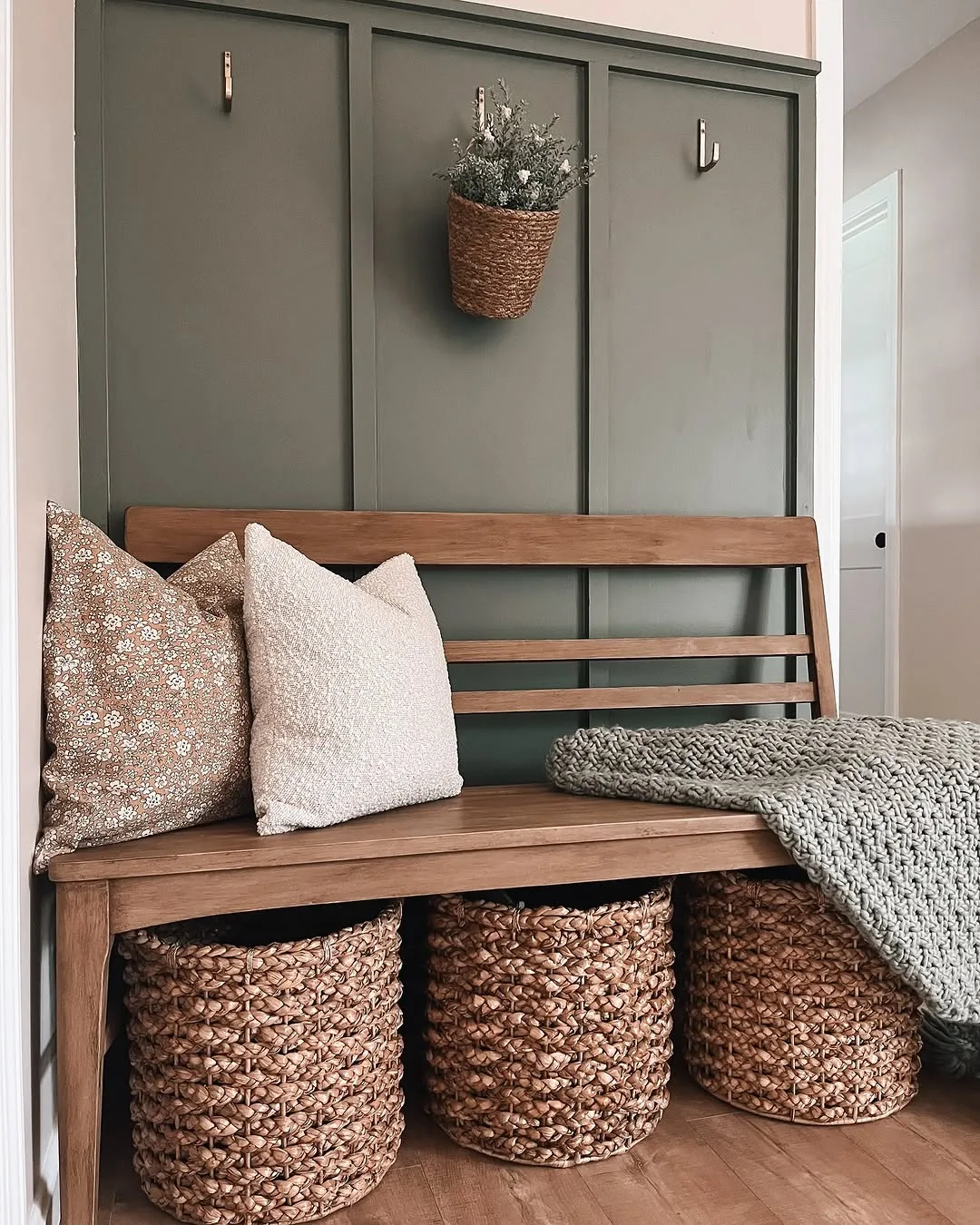
Post lands through the door every day, and without a set place it spreads across tables, benches and stairs within hours. Wall baskets catch letters, leaflets and gloves at standing height, which keeps every flat surface in the hall clear and calm.
Mount two or three baskets in a column beside the door or above the small table, using fixings suited to your wall. Label each basket by person or by purpose if your household likes order, and keep the lowest basket for gloves and hats.
Slim halls suit wall baskets especially well, because the storage rises vertically instead of eating precious floor space near the door. Homes where post piles cause daily stress will feel the difference within the first week of using them properly.
Label the baskets with small tags tied on with string, which looks softer than stickers and can change as needs change. Sorting post on arrival takes ten seconds and stops the baskets from becoming another hiding place for household clutter.
Overloading one basket until letters bend and slide out is the mistake to avoid, because the system then fails at the exact moment it is needed. Empty each basket weekly, recycle leaflets at once, and file important letters the same day.
Pinecone and Candle Display on a Stool

Pinecones carry the shape of winter woods into the hall for free, and they pair beautifully with soft candlelight in the evening. One small wooden stool holding a shallow bowl of pinecones and a battery candle makes a quiet corner near the door.
Arrange the pinecones loosely in the bowl with the largest at the base and a few leaning at natural angles on top. Tuck the candle jar among them or stand it beside the bowl, and add one sprig of greenery for colour.
Rustic and country style homes suit this display best, because the materials match the wood, stone and wool already in the room. Modern halls can use it too, since the simple shapes read as sculpture rather than as decoration.
Battery candles keep the glow safe among dry pinecones, paper and passing sleeves, and a timer means the corner lights itself each evening. Brush dust off the cones monthly with a dry paintbrush so the display stays looking cared for and fresh.
Neglecting the display for months is the slip that turns charm into dust, because pinecones gather fluff and the candle battery fades quietly. Refresh the bowl each month, swap tired cones for fresh ones, and the corner keeps its quiet appeal.
Common Mistakes
Treating January like a smaller version of the festive month is the first mistake, because the entrance then feels like a party that ended weeks ago. Pack the glitter and bright red away, and let plain greenery, wood and wool carry the season instead.
Ignoring storage while adding decoration is the second mistake, since pretty objects cannot fix piles of boots and coats on the floor. Solve the storage first with baskets, hooks and a tray, then add the gentle styling on top of the order you created.
Buying everything new in one weekend is the third mistake, because rushed sets of matching objects often look flat and cost more than they should. Gather pieces slowly from home, the garden and charity shops, and the entrance will feel collected and personal.
Forgetting light is the fourth mistake, since winter entrances spend most of their hours in darkness or dull gloom. One lamp, a mirror and a couple of battery lanterns change the mood more than any ornament you could hang on the wall.
Crowding every surface is the final mistake, because a busy hall feels smaller and harder to use with every added object. Leave breathing room around each piece, keep the walkway fully clear, and let a few calm choices do all the work.
Budget Friendly Winter Entryway Decor Ideas for Small Spaces
One calm corner built mostly from things you already own proves that winter entryway decor ideas do not need a large spend at all. Move a basket from the bedroom, borrow a stool from the kitchen, and the entrance changes within one afternoon.
Shop your own home first and write a short list of only the gaps, such as a boot tray or a set of sturdy hooks. Buying two useful pieces beats buying six decorative ones, and the money saved can go toward one good washable rug.
Natural materials from the garden cost nothing and suit the season perfectly well all winter long. Pinecones, branches, ivy and fir offcuts fill vases and bowls, and each walk outside can bring home one more piece for the display by the door.
Secondhand benches, mirrors and baskets carry solid quality at low prices in charity shops and local selling groups near you. Check the joints, clean everything well, and remember that a coat of paint can unite pieces that started life in different homes.
Spending on the pieces that work hardest protects the budget best, so put money into the tray, the hooks and the runner before anything purely decorative. Hardworking basics serve every day for years, while ornaments can arrive slowly as bargains appear.
Tips for a Warm Welcome All Winter
Clear the entrance every evening as part of locking up, hanging coats, pairing boots and emptying the key bowl of clutter. Five quiet minutes keep the morning calm and stop small piles from becoming the permanent look of the room.
Layer scent gently near the door with a small bowl of dried orange peel, cloves or a sprig of rosemary on the table. Soft natural scent greets guests kindly, while strong sprays can overwhelm a small hall within seconds of spraying.
Check the porch light and the hall lamp bulbs at the start of each month, because winter guests arrive in the dark most days. Warm white bulbs flatter wood and skin, and a working light makes the whole welcome feel safer.
Rotate one small detail each month, because winter entryway decor ideas stay fresh when the wreath becomes branches, or the cushion cover changes colour. Small changes keep the entrance feeling cared for without any new spending at all.
Welcome guests with somewhere obvious to put their things, such as one free hook, space on the bench and a mat ready for wet shoes. People relax faster when the first minute inside your home feels easy and thought through.
End each week with a quick reset of the whole entrance, shaking mats, wiping the tray and washing one throw on rotation. Steady small care keeps the space at its best from the first frost to the first spring morning.
Frequently Asked Questions
How do I decorate my entryway after the holidays without it feeling bare?
Most halls feel bare because the colour and sparkle leave in one single day, so replace them gradually with texture instead. Evergreen, woven baskets, a wool runner and warm light fill the space calmly, and the entrance soon feels wintry rather than empty.
Can a small entryway still feel cosy in winter?
Yes, small entrances often feel cosier than large ones once the basics are properly in place. One basket, two hooks, a mirror and a battery lantern cover storage, light and softness, and even the tiniest hall can hold those four pieces.
What kind of mat works best for wet winter boots?
Look for a layered pair, with a flat washable mat underneath and a coarse coir or rubber scraper mat on top. Together they trap water and grit right at the door, and both lift easily for shaking and washing outside.
Are battery candles safe near coats and scarves?
Flameless battery candles are the safe choice near fabric, paper and passing sleeves, because they give warm light with no flame, no heat and no dripping wax. Lanterns with timers add the welcome without any of the worry of real candles.
How often should I clean the entryway in winter?
Every week deserves a proper clean, with mats shaken, the boot tray rinsed and the floor washed to clear salt and grit. Quick daily habits, like pairing boots and hanging coats at once, keep the weekly job small and simple.
Which colours suit a calm winter entryway?
Cream, warm white, oatmeal, natural wood, deep green and soft grey all suit the season and mix happily together in one scheme. Build the palette from those tones, add texture before colour, and the hall will feel sheltered without feeling dark.
More Ideas to Explore
A welcoming hall pairs well with calm styling in the rest of the home, so these reads are worth a look. winter mantel decor ideas brings the same quiet mood to the living room shelf, while winter bedroom decor ideas turns the bedroom into a deep sleep retreat. In the kitchen, winter kitchen decor ideas adds seasonal warmth around the counters, and winter wreath ideas finishes doors and walls with natural greenery.
Conclusion
Good entrances in winter are built on order first and decoration second, because calm comes from clear floors and set places for everything. Baskets, hooks, a tray and a bench quietly solve the daily rush at the door for the whole family.
Mix storage with softness and gentle light, and your winter entryway decor ideas will carry the entrance from the first frost to early spring. Evergreen, wool, wood and candlelight do the heavy lifting without any festive clutter at all.
Remember that small habits protect the look better than big makeovers, since a tidy tray and a shaken mat take minutes each week. Care for the practical pieces properly and the pretty ones will keep shining beside them all season long.
Step through your own front door on a dark evening and notice how the space greets you, then adjust one thing at a time. Soon the entrance will feel like a warm welcome home, which is the whole point of styling it. Guests will feel the care in these winter entryway decor ideas before they have even taken their coats off.