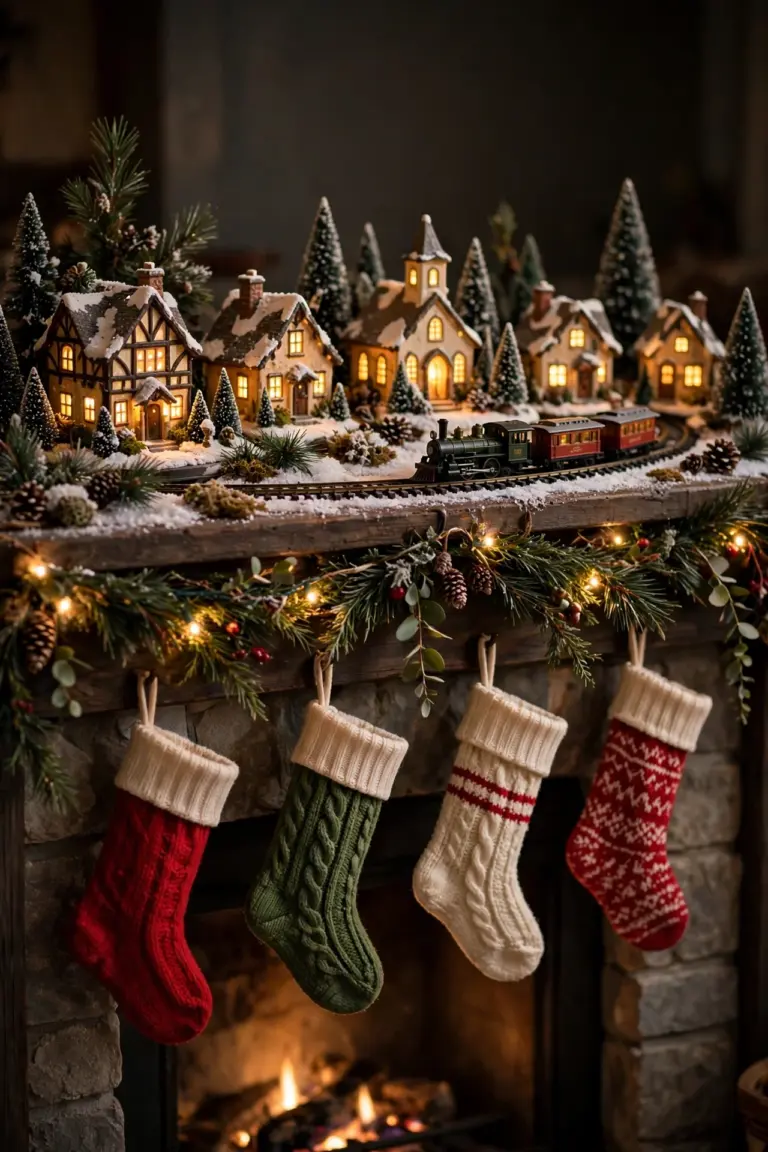
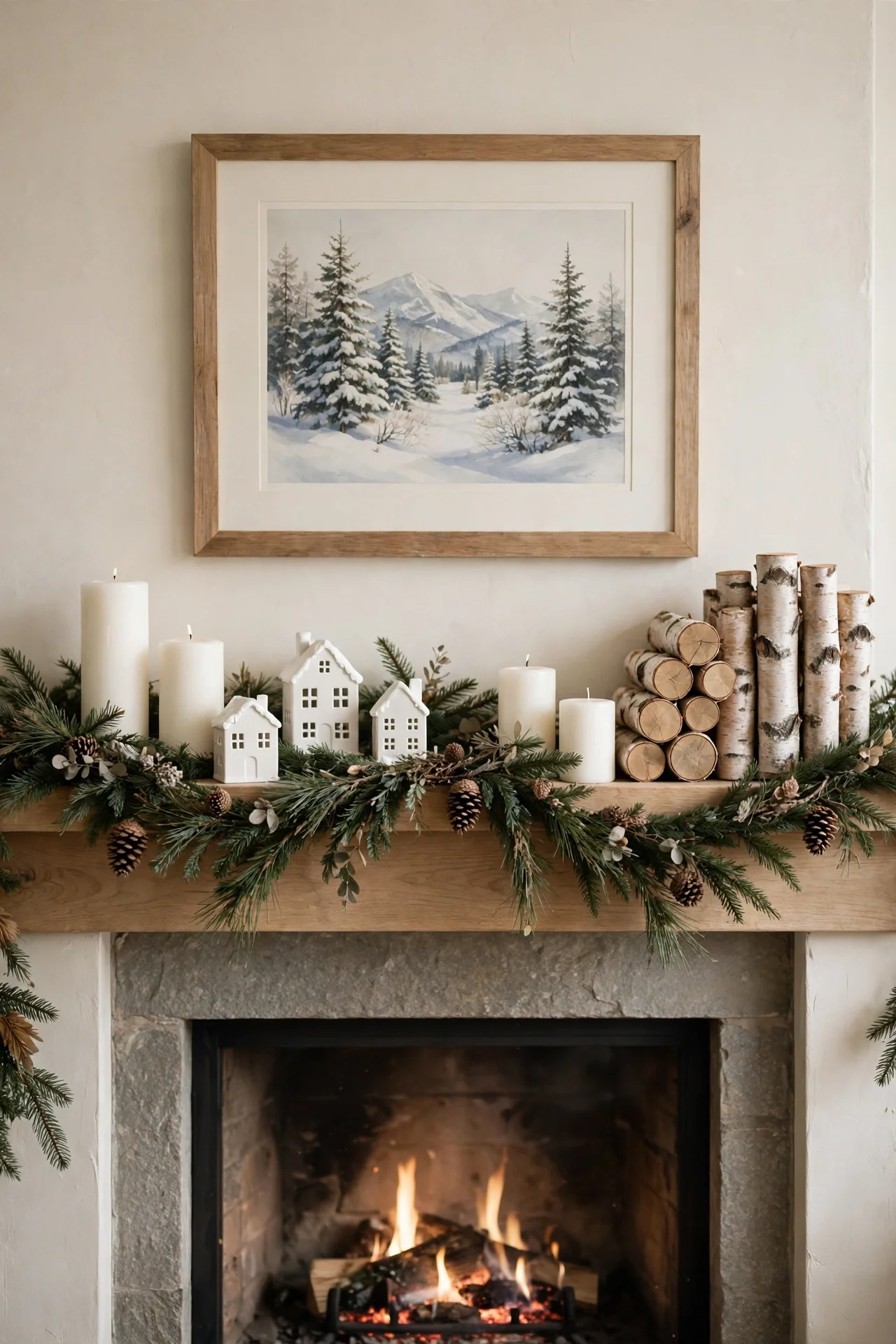
Winter Mantel Decor Ideas
Cold January light changes how a living room feels, and the mantel is usually the first place the eye lands when anyone walks through the door. Once the Christmas decorations come down, that shelf can look bare and a little sad, even though the room itself has not changed at all.
Simple winter mantel decor ideas fix that bare feeling with calm colours, natural textures and soft light instead of bright festive colour. Think white, cream, pale grey and warm wood, with evergreen branches and candles doing most of the work while the weather outside stays cold and grey.
You do not need a working fireplace, a huge shelf or a big budget to make the change feel worthwhile. Each idea below explains what to place, where it works best and which mistake to avoid, so you can build a calm winter display from pieces you mostly own already.
What Are the Best Winter Mantel Decor Ideas After Christmas?
Calm colours carry a winter mantel further than any single ornament can. White, cream, soft grey and natural wood keep the shelf feeling peaceful, while evergreen and eucalyptus bring life without shouting for attention the way red berries and gold ribbon did in December.
Start with a base layer, then add height, then add light, because the most dependable winter mantel decor ideas all follow that same simple order. One garland or a row of greenery comes first, a taller piece anchors the middle or one end, and candles finish the arrangement with a gentle glow.
Most homes already own much of what a good winter display needs, from plain candles and picture frames to baskets, mirrors and spare logs. Swapping festive pieces for neutral ones you already have keeps the cost low and the look calm, and the shelf can stay styled until early spring.
Evergreen Garland With Natural Pinecones
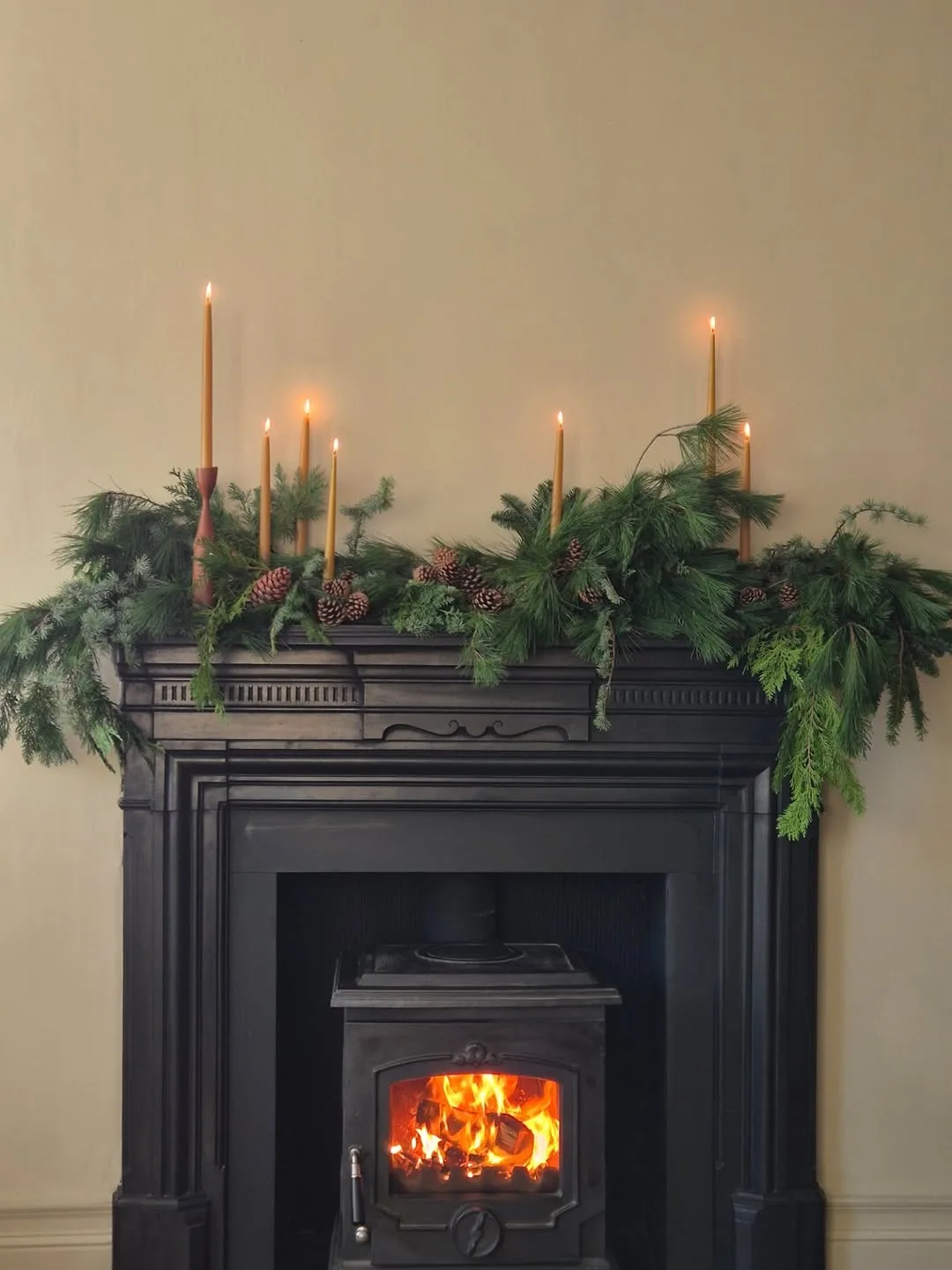
Fresh evergreen branches laid along the shelf give a winter mantel its base layer and its scent. Cedar, fir and pine all work well, and their deep green colour looks rich against white walls and pale wood while the garden outside still looks bare and brown.
Drape the garland so it falls slightly over the front edge in the middle and lifts a little at both ends. Tuck pinecones into the greenery at uneven intervals, grouping two or three together here and there rather than spacing them out in a neat, even row.
It suits almost every style of room, from modern flats to older houses with heavy wooden fireplaces. Anyone who misses the smell and colour of the Christmas tree in January usually finds that a plain green garland fills the gap without bringing back the full festive look.
Try collecting pinecones on a winter walk and drying them indoors for a few days before you use them. Dry cones open up, last longer and cost nothing, and children enjoy gathering them, which makes the garland feel personal rather than bought in a hurry.
Avoid laying real greenery where it touches candle flames or sits against a hot fireplace surround, because dry branches catch fire faster than most people expect. Keep flames in sturdy holders at a safe distance, and replace any branches that start shedding badly.
White Pillar Candles in Varied Heights
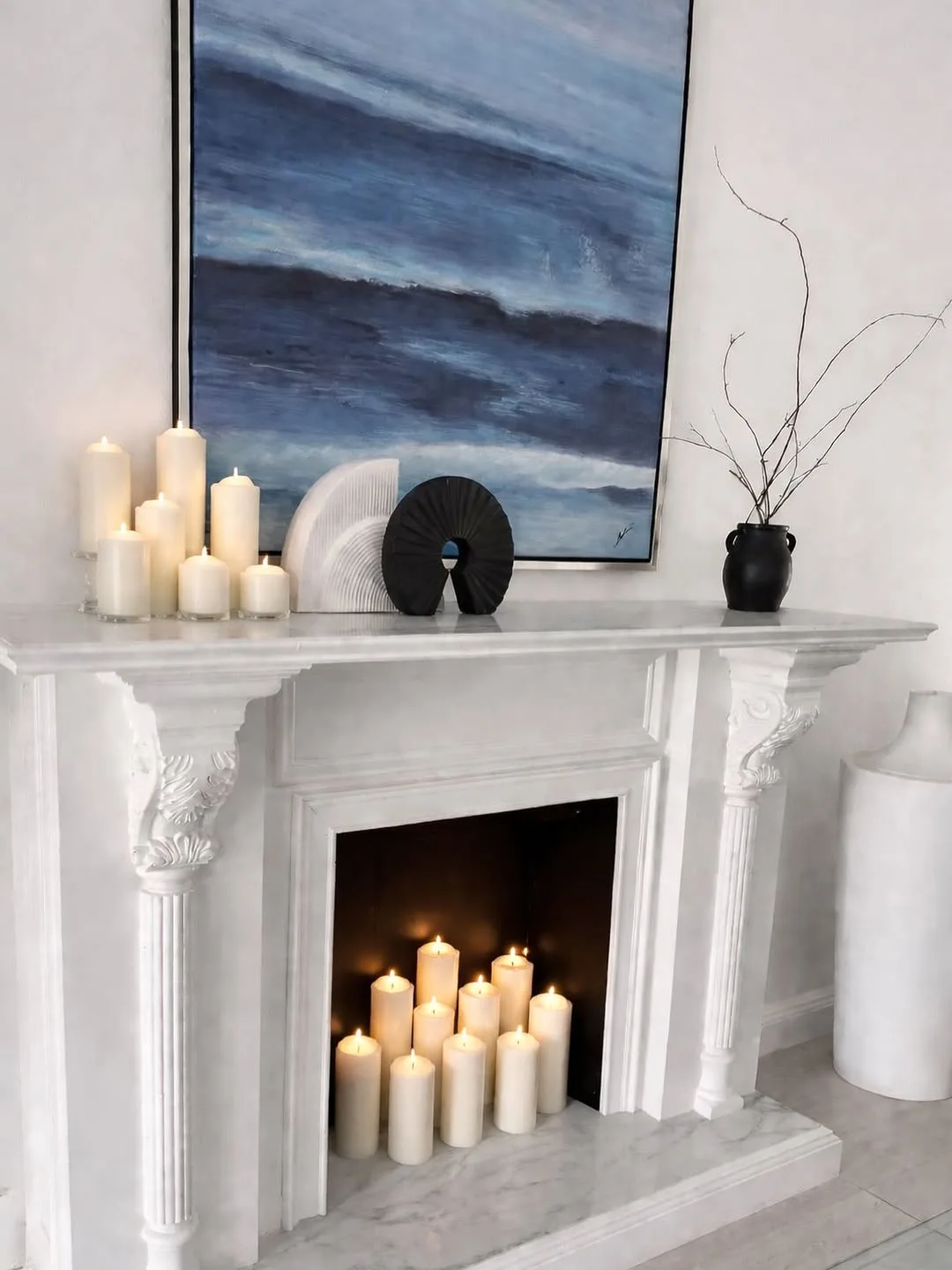
Groups of plain white pillar candles bring the soft light a winter mantel needs on dark afternoons. Different heights stop the shelf looking flat, and clean white wax fits the calm palette of the season far better than coloured candles left over from December.
Set the tallest candle near one end or just off centre, then step the others down in height beside it. Odd numbers look more relaxed than pairs, so three or five candles usually work best, with small gaps between them so each flame has room to breathe.
People who light candles every evening get the most from this idea, because the display earns its place instead of gathering dust. Homes with a working fire also benefit, since candlelight above echoes the flames below and doubles the warm feeling in the room.
For a low cost version, gather plain white candles you already own from other rooms before buying anything new. Supermarket pillars burn just as well as expensive ones, and mixing slightly different whites and creams looks softer than a set that matches perfectly.
Keep every real flame well away from garlands, dried stems and paper artwork, and never leave a burning candle alone in the room. Holders should be wide, heavy and heatproof, candles should stand level, and a snuffer nearby makes putting them out at bedtime quick and safe.
Framed Winter Landscape Artwork
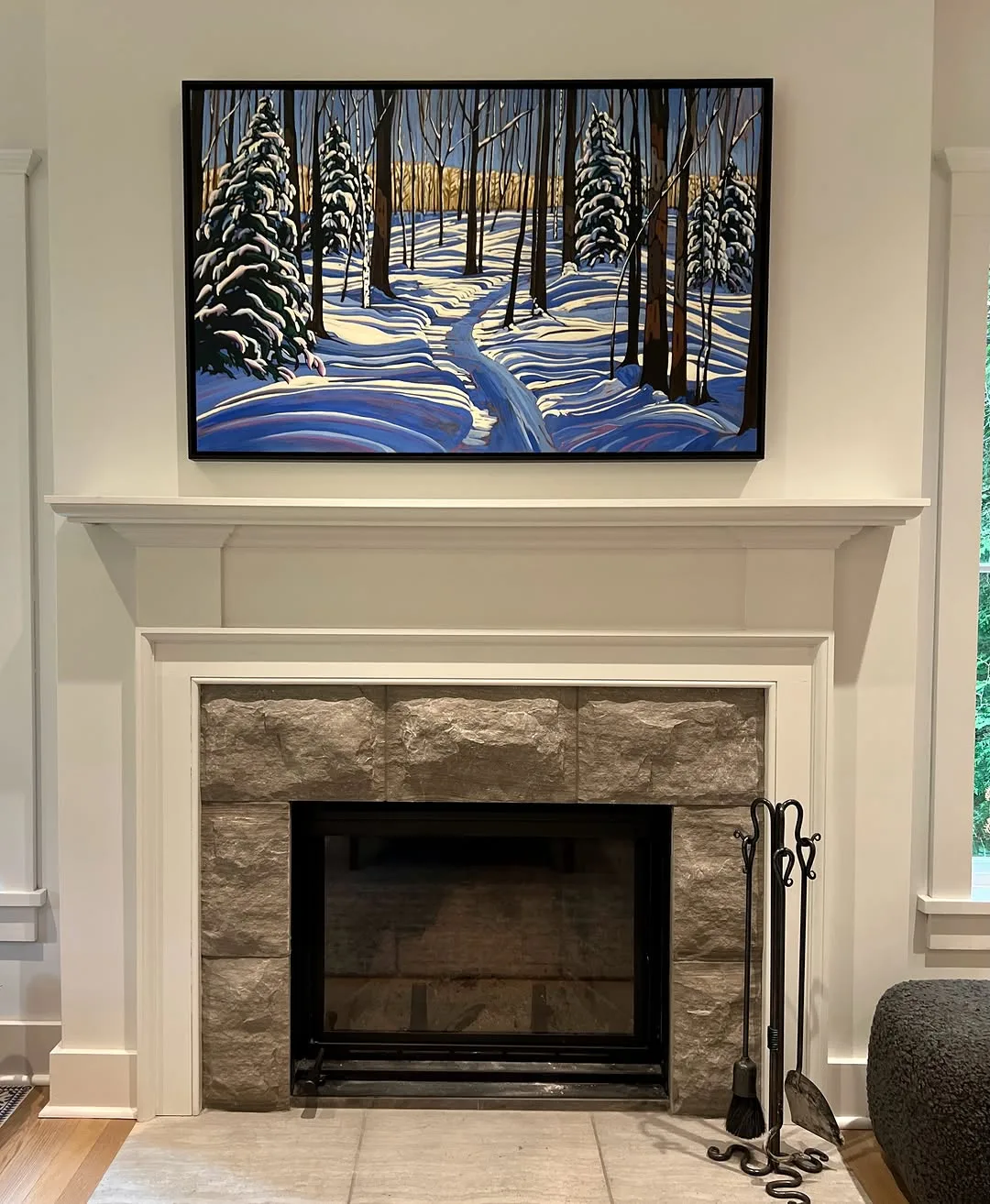
One large framed print of a snowy landscape gives the mantel a clear focal point for the whole season. Bare trees, white fields and pale skies all echo the weather outside, and a single strong picture calms the shelf far better than several small competing pieces.
Lean the frame against the wall in the centre of the shelf, or hang it just above so the bottom edge nearly touches the mantel. A wooden or black frame suits the winter palette best, and a wide pale mount inside the frame adds to the snowy feeling.
It suits rooms where the mantel feels empty in the middle and needs one anchor piece to build around. Anyone who rotates artwork through the year will enjoy this swap, because changing one print in January refreshes the whole wall without moving any furniture.
Prints cost very little when you buy them unframed and use a frame you already own. Charity shops and winter sales are full of landscape pictures in January, and even a page from an old calendar of snowy scenes can look striking behind glass.
Avoid choosing a picture with bright summer colours or a busy pattern, because it will fight with the calm scheme around it. Glass glare is the other common problem, so tilt a leaned frame slightly forward where lamplight does not bounce straight off it.
Stacked Birch Logs at One End
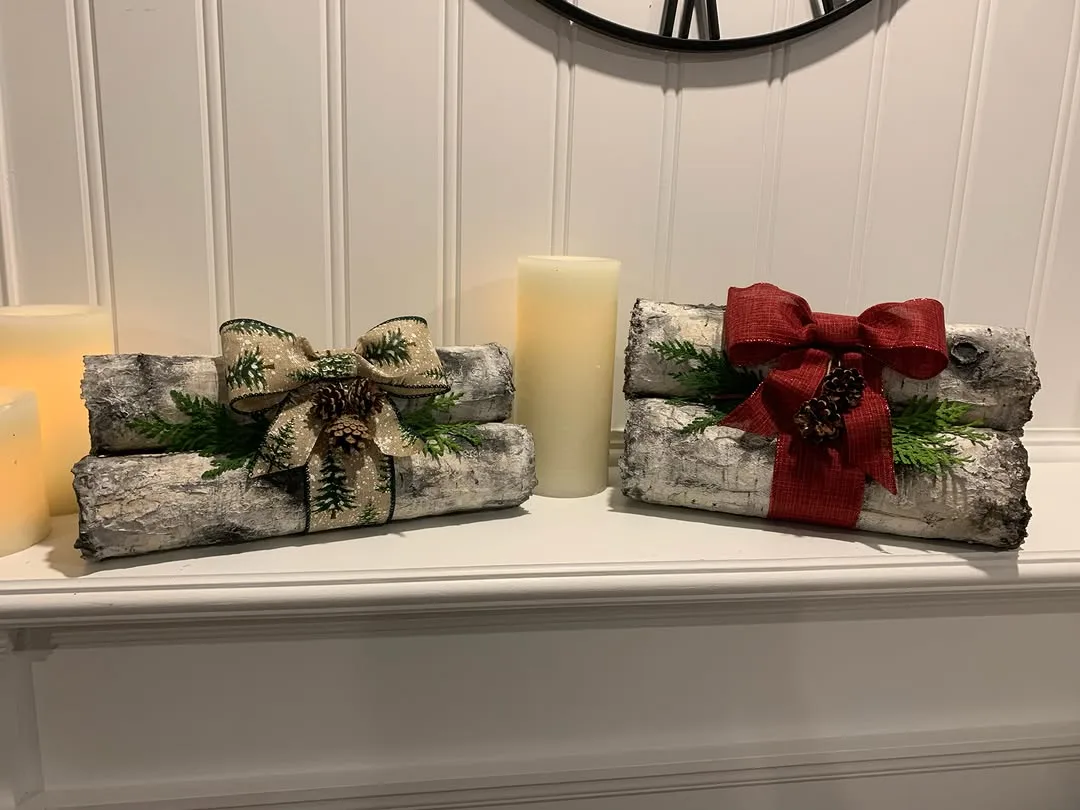
Birch logs bring pale bark, clean lines and a woodland feel to one end of the mantel shelf. Their white and grey bark matches the winter palette beautifully, and a small stack adds height and texture without any colour that needs matching to the rest of the room.
Stack three to five short logs in a neat pile, or stand them upright in a row like books on a shelf. Cut ends facing outward show the pale rings of the wood, which look decorative in themselves, and a strand of greenery tucked beside them softens the stack.
It suits cottages, cabins and modern rooms alike, and it pairs happily with other winter mantel decor ideas built on wood, wool and candlelight. Households with a real fire find it practical too, because the stack can hold a few dry logs ready for the evening.
Pale bark shows dust quickly, so give the logs a brush outdoors before you bring them in and arrange them. Garden centres sell short birch rounds cheaply in winter, and fallen branches from your own garden or a friend's wood pile cost nothing at all.
Damp or dirty logs are the mistake to avoid, because they can mark pale paint and bring insects indoors. Only use wood that has dried under cover for a good while, and keep it off painted surfaces with a small tray or cloth underneath.
Ceramic Village Houses in Soft White
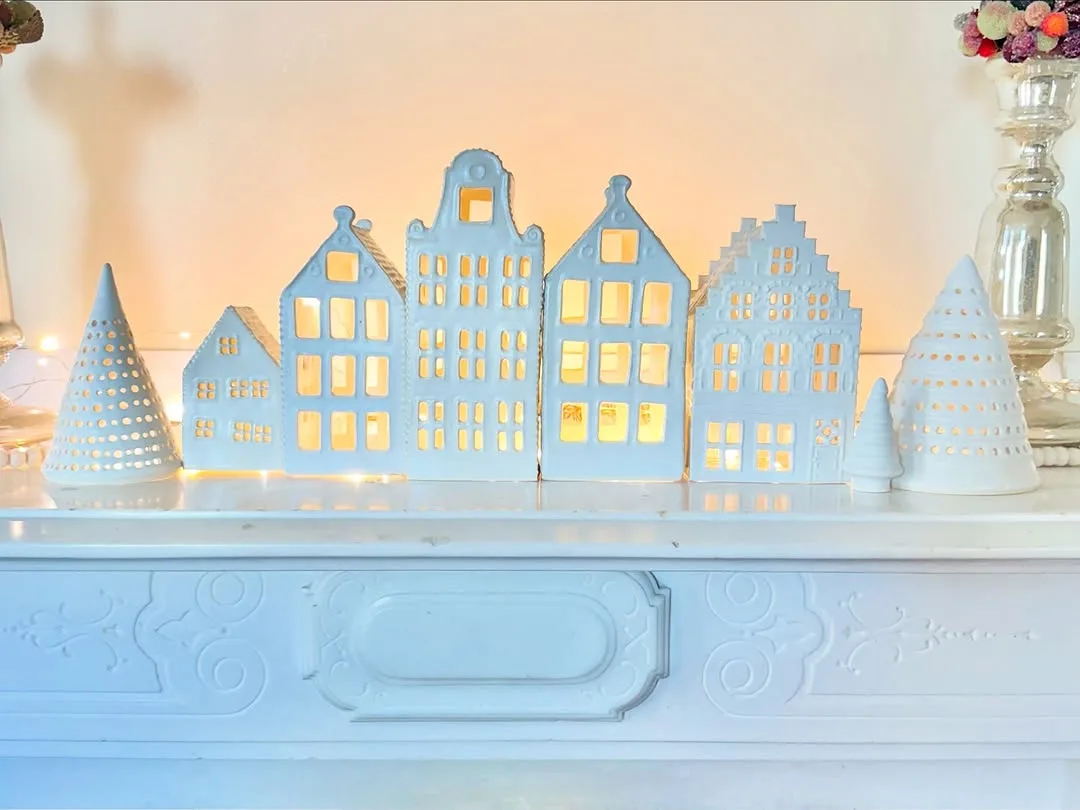
Small ceramic houses in soft white turn the mantel into a quiet winter village that glows after dark. Plain unpainted finishes keep the look calm and grown up, very different from the bright painted village sets that appear in shops before Christmas with glitter on every roof.
Line the houses along the shelf in a gentle row, mixing two or three heights so the rooftops rise and fall like a real street. Leave small gaps between buildings for bottle brush trees or tiny candles, and keep the tallest house near the middle.
Families with children often love this idea most, because building the village becomes a small January tradition of its own. It also suits collectors who already own a few white houses and want a reason to display them for longer than the Christmas season allows.
Tiny battery tea lights placed inside the houses make the windows glow without any flame near the ceramics or greenery. Battery lights are the safer choice here, they can run on timers, and they let the village shine every evening even when nobody is home.
Too many houses crowded edge to edge make the shelf look like a shop display instead of a home. Five to seven buildings usually fill a standard mantel with room to spare, so store the rest and swap them in later if you want a change.
Silver Glass Votives for Evening Glow

Silver glass votives scatter soft points of light along the mantel and suit long winter evenings perfectly. The mercury style finish hides the candle inside and throws a gentle sparkle onto the wall, which feels festive enough for January without any red or glitter in sight.
Place votives in small groups between the bigger pieces on the shelf rather than in one straight line. Three near one end and two near the other keeps the balance relaxed, and spacing them unevenly makes the light feel natural, like candlelight in an old inn.
It suits anyone who eats dinner in the same room or reads nearby in the evening, because the glow lands where people actually sit. Small mantels benefit most, since votives add light and interest without taking the space that larger ornaments would demand.
Battery tea lights inside votives give nearly the same glow with none of the worry about real flames near garlands. They suit homes with pets or small children especially well, and cheap multi packs mean every votive can shine at once instead of only a few.
Never leave real tea lights burning in votives while you sleep or go out, and keep them standing on a level, heatproof surface away from dried greenery. Thin glass can crack with heat, so let a votive cool fully before you move it.
Wooden Bead Garland Draped Softly
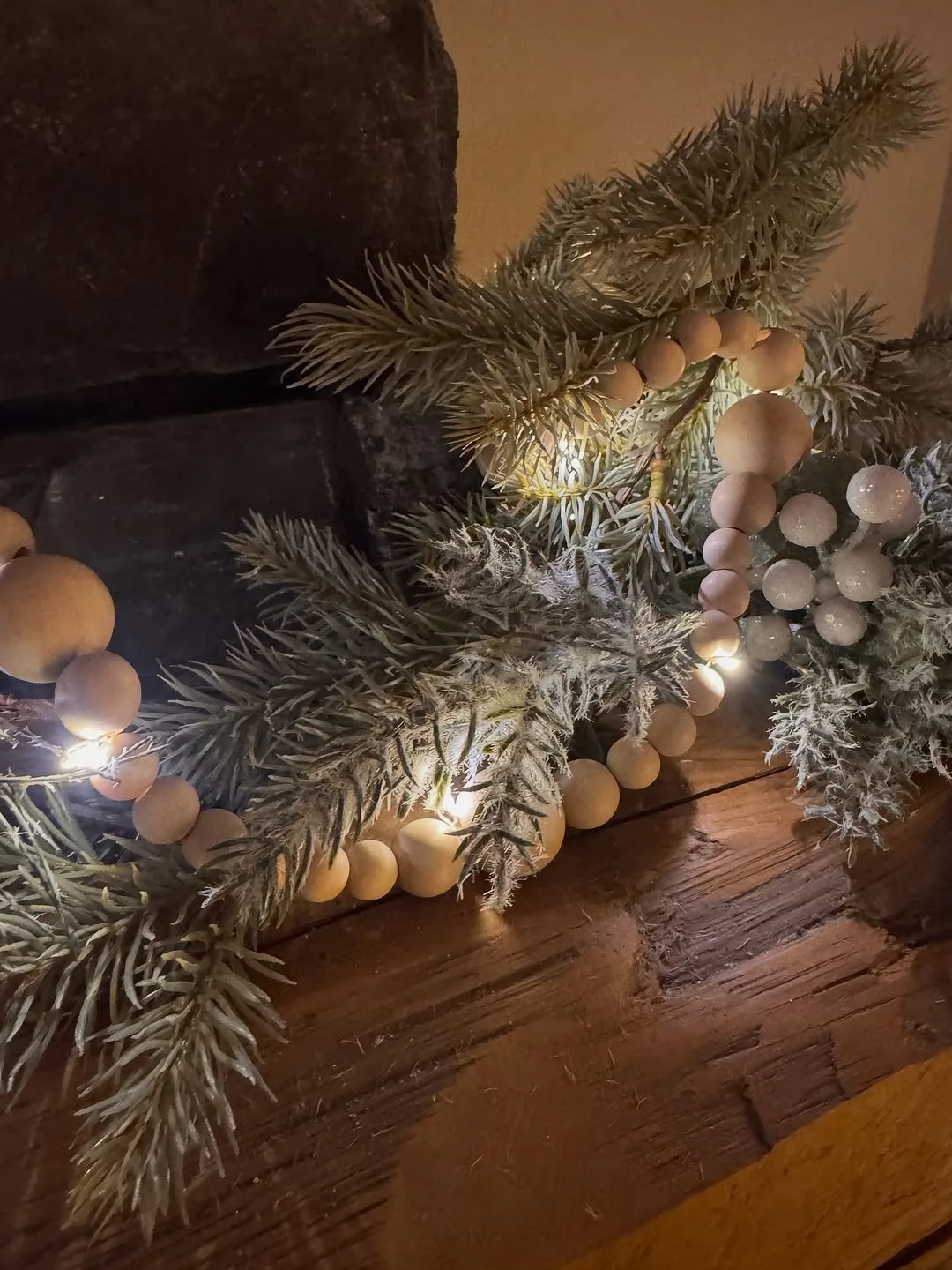
Strands of plain wooden beads soften the hard straight line of a mantel shelf in seconds. Natural wood tones warm up white and grey schemes, and the gentle curve of a draped strand balances the tall, straight shapes of candles, frames and vases along the shelf.
Loop the strand so it dips once in the middle, or let it fall in two soft swags held by a heavy object at each end. A tassel at one end adds a finishing touch, and layering the beads over an evergreen garland looks especially rich.
It suits relaxed, family friendly rooms where polished or formal styling would feel out of place. Anyone who likes farmhouse or Scandinavian style usually already owns a strand, and those who do not can thread one from craft shop beads in a single quiet evening.
Natural unfinished beads cost the least and age the best, picking up a soft sheen from handling over time. Paint just a few beads white or grey if you want the strand to match your scheme more closely, and leave the rest plain for contrast.
Bright painted beads are the common mistake here, because strong colour breaks the calm winter palette instantly. Very long strands cause the other problem, pooling on the shelf or dangling low enough to catch on the fireguard, so measure your shelf before you buy.
Small Woven Wreath With Eucalyptus

One small woven wreath brings a circle of soft green to the centre of the winter mantel. Willow, grapevine or twig bases all work, and a few sprigs of eucalyptus tucked into the weave add the pale, dusty green that defines winter styling.
Hang the wreath on the wall above the middle of the shelf, or lean it against the wall in front of a mirror or picture. Ribbon in cream or soft grey suits it better than string, and the wreath should sit clear of any candle flames below.
It suits smaller mantels where a full garland would overwhelm the shelf and crowd everything else out. Anyone who keeps a plain wreath for the front door can simply bring it indoors in January, which gives one decoration two seasons of use for one price.
Fresh eucalyptus stems dry beautifully in place and keep a gentle scent for weeks, so there is no need to replace them often. Florists sell small bunches cheaply in winter, and even three or four stems are enough spread around one side of the wreath.
Avoid wreaths covered in glitter, fake snow spray or bright berries, because they pull the scheme straight back to December. Size matters too, since an oversized wreath swallows a small mantel whole, so choose one that spans about a third of the shelf length.
Carved Wooden Deer Figurines

Carved wooden deer bring a quiet woodland note to the mantel and suit the months after Christmas perfectly. Plain wood finishes keep them calm and timeless, and their gentle shapes please children and adults alike without a single flash of tinsel or bright paint anywhere.
Stand a pair of deer at one end of the shelf, one slightly ahead of the other as if walking through snow. A small group of three works on a longer mantel, and placing them near greenery or logs makes a little woodland scene that tells a story.
Homes that lean toward woodland or cabin style find deer among the easiest winter mantel decor ideas to live with all season. They also suit anyone who collects wooden animals slowly over the years, adding one good piece each winter instead of buying a whole set.
One tall stag beside a shorter doe gives the group natural variety without any effort at all. Craft fairs and winter markets are the best places to find carved pieces with real character, and simple unfinished deer cost far less than painted ornaments from big shops.
Avoid deer with glitter antlers, red noses or Santa hats if you want the display to feel like winter rather than Christmas. Wobbly bases are the practical mistake, since a tall figure that rocks on the shelf will eventually fall, so check each piece stands firmly.
Mirror With a Frosted Garland Swag
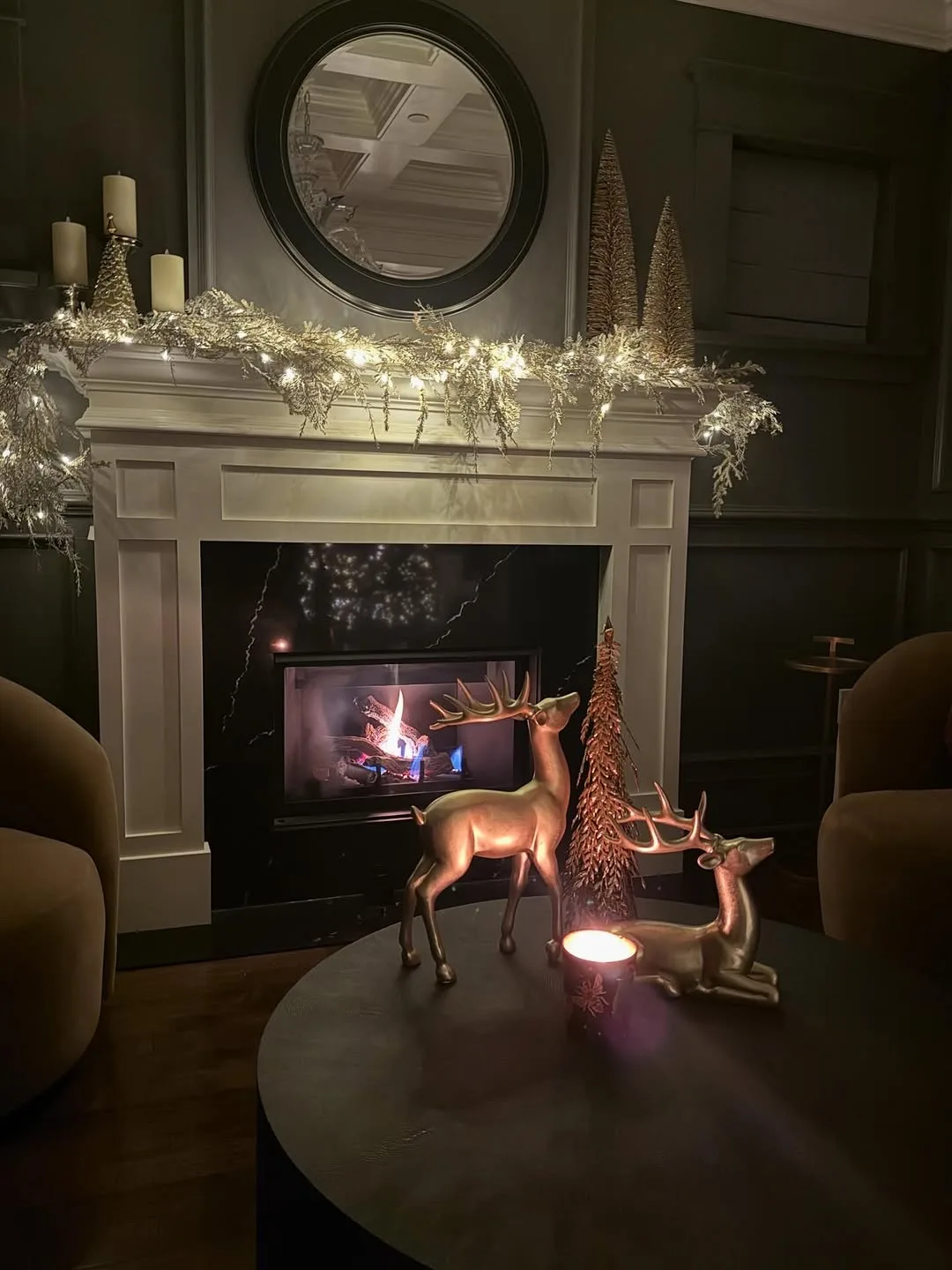
Mirrors earn their place above a winter mantel by doubling every bit of light in the room. Candle flames reflect and multiply after dark, grey daylight spreads further in the afternoon, and a soft garland swag across the top corner keeps the glass from feeling bare.
Hang the mirror centred above the shelf, then drape a short frosted garland across one top corner so it falls a little way down the side. Asymmetry keeps the look relaxed and modern, and a round mirror softens the straight lines of the shelf below.
It suits darker rooms and north facing living rooms most, where every scrap of winter light matters during the short days. Small rooms benefit too, because the reflection opens the space up and makes the mantel feel like a window rather than a block of wall.
Frosted garlands with a light dusting of white need no extra decoration at all, which keeps costs down. Look for one with pinecones or white berries already attached, or add your own with wire, using a short offcut from a longer garland if you have one.
Fingerprints and dust show on mirrors faster in winter because low sun strikes the glass at an angle. Give the glass a quick wipe each week, and keep spray polish away from the garland, since dried greenery absorbs smells and chemicals can mark real leaves.
Lanterns With Battery Candles Inside
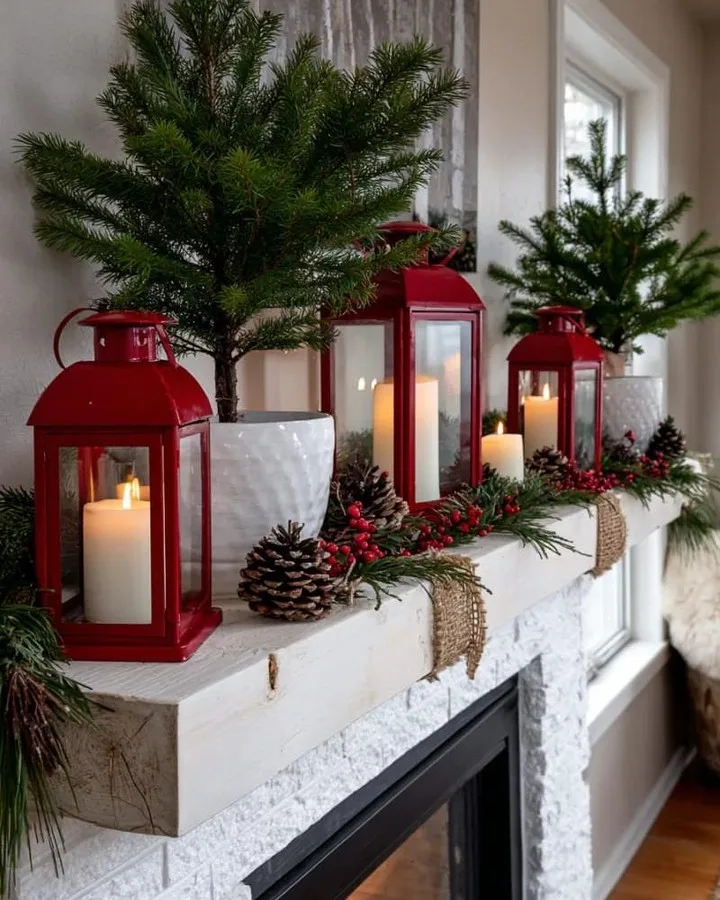
Lanterns bring height, structure and a warm pool of light to the ends of a winter mantel. Metal or wooden frames suit the season, and the candle inside stays protected behind glass, which makes lanterns one of the most practical ways to light a shelf.
Set one lantern at each end of the shelf for balance, or group two of different heights at one end only. The flame should sit roughly at the height of the mantel clock or centre picture, so the light lands on faces and books rather than the ceiling.
It suits busy family rooms where real candles would get knocked, brushed past or forgotten during the evening. Anyone who wants the mantel lit every night without thinking about it will appreciate lanterns most, especially in homes with cats that stroll along shelves.
Timers on battery candles mean the lanterns switch on at dusk and off at bedtime with no effort from you. That small habit makes the room feel welcoming the moment you walk in, and modern battery candles flicker gently enough to fool most guests.
Cheap lanterns with thin glass and sharp edges are the mistake to avoid, because they mark the shelf and feel flimsy in the hand. Check that the door opens smoothly for battery changes, and dust the glass weekly, since a dusty lantern gives dull light.
Dried Eucalyptus in a Stone Vase
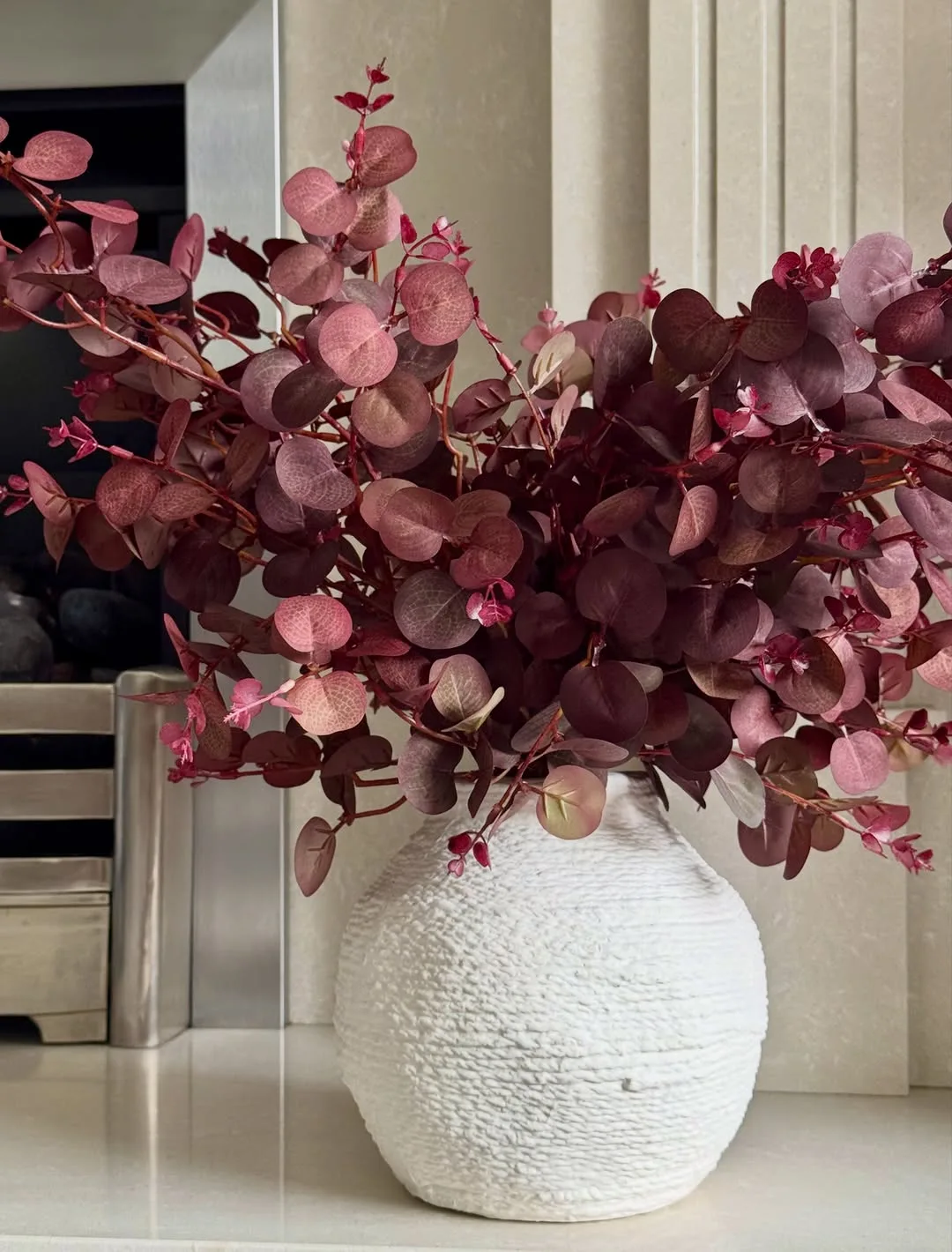
Dried eucalyptus in a heavy stone vase brings height, scent and soft grey green colour to the mantel. The round leaves catch light gently, the stems last for months without water, and the whole arrangement asks for nothing once placed, which suits busy midwinter weeks.
Fill the vase with five to seven stems and let them fan out naturally rather than forcing them upright. One vase at one end of the shelf balances a stack of logs or a lantern at the other, and trimming stems to different lengths keeps the shape soft.
It suits anyone who forgets to water plants or travels often in winter, because dried stems never wilt or drop petals in your absence. Minimal rooms benefit most, since a single vase of eucalyptus can carry a whole mantel without other decoration competing beside it.
Stone and ceramic vases in grey, cream or pale clay match the winter scheme and hold tall stems steady. Heavy bases matter more than looks here, so test a vase in the shop if you can, and add a few pebbles inside a lighter vase.
Tall stems that tower far above the mirror or picture look awkward and top heavy on most mantels. Keep the whole arrangement under about twice the height of the vase, keep dried stems well away from real flames, and shake dust off outdoors every few weeks.
Snowy Bottle Brush Trees in White and Grey
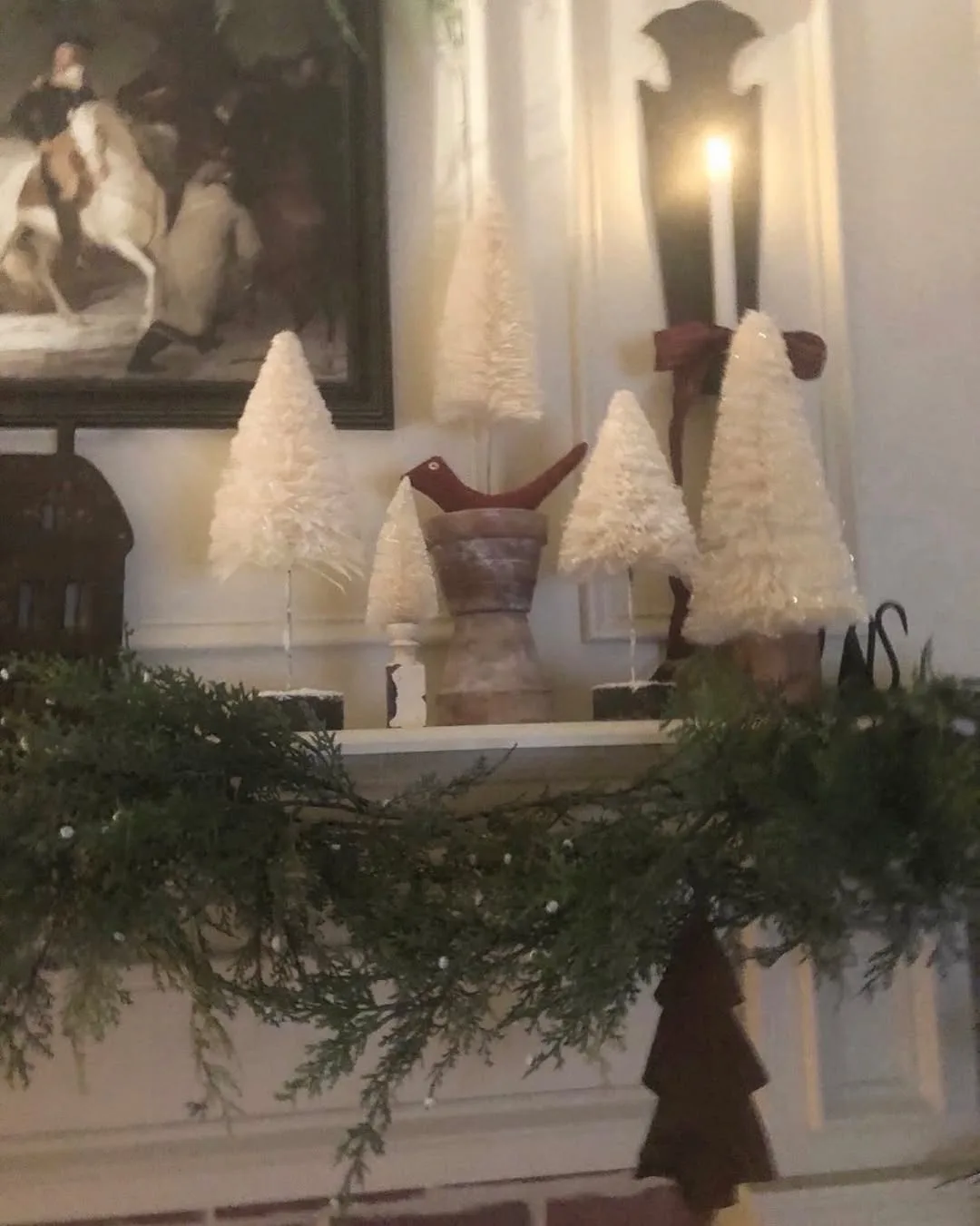
Bottle brush trees in white and grey line the mantel like a tiny snowy forest after a fresh fall. Their soft bristles catch the light, the colours stay calm, and a row of small trees adds winter charm without a single bauble, ribbon or strand of tinsel.
Group the trees in clusters of three or five, mixing heights so the skyline rises and falls along the shelf. Clusters look better than one even row, and placing a cluster beside the ceramic houses or the deer joins separate pieces into one small winter world.
It suits anyone who loved the Christmas village look but wants a calmer version that can stay until spring. Children enjoy arranging the forest, and small budgets go far here, because bottle brush trees are among the cheapest winter ornaments in any craft shop.
White trees beside grey ones give gentle contrast without any real colour at all, which keeps the palette peaceful. A little fake snow along the shelf finishes the scene, though a plain white runner underneath does the same job with far less mess to clear.
Trees in bright pink, blue or red belong to a different scheme and spoil the calm winter effect at once. Wobbly trees cause the everyday annoyance, falling over whenever a door slams, so press the bases flat or stand them on a thin wooden board.
Layered Frames With Family Photos
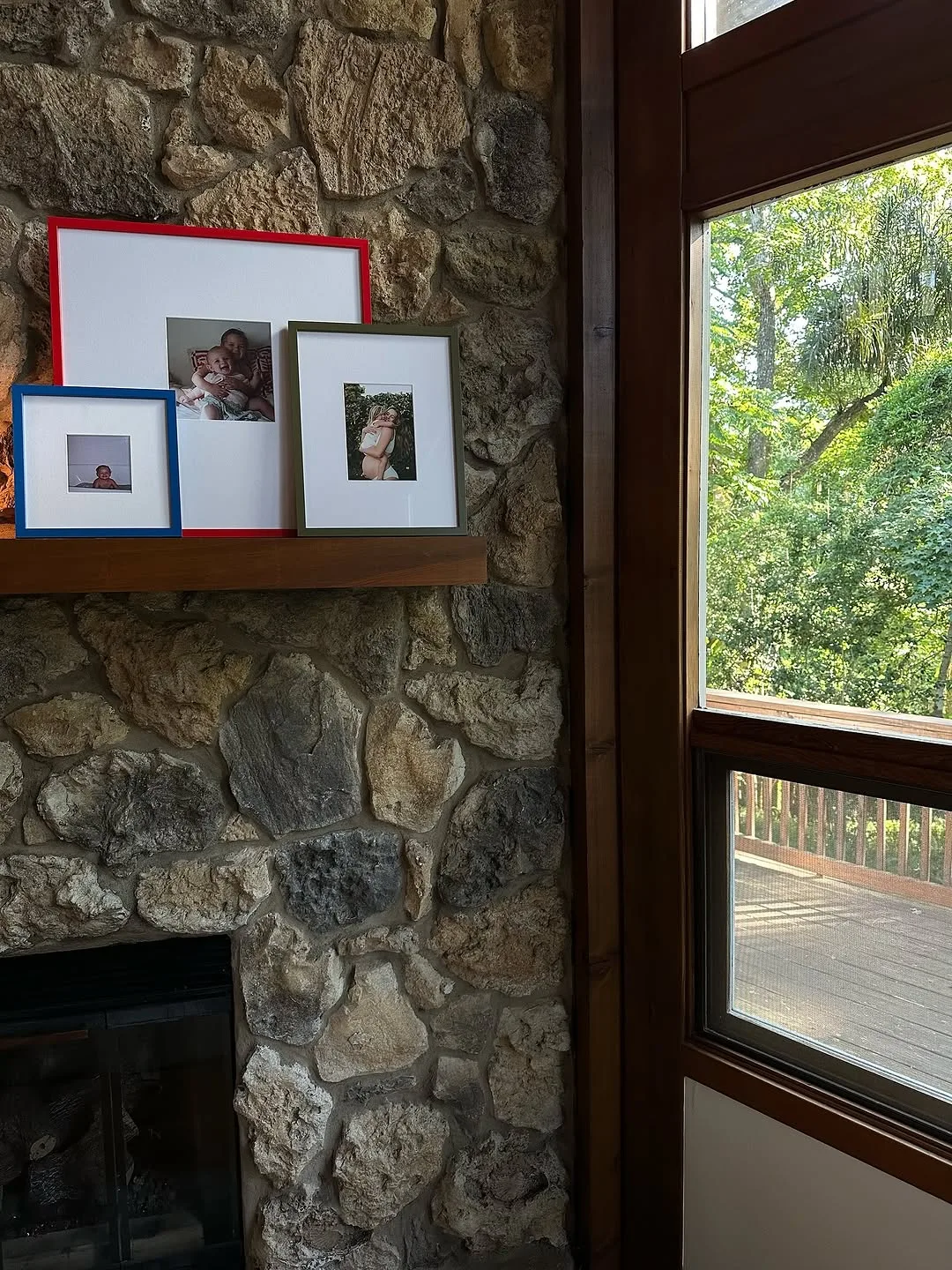
Family photographs layered along the mantel make the shelf feel personal in the quiet months after the holidays. Winter portraits, snowy holiday pictures and everyday shots of the people who live in the house all belong here, and guests always stop to look at them first.
Lean two or three frames of different sizes against the wall, with the largest at the back and smaller ones overlapping in front. Mix one or two frames standing on small easels if the shelf is deep, and keep frame colours within wood, black or white.
It suits households that take plenty of photos and rarely print them, because the mantel becomes a small gallery that changes through the year. Grandparents love this idea most of all, and it gives visiting family something warm to talk about on cold evenings.
Black and white prints suit the winter palette especially well and make photos from different years sit happily side by side. Printing at home or through a cheap online service costs very little, and swapping prints each month keeps the display fresh without buying anything.
Frames that are all the same size in one straight row look like a shop shelf rather than a home. Glass that reflects the window is the other common problem, so angle frames slightly or move the worst one where daylight does not strike it directly.
Woven Basket With Extra Logs Below
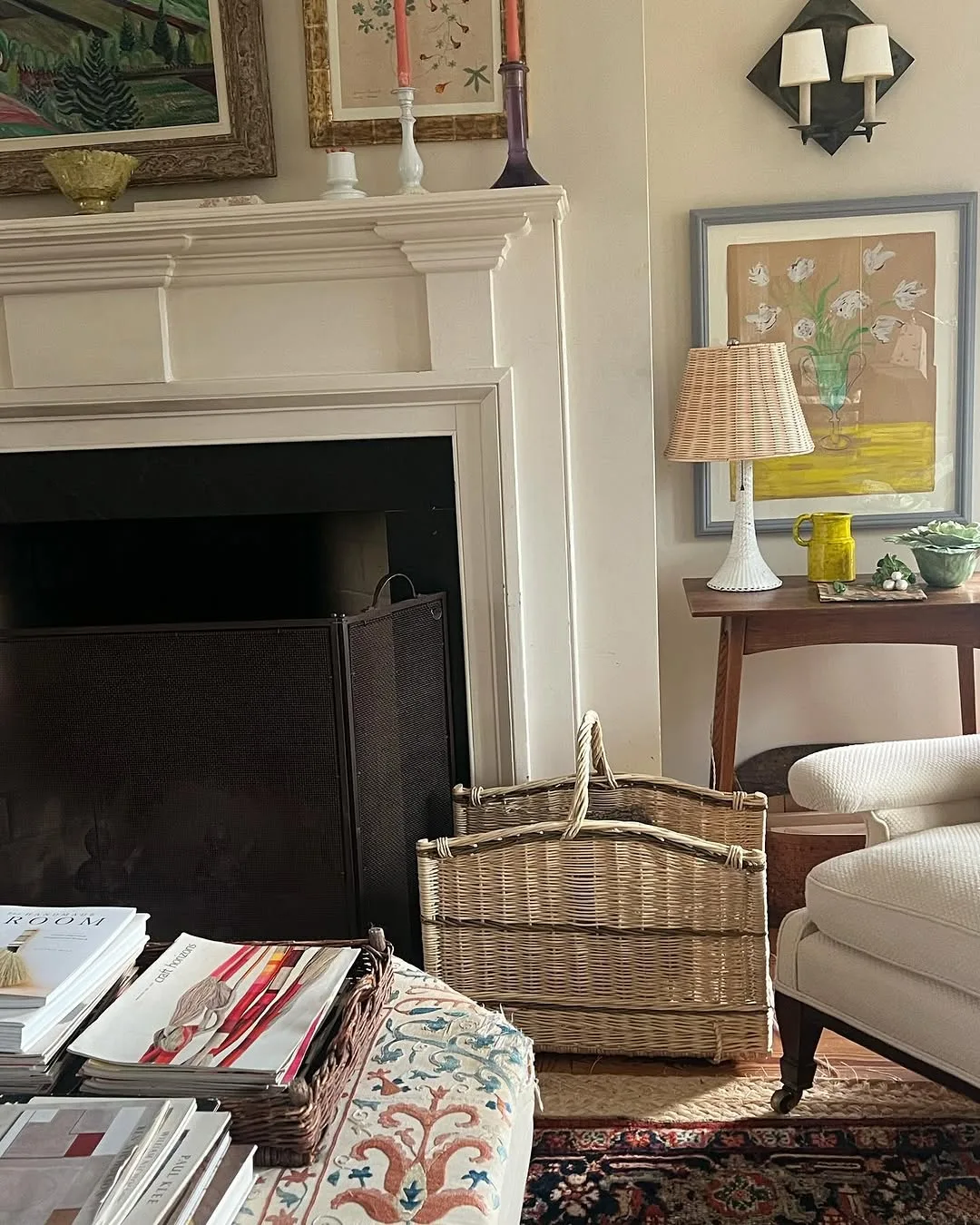
Below the mantel shelf, a woven basket of extra logs completes the winter picture and serves the fire at the same time. The basket fills the awkward space beside the hearth, its natural weave echoes the wood tones above, and the whole fireplace corner looks planned.
Fill the basket about three quarters full so the logs look generous without spilling onto the floor. Stand the straightest logs upright around the edge and lay shorter pieces in the middle, keeping one or two pale birch logs on top where their bark shows.
It suits every home with a working fire, a wood stove or even a decorative fireplace that needs a reason to exist. Anyone tired of logs stacked in a plastic box or a carrier bag by the hearth will find a good basket lifts the corner instantly.
Extra baskets earn their keep all year, holding blankets in spring and kindling next winter, so a sturdy one is money well spent. Charity shops and winter sales often hide excellent baskets for very little, and a simple woven one in natural tones outlasts cheap imitations.
Bark, soil and small insects arrive with real logs, so shake and brush each log outdoors before it comes into the basket. A washable cloth in the bottom catches the mess, and keeping the basket a safe distance from the open fire stops the weave drying out.
Common Mistakes
Overcrowding the shelf is the mistake behind most winter mantels that feel wrong without an obvious reason. When every inch holds an object, the eye has nowhere to rest, so remove pieces one at a time until the display breathes again, even if half of them go back into storage.
Colour clashes creep in when red and gold Christmas pieces stay on the shelf beside calm winter neutrals. Pack every strongly festive item away in January, even favourites, because the winter look depends on a quiet palette of white, cream, grey, wood and green with nothing shouting over it.
Candles placed too close to garlands, dried eucalyptus or paper artwork create a real fire risk on a winter mantel. Keep flames in wide, stable holders, leave clear space around every flame, blow candles out before bed, and choose battery candles anywhere greenery hangs low.
Height balance goes wrong when everything on the shelf stands at the same level or one end towers over the other. Build one or two gentle high points with a vase, mirror or stack of logs, keep the middle lower, and check the outline from the doorway.
Dust dulls a winter display faster than most people expect, settling on greenery, glass and pale ceramics within a fortnight. A soft brush over the whole shelf each week keeps colours true, and shaking garlands and dried stems outdoors stops the dust simply moving rooms.
Budget Friendly Winter Mantel Decor Ideas for a Calm Home
Start with what you already own, because most winter mantels need editing rather than shopping. Plain candles, frames, mirrors, baskets and vases from other rooms can move to the mantel for free, and simply removing the festive colours transforms the shelf before you spend anything at all.
Shop your own storage boxes next, hunting for white, cream and wooden pieces that were packed away with the Christmas things. Neutral items often hide in holiday boxes, and finding them in January feels like getting new decorations for nothing more than opening a lid.
Branches, pinecones and logs from the garden or a winter walk cost nothing and carry most winter displays on their own. Evergreen offcuts from a hedge, fallen cones dried by the fire and pale sticks in a vase give texture and scent that shops cannot sell you.
Secondhand shops overflow with frames, vases, mirrors and baskets in January as other households clear their shelves. Prices drop after Christmas too, so the same money buys better quality, and one good secondhand mirror or stone vase can anchor your mantel for many winters.
Spend whatever small budget remains on the one or two pieces you will touch daily, such as good candles or a sturdy basket. Money placed where your hands and eyes go most often works harder than money spread thinly across a shelf of small, forgettable ornaments.
Winter Mantel Styling Tips
Keep the palette to three main colours and repeat them at least three times along the shelf for a settled look. White, wood and green carry most mantels, and repeating each colour in different materials, such as wax, wool and leaves, makes the scheme feel planned.
Work in odd numbers whenever you group objects, because threes and fives look relaxed while pairs can feel stiff and formal. One group of three candles, five trees or three frames will nearly always please the eye more than the same pieces arranged in matching couples.
Light shapes the mood of the room more than any ornament, and the softest winter mantel decor ideas use candles, lanterns and mirrors to stretch the little daylight winter gives. Place light sources at different heights so the glow spreads across faces, books and walls.
Step back to the doorway and look at the mantel the way a visitor sees it before you call the job finished. Squinting slightly blurs detail and shows the big shapes clearly, which reveals a lopsided end, a gap in the middle or a piece standing too tall.
Safety belongs in styling, not as an afterthought once everything looks pretty and the candles are lit. Keep real flames away from anything that can burn, use holders that cannot tip, fit battery candles near low greenery, and never leave a flame burning in an empty room.
Change one small thing each week or two, such as fresh greenery, a different photograph or a new candle, to keep the display alive. Small changes stop the mantel fading into the background of daily life, and they spread the pleasure of styling across the whole season.
Frequently Asked Questions
How do I style a mantel after Christmas without it looking bare?
Begin by keeping the greenery and candles from your Christmas display and removing only the red, gold and glittery pieces. What remains is the calm base of a winter display, and adding wood, white ceramics and a mirror or picture fills the gaps until the shelf looks full again.
Which colours work best on a winter mantel in January and February?
Soft whites, cream, pale grey and natural wood form the base of the palette, with evergreen and eucalyptus green as the living colour on top. Silver and clear glass add a little sparkle for the evening, while black frames or a black mirror edge give the pale scheme welcome definition.
Can I style a mantel if my fireplace never gets used?
Yes, and an unused fireplace is often easier to style because winter mantel decor ideas do not depend on real flames at all. Battery candles, lanterns and fairy lights give the glow safely, a basket of logs still looks right below, and the hearth can hold candles or books.
How can I keep candles on a mantel safe through winter?
Place every candle in a wide, heavy, heatproof holder on a level part of the shelf, well away from garlands, dried stems and artwork. Burn candles only while someone is in the room, snuff them before bed, and switch to battery candles anywhere near low hanging greenery or curious pets.
What can I use instead of a garland on the mantel?
Wooden bead strands, a folded woollen runner, a row of small trees or a line of ceramic houses all cover the shelf edge happily without a garland. Dried stems in two vases at either end give the same finished feeling, and a mirror above can carry the display almost alone.
How long can a winter mantel display stay in place?
Most winter styling looks right from the start of January until the first spring flowers appear, which gives you two to three months of use. Swap greenery when it fades, change photographs now and then, and the same display will carry the room gently from deep winter into early spring.
More Ideas to Explore
Winter styling continues across the rest of the house in these companion guides. Dress the fireplace for the festive weeks with christmas mantel decor ideas, layer soft glow from winter candle decor ideas on shelves and tables, carry the calm into sleep spaces with winter bedroom decor ideas, and warm the heart of the home with winter kitchen decor ideas.
Conclusion
Winter mantel decor ideas work best when they feel calm rather than empty, and every idea in this guide follows that simple rule. Greenery, candles, wood and white ceramics turn the shelf into a quiet focal point that suits the slowest, darkest weeks of the year.
Pick three ideas that suit your room and your budget, and begin with those instead of trying everything at once. A garland, one strong centrepiece and a source of soft light will carry most mantels, and you can add the deer, the village or the trees whenever you are ready.
Small weekly care keeps the whole display looking fresh from January to March with very little effort involved. Dust the shelf, trim or replace tired greenery, wipe the mirror and votives, and check that every candle still stands straight and burns cleanly before lighting it again.
Your mantel does not need to impress anyone or follow anyone else's rules to be worth styling this winter. Build it from things you love, keep it safe and calm, and let it be the warm heart of the room until spring light finally returns. Keep these winter mantel decor ideas saved for the quiet weeks after Christmas, when the house needs calm more than sparkle.