Outdoor Christmas Light Ideas for a Magical Yard
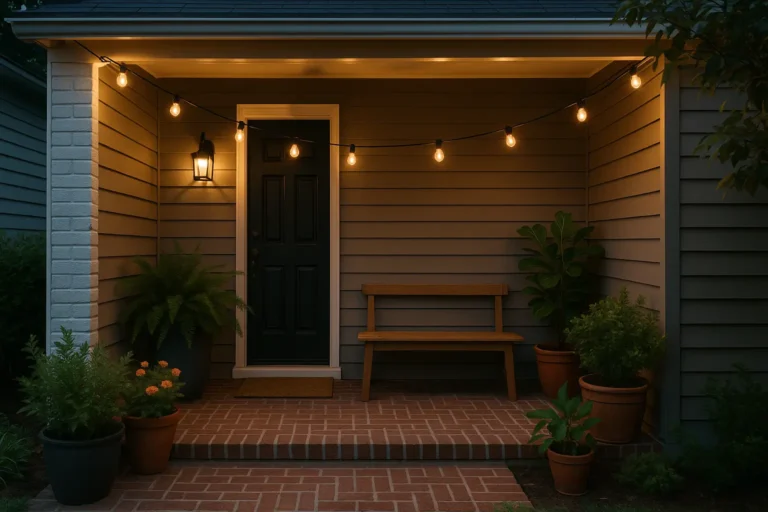
December evenings feel special when a home glows softly from the street, and good outdoor christmas light ideas turn an ordinary yard into a warm welcome.
Neighbours often smile when they pass a house that sparkles with care, yet the best displays rarely cost the most money. Thoughtful planning matters more than quantity. Choosing one colour story, measuring before buying, and placing lights where eyes naturally travel beats random strands draped in a hurry.
Planning ahead saves money, time and cold fingers. Note the roofline, the front door, large trees, bushes and the path. Decide which features deserve light first, then build around those anchors.
What Are the Best Outdoor Christmas Light Ideas to Start With?
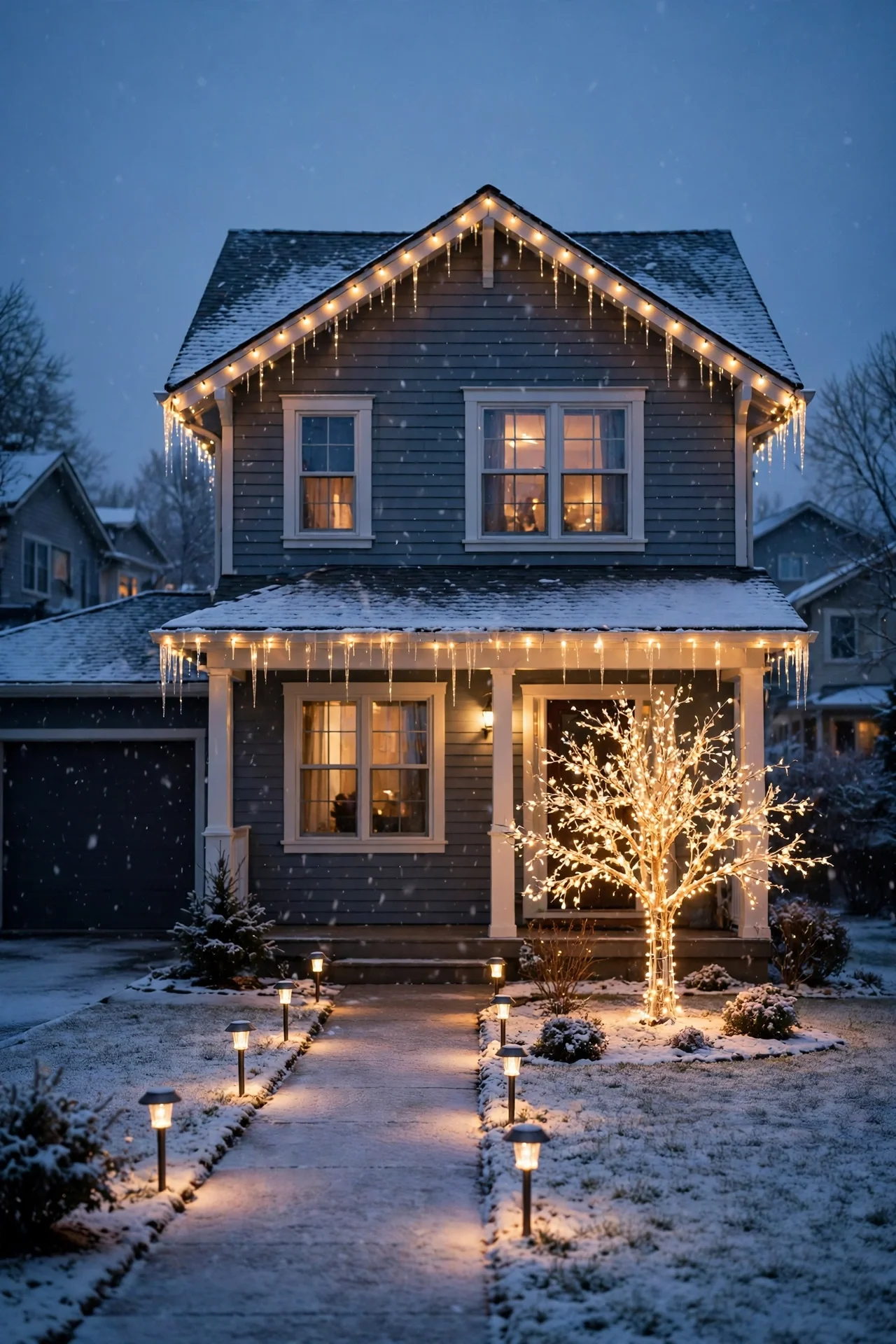
Start with the roofline, the front door and one large tree or bush, because those three spots give the biggest effect for the least effort. Many outdoor christmas light ideas build on that simple base. Add pathway lights for safety, then fill gaps only when the basics look balanced.
Simple warm white bulbs suit almost every house and never fight with wreaths, garlands or coloured ornaments nearby. Beginners do well with one colour family and one repeated shape, such as steady bulbs along every edge.
Most beginners should buy a few quality strands, plastic clips, an outdoor timer and a sturdy extension cord made for outdoor use. Work during daylight, keep cords off walkways, and use a protected outdoor socket for safety through rain and frost.
Classic Warm White Roofline Lights
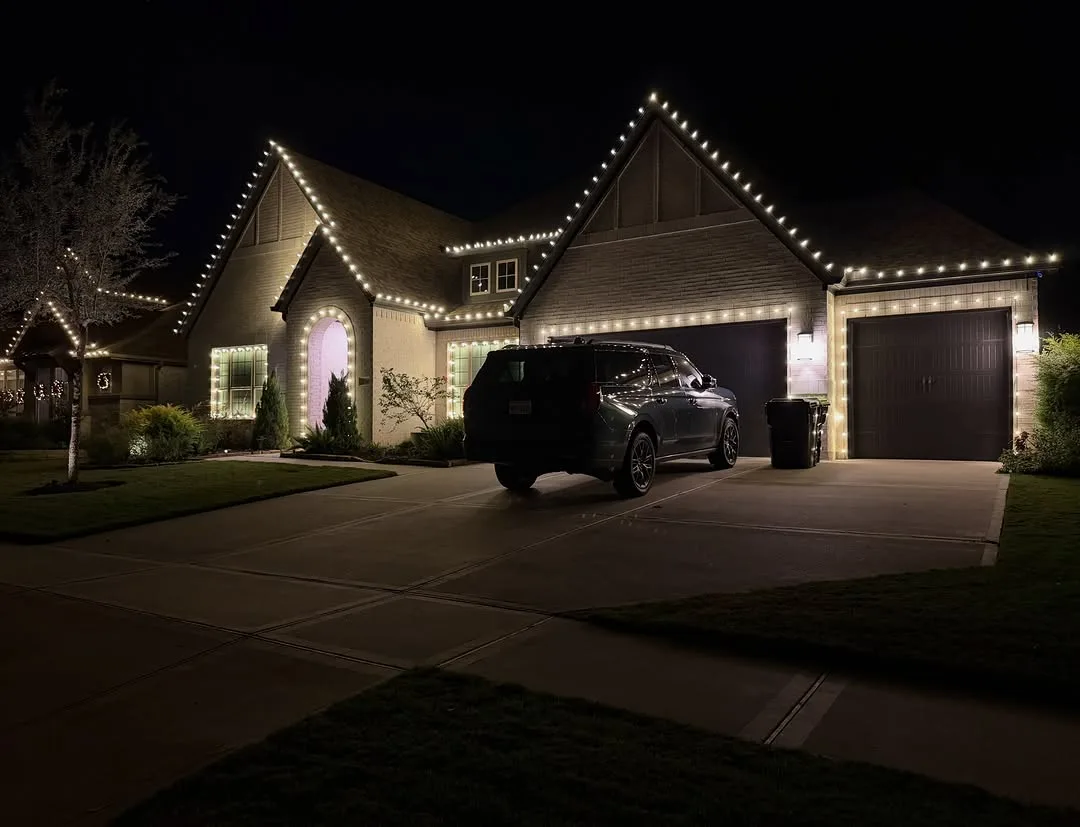
Roofline strands of warm white bulbs trace the front edge of the house and give the display its clean outline. Bulbs sit in a straight row along the gutter or fascia board, glowing like a drawn line of light.
Measure the roofline with a long tape or a ball of string before buying anything, then add a little extra length for corners. Attach bulbs with plastic clips made for gutters or shingles, spacing them evenly. Work from a steady ladder with a helper, and move the ladder instead of leaning.
Homes of every size suit this look, from small cottages to tall family houses with several roof levels. Brick, wood and painted walls all carry warm white light well. First time decorators find the method forgiving, because one straight line looks tidy even when the rest of the yard stays simple.
Clip every bulb rather than every second or third bulb, because even spacing stops the line from looking patchy after dark. Photograph the roofline from the street on the first evening and adjust sagging sections the next day. Small corrections early keep the display polished all season without extra spending.
Leaving bulbs to hang from old nails or staples causes most roofline problems. Skipping the measuring step also hurts, because a short strand forces an ugly join or a dark gap above the door.
Icicle Lights Along the Eaves
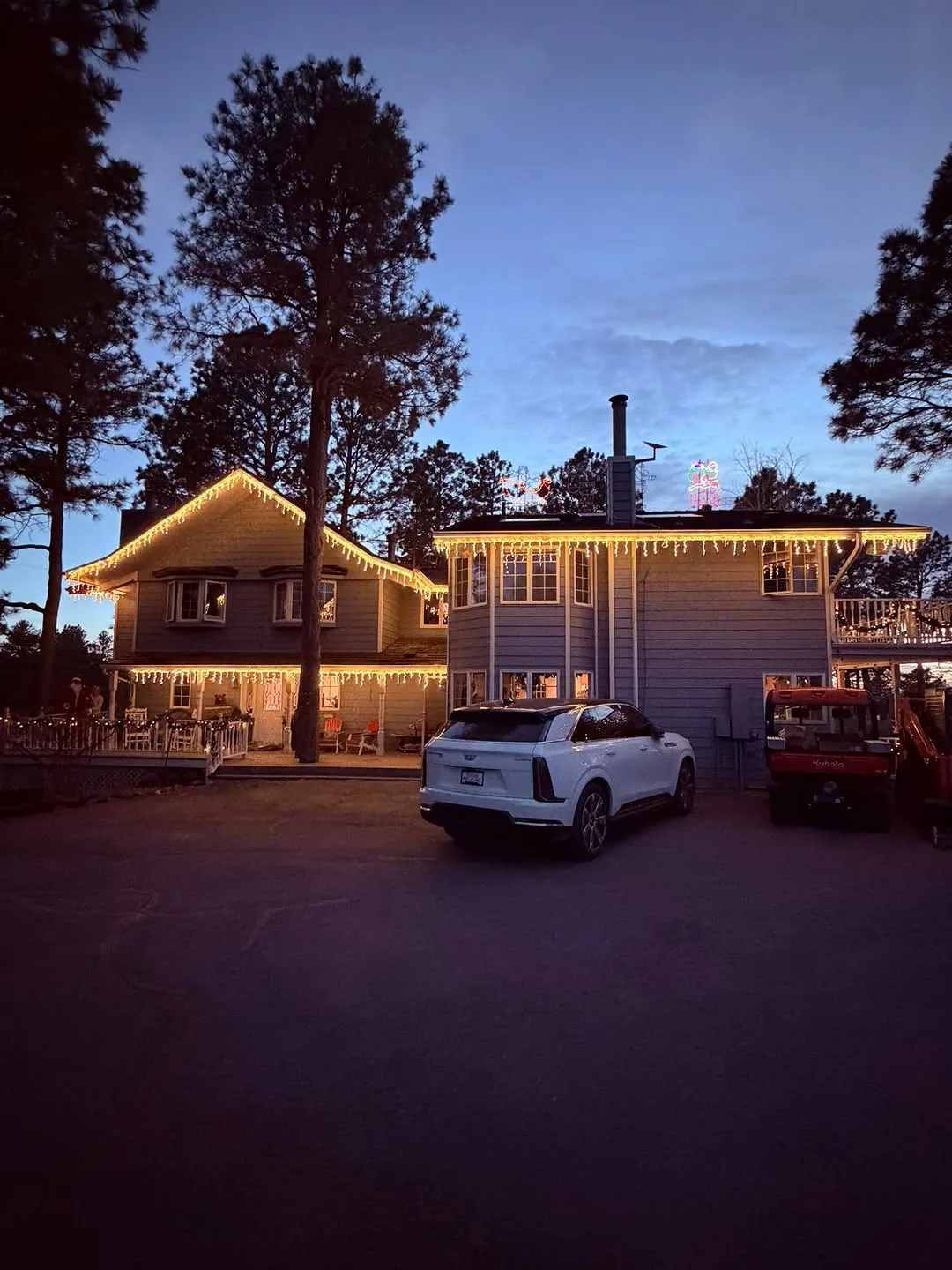
Icicle strands hang from the eaves in drops of different lengths, copying real ice catching the light. Short and long drops alternate along a main cord, and the row shimmers gently when a breeze moves it. Cool white bulbs give the crispest frozen effect, while warm white feels softer.
Hang icicle strands from gutter clips so every drop falls freely and hangs straight down. Keep the main cord tight along the edge, because sagging sections make drops bunch together.
Families who love a winter wonderland mood enjoy icicle lights most, especially on homes with wide eaves and a clear view from the road. Houses near trees look magical when icicles glow above snowy bushes.
Gentle handling during storage keeps icicle strands useful for years. Coil each strand loosely around cardboard in January, keeping drops untangled and bulbs unbroken. Label the coil with its length and hanging spot.
Mixing old icicle strands with new ones often disappoints, because bulb colours rarely match between brands and years. One row may glow warm while the next looks blue. Buying all strands for one eave in the same season and from the same range avoids that patchy, uneven finish.
Wrapped Tree Trunks and Branches
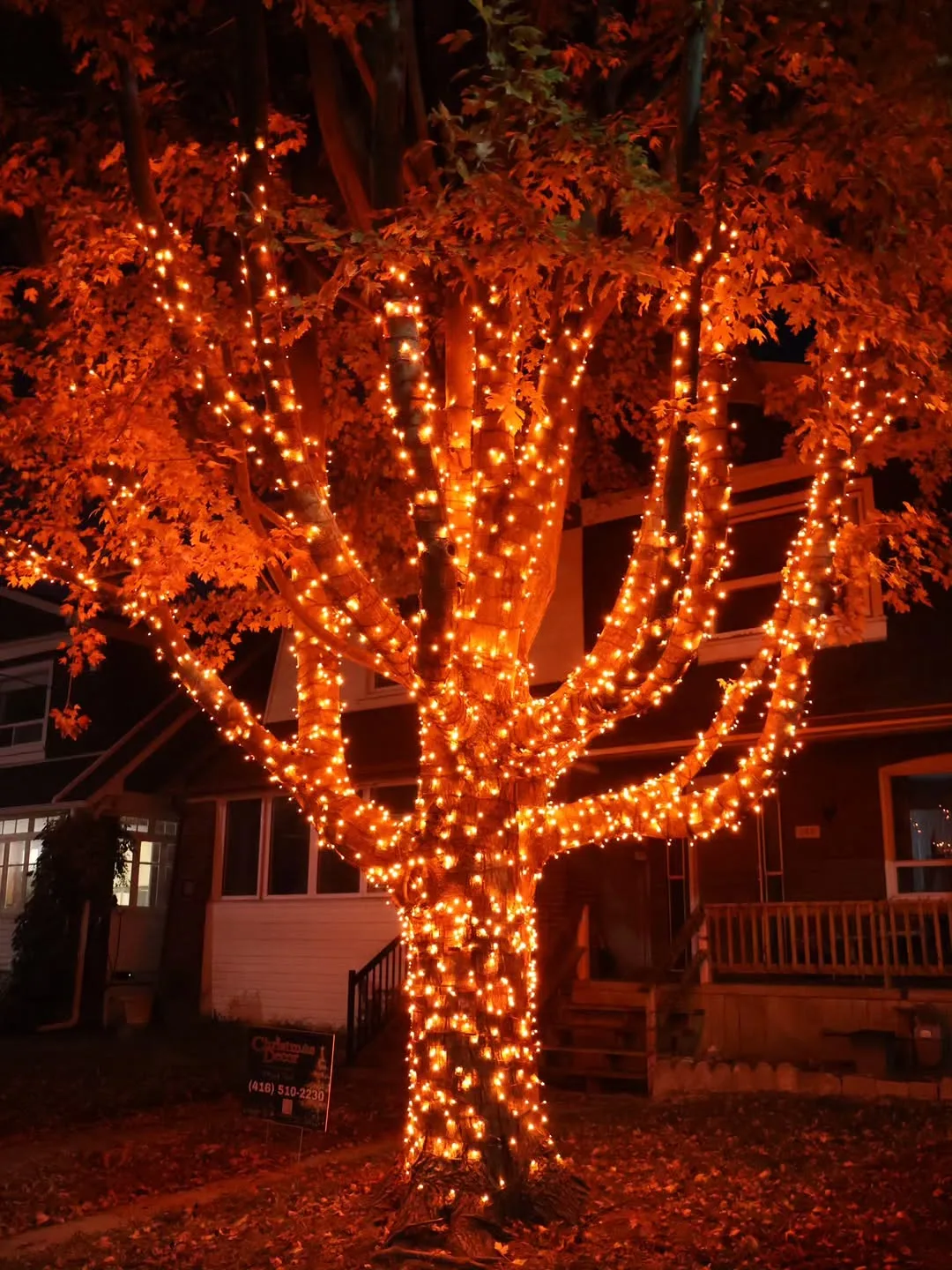
Bare winter branches become sculptures of light when strands wind around trunks and climb into the canopy. Wrapped trees rank among the most loved outdoor christmas light ideas because one tree can anchor a whole front yard.
Begin at the base near an outdoor socket or a weatherproof extension cord, and wind upward in steady spirals about a hand span apart. Keep the cord snug without cutting into bark. Step back often to check the shape from the street, because gaps hidden from below show clearly there.
Gardens with one strong tree gain the most, though a pair of smaller trees flanking the driveway also looks wonderful. Evergreen trees take a looser wrap through outer branches, while bare deciduous trees show every spiral.
Soft white bulbs flatter most bark colours, but one tree wrapped in gentle gold can become a lovely focal point near the door. Wrapping the lowest branch tips adds sparkle at eye level for guests on the path.
Wrapping strands too tightly damages bark and bulbs, and tight cords become harder to remove in January. Another common slip is wrapping every tree in the yard, which turns a calm scene into a bright forest with no focal point.
Lighted Pathway Stakes
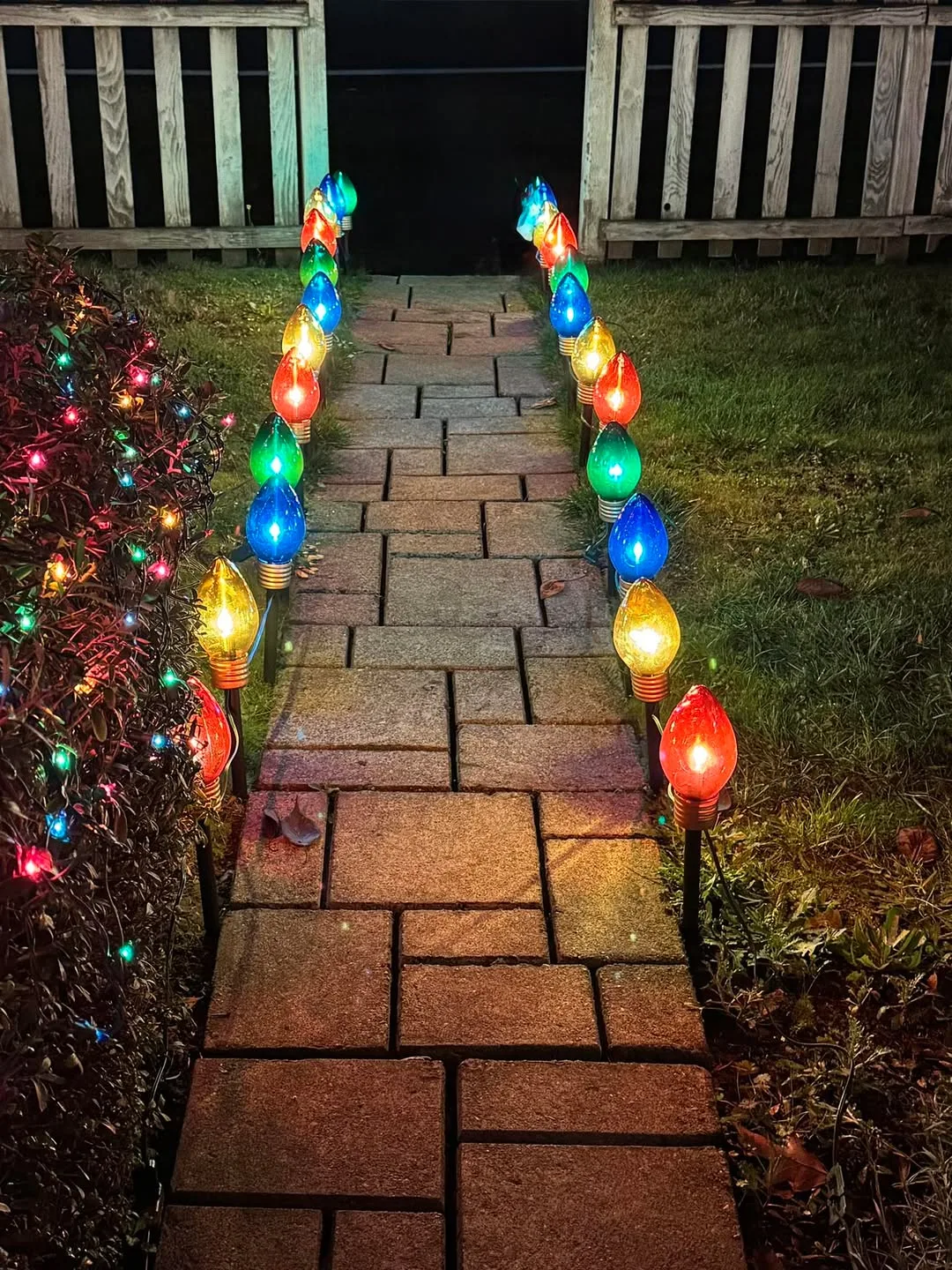
Guests appreciate a clearly lit route from the street or driveway to the front door, and pathway stakes deliver light exactly at foot level. Short posts topped with small bulbs push into the soil along both path edges.
Push stakes into soft soil before the ground freezes hard, keeping each one upright and level with its neighbours. Run the connecting cord along the back edge of the path where feet rarely reach. Space stakes about one large step apart, then walk the route after dark to check for gaps.
Busy households with children, grandparents and delivery visitors benefit most from clear path lighting. Snowy regions gain extra value, because low lights still show the route when taller lamps wear white caps.
Place one stake near any change in level, such as a single step or sloped section, even when spacing becomes slightly uneven there. Safety beats perfect symmetry every time. Choosing stakes with replaceable bulbs also helps, because one failed bulb near the door can be swapped in minutes.
Spacing stakes far apart to stretch a short set across a long path leaves pools of darkness between weak glows. Buying enough stakes for the full route, or lighting only the section nearest the door, gives a safer result.
Net Lights Over Bushes and Hedges
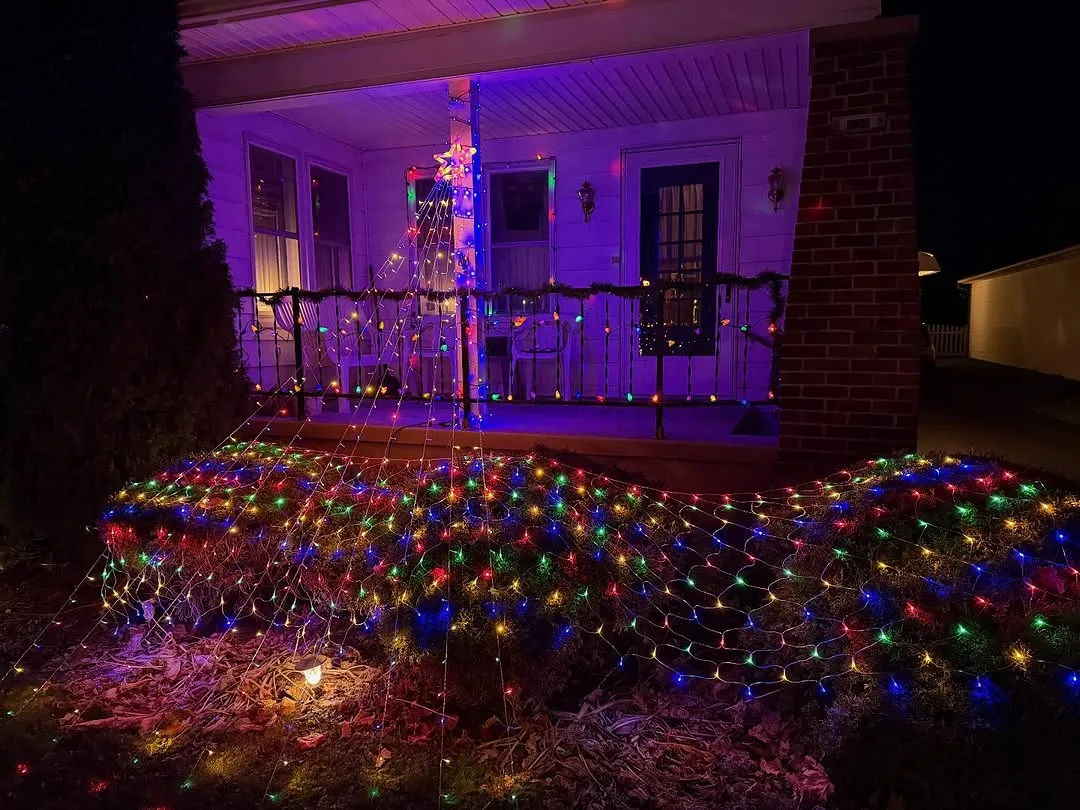
Net lights come as a woven grid of small bulbs that drapes over a bush like a glowing blanket. Even coverage appears in minutes, with no need to wind strands around individual branches. Round shrubs, box hedges and low evergreen borders all take nets beautifully and look neat from the street.
Drape the net over the top of the bush and let the edges fall evenly on all sides, then tuck loose corners underneath so wind cannot lift them. Match the net size to the bush before buying. Connect the cord at the hidden back side, keeping plugs off the wet ground.
Anyone short on time loves net lights, because three bushes can glow within half an hour. Gardeners with matching shrubs along a fence gain a tidy, repeated rhythm that looks planned and calm.
Choose net colours to match the rest of the display rather than mixing warm and cool sets on neighbouring bushes. Photograph the row after dark and shift any crooked net, because small twists show clearly in pictures.
Pulling a net tightly across a bush bends branches and leaves bright spots where bulbs cluster against leaves. Loose draping with a little slack looks fuller and kinder. Covering flowering shrubs that need winter pruning also backfires, because the net tangles in cut branches and slows the garden job.
Window Frame Outline Lights
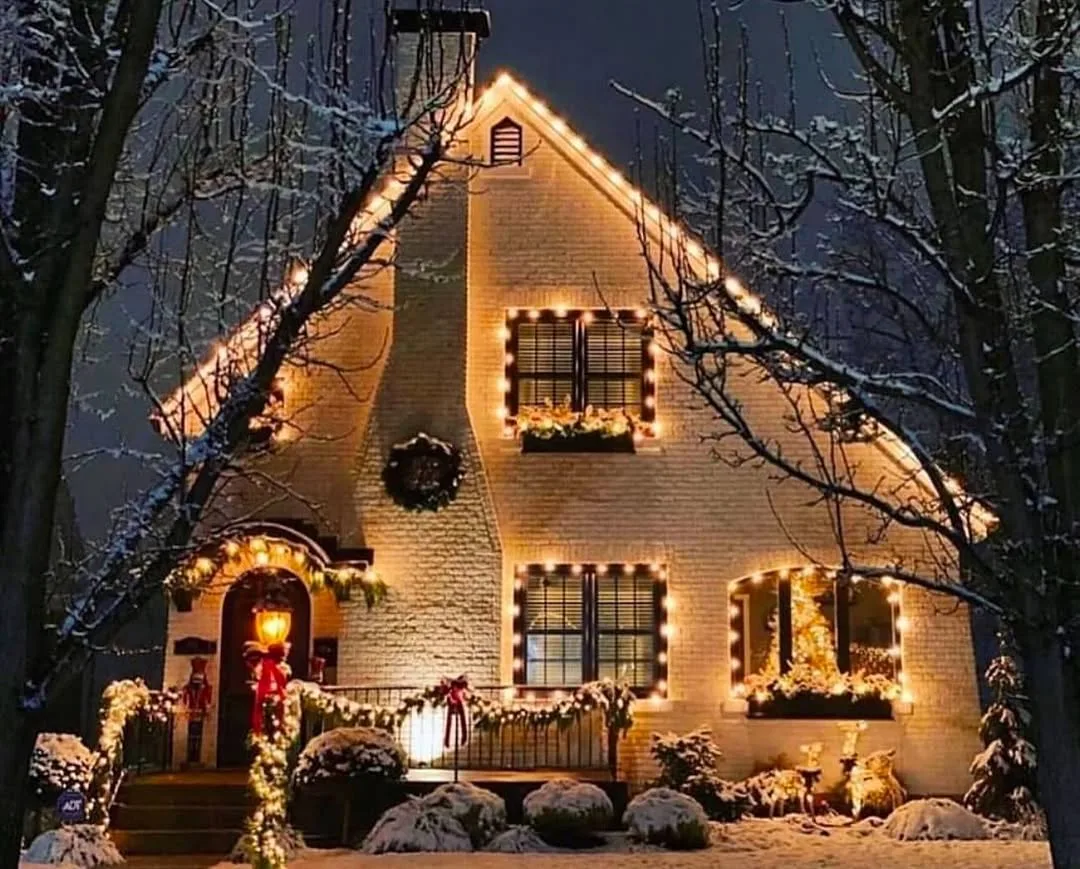
Window frames outlined in light turn plain glass into warm pictures that glow from the street. A single strand follows each frame edge, echoing the shape of the house. Two front windows framed alike give balance, while one large picture window framed alone makes a strong, simple statement.
Trace each frame with a tape before shopping, counting all four sides plus the drop down to the socket. Fix the strand with clips made for frames or siding, keeping bulbs facing outward.
People who prefer decorating without long ladder sessions enjoy window outlines, because many frames are reachable from a small step stool. Townhouses and homes with little yard space gain strong curb appeal here.
White or warm bulbs keep window outlines elegant, while one window in a soft colour can delight children whose bedroom faces the street. Pairing framed windows with a simple wreath in each pane adds depth without clutter.
Forgetting to check how the strand looks from inside causes a common annoyance, because clips and cords can block the view or rattle against glass. Test one window first and view it from the sofa.
Porch Column Spiral Lights
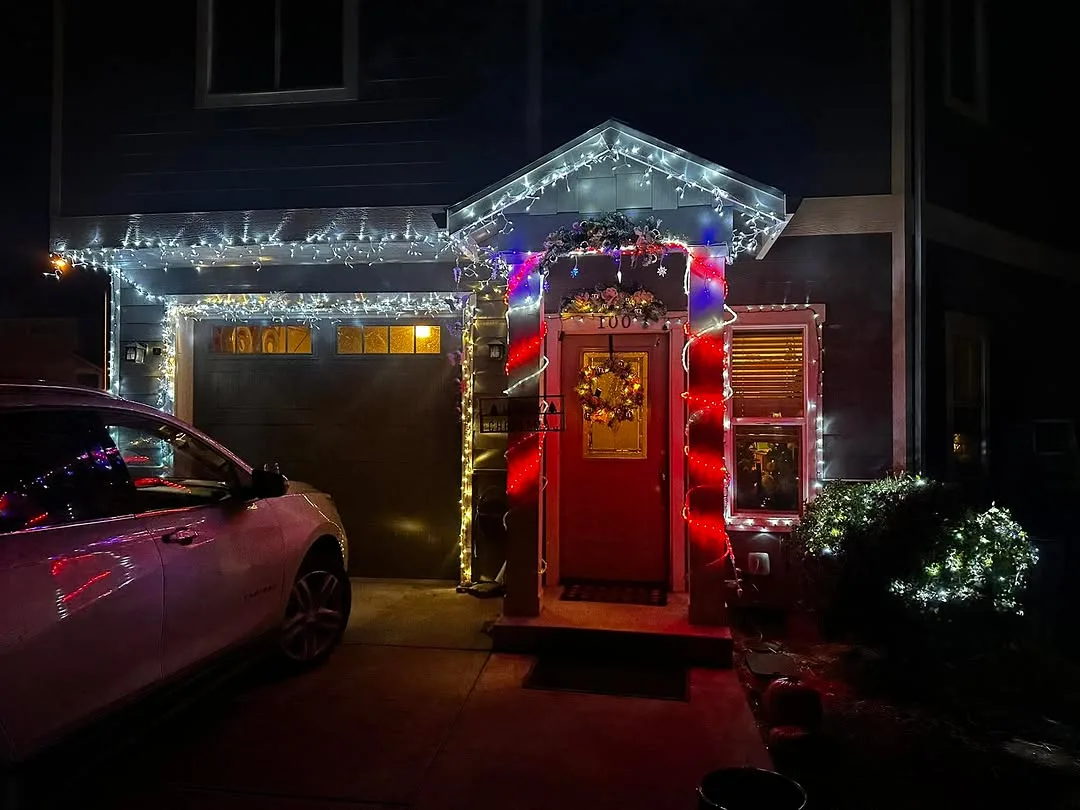
Porch columns wrapped in spirals of light frame the front door like glowing pillars. Strands wind evenly from base to top, giving the entrance height and ceremony. Adding a simple wreath between the columns completes a doorway scene that guests remember long after the visit ends.
Wind the strand upward in steady turns, keeping gaps even by eye and checking from the steps below. Secure the top and bottom ends with soft ties or clips so gravity cannot slide the spiral down overnight.
Couples hosting Christmas dinners and families who photograph children by the door love the column look. Homes with plain entrances gain instant character, and porches with railings can echo the spiral on a smaller scale.
Leave a small gap between the spiral and painted wood by avoiding tight pressure on painted surfaces. Battery strands suit columns far from sockets, though mains power gives steadier brightness for long evenings.
Yanking strands off columns in January strips paint and snaps bulbs, so unwind slowly and coil each strand as it comes down. Wrapping columns in different colours on each side also looks odd from the street.
Soft Projector Glow on the House Wall
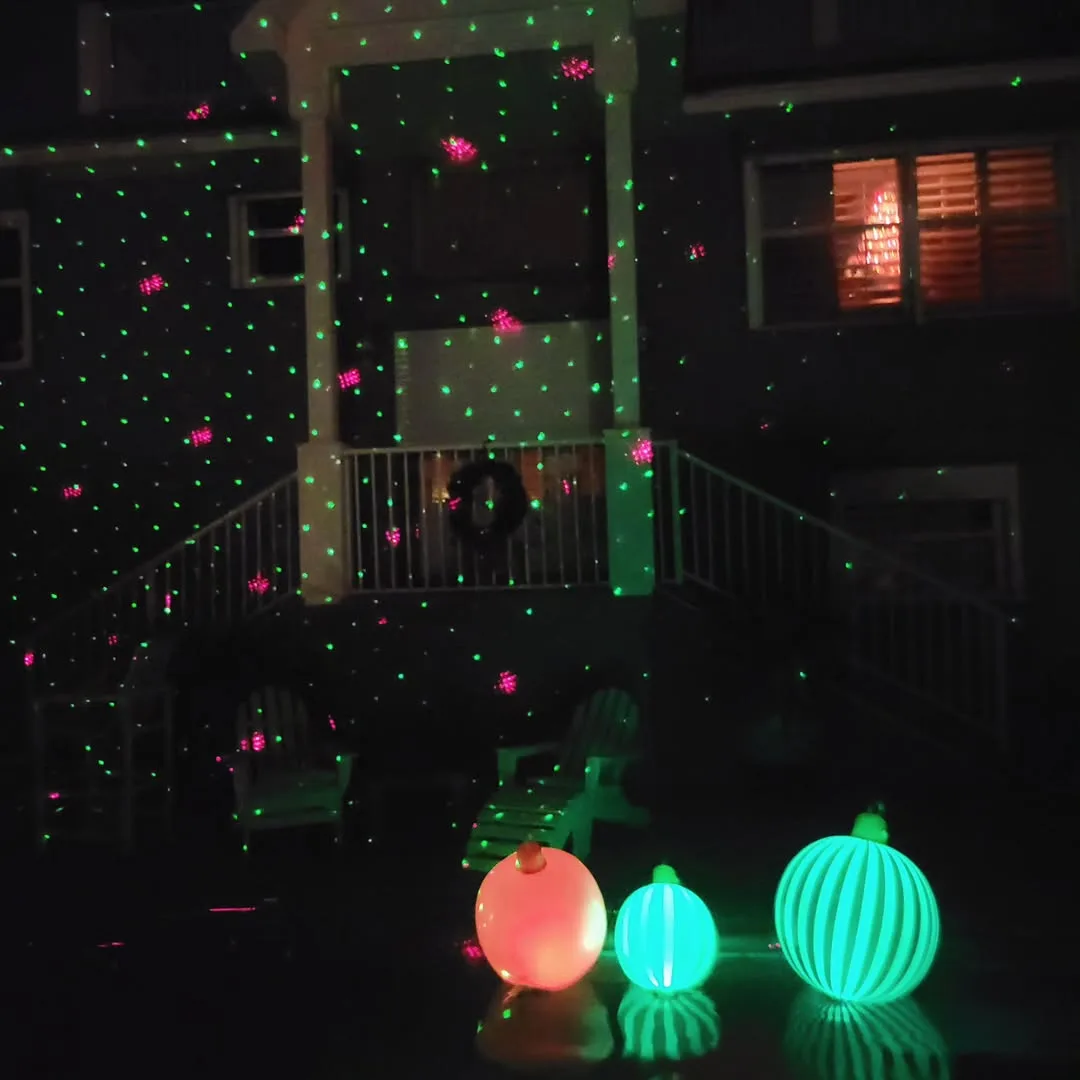
Projectors cast gentle patterns of snowflakes, stars or soft colour washes onto a blank house wall from one small ground unit. No ladders, clips or long cords are needed, making projectors the fastest decorating tool here.
Point the projector from a spot roughly three to five metres from the wall, angled slightly upward for the widest spread. Stake the unit firmly and aim it away from windows of neighbouring homes and passing traffic.
Small front yards and homes with one large blank wall suit projectors best. Busy families who decorate late in the season gain a full display in ten minutes. Projectors also help anyone unable to climb ladders, since everything happens at ground level with a remote and a timer.
Dark walls show projector patterns faintly, so pale siding gives the prettiest results. Pairing a projector with a few real strands along the door keeps the display grounded.
Aiming a projector through tree branches breaks the pattern into confusing patches that dance in the wind. Clear sight lines matter more than fancy effects. Buying the brightest unit available is another frequent slip, because gentle light that matches the display always looks classier than a wall of glare.
Garland and Lights Around the Front Door
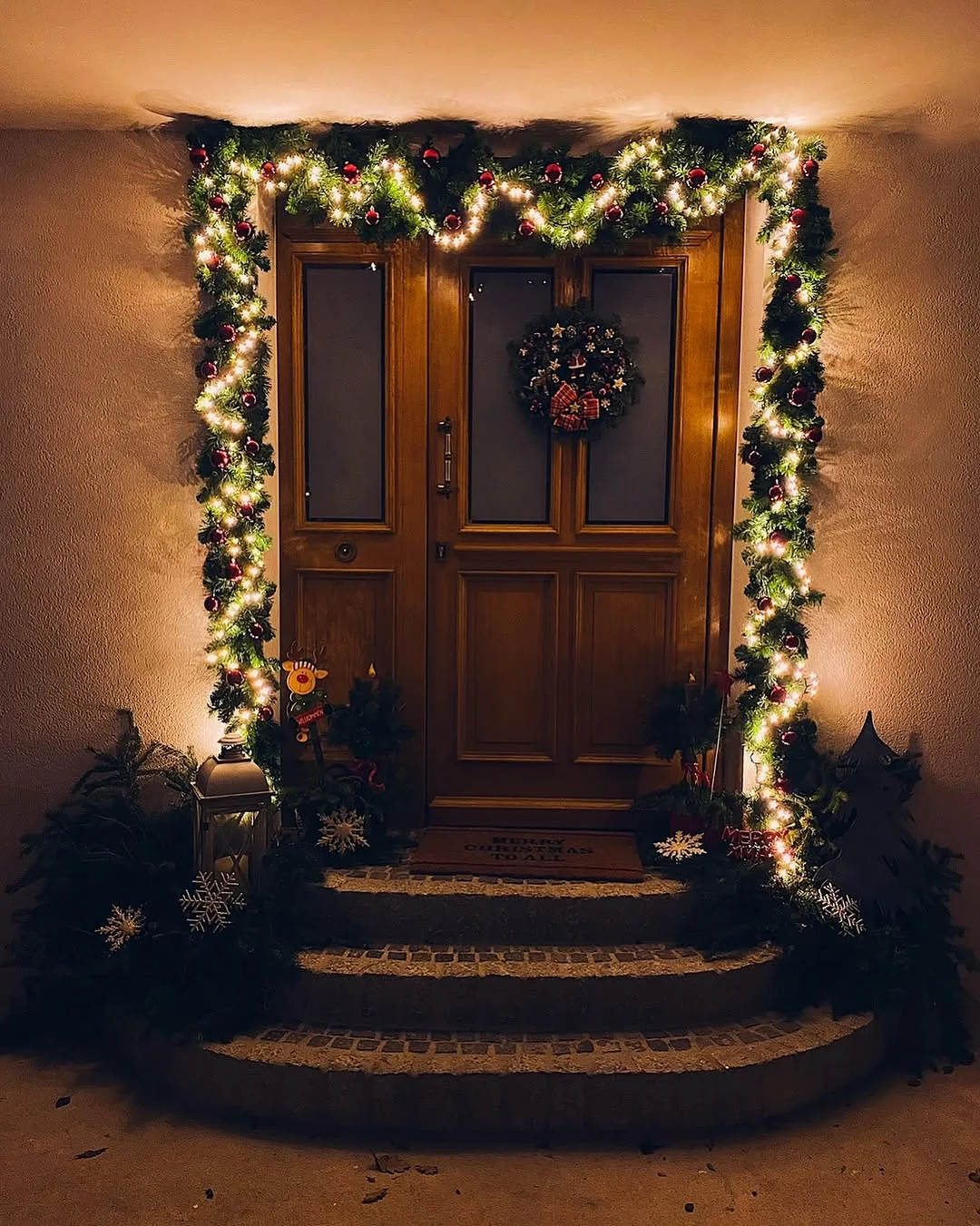
Doorways dressed with a garland threaded with small lights give guests the warmest possible arrival. Greenery softens the door frame, berries or pinecones add texture, and tiny bulbs tucked inside the leaves glow softly.
Hang the garland on hooks or a frame hanger that needs no nails, letting it follow the frame on both sides. Weave a battery strand through the greenery before hanging, spacing bulbs evenly and hiding the battery pack behind leaves.
Welcoming hosts who greet many visitors in December get the most joy from a dressed doorway. Homes with plain doors and little porch space still achieve a full festive scene in one small area.
Add a matching wreath at eye level and keep colours in line with the roofline and path lights for a joined up look. Scented greenery near the door delights guests before they even knock.
Stapling garlands directly into door frames splits wood and leaves holes that show all year. Heavy garlands on weak hooks also crash down on windy nights, scattering bulbs across the steps. Weigh the finished garland, choose hooks rated above that weight, and check the fixings weekly during storms.
Lanterns with Fairy Lights on the Steps
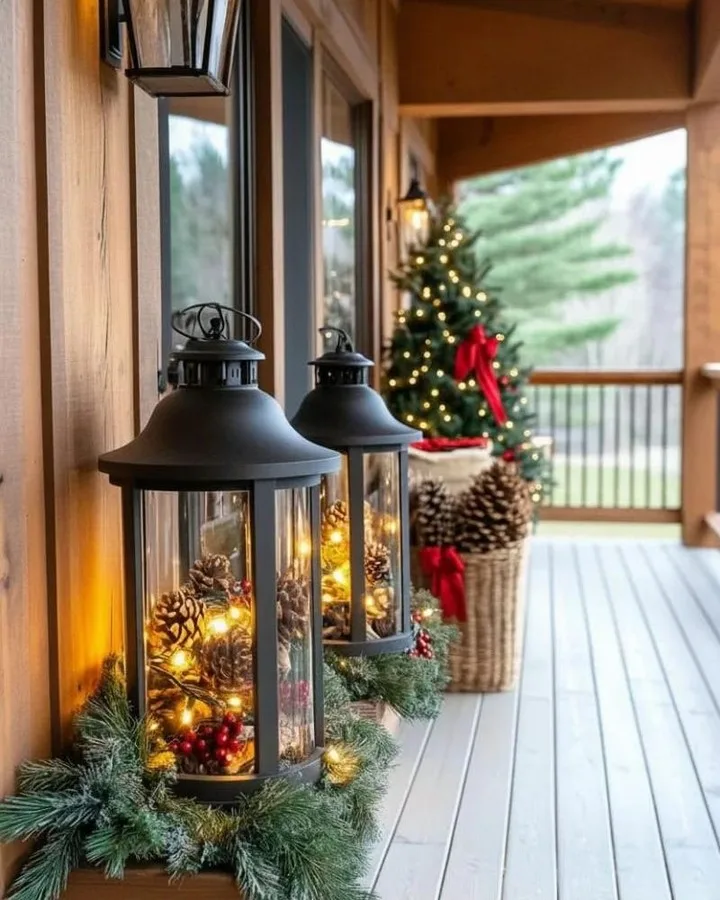
Lanterns filled with coiled fairy lights turn plain steps into a small staircase of glowing jars. Glass panels protect the tiny bulbs from wind and rain while showing every sparkle. Grouping three lanterns of different heights on one side looks generous, while a matching pair flanking the door feels classic.
Fill each lantern loosely with a short battery strand, letting the coil settle naturally rather than packing it tight. Place the largest lantern on the lowest step and smaller ones above, keeping the walking route completely clear.
Steps of every kind suit lanterns, from grand stone stairs to two plain concrete treads outside a cottage. Households avoiding extra mains cords outdoors appreciate the battery freedom, and lanterns move indoors easily after Christmas.
Battery packs hidden under a fold of ribbon or behind the lantern handle keep the look clean. Warm white fairy lights inside coloured glass give a jewel effect children adore.
Putting lanterns in the middle of steps invites trips and kicks, especially when guests carry bags or children run ahead. Always line lanterns along one edge with room to spare. Glass lanterns also need bringing in during severe storms, because a fallen lantern on stone steps breaks quickly.
Curtain Lights Along the Garden Fence
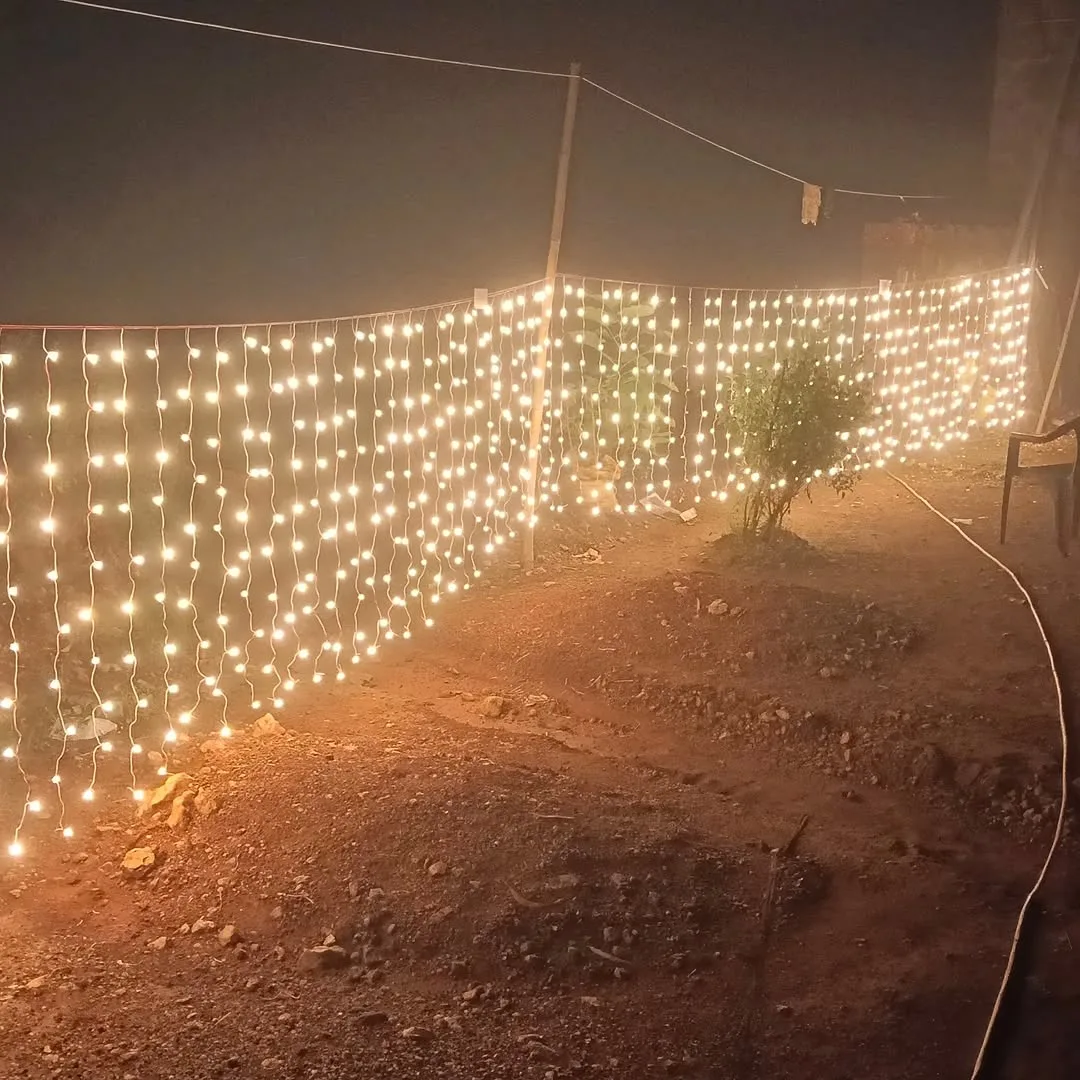
Fences dressed with curtain lights become a soft wall of sparkle behind the whole yard. Strands hang side by side from a top wire, dropping to even lengths like a glowing curtain. Back gardens gain a party backdrop, while front fences gain a boundary of light that looks generous without blinding passers by.
Clip the top cord of the curtain to the fence rail or a taut wire, keeping it level so the drops hang straight. Measure the fence length first, because curtains come in fixed widths and gaps look obvious after dark.
Gardens used for winter gatherings shine with a lit fence behind tables, fire pits or a hot drinks station. Long plain fences that look dull all year become the best feature of the garden each December.
Evening photographs against a curtain of lights flatter everyone, so place a bench a little in front of the fence for family pictures. Warm white drops keep skin tones kind, and a dimmer setting suits late evenings.
Choosing a curtain far too wide for the fence leaves bunched strands at one end and bare wood at the other. Folding excess drops behind the fence also wastes bulbs nobody sees. Measure honestly, buy the nearest smaller size, and centre the curtain on the most visible section instead.
Multicolour Lights for a Playful Family Look
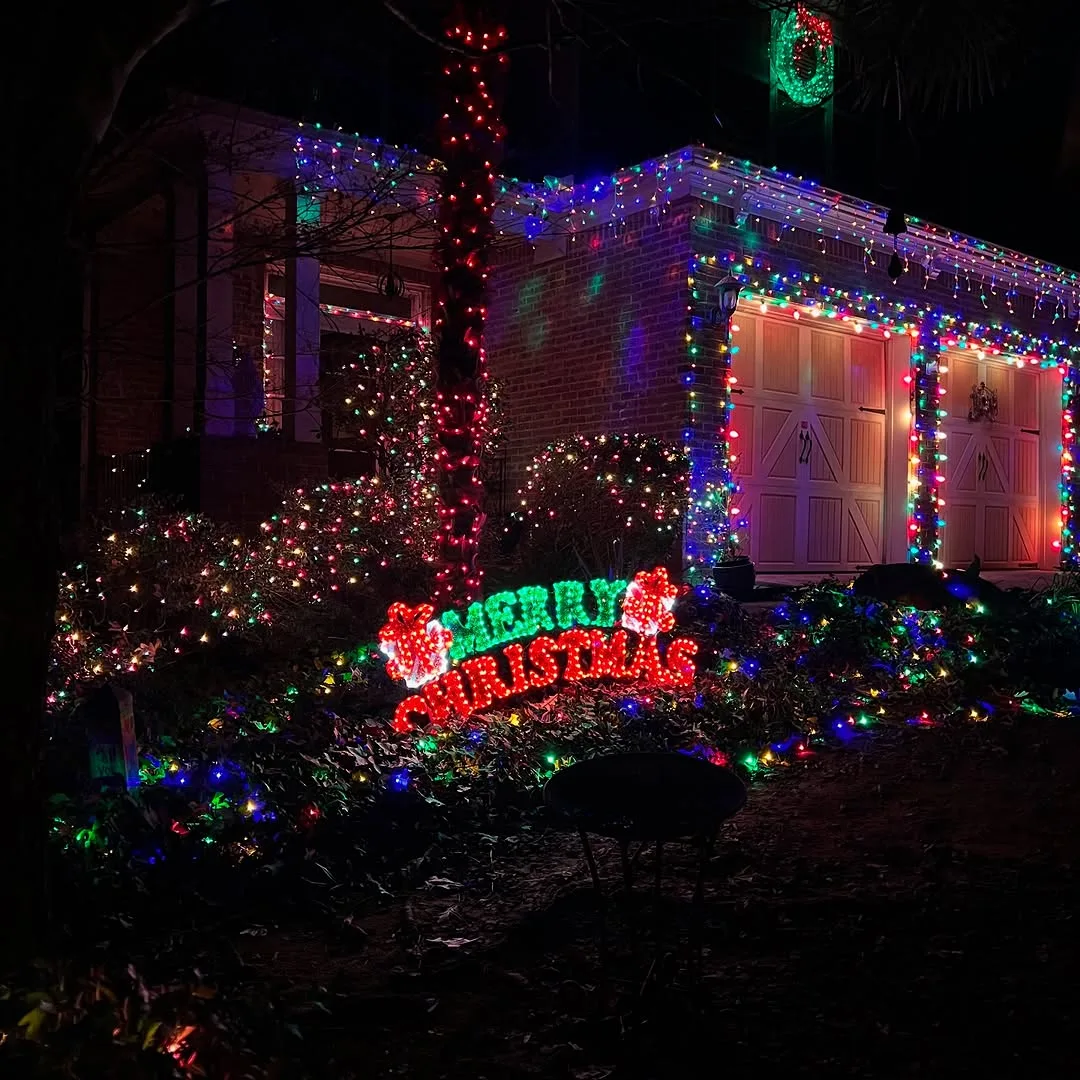
Colour brings joy to a family display, with red, green, gold and blue bulbs marching along rooflines, bushes and trees. Children read a multicolour house as pure celebration, and many adults keep the style from their own childhood streets.
String colours in one clear zone, such as the porch and one tree, while keeping the roofline warm white for structure. Balanced displays often use colour at ground level where children see it closely.
Children, grandparents and fun loving households choose multicolour lights year after year. Streets where most homes glow white look livelier with one joyful colour house among them. Families decorating on a budget also benefit, because older coloured strands from storage blend happily without needing perfect matches in tone.
Bold colour pairs beautifully with simple shapes, such as one wrapped tree, plain pathway stakes and a dressed door. Keeping ornaments and figures few lets the colours carry the show.
Using every colour setting at once, including flashing chases in several directions, tires the eyes and annoys the street. Pick one steady pattern for most of the evening and save lively modes for party hours.
Solar Lights in Garden Beds and Borders
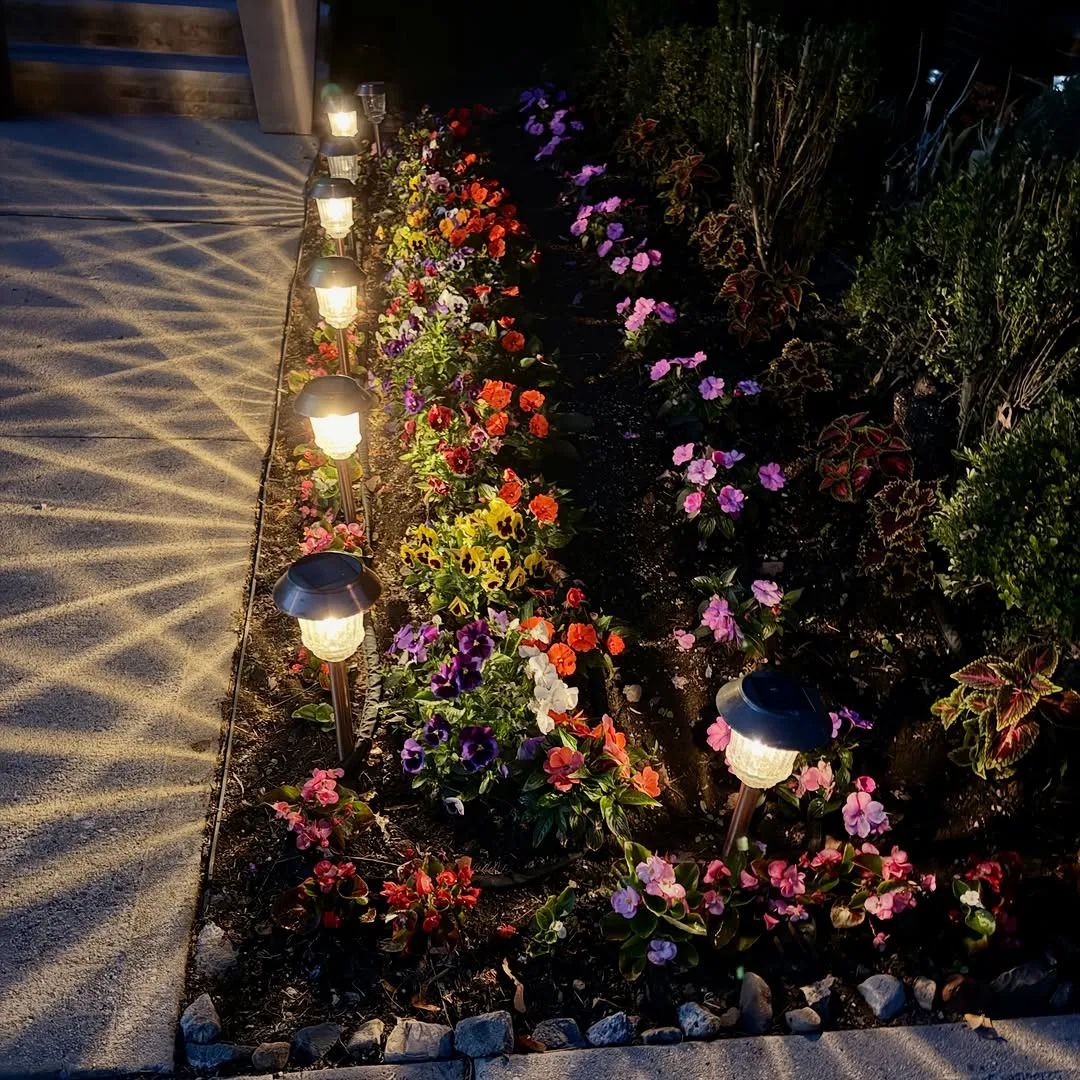
Solar lights charge by day and glow by night with no cords, sockets or running costs at all. Small stakes and lantern shapes dot flower beds and borders, marking edges and highlighting winter shrubs.
Garden beds facing the sun suit solar lights best, because short winter days already limit charging time. Push each stake into soil where daylight falls for most of the day, away from fences and dense evergreens.
Small gardens, plots with no outdoor socket, and homes with distant borders all gain from solar freedom. Gardeners enjoy picking out favourite plants with tiny pools of light, and far pathways become safer without cables.
Stake solar lights a little closer together than mains stakes, because each one glows more softly. Grouping three near a bench or bird bath creates a visible pool of light rather than scattered dots.
Burying the solar panel under mulch or fallen leaves stops charging completely, and the light fades before guests even arrive. Placing units under thick shrubs causes the same slow failure. Walk the beds on a bright morning, clear every panel, and angle each one toward the midday sun.
Lighted Reindeer and Yard Figures
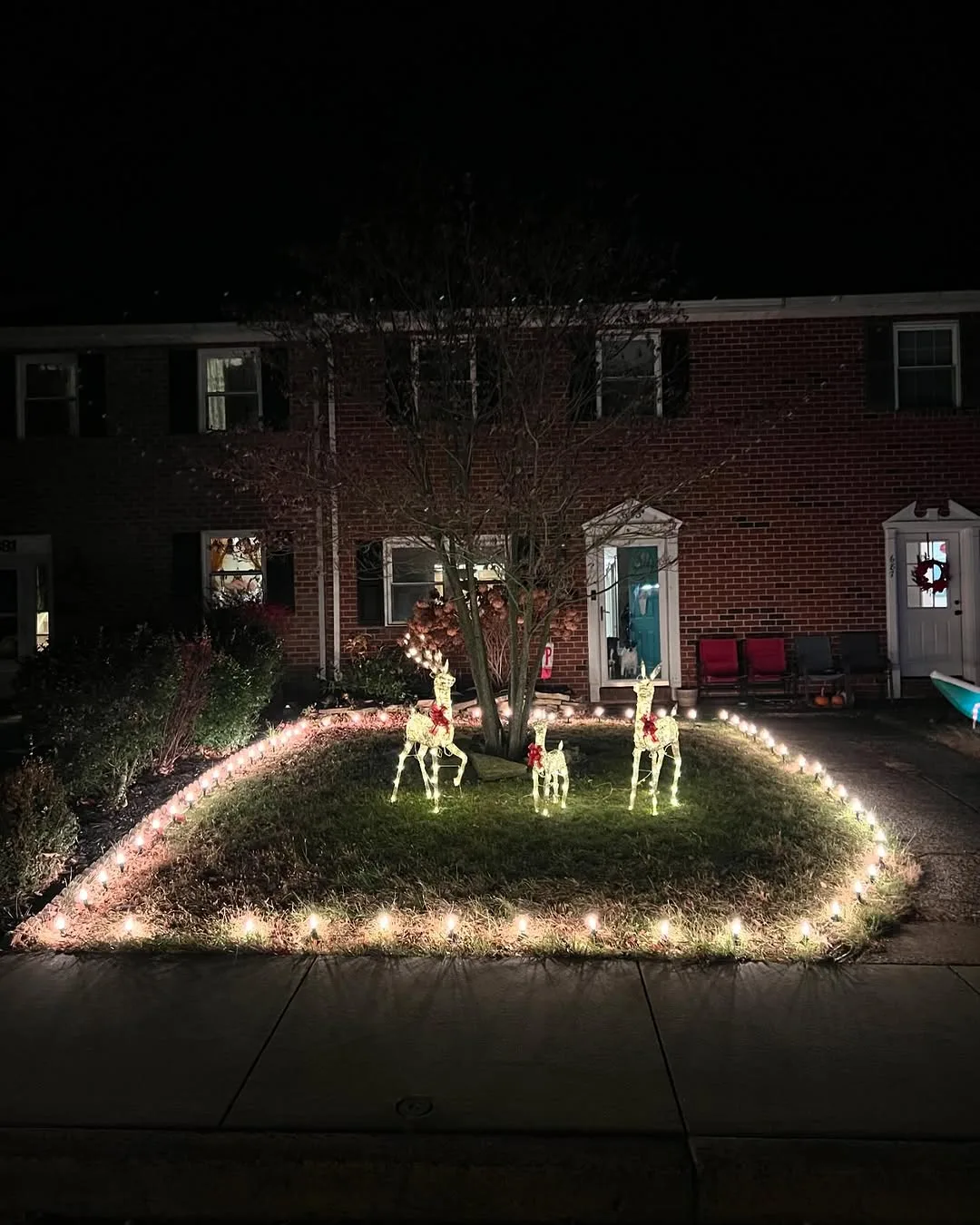
Figures of reindeer, snowmen, angels and woodland animals bring storybook charm to a front lawn. Frames wrapped in tiny bulbs glow warmly after dark, and a small group arranged like a scene tells a gentle story.
Stand figures on level ground and anchor them with the ground stakes provided, because winter wind topples tall frames easily. Arrange groups in odd numbers, such as three, with space between each figure.
Families with young children delight in figures most, especially a friendly character near the path who greets them home from school. Large lawns carry bigger scenes, while small yards suit a single figure beside the door.
Keep figure colours in line with the rest of the display, choosing warm white frames for calm streets or gentle colour for playful homes. Storing frames flat or nested in January saves garage space and protects bulbs.
Letting figures lean at tired angles after storms spoils the whole scene, because a fallen reindeer looks sad rather than festive. Check anchors weekly and after every strong wind.
Smart Timer Displays for Easy Evenings
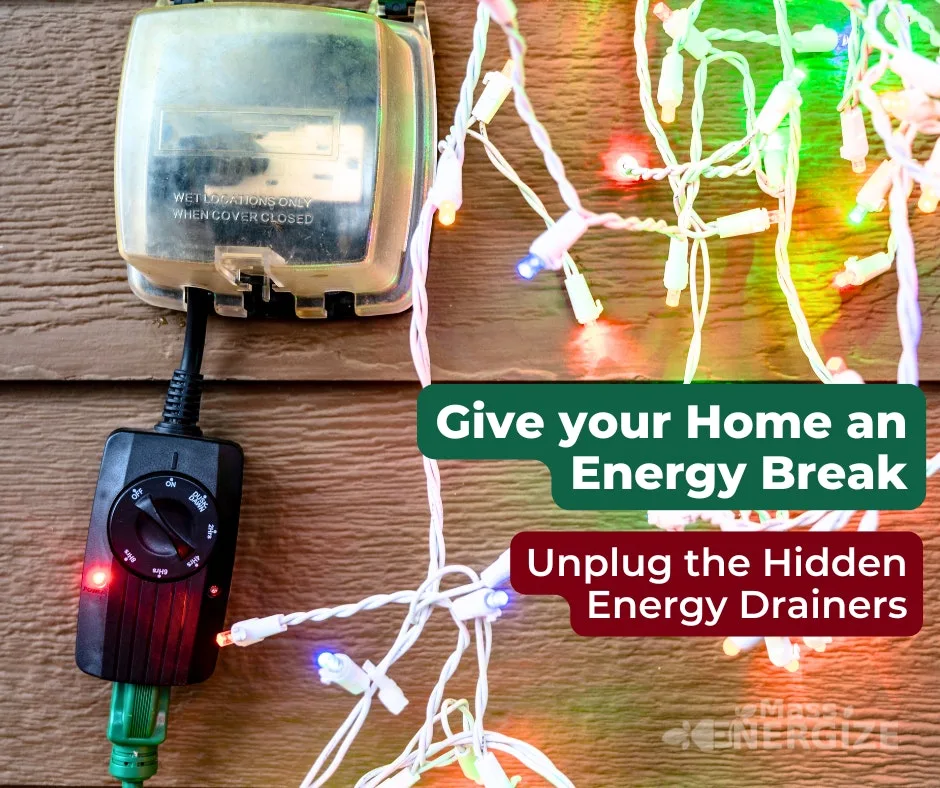
Timers switch the whole display on at dusk and off at bedtime without anyone stepping into the cold. Simple plug in timers cost little, while smart plugs add phone control and schedules for different zones.
Set the main timer to start just before full dark and to stop near the time the street goes quiet. Put pathway and door lights on the longest schedule for safety, and let figures or projectors finish earlier.
Anyone with a busy December, older relatives who forget switches, and households travelling for a few days all benefit from timers. Displays on timers also save electricity compared with lights forgotten until midnight.
Smart plugs with a sunset setting adjust themselves as days shorten, keeping the display punctual all season. Naming each plug clearly in the app, such as roof, tree or path, makes changes quick.
Skipping timers and relying on memory wastes power and leaves the house dark on evenings when guests arrive early. Forgetting to reset timers after a power cut causes the reverse problem, with lights blazing at noon. Check the schedule after any outage, and view the display weekly from the street.
Common Mistakes
Most lighting problems come from rushing, not from choosing the wrong outdoor christmas light ideas in the first place. Displays fail when strands go up untested, cords cross walkways, and ladders lean at brave angles.
Buying strands before measuring leads to short rooflines, stretched nets and spare bulbs glowing behind bushes where nobody sees them. Shop with a written list of lengths, colours and bulb counts, then stick to it in the store.
Ladders cause more December injuries than any other decorating tool, usually when people lean sideways instead of moving the ladder. Keep hips inside the ladder rails, work with a helper, and wear shoes with firm grip.
Water and electricity demand respect outdoors, so cracked cords, indoor extension leads and overloaded sockets have no place in a display. Use only cords and strands rated for outdoor use, and keep plugs raised off wet ground in weatherproof boxes.
Overloading one wall with every idea at once buries the house under competing sparkle. Roofs, doors, trees, fences, figures and beds all glowing at full strength leave the eye nowhere to rest.
How to Try Outdoor Christmas Light Ideas on a Budget
Shop your own storage boxes before any store, because most homes already own more lights than they remember. Test every stored strand in October, list what works, and plan the display around those pieces first. Buying only missing clips, one timer and perhaps one new strand keeps the budget gentle.
Borrowing ladders, spare clips and even a projector from neighbours or family cuts costs and builds friendly street spirit. Return everything clean and early in January with a small thank you.
Choosing two or three outdoor christmas light ideas and doing them really well beats attempting ten ideas thinly. A neat roofline, a wrapped tree and a dressed door cost less than a scattered yard, yet photograph better and feel calmer.
One new element per year builds a rich display slowly without painful December bills. Watch January sales for quality strands, clips and timers at deep discounts, then store purchases with labels for next season.
Spending on safety items should never be cut, even when money feels tight. Outdoor rated cords, weatherproof plug boxes and proper clips protect the house, the display and everyone walking the path.
Outdoor Lighting Tips That Make Everything Easier
Test every strand indoors the week before decorating, spreading each one across the floor and replacing dead bulbs while you sit in the warm. Finding faults early means the ladder work happens once, in daylight, with everything working.
Take a photograph of last years display before taking it down, and store the picture with the strands. Memory fades by December, but a photo shows exactly which net fitted which bush and how the roofline clips were spaced.
Label each strand with tape and a marker naming its spot, such as roof front, big tree or fence. Labels turn setup into a simple matching game and help family members assist without long explanations.
Work in daylight and finish connections before dusk, then enjoy the first switch on as a small family event with hot drinks. Checking the display from the street at night reveals sagging lines and dark gaps invisible from the garden. Small adjustments the next morning keep everything tidy.
Keep a simple safety routine through the season. Walk the yard weekly to check anchors, plugs and cords, especially after storms or heavy frost. Turn displays off during severe weather warnings and whenever the house stands empty for several days.
Photograph the finished display and share the picture with family who live far away, because glowing homes carry Christmas greetings beautifully. Saving the best photo also guides next years plan and shows how the display grows.
Frequently Asked Questions
How Long Do Outdoor Lights Last?
Most quality outdoor strands last three to five seasons when stored dry and handled gently. Bulbs fail sooner than cords, so replacing individual bulbs extends the life of a whole strand.
Can Indoor Lights Be Used Outside?
Indoor strands lack the sealed sockets and tougher insulation that outdoor weather demands, so indoor lights belong inside only. Rain and frost creep into indoor fittings quickly, causing failures and safety risks. Outdoor rated strands cost only a little more and carry clear markings, so check every box before buying.
How Many Outdoor Christmas Light Ideas Should One House Use?
Three to five ideas usually suit one house best, such as a roofline, a tree, a dressed door and path lights. Fewer ideas done neatly look richer than many ideas competing for attention.
When Should Lights Go Up and Come Down?
Early December is the classic time to hang lights, though many families decorate during the last weekend of November when weather feels kinder. Taking displays down by the middle of January keeps the street tidy and protects strands.
Do LED Bulbs Really Save Money?
Yes, modern LED strands use far less electricity than old bulb styles and stay cool to the touch, which also makes them kinder to dry greenery. Savings grow across a whole display run for five or six hours nightly.
How Should Strands Be Stored After Christmas?
Coil each strand loosely around cardboard or a storage reel, then place it in a dry box with its label facing up. Keeping bulbs uncrushed and cords untangled prevents most failures next season. Store boxes off the floor in a dry cupboard, and add the display photograph for an easy plan.
More Ideas to Explore
Keep the festive mood going beyond the yard with christmas porch decor ideas for the entrance, christmas garland ideas for railings and frames, christmas front door decor ideas for a warm welcome, and christmas staircase decor ideas to carry the glow indoors.
Conclusion
Lights turn a house into a welcome, and the glow matters far more than the size of the display. One tidy roofline, one shining tree and a dressed front door already tell guests that Christmas lives here.
Small habits make the whole season easier. Testing strands early, labelling everything, using timers and checking anchors after storms keep the display safe and steady. Families who build slowly, adding one good element each year, end up with yards that look richer than rushed displays costing far more.
Every home has its own best features waiting for light. Bare branches, plain fences, dark corners and simple steps all become beautiful when one careful idea meets them. Walk your yard at dusk, choose the spots your eyes visit first, and give those places light before anywhere else.
Save these outdoor christmas light ideas with your December notes, and start next season with a short walk, a warm drink and a simple plan. Kind light, placed with care, makes any home feel like Christmas. Start small this year, and let your outdoor christmas light ideas grow a little brighter every December.