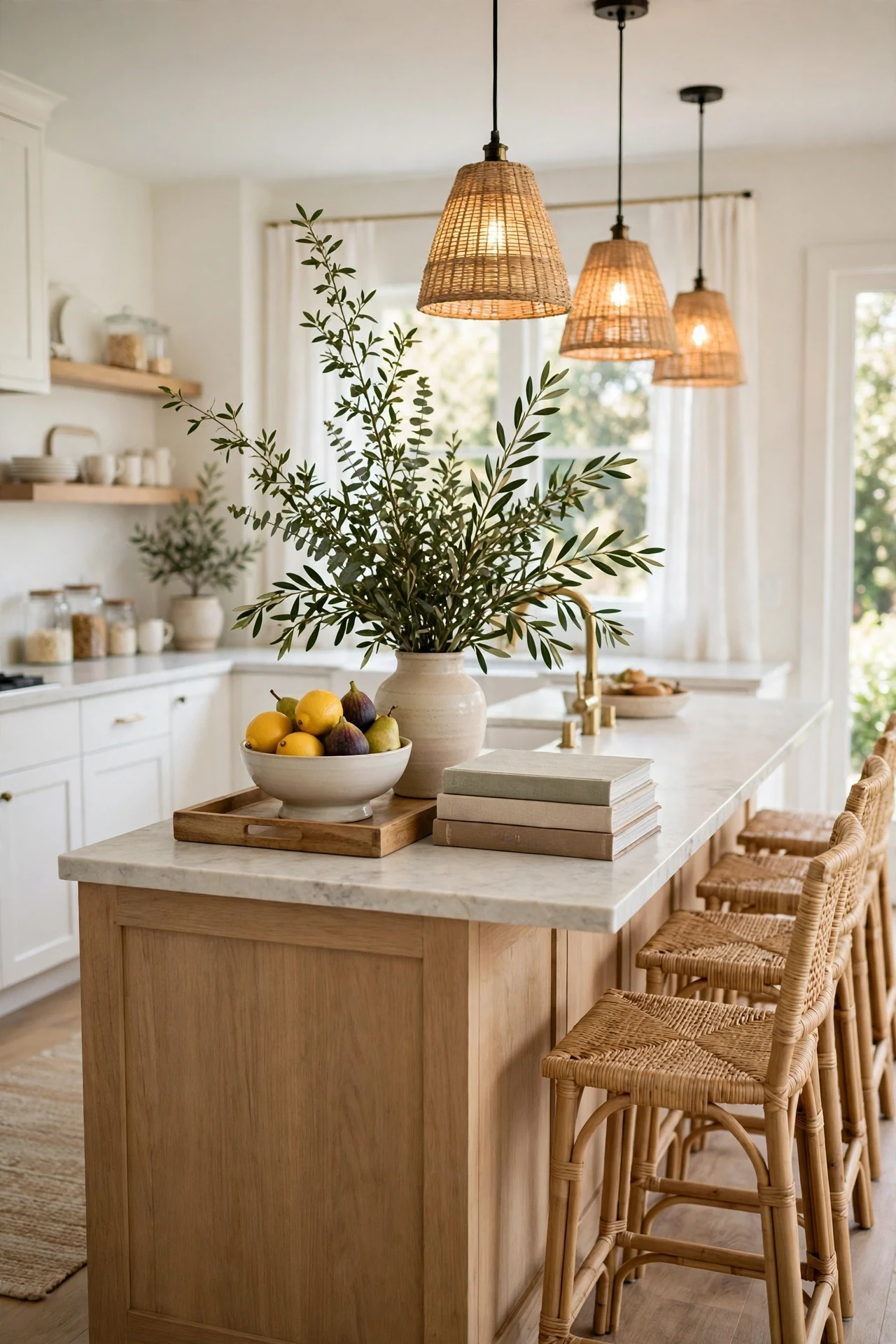
Kitchen Island Decor Ideas That Balance Style and Everyday Use
Kitchen islands pull double duty in most homes, serving as prep space, homework spot, serving counter, and gathering point all at once. Because the island sits in the middle of everything, whatever you place on it shapes the whole feel of the room. Good kitchen island decor ideas respect that balance, adding warmth and personality without stealing the work space you rely on daily.
Many people either crowd the island with ornaments or leave it completely bare, and both extremes miss the point. Crowding makes cooking awkward and cleaning slow, while a bare island can look cold and unfinished. Simple, purposeful pieces solve the problem, giving the surface a finished look while every item still earns its place.
Below you will find fifteen practical ways to style an island of any size, from small apartment islands to wide farmhouse counters. Each idea explains why it works, how to set it up, who it suits best, and one mistake to avoid. You can mix two or three favorites and build a look that fits your own kitchen.
What Are the Best Kitchen Island Decor Ideas for a Busy Kitchen?
Short answer first: the best kitchen island decor ideas group useful items on a tray or board, keep at least half the surface clear, and repeat one or two colors from the rest of the room. Height helps too, because one tall piece, like a vase of branches, gives the island presence without covering the counter you need for rolling dough or setting down hot pans.
Picture a wide island with a wooden tray near the sink holding soap, a small plant, and a folded towel. One fruit bowl sits at the far end, leaving the middle open for chopping boards and mixing bowls. Guests see a styled room, yet the cook still has a generous clear stretch for dinner prep.
Wooden Tray That Corrals Daily Items
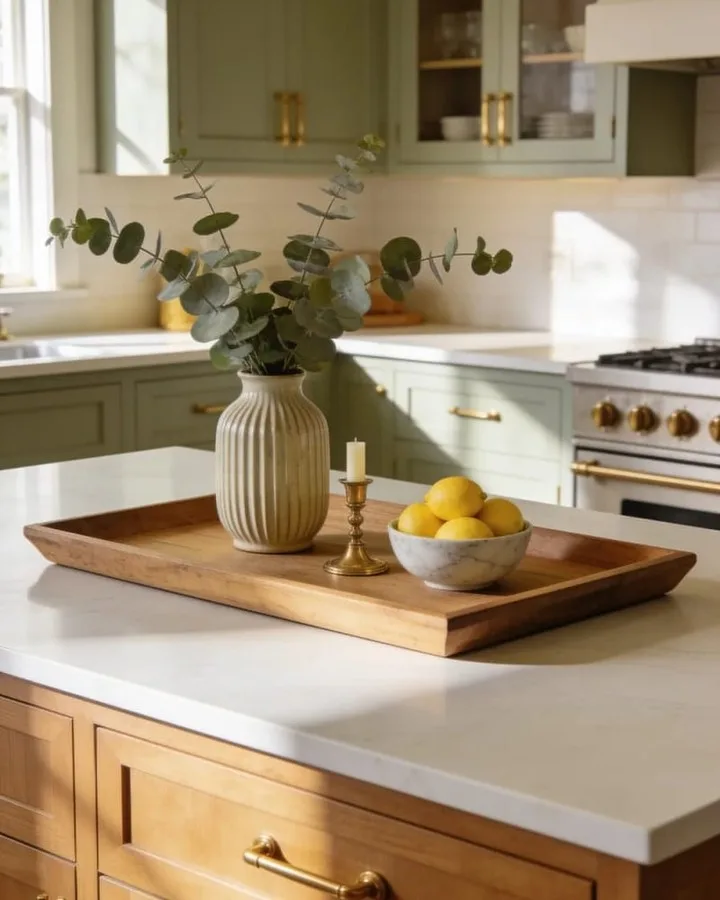
Loose items scatter fast on a big island, and soap, sponges, paper towels, and mail soon spread across the whole surface. One wide wooden tray gathers those everyday things into a single tidy zone, so the island reads as organized even on busy mornings. Grouping also makes visual sense, because the eye sees one arrangement instead of ten small distractions.
Choose a tray with low sides and enough room for the items you reach for daily, usually olive oil, salt, soap, and a small plant or candle. Keep the tray near the sink or the stove, wherever those items actually get used. Wipe the tray weekly, since crumbs and drips collect under bottles faster than most people expect.
Families with children suit this idea well, because homework, lunch boxes, and cooking all compete for the same surface. Small islands benefit too, since one tray defines a clear boundary between the styled corner and the open work zone. Anyone who cooks daily will appreciate how fast cleanup becomes when everything has a home.
Sara placed a long oak tray beside her sink with dish soap, a scrub brush, a small potted herb, and a folded linen towel. Guests now compliment her tidy island, and she clears the whole tray in seconds when she needs the full counter for baking days. Nothing else on the surface changed, yet the room feels calmer.
Overfilling the tray defeats the whole purpose and turns it into a cluttered shelf. Limit the tray to items you touch every day, and move rarely used bottles back into cupboards. When the tray starts to overflow, treat that as a signal to edit rather than a reason to buy a bigger tray.
Bowl of Fresh Fruit as the Centerpiece
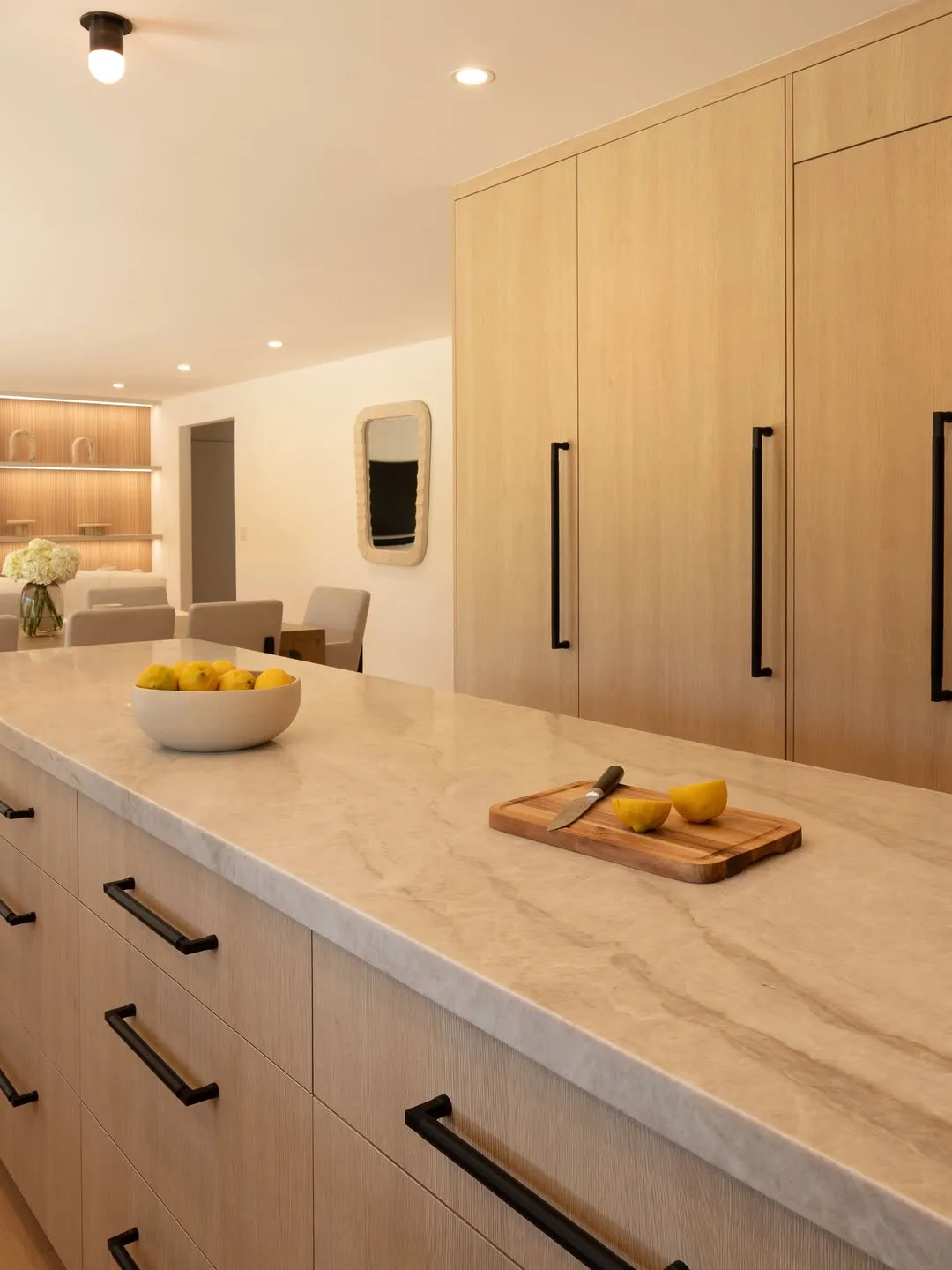
Fresh fruit brings natural color to the island without any styling skill at all. Lemons, oranges, green apples, or pomegranates fill a simple bowl with shapes and shades that change through the seasons. Because the display gets eaten and replaced, the island always looks alive rather than staged.
Pick a bowl wide enough to hold fruit in a single loose layer or a gentle mound, and keep the bowl away from the main prep zone. Citrus lasts longest at room temperature, while apples and pears need checking every few days. Wash fruit before displaying it if children grab snacks straight from the bowl.
Anyone who wants color on a budget suits this idea, since the centerpiece doubles as the weekly fruit shop. Bright kitchens with white counters gain warmth from the natural tones, and plain modern islands gain softness from the round shapes. Households that entertain often also like how welcoming a full fruit bowl looks to arriving guests.
When Marco swapped his empty island for a wide ceramic bowl of lemons and limes, his whole kitchen looked brighter in photographs and in person. He tops up the bowl during his Saturday shop, choosing whatever citrus looks best that week. Friends now reach for fruit during visits, which makes the display feel generous as well as pretty.
Leaving fruit too long turns a fresh display into a sad one, with soft spots and fruit flies undoing the effect. Check the bowl every second day and move anything ripe into the fridge or the lunch box. Rotate new fruit to the bottom so older pieces get eaten first instead of hiding underneath.
Vase with Tall Branches or Greenery
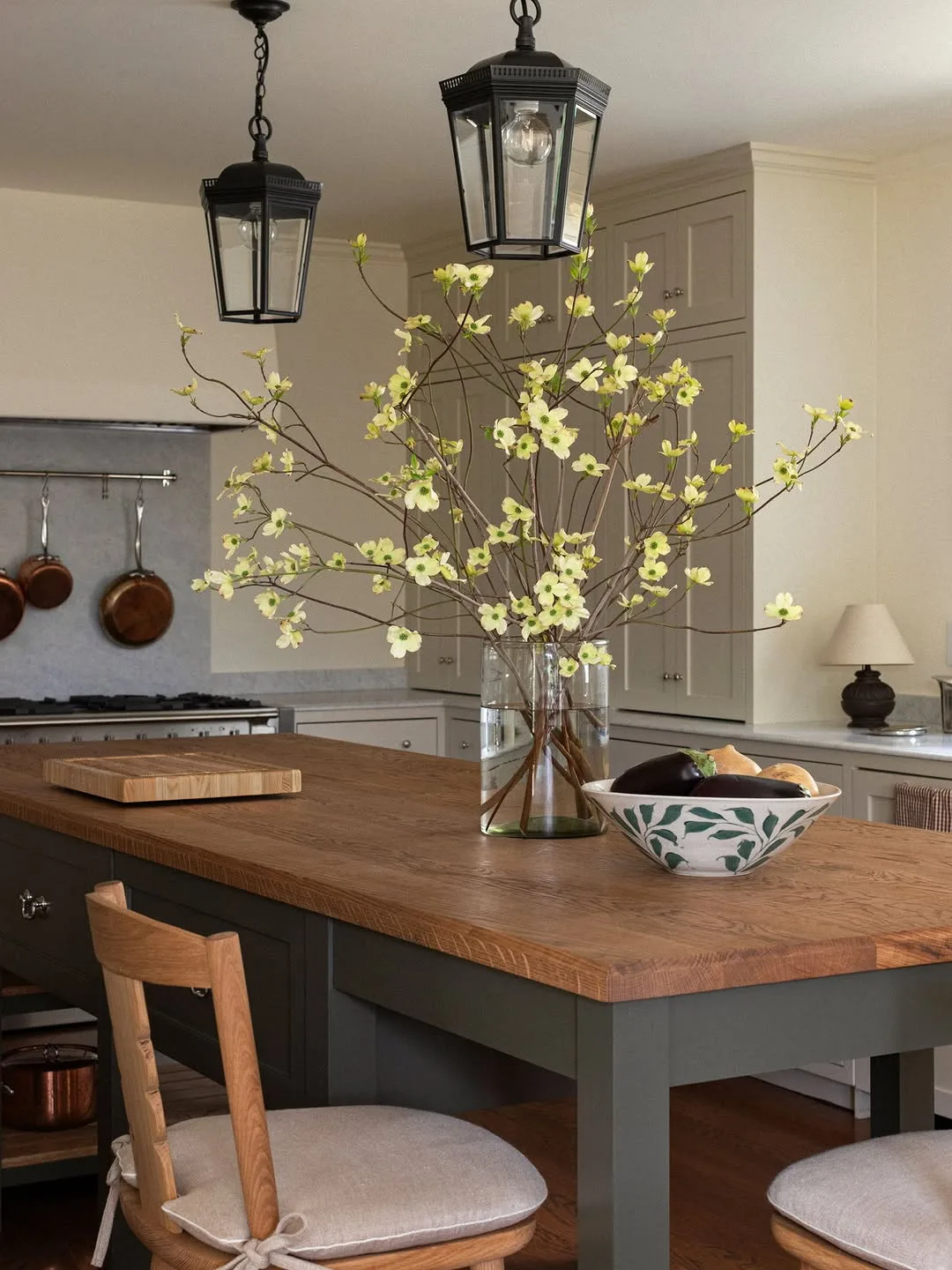
Height changes how an island feels, and tall branches in a simple vase give the eye a reason to travel upward. Among kitchen island decor ideas, vertical pieces work especially well because they add presence while using almost no counter space. Bare branches in winter, leafy stems in spring, and eucalyptus all year keep the look fresh with minimal effort.
Use a heavy vase with a narrow neck so stems stay upright and water cannot splash during cooking. Keep total height below the pendant lights, and place the vase at one end of the island rather than the middle. Change the water every few days, and trim stems at an angle so they drink properly and last longer.
Tall ceilinged kitchens suit this idea best, because high rooms can look empty above the island without a vertical accent. Minimalist cooks also love it, since one vase replaces several small ornaments. Anyone with a garden gains a free supply of clippings through most of the year.
Priya keeps a stoneware vase of olive branches at the end of her island, swapping them for pussy willow in early spring. The branches soften the hard lines of her cabinets, and guests often ask where she bought the arrangement. She spends almost nothing on it, gathering most stems from her own yard and a generous neighbor.
Placing the vase in the center of a working island causes daily frustration, because cooks must reach around it and tall stems block sight lines across the room. End placement keeps conversations open and prep space clear. Also skip strongly scented flowers near food, since heavy perfume fights with cooking smells and both lose.
Stack of Cookbooks with a Small Plant
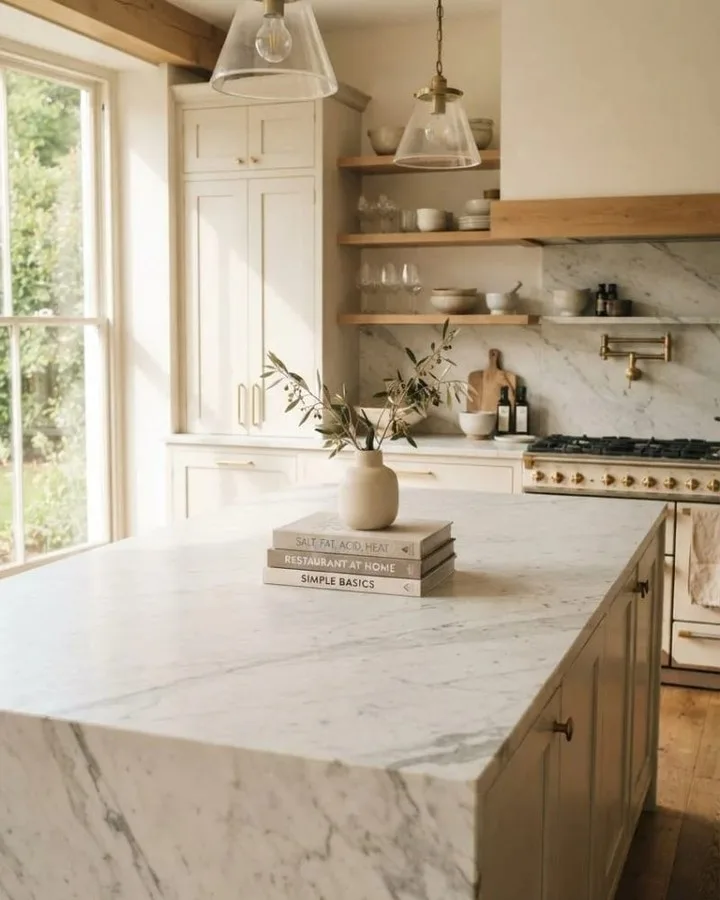
Cookbooks earn their place on an island because people actually cook from them there. One neat stack adds color, height, and personality, showing visitors what kind of food this household loves. Resting a small plant or a candle on top turns the stack into a finished arrangement instead of storage.
Stack three or four large books with the biggest at the bottom, aligning the spines for a clean edge. Choose books with sturdy covers that wipe clean, since flour and splashes travel across islands quickly. Rotate titles every month or so, pulling the next book you plan to cook from to the top of the pile.
Keen home cooks suit this idea perfectly, because their favorite books stay within reach instead of hiding in another room. Islands with a quiet end near seating work best, giving readers a spot to flip pages with coffee nearby. Small kitchens also gain, since the stack does display and storage duty at the same time.
For years Helen kept her baking books in a bedroom cupboard, and then she stacked four favorites beside her island stools with a tiny fern on top. She bakes more often now, simply because the books invite her every time she makes tea. The fern gets watered whenever she waters the herbs, so the arrangement stays green with little thought.
Building the stack too high invites topples and makes lower books hard to pull out. Keep the pile at four books or fewer, and never stack near the sink where splashes soak pages and covers. Precious or signed editions belong on a shelf, not within reach of tomato sauce and olive oil.
Pendant Lights That Frame the Island
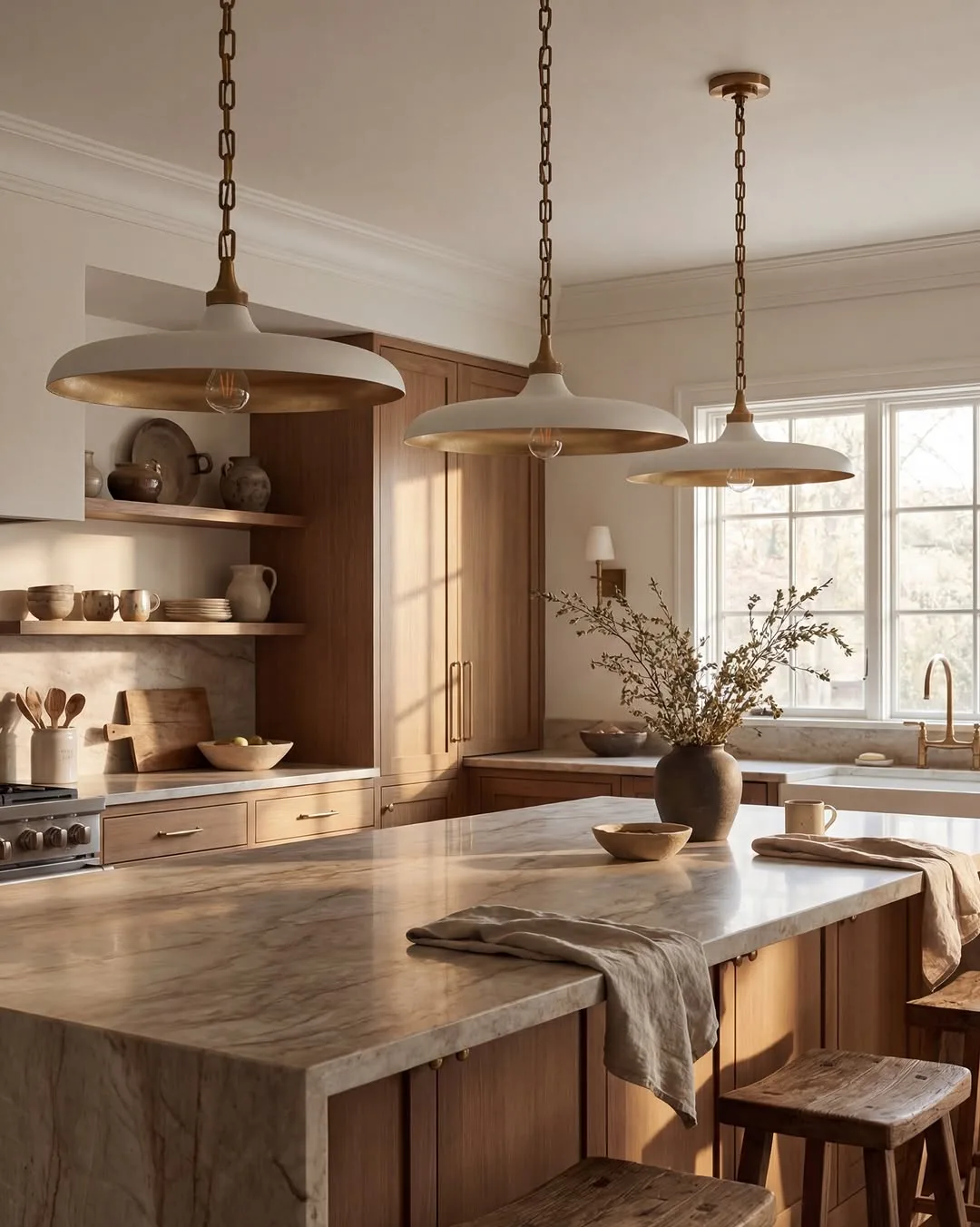
Lighting counts as decor on an island, because pendants hang at eye level and set the mood for the whole room. Two or three pendants in a row frame the island like a picture, marking it as the heart of the kitchen. Warm bulbs inside those fixtures flatter food, faces, and every surface below.
Hang pendants so the bottom of each shade sits roughly seventy five to ninety centimeters above the counter, high enough to see across and low enough to feel cozy. Match the finish to cabinet handles or stool legs for a connected look. Put the pendants on a dimmer switch if you can, since islands host bright prep work and soft evening drinks in the same day.
Open plan homes suit this idea most, because pendants define the kitchen zone without walls. Dark kitchens gain both style and real task light from well chosen fixtures. Anyone planning a light refresh rather than a full remodel will find pendants give the biggest visible change for the money.
Two black metal pendants transformed the plain white island belonging to Jonas and his partner Mia from a work counter into a gathering spot. Friends now linger there with drinks while dinner finishes, drawn by the warm pool of light. The couple kept their old stools and counters, yet visitors keep asking what they renovated.
Choosing shades that hang too low blocks views and bumps heads, especially with tall cooks and raised serving platters. Measure from the counter, not the floor, and test heights with a taped string before fixing anything. Also match bulb warmth across all fixtures, because mixed tones make even clean kitchens look untidy.
Runner Rug Along the Working Side
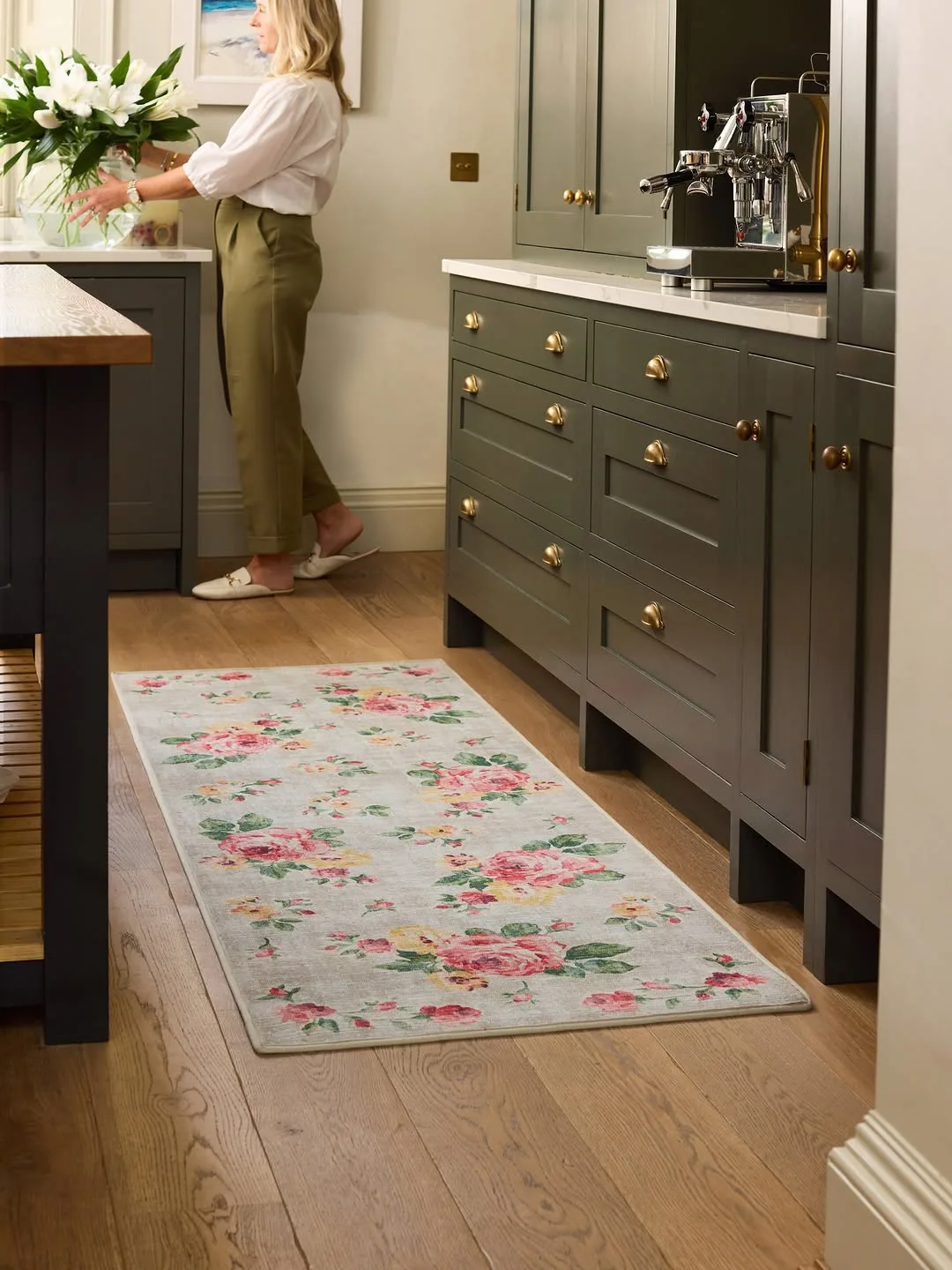
Rugs are decor for the floor around the island, and a long runner softens the hard working side where cooks stand for hours. Color and pattern along the floor balance the plain stretch of cabinet fronts. Feet also thank you on cold mornings, which makes the runner both pretty and practical.
Measure the island length and choose a runner slightly shorter, leaving a small border of floor at each end. Flat woven styles in wool or washable cotton handle kitchen traffic best, and a non slip pad underneath keeps everything safe. Pick patterns with several colors, since busy prints hide crumbs and small stains between washes.
Busy family kitchens suit runners well, because the pattern forgives daily mess and the soft surface suits children who sit on the floor near the action. Long galley style islands gain the most visual warmth. Cooks who stand through long baking sessions will feel the comfort difference within the first week.
Leah laid a faded red runner along her island after noticing her feet ached during Sunday meal prep. The rug warmed the whole room, tying her counter stools and curtains together through shared color. She shakes it outside twice a week and washes it monthly, and it still hides the evidence of three children and a dog.
Skipping the non slip pad turns a runner into a hazard, because rugs creep across smooth floors exactly where people carry hot pans. Thick pile styles also trap crumbs and trip rolling stool wheels. Keep the rug flat, low, and firmly padded, and check the edges weekly for curling corners.
Bar Stools with Cushions in One Color
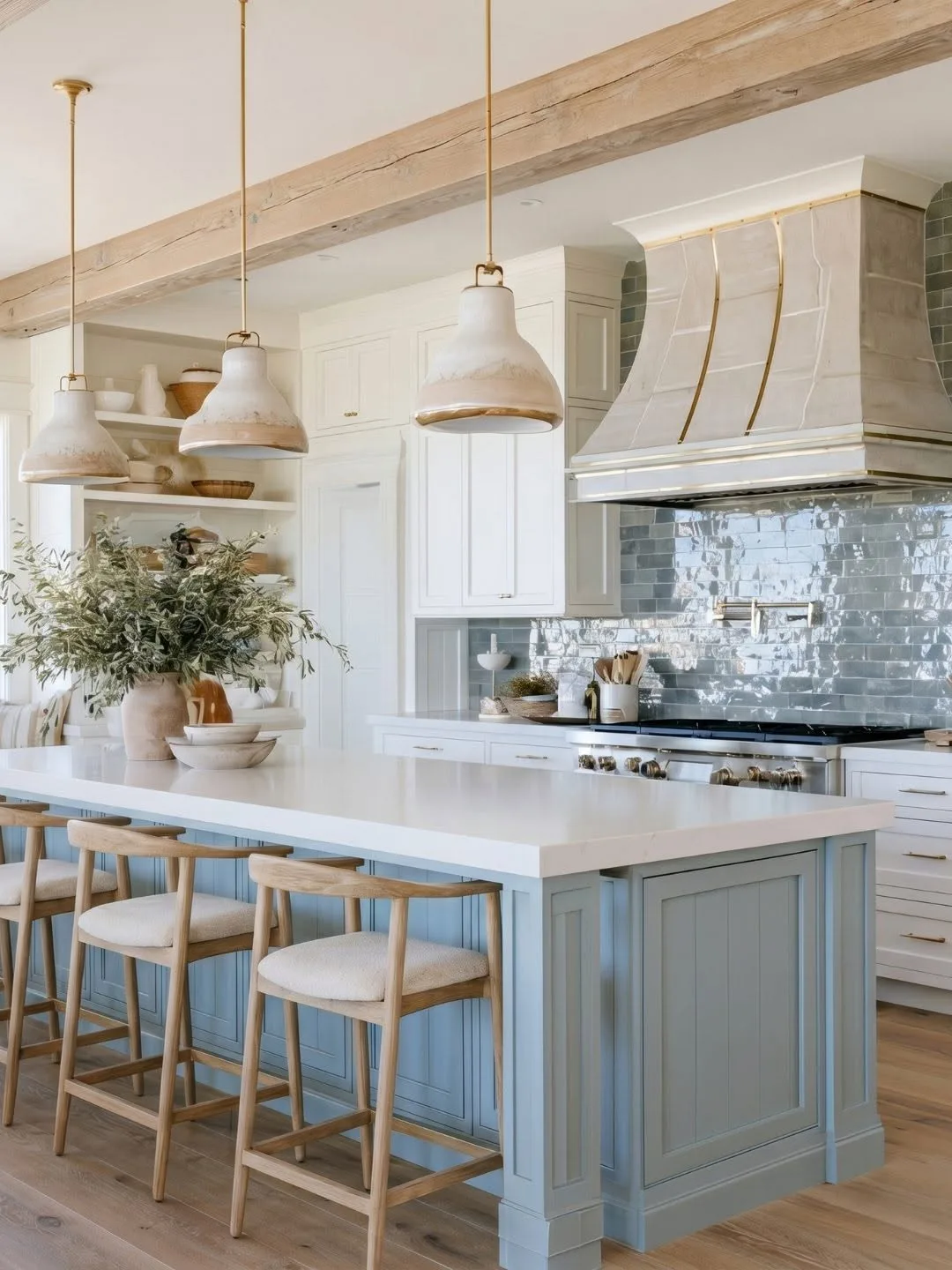
Seating shapes how an island looks from the rest of the room, and matching cushions pull a row of stools into one calm line. Color on the cushions can echo curtains, a rug, or painted cabinets, tying the island into the wider scheme. Bare stool rows, by contrast, often look like a cafe that never got finished.
Simple repetition does the heavy lifting in many kitchen island decor ideas, and cushions prove the point cheaply. Choose washable covers in one solid color, or one quiet pattern repeated on every stool. Check that cushions sit firm and flat, because sagging pads look tired and slide around during long sits.
Households where the island doubles as a dining table suit this idea best, since guests sit longer and notice comfort. Parents like washable covers for obvious reasons involving jam and juice. Anyone with plain wooden or metal stools can transform the row in one afternoon without tools.
Once Tom added deep green cushions to his four oak stools, his island corner started looking like a planned breakfast nook. His children now claim favorite stools, and homework sessions last longer without complaints about hard seats. He keeps one spare cover in a drawer, ready for the spills that family life guarantees.
Mixing leftover cushions in clashing colors makes the row look accidental rather than relaxed. If covers differ, keep them within one color family so the eye still reads a set. Also avoid cushions so thick that knees knock the counter edge, because comfort at the island depends on leg room as much as padding.
Cake Stand Used for Everyday Display
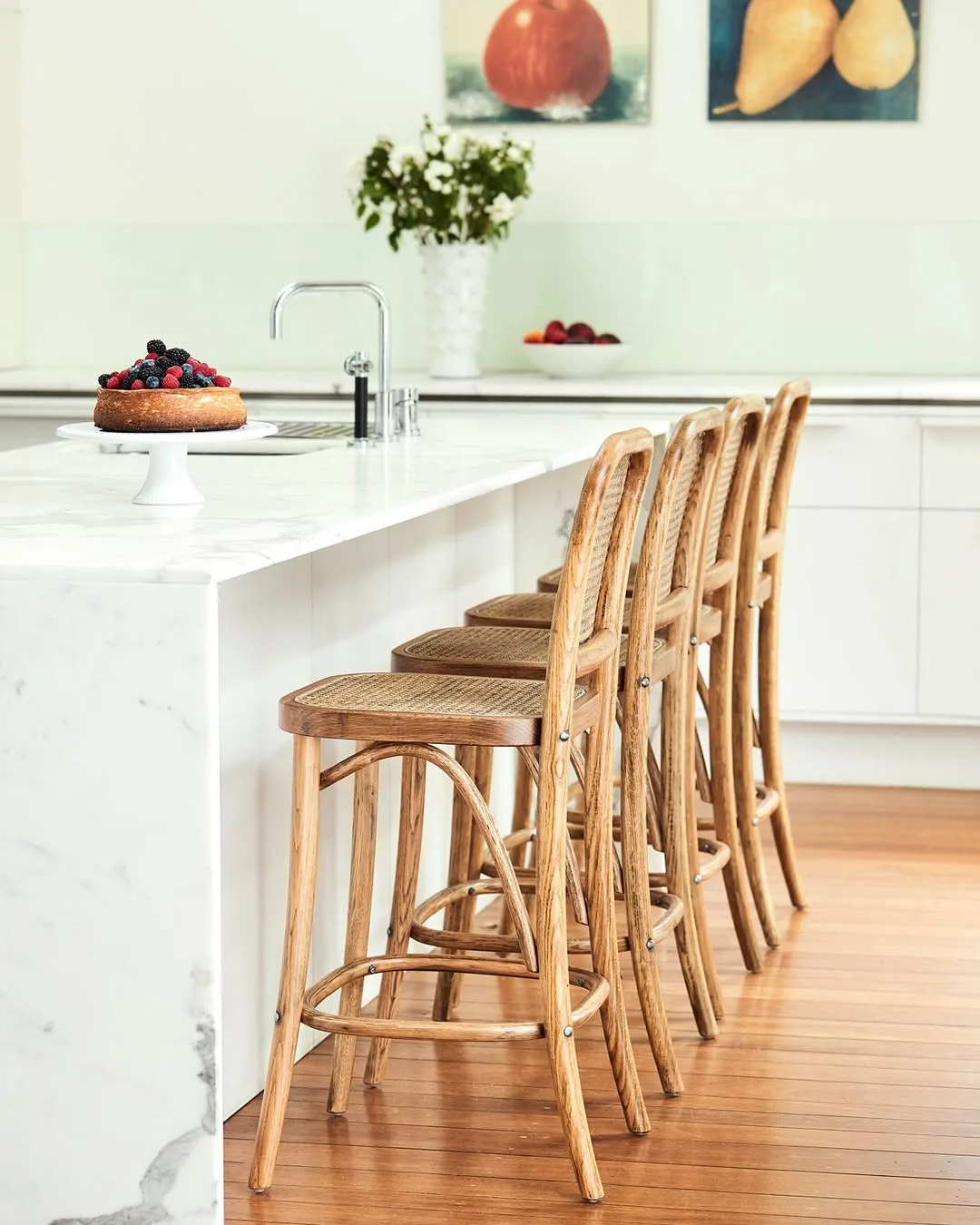
Raised displays add a second level to a flat island, and a cake stand lifts small items into a tidy little scene. Under its dome or on its plate, muffins, citrus, soaps, or a small plant gain importance just by sitting higher. Everyday objects look deliberate when they stand on a pedestal instead of spreading loose.
Place the stand toward one end of the island and change its contents with the week, from baked goods on Sunday to a candle and matches on quiet weekdays. Glass domes keep dust off food and add shine that plays well with pendant light. Wash the plate often, since raised displays draw the eye and show every crumb.
Bakers suit this idea naturally, because their stands finally earn daily use instead of hiding in a cupboard until birthdays. Small islands gain too, since vertical display uses air space rather than counter space. Anyone who enjoys seasonal styling will love how quickly the stand changes mood with new contents.
On weekday mornings, Grace keeps croissants under the dome of her glass stand, and by Friday the same stand holds a candle and a small bowl of matches. Weekend guests assume she styles her kitchen constantly, though the trick takes her two minutes. The stand itself came from her wedding registry and sat unused for three years before this habit began.
Filling the stand with random clutter ruins the charm and turns a display piece into a junk shelf. Limit contents to one theme at a time, and keep food fresh or remove it. Also set the stand on a mat or board if your counter scratches easily, because ceramic and glass bases can mark stone over time.
Candles Grouped on a Metal Tray
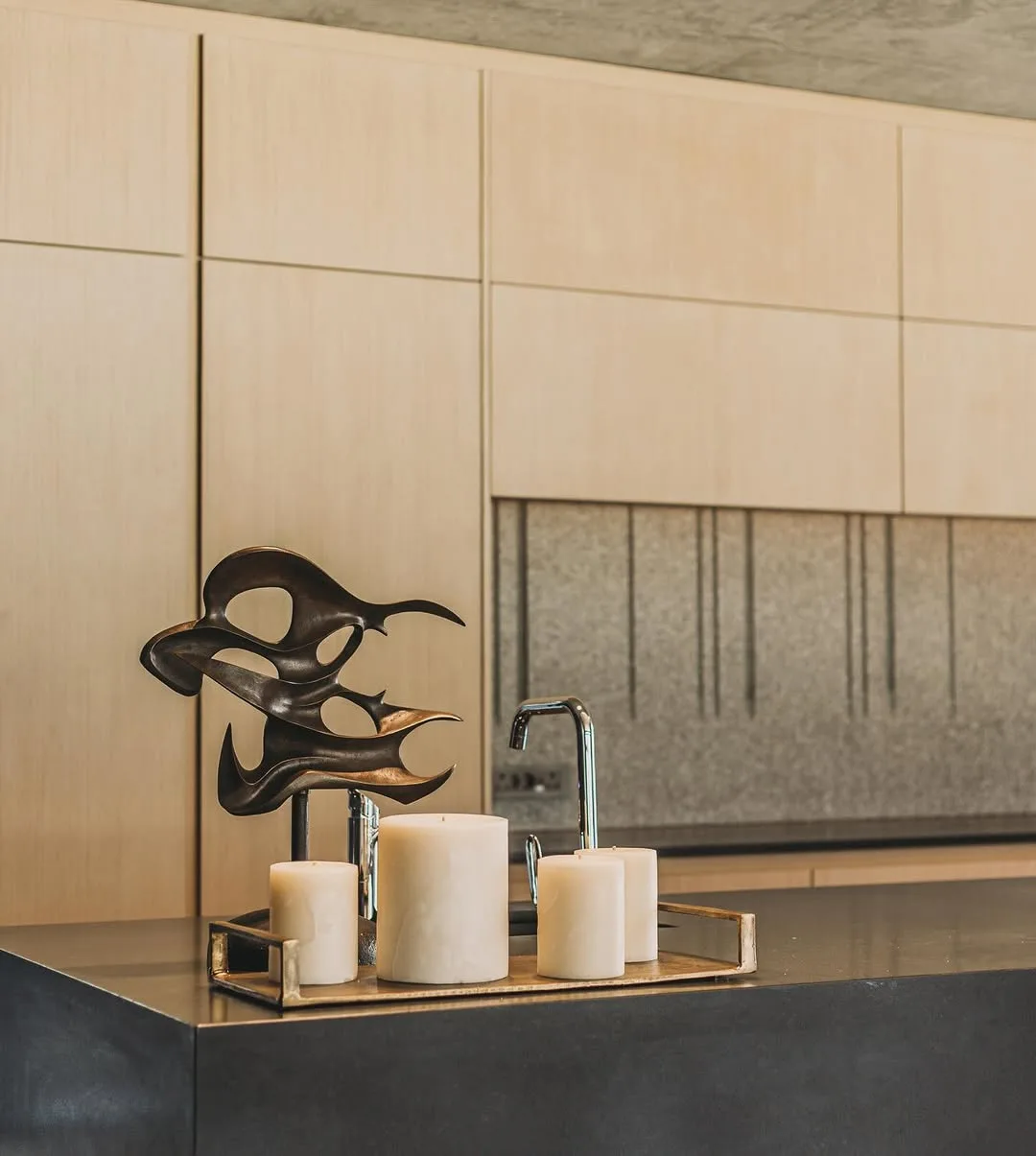
Candlelight softens an island after dark, turning a work surface into a calm evening setting in seconds. Grouping candles on a metal tray keeps flames contained, wax contained, and the whole arrangement easy to move when cooking starts. Mixed heights and simple glass holders make the group look gathered rather than bought as a set.
Gather three to five candles of different heights on a tray with raised edges, and keep the tray on the seating side of the island away from cooking heat. Unscented candles suit kitchens best, because food smells should lead during meals. Battery operated candles give the same glow for homes with small children or curious pets.
Evening entertainers suit this idea most, because candlelight flatters every gathering and costs almost nothing. Islands that face a dining or living area gain a warm focal point after sunset. Anyone who eats at the island will enjoy how the tray marks the shift from cooking time to eating time.
When the Okafor family finishes cooking on Fridays, they slide the prep boards away and set their brass tray of candles in the middle of the island. Dinner feels like an occasion even when the menu is simple pasta. The children take turns lighting the candles with a long lighter, under watchful eyes, and the ritual now starts every weekend.
Burning candles beside paper towels, wooden utensils, or loose sleeves invites real danger in a working kitchen. Keep the tray clear of anything flammable and never leave flames alone in the room. Trim wicks short to reduce smoke, and let wax cool fully before moving the tray so hot pools cannot spill.
Woven Basket for Bread or Linens
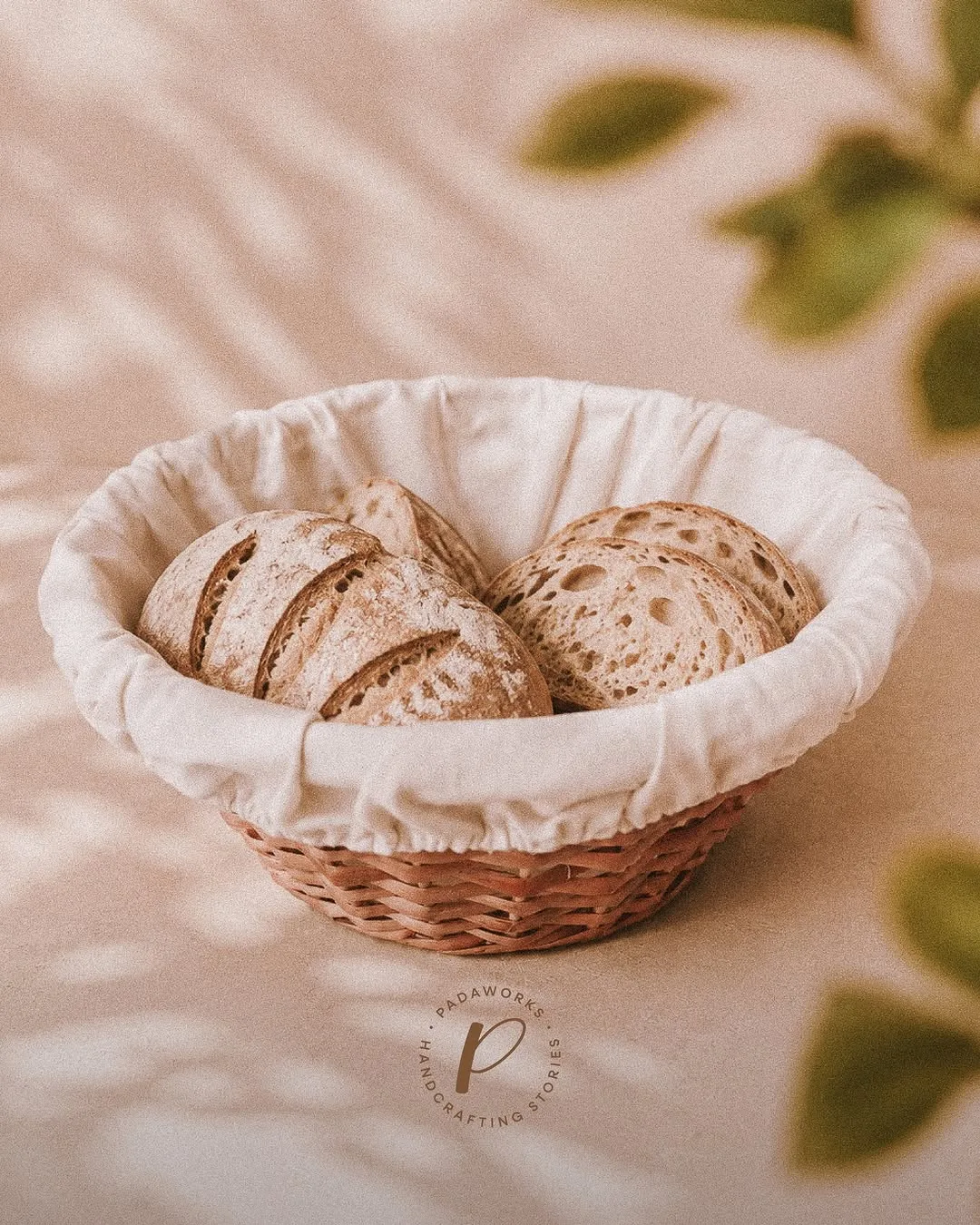
Woven baskets bring texture that smooth counters and glossy cabinets often lack. One generous basket holding bread, fruit, or rolled linens adds a soft, handmade note to the island. Natural fibers also warm up white and grey kitchens, which can feel chilly without any organic material in sight.
Line the basket with a clean cloth when it holds bread, and shake crumbs out daily so the display stays fresh. For linens, roll napkins and tea towels so their edges show in a neat spiral. Choose a basket with sturdy handles if you plan to carry it to the table, and keep sizes modest so the basket never swallows the whole island.
Country style and relaxed family kitchens suit baskets best, because the look welcomes a little imperfection. Households that bake or buy fresh bread often will use the basket daily rather than dust it. Anyone short on cupboard space gains honest storage that happens to look good sitting out.
Fatima keeps a wide seagrass basket of flatbreads and rolls beside her stove end of the island, lined with a checked cloth her mother gave her. Guests help themselves during meals without opening a single cupboard. On baking days the same basket collects warm loaves as they come out of the oven, perfuming the whole room.
Storing fresh bread in a basket for many days invites staleness and mold, especially in humid weather. Treat the basket as daily display and short term holding, moving leftovers to a proper container each night. Also keep the basket away from sink splashes, since damp fibers develop musty smells that transfer to food.
Small Herb Garden in Pots
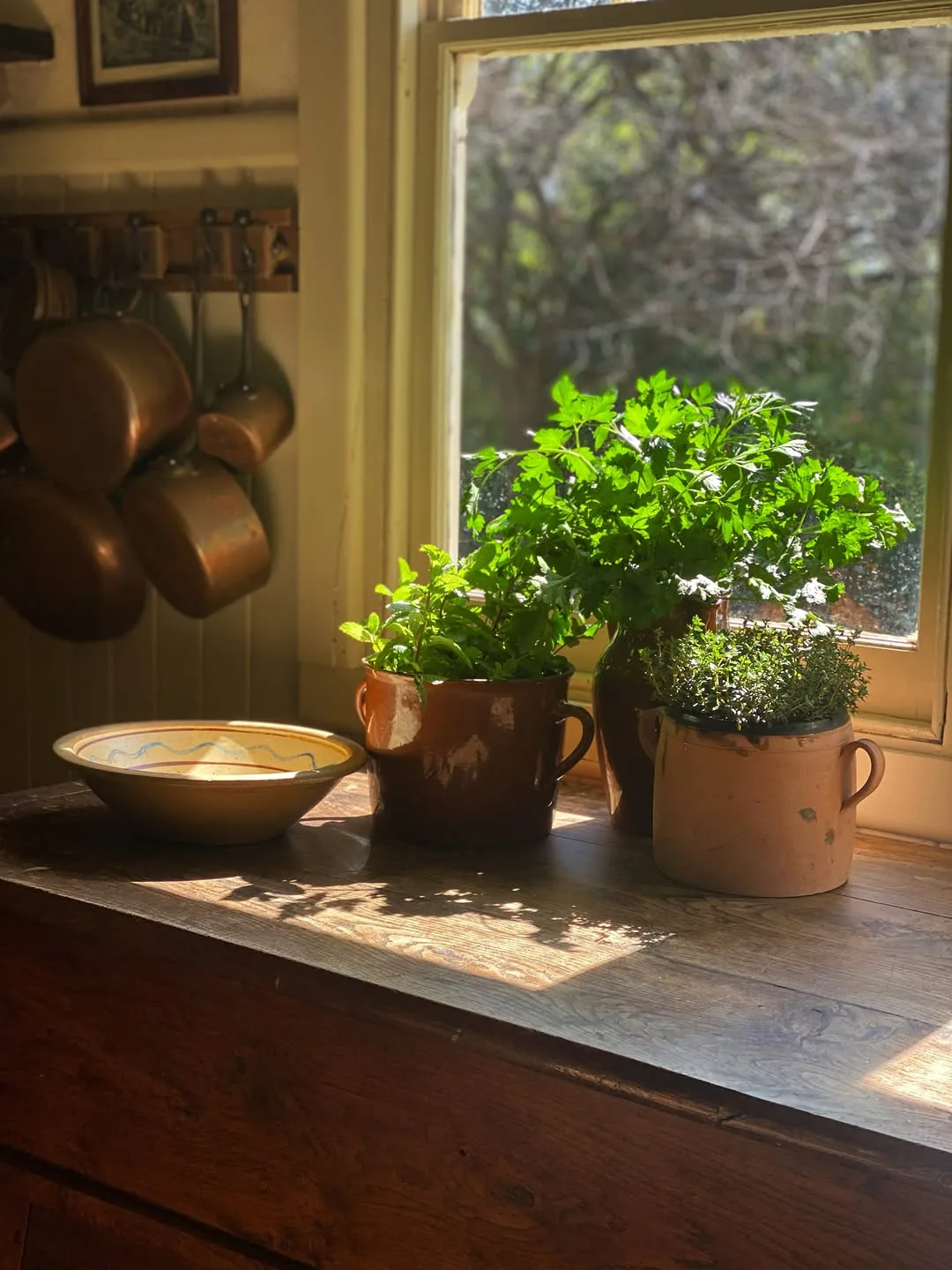
Living herbs bring scent, color, and real usefulness to the island, and few kitchen island decor ideas pay you back at dinner like basil, mint, and parsley do. Small pots lined along a sunny end of the counter keep fresh flavor within reach of the chopping board. Green leaves also soften stone and steel in a way no ornament can copy.
Start with three herbs you actually cook with, in pots with drainage holes and a shared tray beneath to catch water. Most herbs need bright light, so choose the island end nearest a window or add a small grow light. Snip leaves from the top and outside so plants keep producing instead of going to seed early.
Cooks who use fresh herbs weekly suit this idea best, because the plants stay trimmed and healthy through constant use. Bright kitchens gain the most, and small households can manage three pots without any fuss. Children often enjoy watering duty, which makes the little garden a family project as well as decor.
Ben lined four terracotta pots along his island after tiring of buying basil that wilted in the fridge. His pasta sauces changed within a month, and the pots now anchor one end of his counter with a row of green. He rotates the pots a quarter turn each week so every side gets light and grows evenly.
Overwatering kills more counter herbs than drought ever does, leaving soggy soil and clouds of tiny flies above the island. Water only when the top of the soil feels dry, and empty the tray so roots never sit in puddles. Weak, leggy herbs usually need more light rather than more water or food.
Seasonal Decor Swapped Through the Year
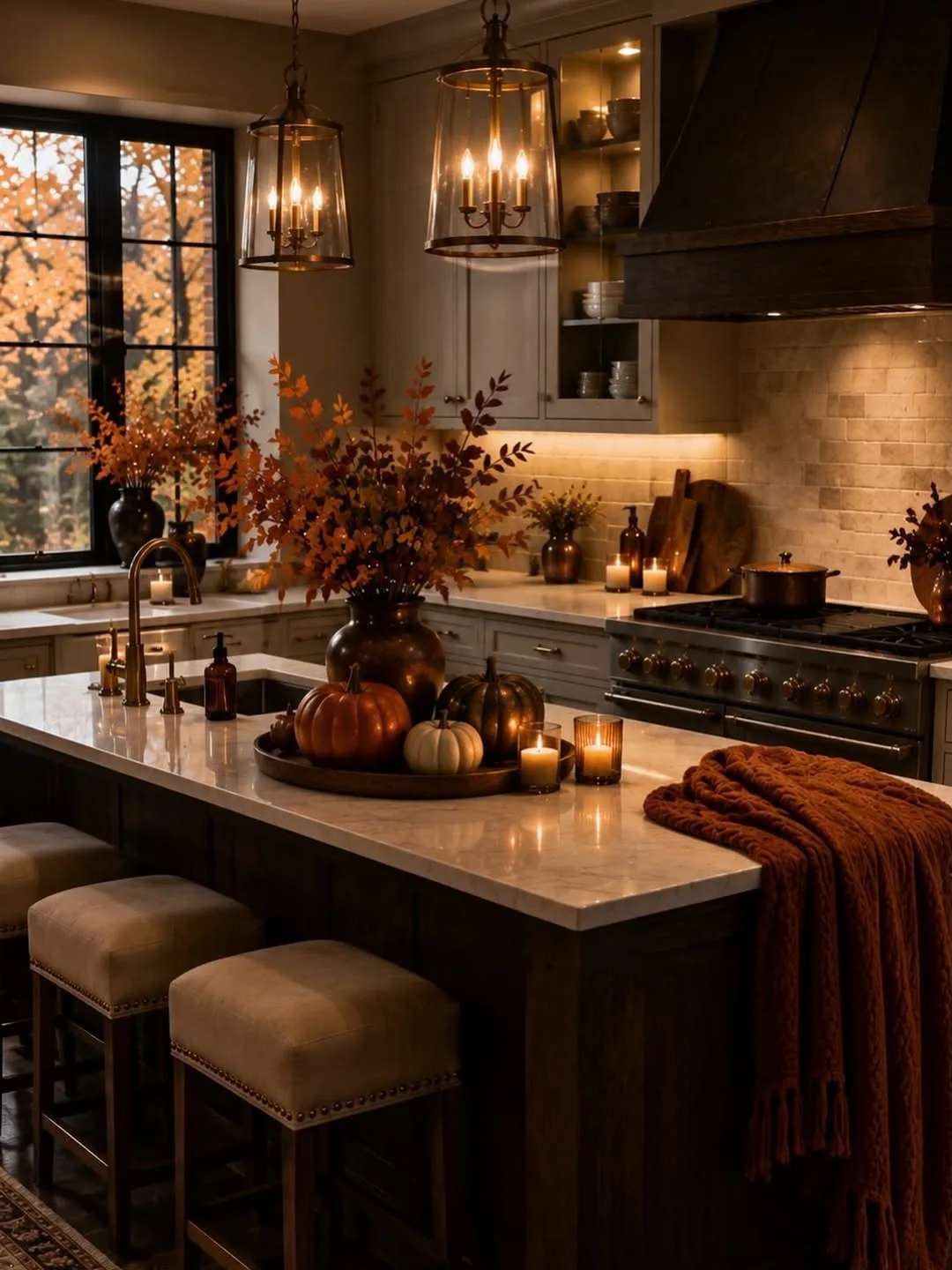
Changing one or two island pieces with the seasons keeps the kitchen feeling current without constant shopping. Small pumpkins in autumn, pinecones and candles in winter, tulips in spring, and shells in summer each take minutes to set out. Rotation also makes familiar rooms feel freshly styled four times a year.
Keep a single storage box for island seasonal pieces so swapping stays quick and clutter stays boxed away. Limit each season to three items at most, arranged on a tray or in one cluster. Store fragile pieces wrapped in the cloths you use for the next season, and donate anything that no longer earns its space.
Hosts who mark holidays with gatherings suit this rhythm well, because the island greets guests with quiet seasonal signals. Families with children enjoy the small ceremony of changing the display together. Anyone bored by static decor will appreciate how one swap refreshes the whole room at almost no cost.
Every December, the Nguyen family replaces their autumn bowl of pinecones with a small wooden village and a string of warm lights along the island edge. January brings plain candles, and spring swaps in a jug of branches from their garden. The island has become their family calendar, noticed by every visitor who walks in.
Overdoing seasonal decor crowds the island until cooking feels like working inside a shop window. Themed clutter also dates fast and can embarrass by the second week. Keep displays small, useful, and easy to clear away in one trip when a big cooking day arrives.
Cutting Board Leaning as a Backdrop
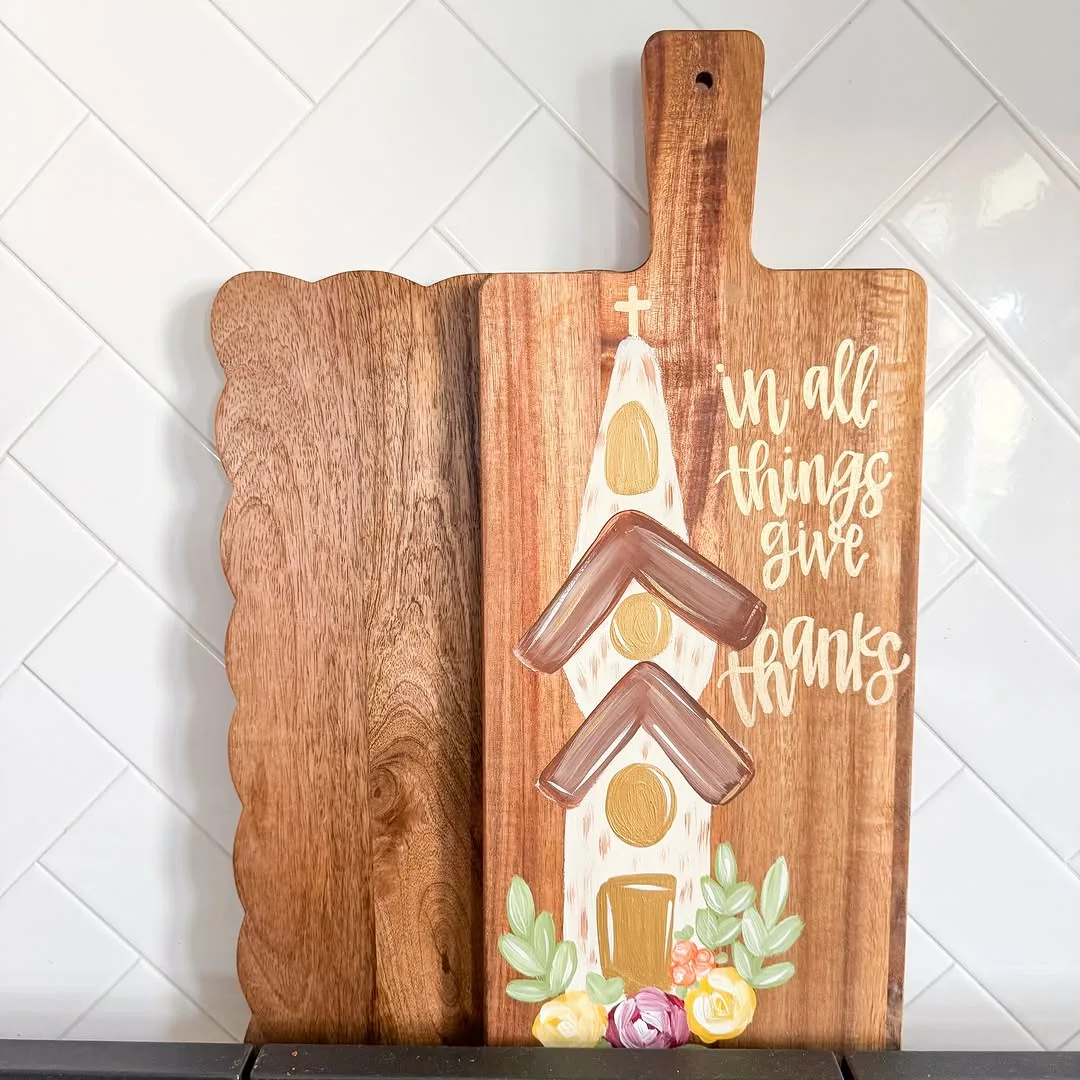
Leaning a large cutting board against the backsplash end of an island adds warmth and texture with zero effort. Wood grain breaks up long runs of stone or tile and gives smaller items in front a calm background. Boards also hide wall outlets and small marks that islands collect over years of use.
Choose the largest board you own, ideally one with a handle or a juice groove that adds shape. Lean it at the back edge of the island, then layer a smaller board or a framed print in front for depth. Keep the working side of the island clear, and pull the boards flat when you need them for prep.
Wooden and farmhouse style kitchens suit this look naturally, though one board warms modern counters just as well. Cooks who own beautiful boards gain display space for pieces that usually hide in drawers. Anyone decorating on a tiny budget will love that the backdrop costs nothing at all.
Omar leaned his grandfather's worn maple board behind his island fruit bowl, and the old wood instantly became the most loved feature in his kitchen. Scratches from decades of family meals show in the grain, starting conversations with every new guest. He still uses the board weekly, washing and drying it before it returns to its place.
Neglecting board care ruins both looks and hygiene, because leaning boards still collect splashes and grease near the stove. Wash boards with hot soapy water, dry them upright, and oil the wood monthly so it resists cracks. Never lean a board you used for raw meat until it has been washed and dried properly.
Ceramic Pitcher Holding Kitchen Tools
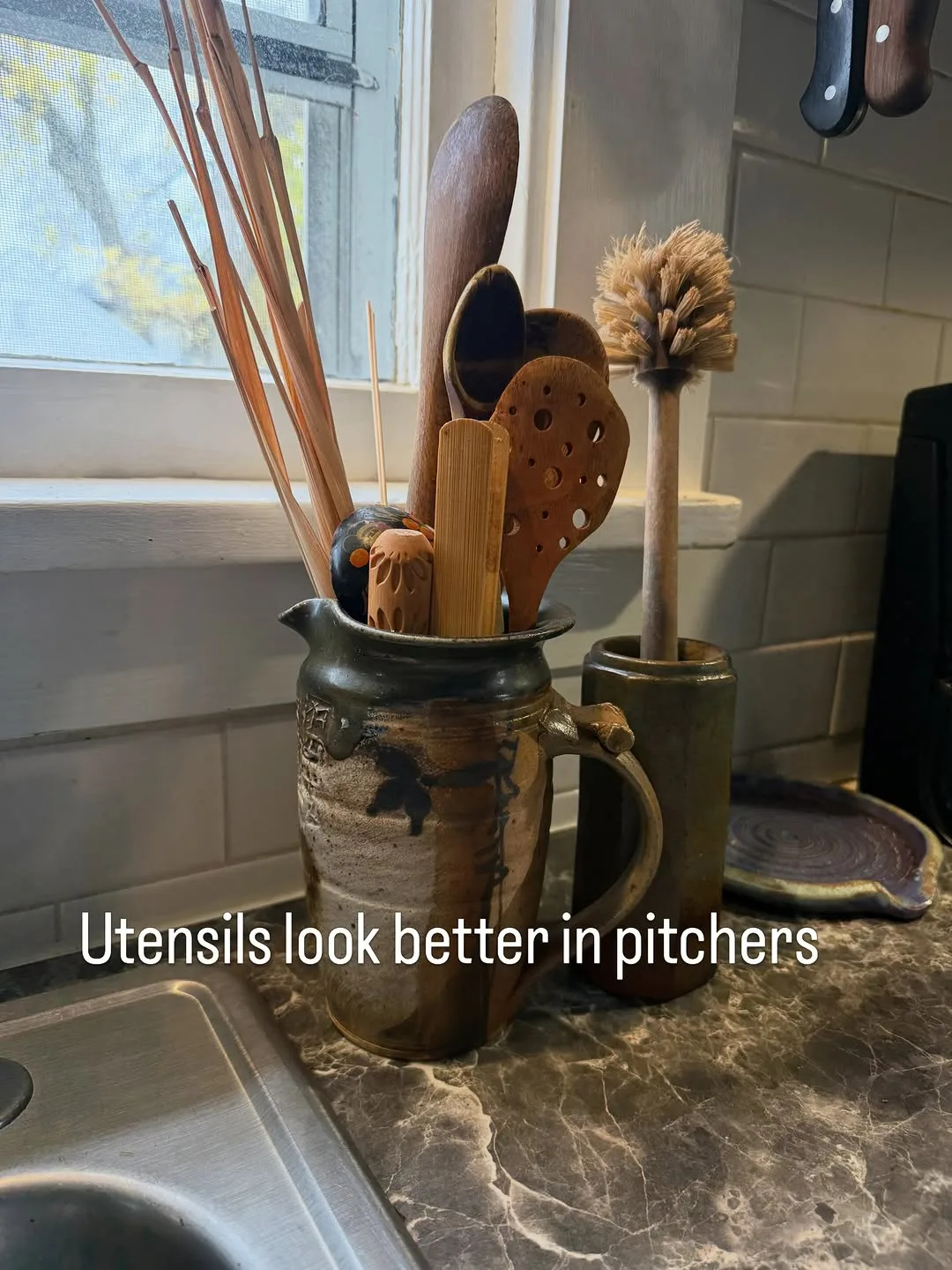
Useful items can serve as decor when they sit in something beautiful, and a ceramic pitcher turns spatulas and wooden spoons into a small sculpture. Tools stay within reach of the stove while the pitcher adds color and a crafted feel. Crocks and jugs in handmade glazes carry more character than plain metal holders.
Fill the pitcher only with tools you grab daily, usually two wooden spoons, a spatula, a whisk, and tongs. Set the pitcher beside the stove end of the island where cooking actually happens. Wash tools before returning them, and dry the pitcher inside weekly so trapped moisture cannot grow stale smells.
Daily cooks suit this idea best, because their tool pitcher stays in honest use rather than gathering dust. Small kitchens gain counter order near the stove, and cooks with beautiful handmade pottery finally get to enjoy it outside the cupboard. Anyone who hates digging through drawers mid recipe will convert quickly.
Rosa keeps her olive wood spoons and her mother's whisk in a blue glazed pitcher her sister made at a pottery class. Every meal starts with that pitcher, and its uneven glaze catches the pendant light in the evenings. She says the arrangement reminds her that kitchens should hold family stories, not just equipment.
Cramming every utensil you own into the pitcher makes tools hard to pull out and chips the rim over time. Keep the daily set small and store the rest in a drawer nearby. Also check that tall tools cannot tip the pitcher when you grab one quickly during busy cooking.
Large Statement Bowl Left Mostly Empty
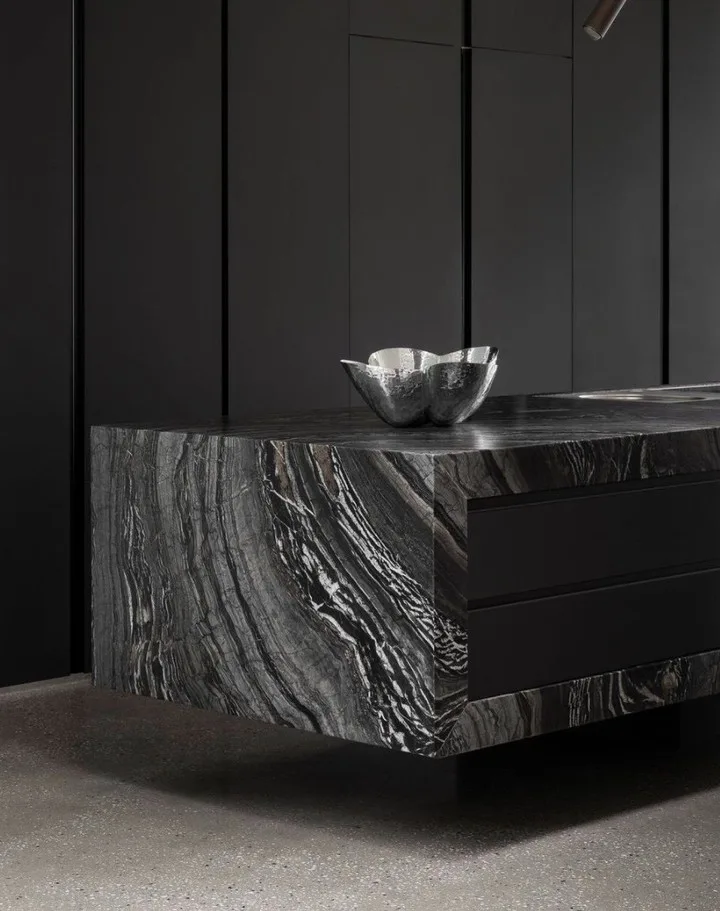
Sometimes the boldest island decor is a single beautiful object with room to breathe. One large bowl in stone, wood, or hammered metal anchors the island while staying empty or holding just a few items. Empty space around it signals calm and confidence, proving that styling does not require filling every centimeter.
Pick a bowl with real presence, wider than a dinner plate and heavy enough to feel grounded on the counter. Place it slightly off center, where it catches light but leaves both ends useful. During big cooking days, the bowl can hold ingredients, mail for one hour only, or nothing at all while you work around it.
Minimalist households suit this idea perfectly, because one object carries the whole styling load. Large islands gain the most, since wide counters can look empty and cold without an anchor piece. Anyone overwhelmed by styling advice will appreciate a rule this simple: one good bowl, kept clear.
Hannah placed a wide black stone bowl in the middle of her pale island and resisted every urge to fill it with clutter. Mail goes straight to a drawer now, and the bowl holds only lemons on market days. Her kitchen photographs beautifully, and cleaning takes minutes because almost nothing sits out.
Letting the statement bowl become a dumping ground destroys the whole effect within a week. Keys, receipts, and loose change creep in quietly and stay for months. Guard the bowl fiercely, giving stray items a proper home elsewhere, and the island keeps its calm finished look.
Common Mistakes to Avoid
Filling every centimeter of the island with decor leaves no room for the work the island exists to support. Cooking, serving, and gathering all need open counter, so styling should claim the edges and corners and leave the middle free. When in doubt, remove one item and see how much easier the next meal becomes.
Ignoring scale makes islands look awkward, with tiny ornaments lost on wide counters and oversized pieces crushing small ones. Match decor size to island size, grouping small items on trays so they read as one larger arrangement. Step back to the doorway and judge the island from where guests first see it.
Buying matching decor sets in one trip gives the island a showroom feel with no personality. Pieces gathered slowly from your own cupboards, markets, and travels look warmer and cost less. Start with what you already own, live with it for a week, and add only what still feels missing.
Forgetting cleaning turns pretty styling into a chore, because islands collect grease, crumbs, and splashes faster than any other surface. Choose washable, wipeable pieces near cooking zones and keep arrangements easy to lift in one move. Decor that cannot survive a damp cloth does not belong beside a stove.
Budget Friendly Kitchen Island Decor Ideas
Start by shopping your own home, because most kitchens already hide trays, bowls, boards, and pitchers in cupboards. Moving a loved piece from a dark shelf to the island gives it new life at zero cost. Many households can style the whole island from things they already own and forget they have.
Second hand shops and market stalls offer wooden trays, ceramic bowls, and woven baskets for a fraction of new prices. Solid older pieces often outlast cheap new imports and carry more character into the bargain. Wash finds well, check for cracks or wobbly bases, and buy one piece at a time.
Plants and fruit deliver the cheapest color in the kitchen, costing little and refreshing themselves as you eat and replant. One herb pot, a bowl of lemons, or clippings from the garden can carry the island for weeks. Seasonal garden cuttings cost nothing at all and change the look every few weeks.
Spend first on the pieces guests touch and see daily, like stool cushions and a good runner, and save on small ornaments. Lighting changes also deserve early money, since one warm bulb improves every item already on the island. Slow spending across months beats one big decorative splurge every time.
Tips for Styling a Kitchen Island
Keep at least half the island completely clear at all times, treating open counter as part of the design rather than wasted space. Clear stretches make styled corners look intentional and keep cooking stress low. When guests arrive, that open space becomes serving room without any last minute clearing.
Group small items on trays, boards, or stands so the eye reads a few calm arrangements instead of many loose pieces. Groups also lift away in one move when you need the surface, which protects the styling during busy weeks. Odd numbers within each group, usually three or five pieces, tend to look most natural.
Repeat one color or material at least three times across the island, and let kitchen island decor ideas guide the island as one composition rather than separate corners. Wooden stools, a wooden tray, and a wooden board quietly agree with each other, for example. Repetition creates the pulled together feeling people notice without knowing why.
Vary heights within each arrangement, pairing one tall piece with lower items so the eye moves gently across the surface. Flat arrangements of items all one height look like storage, while mixed heights look styled. Use books, stands, and trays to raise smaller pieces instead of buying taller decor.
Edit the island every week while you wipe it down, removing anything that drifted there during busy days. Mail, chargers, and school papers migrate to islands in every home, and only regular editing keeps the styled look alive. Two minutes of tidying protects hours of styling effort.
FAQ
How much of a kitchen island should stay clear?
Roughly half the surface should stay open for prep, serving, and everyday tasks. Style the ends and corners, group items on trays, and protect the middle working stretch. Small islands may need even more clear space, while very large islands can carry one central arrangement and still work well.
What is the best centerpiece for a kitchen island?
Fruit bowls, tall branches in a vase, and grouped candles on a tray all work well as centerpieces that take minutes to set up. Choose based on how you use the island, keeping food based pieces near seating and clear of the main prep zone. Change the centerpiece seasonally to keep the room feeling fresh.
How do I style a small kitchen island?
Small islands need restraint, so pick one tray of daily items and one small plant or bowl, then stop. Use height instead of width, choosing a tall vase or a raised stand rather than several low pieces. Keeping the surface mostly clear makes a small island feel bigger and far easier to cook on.
Can I decorate a kitchen island on a tight budget?
Yes, and the cheapest styling usually starts with items already in your cupboards, like boards, bowls, and pitchers. Add one plant or a bowl of fruit for color, then build slowly from market and charity shop finds. Spend first on cushions or lighting, which change the feel of the island more than small ornaments do.
How do I keep island decor clean while cooking?
Choose wipeable materials near the stove, group items so they lift away in one move, and wipe the whole island after cooking sessions. Keep food displays covered or fresh, wash trays weekly, and move delicate pieces away from splash zones. Simple habits protect both the decor and the food you serve.
What colors work best for island decor?
Colors borrowed from the rest of the kitchen always work, echoing cabinets, curtains, or the rug in small repeated touches. Natural tones from wood, fruit, and plants suit almost every scheme and never date quickly. Add one stronger accent, like deep green or warm red, through cushions or a bowl when the room needs energy.
Conclusion
Styled islands prove that beauty and hard work share the same counter happily when each piece earns its place. Simple kitchen island decor ideas rely on clear space, honest materials, and items you use and love daily. Nothing here demands a remodel, a big budget, or styling talent beyond a little patience.
Choose two or three ideas from this guide and set them up properly before adding more. One tray, one bowl of fruit, and one plant can change the whole room in a single afternoon. Living with a small change first shows you exactly what the island still needs, if anything.
Keep editing gently as seasons and habits change, swapping a display here and clearing a corner there. Islands serve real life, so their styling should flex with family meals, homework, and celebrations alike. Small weekly attention keeps the surface calm far better than occasional grand restyles.
Enjoy the island you gather around every day, from morning coffee to late night tea with friends. Warm light, clear space, and a few loved pieces turn a plain counter into the true heart of the home. Start with one corner today and let the rest follow at its own pace.