Hallway Decor Ideas That Make a Narrow Space Feel Welcome
Hallways carry coats, shoes, bags, keys, and muddy boots every single day, yet many homes leave this busy space bare and dim. Guests form a first impression within seconds of stepping through the front door, and everyone in the house passes through the hall more often than any other room.
Good news is that a narrow hall responds well to small and simple changes made with care. Smart hallway decor ideas focus on light, order, and a few warm details rather than large furniture or costly building work. Most of the ideas below cost little, use basic tools, and suit halls of every shape.
Inside this guide you will find fifteen practical ways to decorate a hallway of any length, with clear notes on cost, daily care, and common mistakes. Each idea explains why it works, how to do it well, who it suits best, one real example, and one error that can spoil the result.
What Are the Best Hallway Decor Ideas for a Small Hall?
Short answer first: combine better light, one slim piece of furniture, a mirror, and storage that keeps the floor completely clear. Strong hallway decor ideas repeat one calm color scheme, hang pictures at eye level, and give every coat and bag a set home close to the front door.
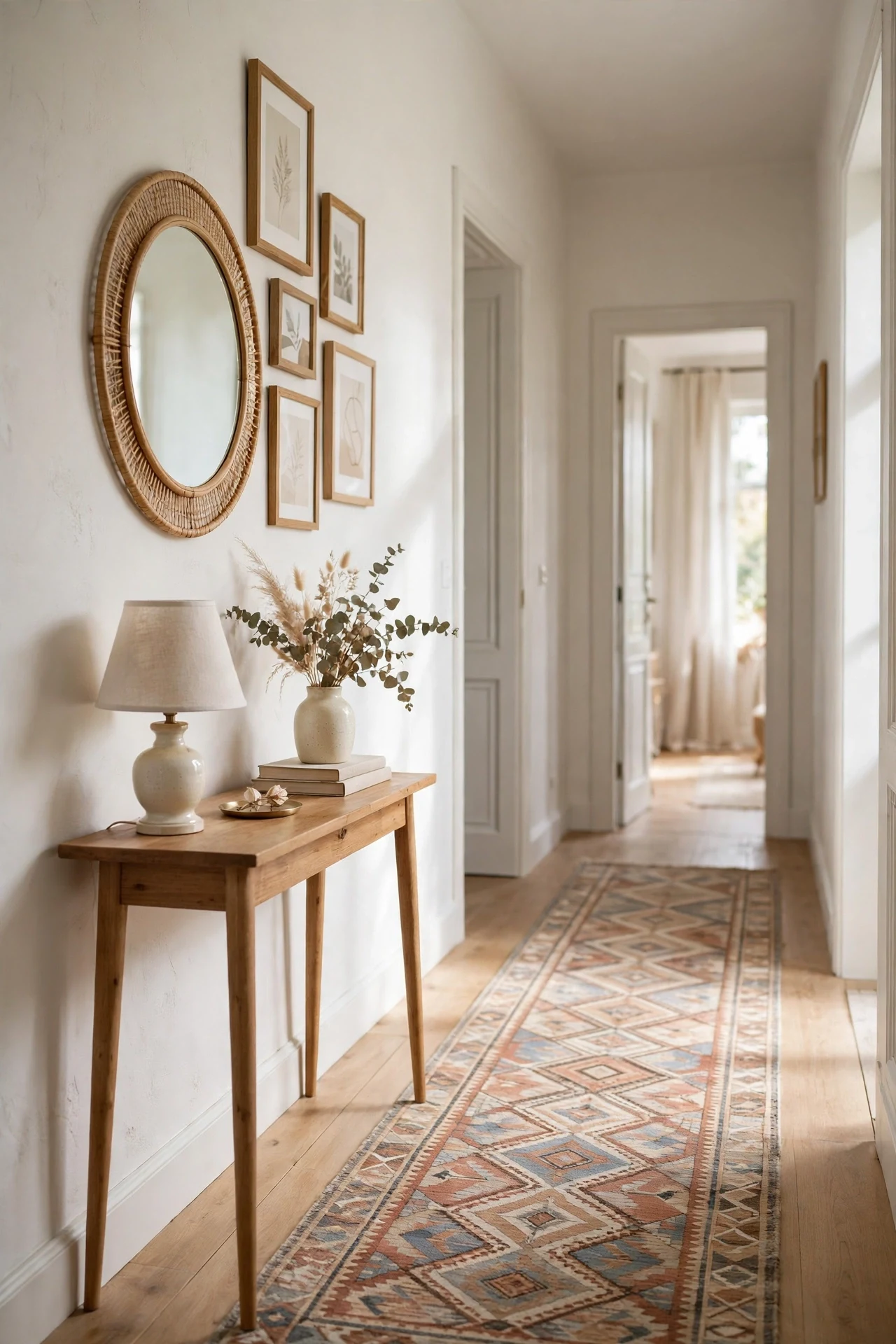
Picture a plain hall with a narrow console table, a lamp glowing at one end, a runner in rust and cream, and six family photos in matching frames. Nothing in that picture costs much or takes long to arrange, yet the space feels planned, warm, and easy to walk through.
Slim Console Table with a Lamp
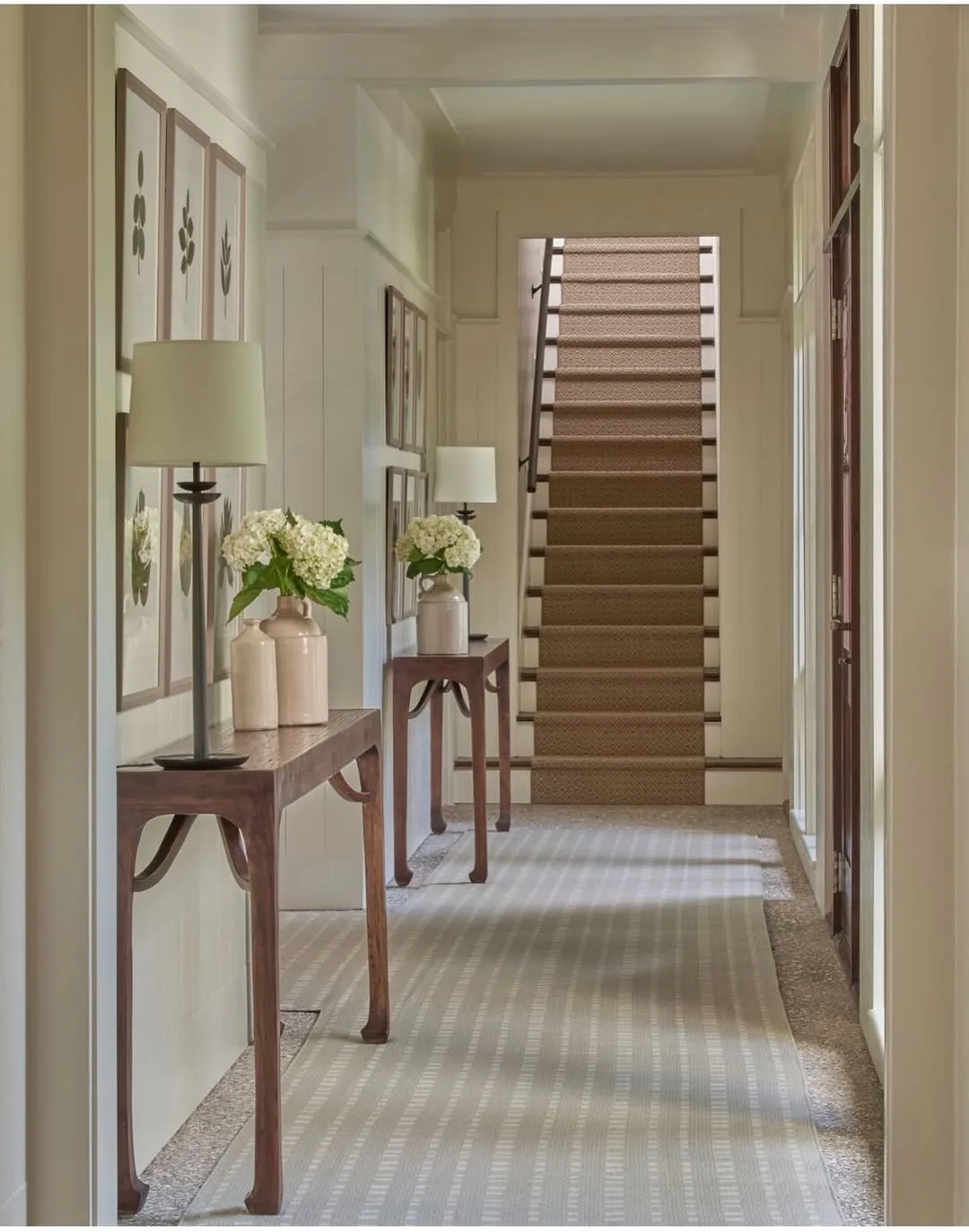
Slim console tables give a hallway a useful surface without stealing walking space from anyone passing through. Mail, keys, and a small plant gain a proper home, so clutter stops spreading across the floor and stairs. One table also creates a natural focal point that makes the hall feel furnished rather than forgotten.
Choose a table between twenty five and thirty five centimetres deep, and check that doors still swing freely beside it. Place a lamp with a warm bulb at one end, a shallow tray for keys in the middle, and one plant or framed photo to finish the small scene.
Busy households suit this idea best, because everyone gains a landing spot for the small items carried in and out each day. Homes with one long blank wall also benefit, since a console breaks the empty stretch into a calm and useful zone near the door.
When Marta added a narrow oak console to her plain hall, guests began setting bags down in one place instead of dropping them on the stairs. Her keys stopped vanishing, the lamp made evenings feel softer, and the whole entrance looked cared for within a single afternoon of simple work.
Deep tables cause the classic problem here, because wide furniture in a narrow hall leads to bumped hips and scratched paint on both sides. Measure the walkway before buying anything, leave at least eighty centimetres of clear passing space, and choose the slimmest table that still holds your daily items.
Long Runner Rug in Warm Colors
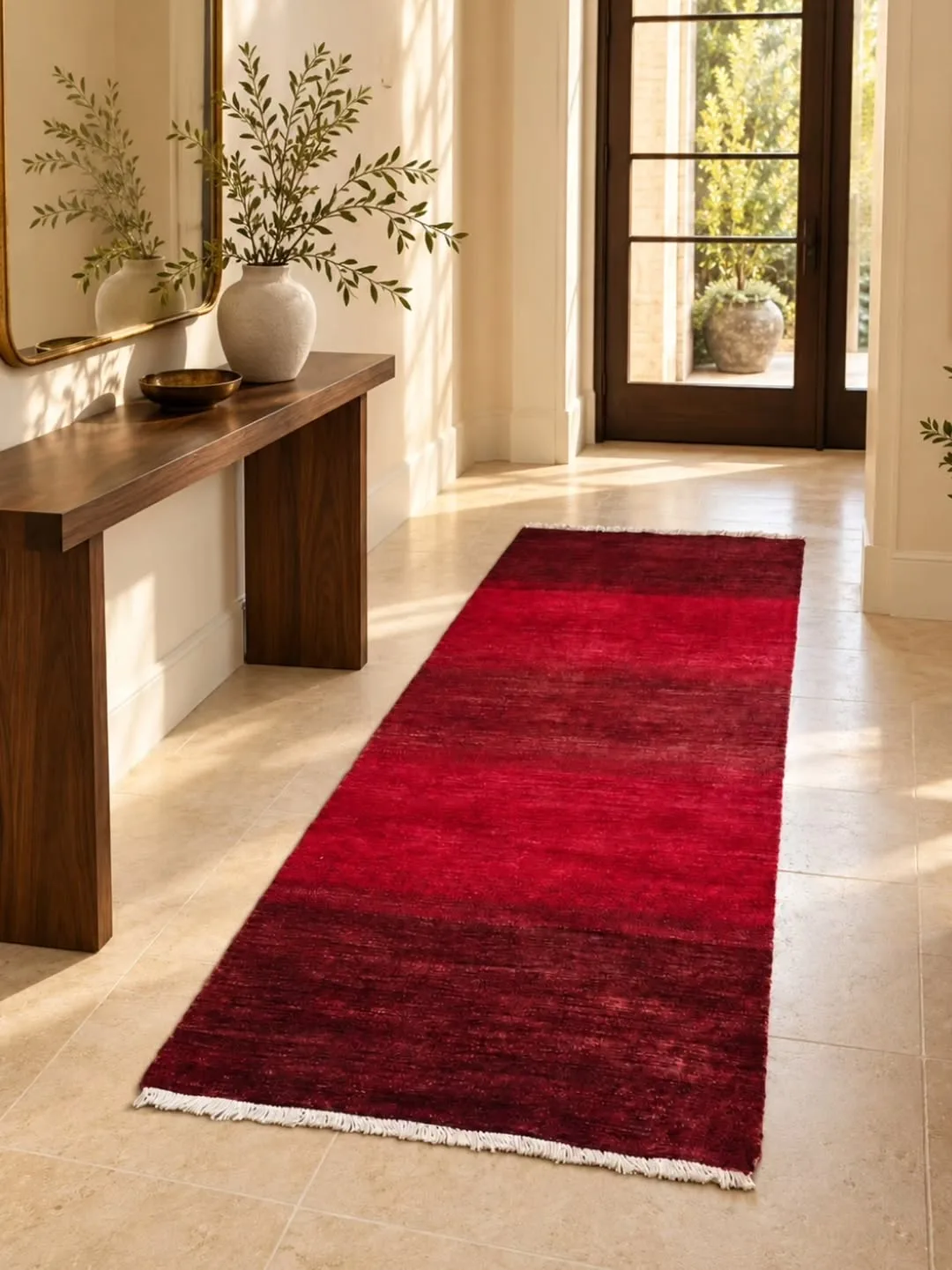
Runners soften hard floors, quiet footsteps, and guide the eye along the length of the hall in one smooth line. Color underfoot also warms a space that often has plain walls and little furniture to carry any pattern or personality.
Measure the hall and leave about ten centimetres of bare floor visible along each side of the rug for a balanced look. Pick flat weave runners that doors can clear easily, and add a non slip pad beneath so the rug stays put during busy mornings and wet weather.
Homes with tile, stone, or wooden floors suit runners best, because bare hard surfaces make halls feel cold and echo with every step. Simple hallway decor ideas often start underfoot for this reason, since one rug changes sound, warmth, and color in a single purchase.
One family laid a deep red runner over pale tiles and watched their grey hall turn warm in minutes without touching a wall. Children stopped slipping in socks, the dog settled on the rug instead of the cold floor, and guests commented on the color before anything else.
Thick pile rugs cause trouble in halls, because doors catch on the edges and dirt hides deep in the fibres near the entrance. Choose low pile or washable styles, shake the rug outside each week, and lift it monthly to clean the floor beneath properly.
Row of Framed Photos at Eye Level
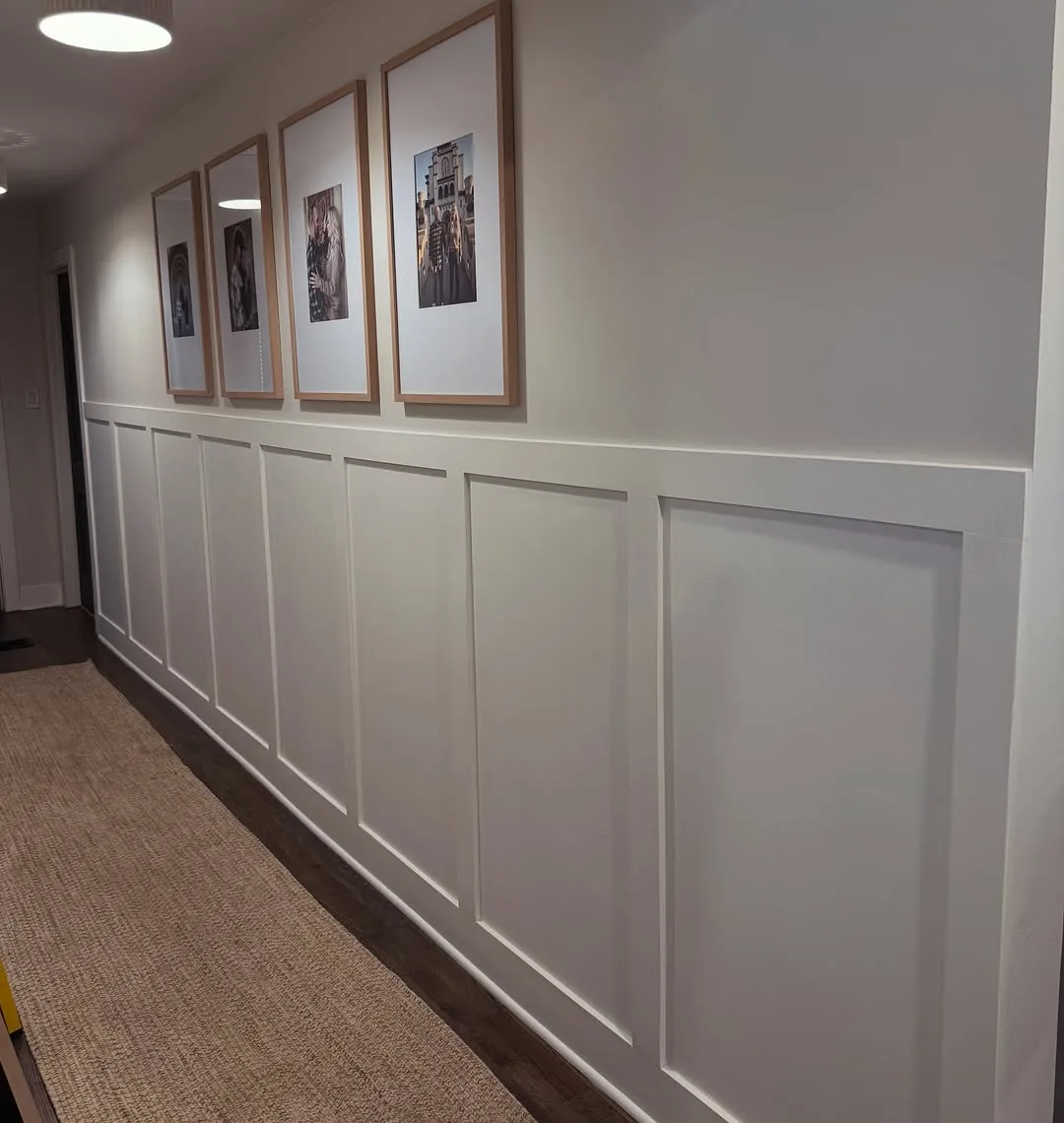
Photos turn a plain passage into a short story about the people who live in the home. Faces and favourite places give guests something warm to look at, and residents enjoy small memories during ordinary trips between rooms each day.
Hang frames so the centre of the row sits near one hundred and fifty centimetres from the floor, which suits most adults standing. Keep gaps even at about five centimetres, use matching frames in one finish, and plan the full layout on the floor before drilling any holes.
Grandparents and growing families suit photo rows best, because halls offer long walls where many frames can gather without crowding a living room. People who print photos from phones also gain, since a planned row finally gives those pictures a real home.
After sorting years of prints, Jonas hung twelve frames in two neat rows above the skirting boards in his hall. Visitors slow down on the way to the kitchen now, children point out baby photos of their parents, and the hall feels like part of the family story.
Mixed frame sizes and clashing colours make photo rows look messy within weeks, even when every picture is lovely on its own. Commit to one frame family, print photos at two or three sizes only, and edit the row once a year so favourites stay and weak shots leave.
Large Mirror That Opens the Space
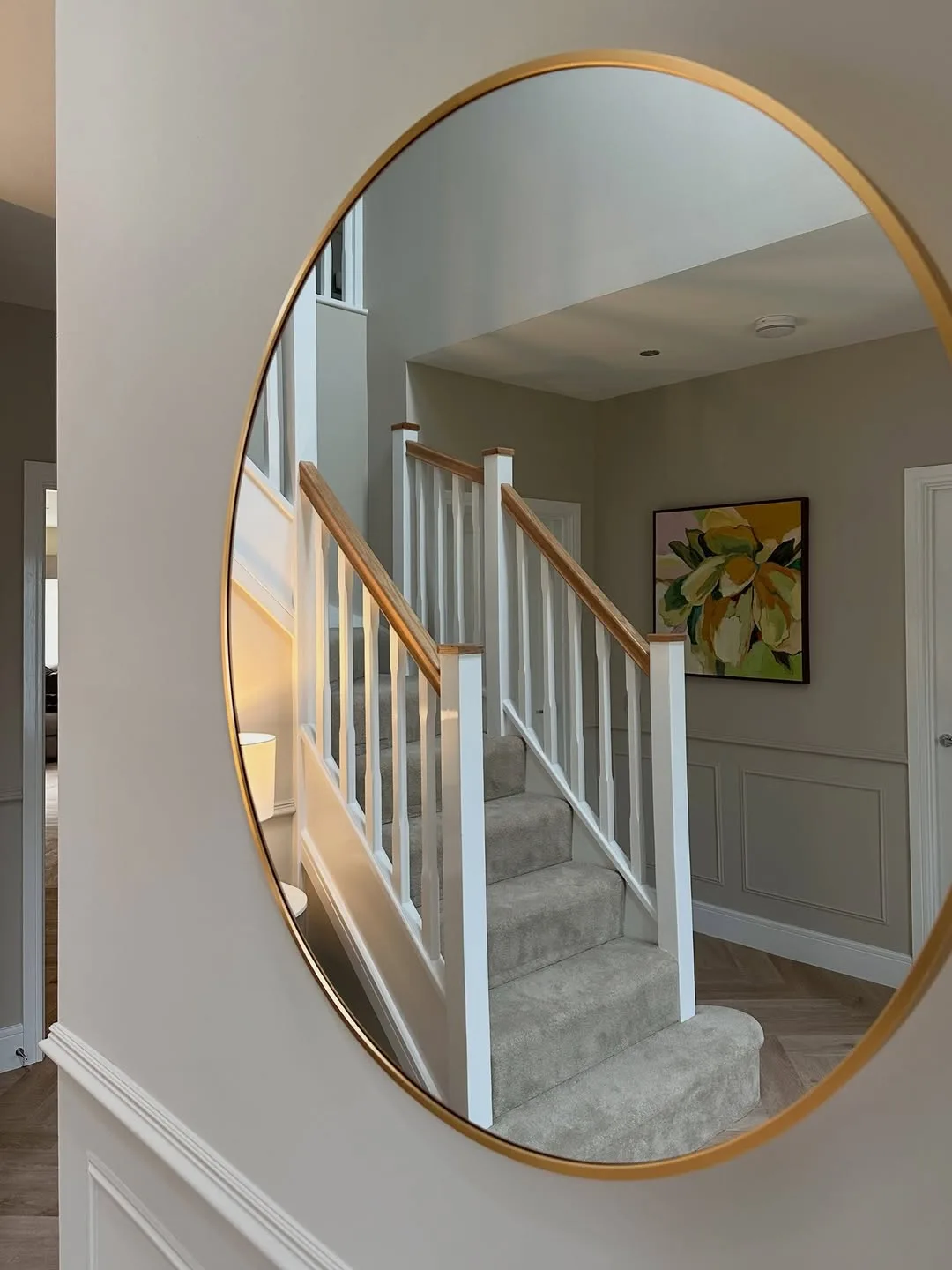
Mirrors bounce light into corners that lamps rarely reach and double the view of whatever sits opposite them. One generous mirror can make a narrow hall feel wider within minutes, because the eye reads the reflection as extra space beyond the wall.
Place the mirror where it reflects something pleasant, like a window, a plant, or a favourite picture on the facing wall. Round and arched shapes soften the straight lines of doors and skirting, while simple wooden or black frames suit most hall styles and colour schemes.
Dark halls and homes with small windows gain the most from a large mirror near the entrance. Anyone who checks hair and coats before leaving also wins, since the mirror earns its place through daily use as well as decoration.
Within one weekend, Priya hung a round mirror above her console table and angled a small lamp so its glow reflected down the hall. Morning light from the kitchen now reaches the front door area, and the entrance feels twice as bright on grey winter days.
Heavy mirrors fixed with weak hooks create a real safety risk, especially above places where children stand to put on shoes. Use fixings rated for the full weight, check the wall type before drilling, and keep the bottom edge high enough that bags and elbows pass safely below.
Wall Hooks for Coats and Bags
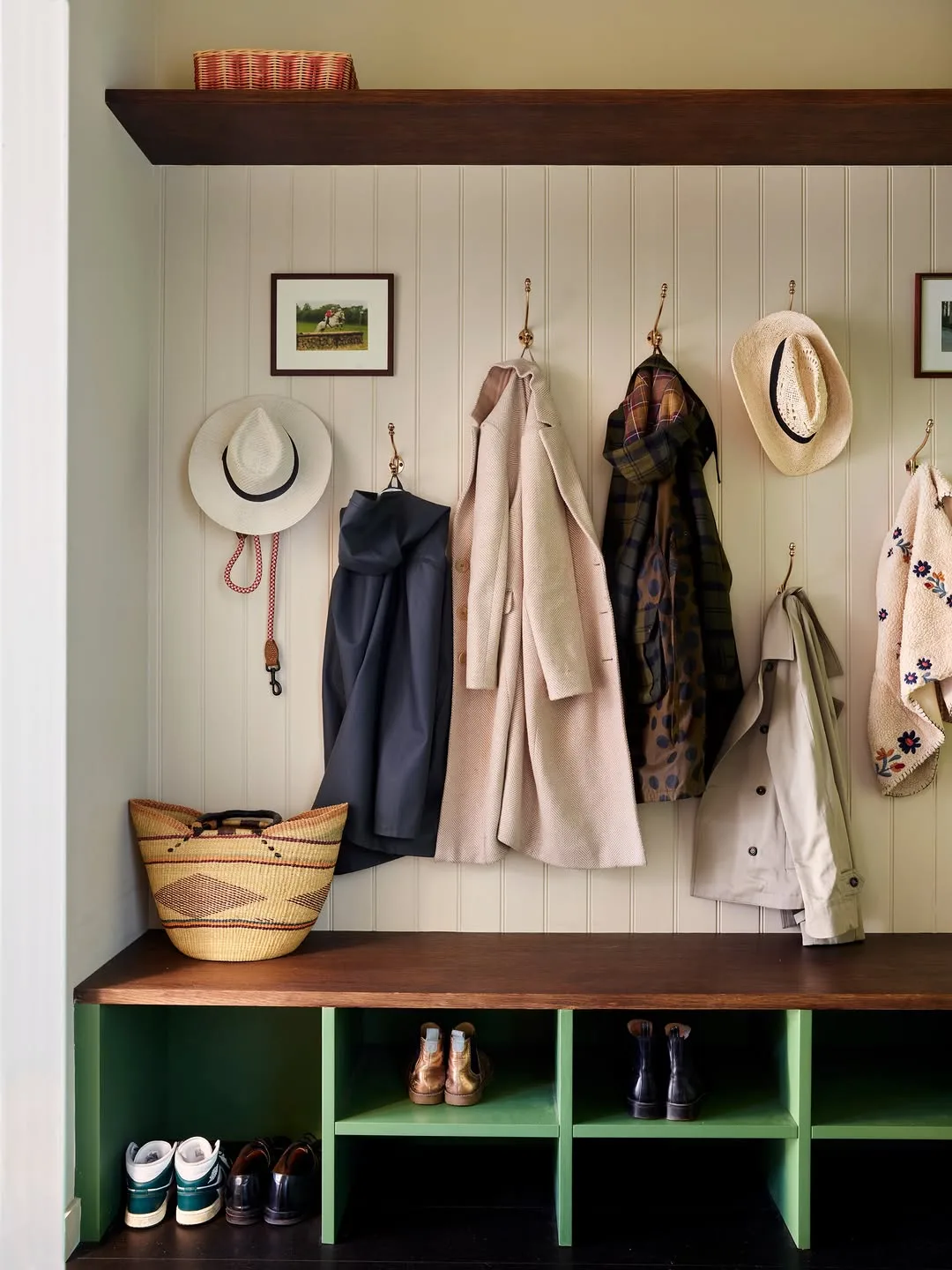
Hooks keep coats, hats, and bags off the floor and turn daily storage into part of the decoration. One tidy row near the door ends the pile on the stairs that makes so many halls feel chaotic and cramped.
Reliable hallway decor ideas treat storage as part of the look, and hooks prove that point better than almost anything else. Fit a sturdy rail at about one hundred and seventy centimetres for adults, add a lower row for children, and space hooks fifteen centimetres apart.
Shared houses and families with school age children suit wall hooks best, because every person can claim one hook as their own. Small flats also gain, since vertical storage near the door replaces a bulky coat stand that eats floor space.
In one small flat, four black hooks beside the door hold two coats, a work bag, a school backpack, and a dog lead without any crowding. Guests copy the setup instinctively, wet umbrellas drip onto a mat below, and the floor stays clear from morning to night.
Screws driven into plaster alone pull out under the weight of winter coats, leaving holes and a rail on the floor. Find the solid studs or use proper wall anchors, spread weight across several hooks, and move heavy bags to a bench or cupboard instead.
Bench with Baskets Beneath
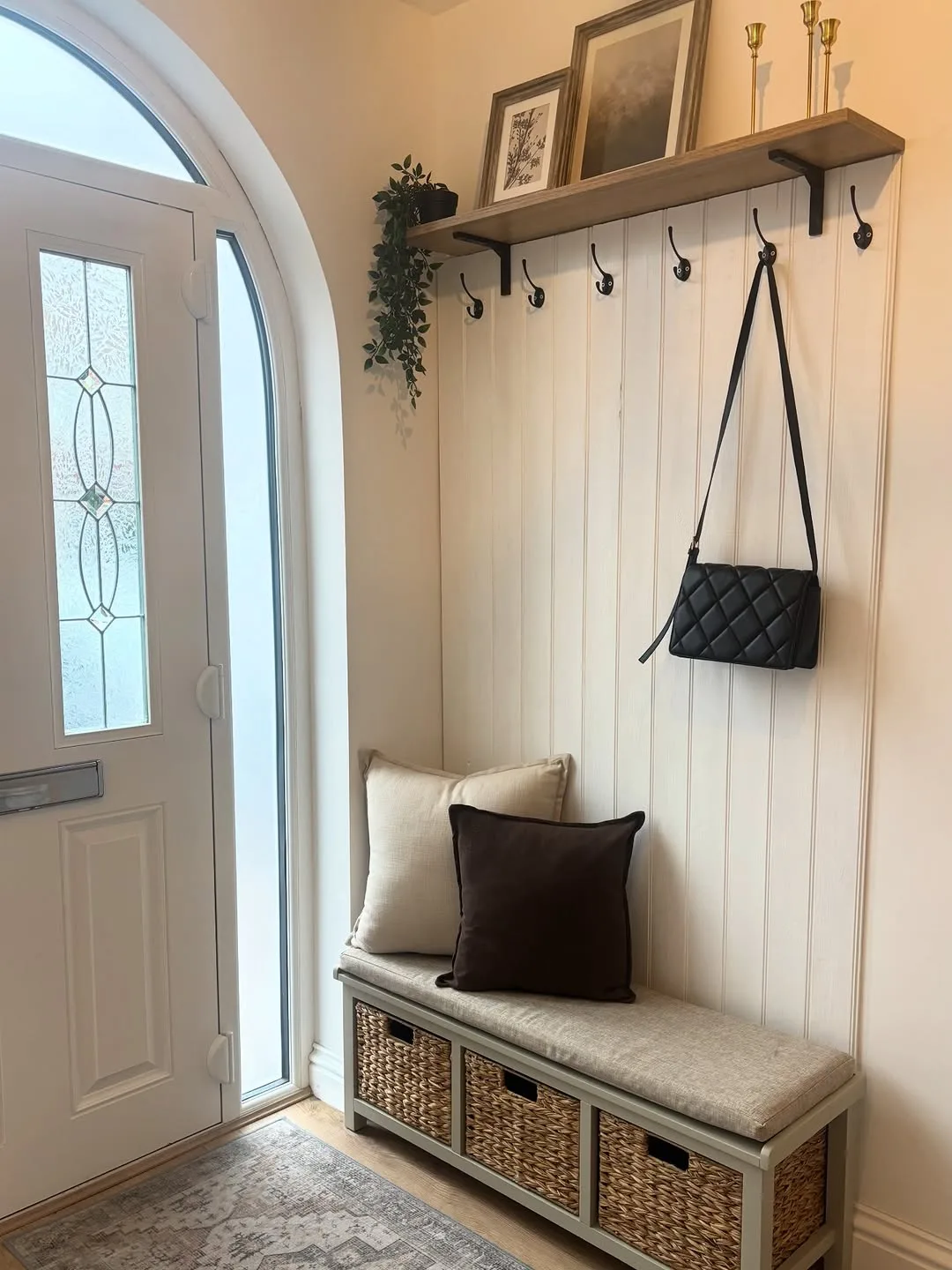
Benches give people a seat for pulling on boots and set down a natural pause point inside the door. Seating also signals welcome, because a hall with somewhere to sit feels like a room rather than a corridor to rush through.
Look for a bench between ninety and one hundred and twenty centimetres long, with open space beneath for two or three baskets. Woven baskets hide shoes, scarves, gloves, and dog leads, while a cushion in washable fabric adds comfort and one calm colour to the seat.
Families with young children suit a hall bench best, because small people need a seat at their own height for shoes every day. Dog owners also benefit, since leads, towels, and treats gather in one basket beside the seat instead of spreading through the house.
Sam built a simple bench from spare timber and slid three baskets underneath for the shoes his family wears most often. School mornings became calmer within a week, muddy boots stay in one spot, and the hall now handles the daily rush without piles forming anywhere.
Cushions in pale fabric show mud and paw prints fast near any front door, no matter how careful the household tries to be. Choose mid tone washable covers, keep one spare cover for laundry days, and wipe the bench seat weekly so dirt never builds into the grain.
Framed Art in One Calm Color Family
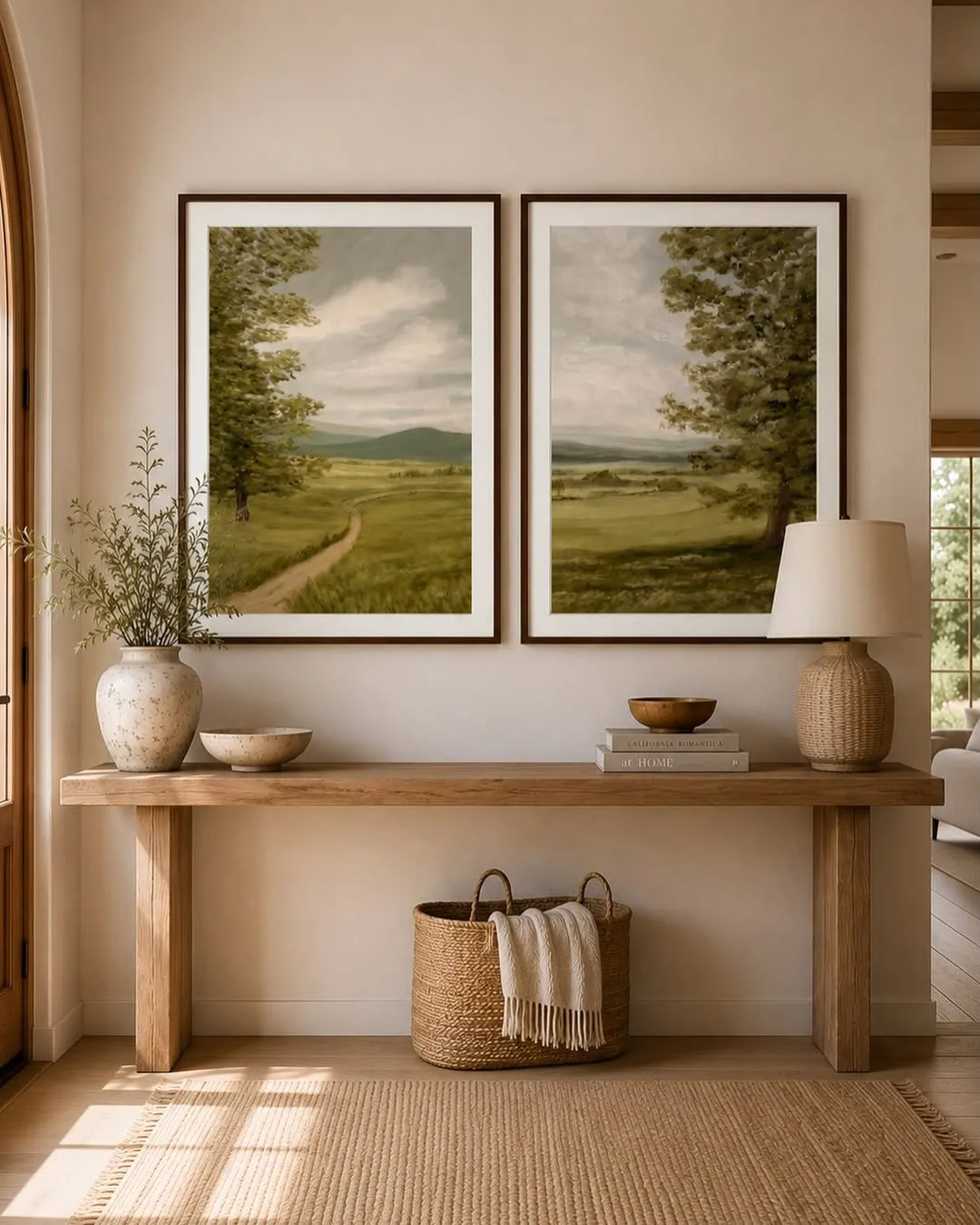
Prints chosen from one colour family give a hallway a calm and planned feel without any need for matching furniture. Blues and greens soothe, soft neutrals warm, and one repeated colour ties separate frames into a single quiet display.
Pick three to five prints that share tones with your runner, door paint, or living room sofa for a linked look. Keep frames in one finish, vary the sizes a little for interest, and hang the group as one block rather than scattering single frames along the wall.
Quiet households and anyone who dislikes busy patterns suit a single colour family best on hall walls. Long halls gain most, because repeated colour carries the eye smoothly from the front door to the rooms beyond without visual noise.
Lena framed five prints in shades of sage and stone, then hung them in one group above her bench. Guests often ask whether an interior stylist helped, and the calm colours make even rushed mornings feel slower and kinder in her small home.
Competing bright colours fight each other on close hall walls, where people stand near the art and notice every clash. Test prints together on the floor in daylight first, remove the loudest piece, and let one strong colour lead while quieter tones support it.
Wall Lights Instead of One Ceiling Bulb
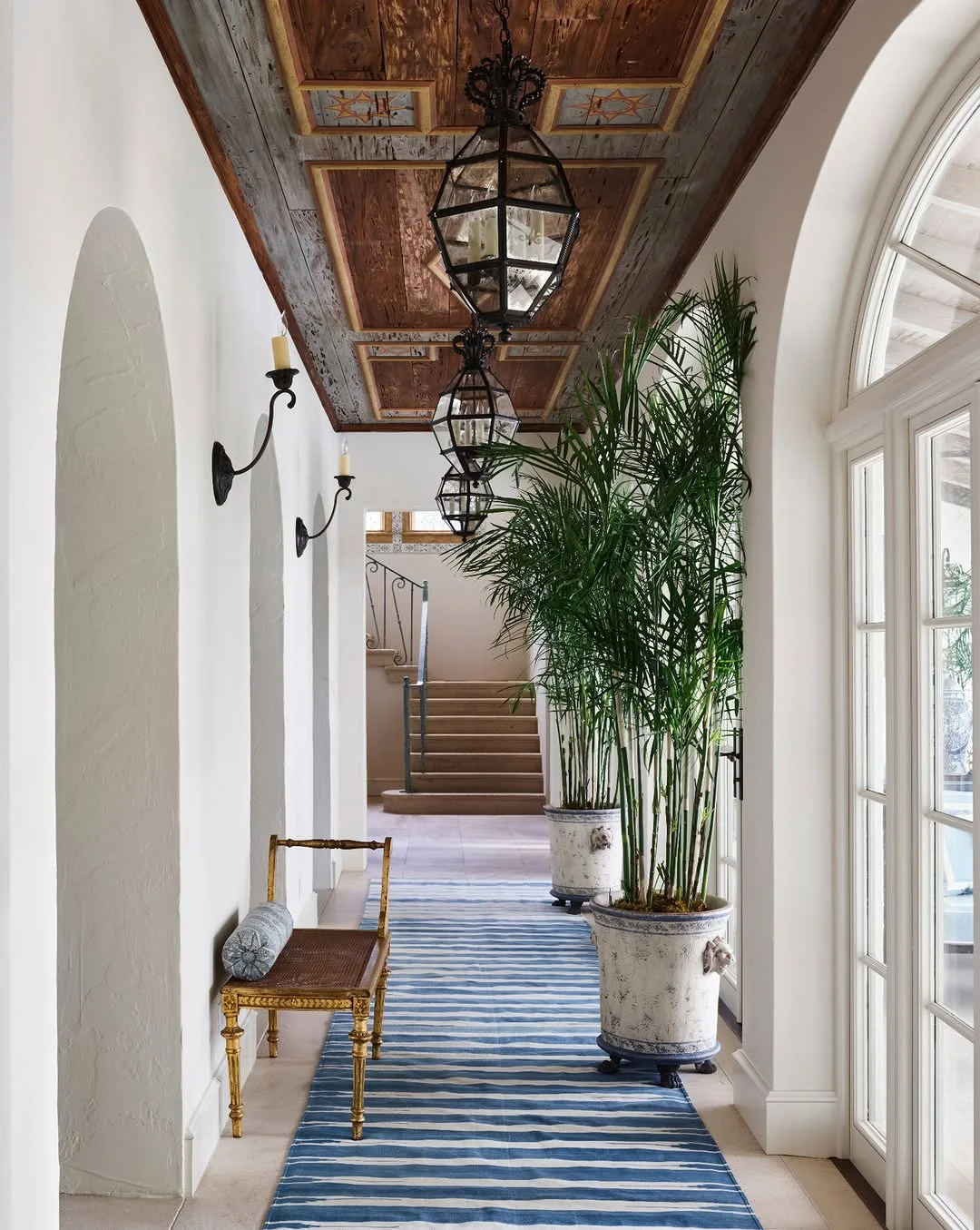
Lighting changes a hallway more than any single object, because bare bulbs glare while soft light flatters both people and paint. Wall lights spread glow along the passage instead of pooling it in one harsh circle above the centre.
Fit two or three wall lights along a long hall, spaced evenly and set high enough that tall guests pass without contact. Thoughtful hallway decor ideas treat light as part of the design, so pick warm white bulbs and shades that aim light up and down the wall.
Long halls and windowless passages gain the most from wall lights, since ceiling bulbs alone leave both ends in shadow. Evening households also benefit, because low warm light makes coming home after dark feel calm rather than stark.
During a simple weekend job, Omar replaced one ceiling bulb with two shaded wall lights and added a small lamp on his console. The hall stopped feeling like a waiting room, family photos gained a soft glow, and guests lingered longer near the door.
Shades in dark metal or thick glass can dim a hall further when bulbs are weak or placed too far apart. Test bulb strength before fixing shades permanently, clean glass shades monthly, and keep one brighter bulb near the door where people need clear light.
Painted Lower Wall in a Deeper Shade
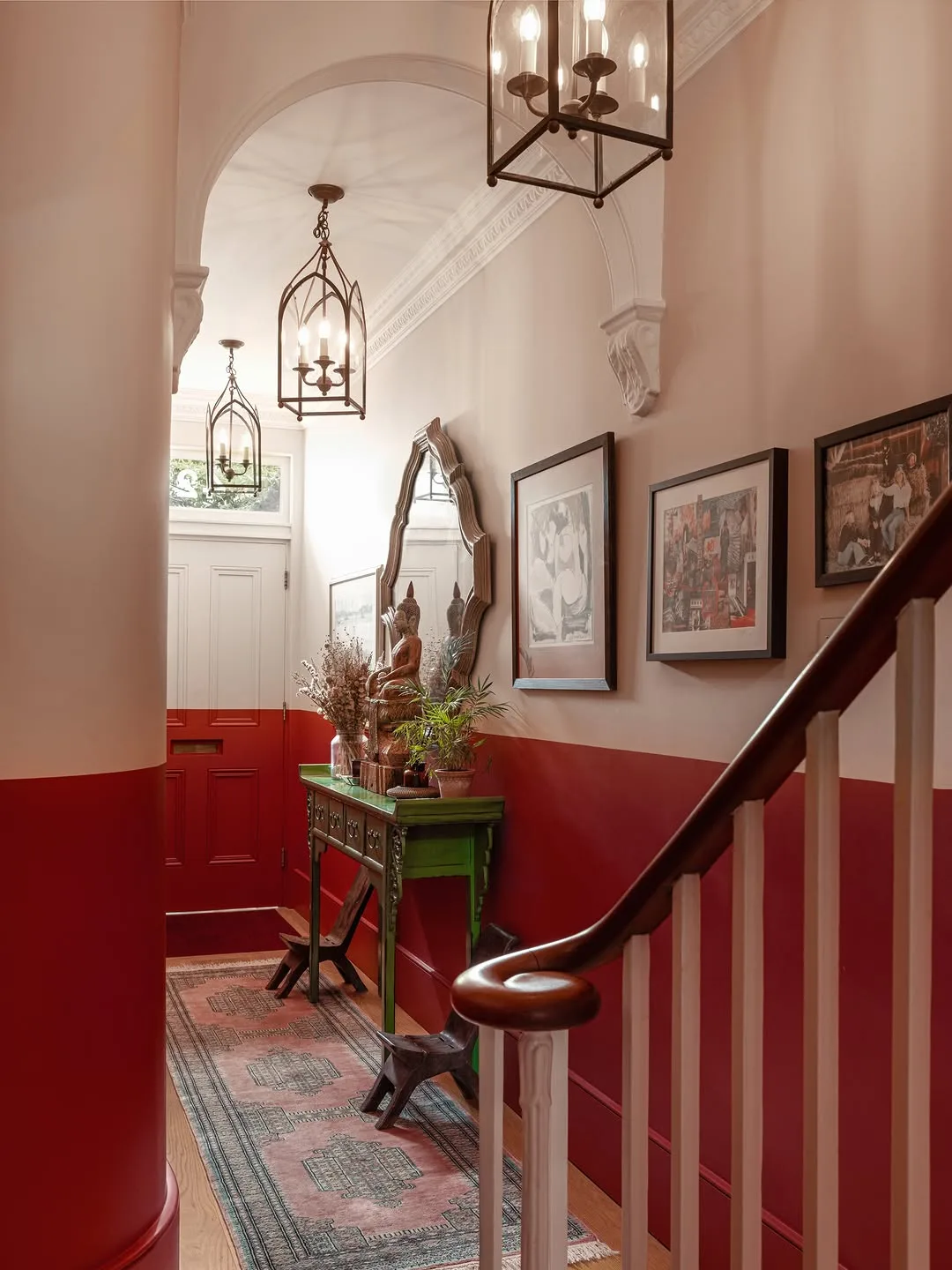
Paint on the lower half of hall walls adds colour where hands, bags, and boots actually touch, while the upper half stays pale and bright. Deeper shades hide scuffs far better than white paint, so busy halls look cleaner for longer between coats.
Divide the wall at about one hundred and ten centimetres, or level with a picture rail where one exists in older homes. Use washable paint in a finish made for busy areas, mark the line with tape and a level, and paint the skirting boards to match.
Homes with children, dogs, and heavy daily traffic suit a painted lower wall best of all. Narrow halls also gain, because a darker base grounds the space and pale upper walls keep the passage feeling open and airy above shoulder height.
Grey green paint below the rail transformed the hall in one terraced house where white walls had shown every mark within weeks. School bags now brush the wall without leaving grey streaks, the colour echoes the garden outside, and repainting takes one afternoon each spring.
Glossy paint shows every bump and old repair in the plaster, especially under side light from a front door window. Choose a soft sheen finish instead, fill and sand rough patches first, and test the colour on a large board before painting the whole wall.
Floating Shelves with Small Plants
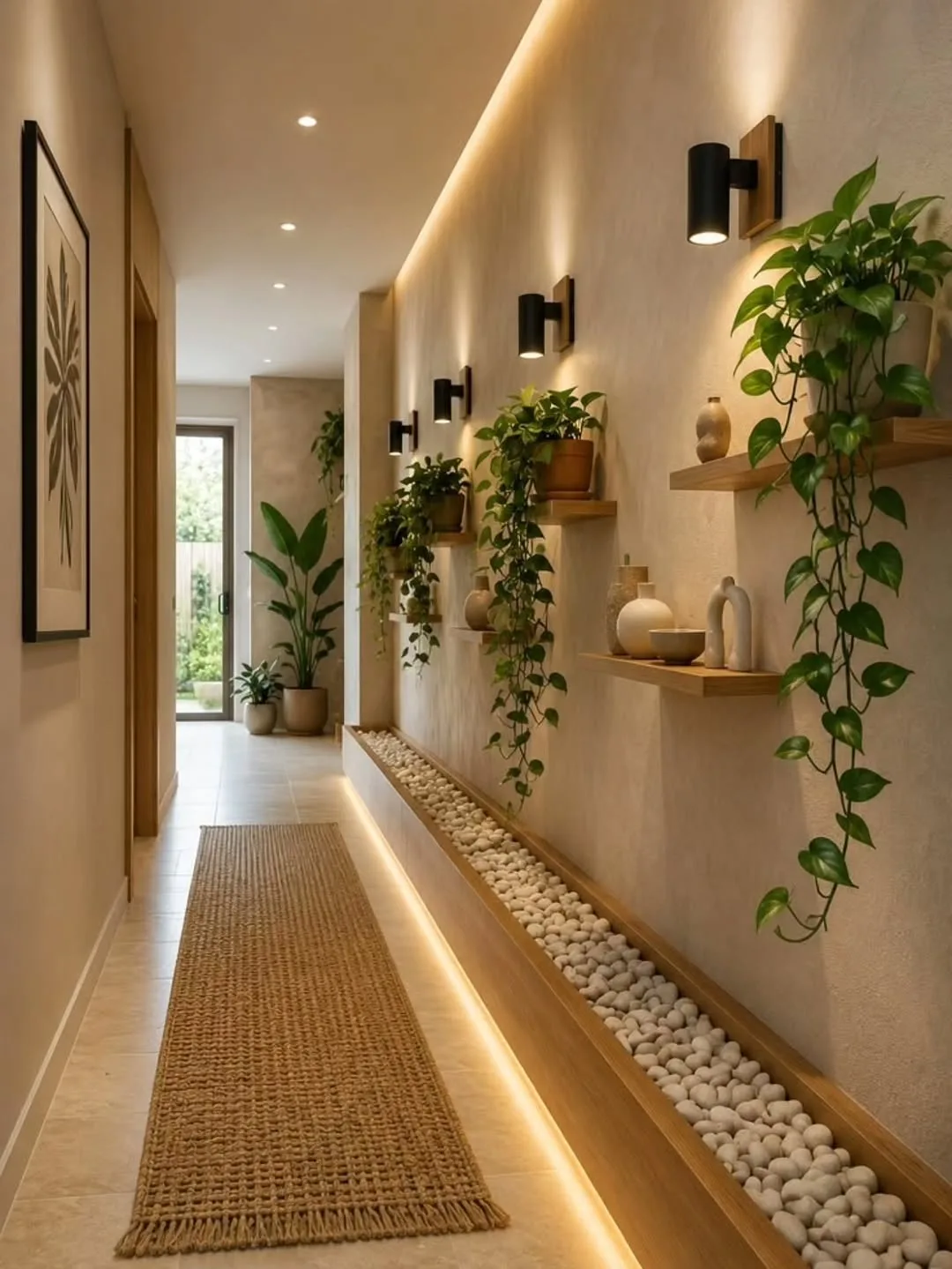
Floating shelves use the empty upper wall in a hall and add display space without touching the floor at all. Small plants soften hard lines, bring life to a passage with no windowsill, and cost very little to replace when seasons change.
Mount shelves above head height in narrow halls, or at picture height where the hall runs wider and people can enjoy them. Keep displays light with one plant, one small frame, and one bowl or stack of books, and leave clear gaps so shelves look calm.
Bright halls suit shelf plants best, because even shade loving plants need some daylight to stay healthy through winter. Plant lovers with crowded windowsills also gain, since hall shelves give spare pots and cuttings a second home inside the house.
Nina fitted two pale shelves above her bench and filled them with trailing plants in plain clay pots. Cuttings root in small jars between the pots, friends take babies home after visits, and the hall smells faintly green and fresh all year.
Crowded shelves drop dust and soil onto people passing below, and heavy pots strain fixings on plaster walls over time. Keep pots small and light, water carefully over a tray, and check brackets twice a year so nothing loosens above the walkway.
Gallery Ledge for Changing Art
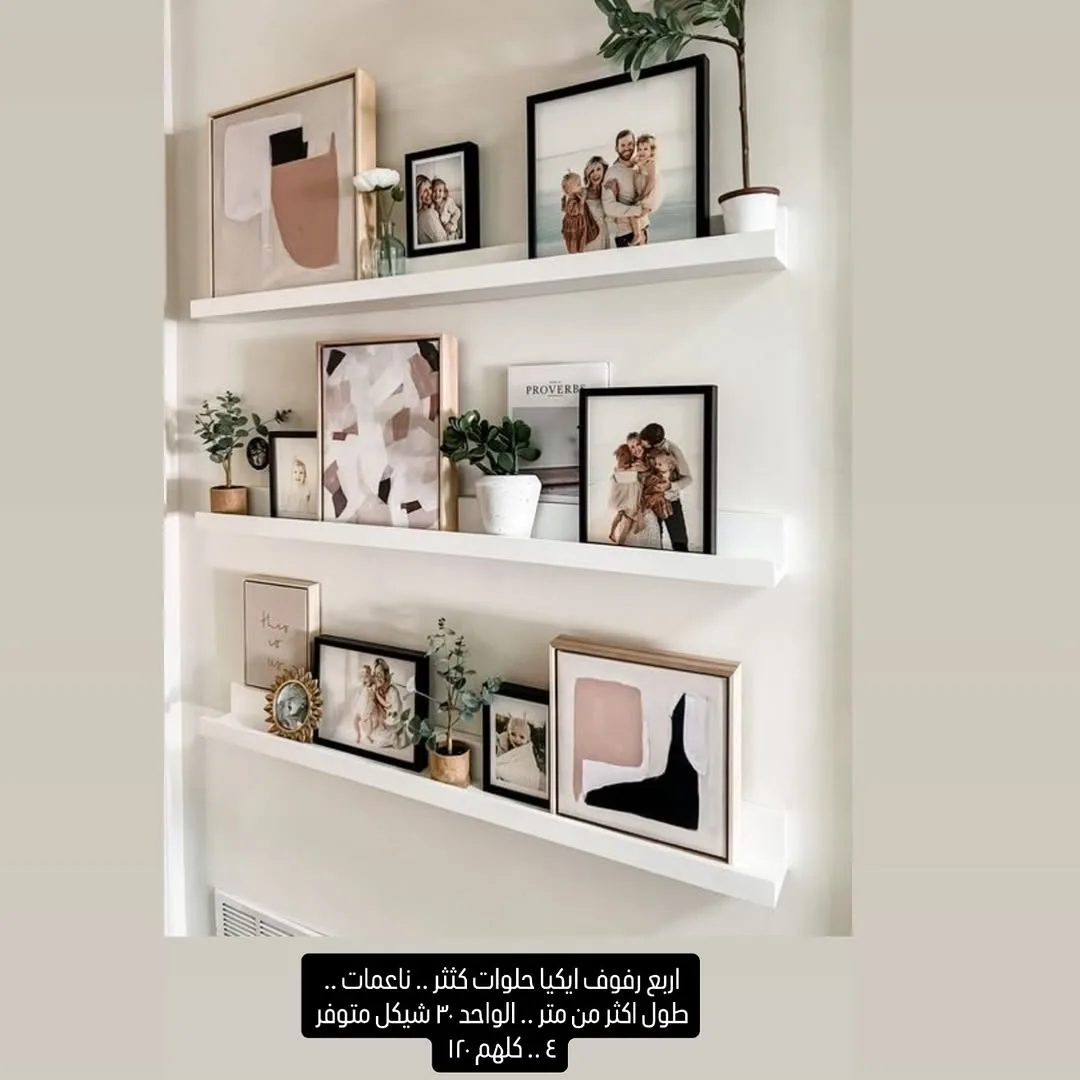
Ledges hold framed prints that lean instead of hang, so art can change with seasons, holidays, and new family photos. Leaning frames overlap slightly and create depth that flat hanging rarely achieves on a plain hall wall.
Screw the ledge into solid fixing points and check the level carefully before loading any frames onto the shelf. Start with the tallest print at the back, layer smaller frames in front, and mix in one small plant or clock to break the line of glass.
Flexible hallway decor ideas suit people who love change, and a gallery ledge serves that habit better than fixed frames. Families enjoy swapping children artwork and holiday cards without new holes, and collectors gain a small gallery that grows slowly over the years.
Ruth mounted one long ledge above her console and restyles it whenever grandchildren send new drawings from school. Christmas cards join the display in December, holiday photos arrive in summer, and the hall always shows something current about family life.
Overfilled ledges look cluttered fast, because too many frames hide each other and collect dust along every edge. Keep layers two deep at most, store spare prints flat in a drawer, and wipe the ledge weekly so the display stays fresh and deliberate.
Woven Baskets for Shoes and Scarves
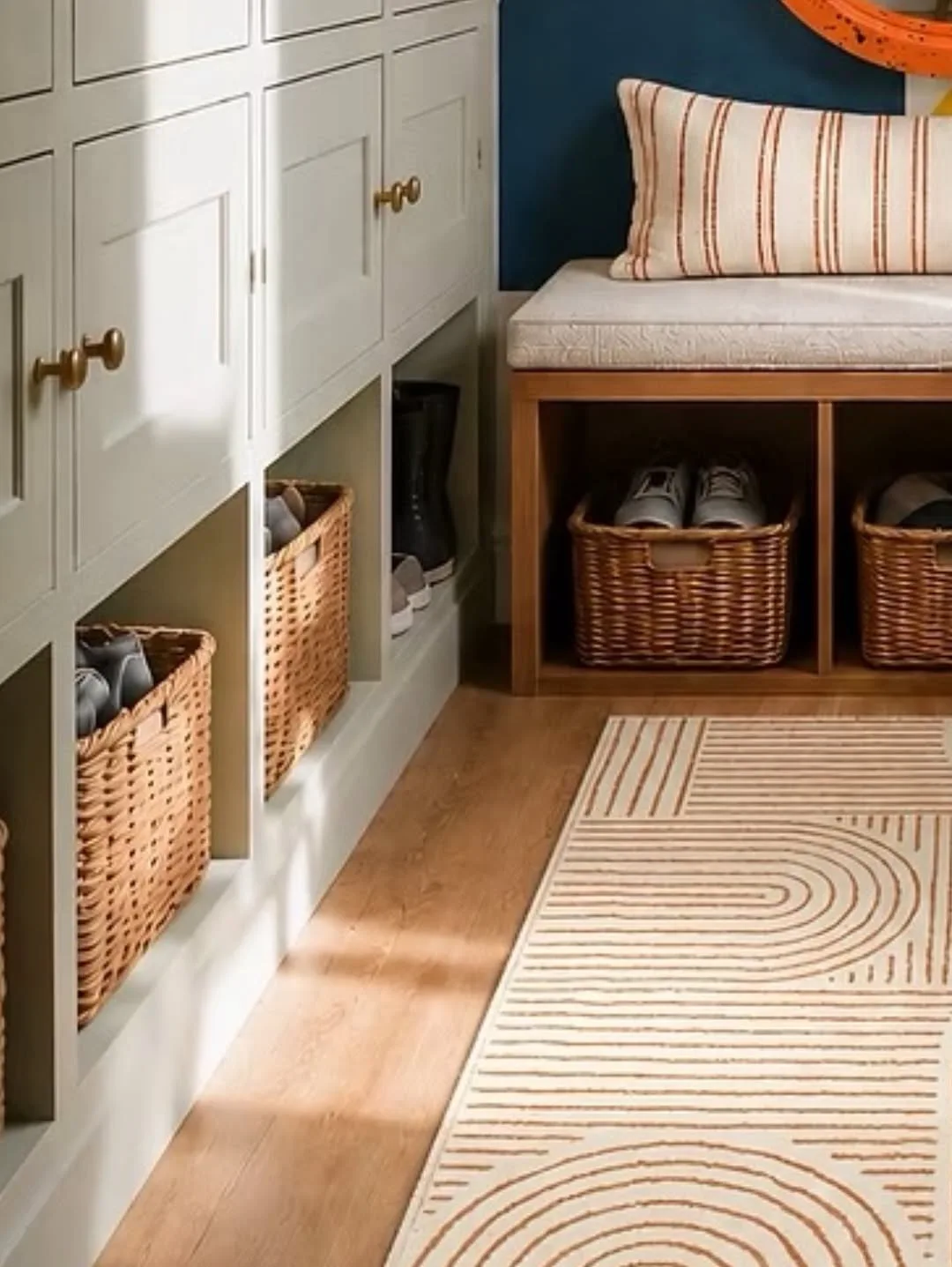
Baskets gather the soft clutter of daily life, like scarves, gloves, hats, and the shoes worn most often at home. Natural fibres add warmth and texture against painted walls, and lids keep the whole collection looking calm from the doorway.
Choose baskets with handles when you plan to carry them between rooms, and measure shelf or bench space before buying a full set. One basket per job works well, such as shoes in one, winter woollens in another, and dog items in a third near the door.
Households that shed layers at the door suit baskets best, because everything lands in one place instead of spreading across the floor. Small halls gain most, since baskets slide under benches and into corners where cupboards would never fit at all.
By the front door of one country home, four baskets hold boots, umbrellas, scarves, and the post waiting to leave the house. Visitors find the setup easy to copy, children know exactly where gloves live, and the floor stays clear even in the wettest weeks.
Plastic boxes do the same storage job but look cold and office like beside natural wood and painted walls. Baskets also fail when people overload them, so shake them out monthly, line the shoe basket with washable cloth, and pass on items nobody wore last season.
Statement Pendant Light Overhead
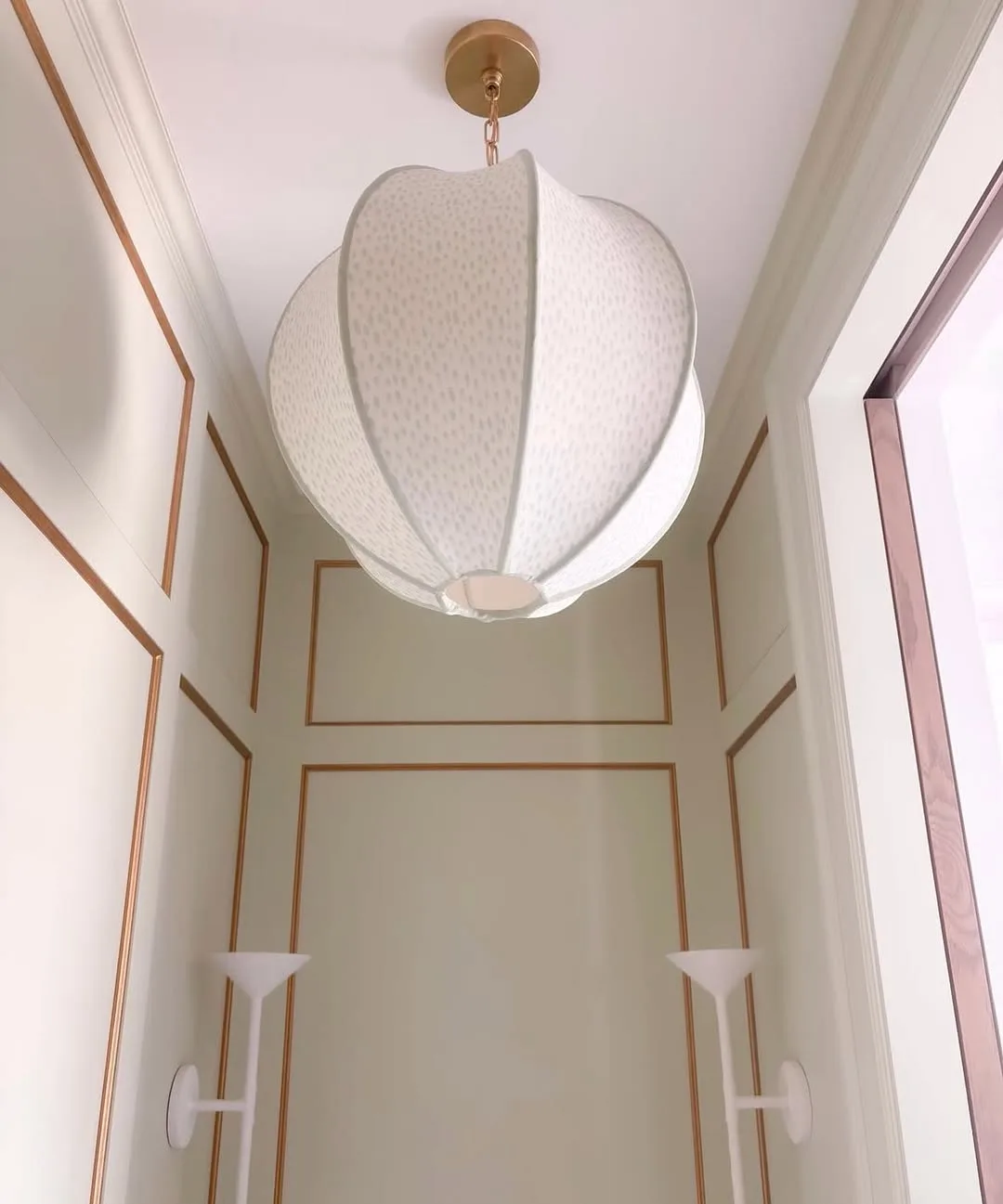
Pendants give a plain ceiling one strong feature and pull the whole hall scheme together from above. One good looking shade in metal, woven fibre, or coloured glass adds character that paint alone rarely delivers in a small passage.
Hang the pendant so the bottom edge clears tall heads by a safe margin, usually around two metres from the floor in standard rooms. Match the shade size to the hall width, because tiny shades vanish in long halls while huge ones crowd narrow spaces.
Small halls with plain ceilings suit a statement pendant best, since one bold piece does the decorating work of several smaller items. Anyone decorating on a tight budget also gains, because one light fitting changes every evening in the space at once.
Above the stairs in a small flat, a woven pendant replaced a bare bulb and turned the ceiling into the favourite part of the hall. Warm light falls through the weave in soft patterns, coats and photos below look richer, and the fitting cost less than a meal out.
Bulbs that hang too low cause ducked heads and knocked shades, especially near stairs where people carry boxes and laundry baskets. Raise short cords where ceilings allow, choose enclosed shades near staircases, and check the swing of nearby doors before fixing the final height.
Board and Batten Wall Panels
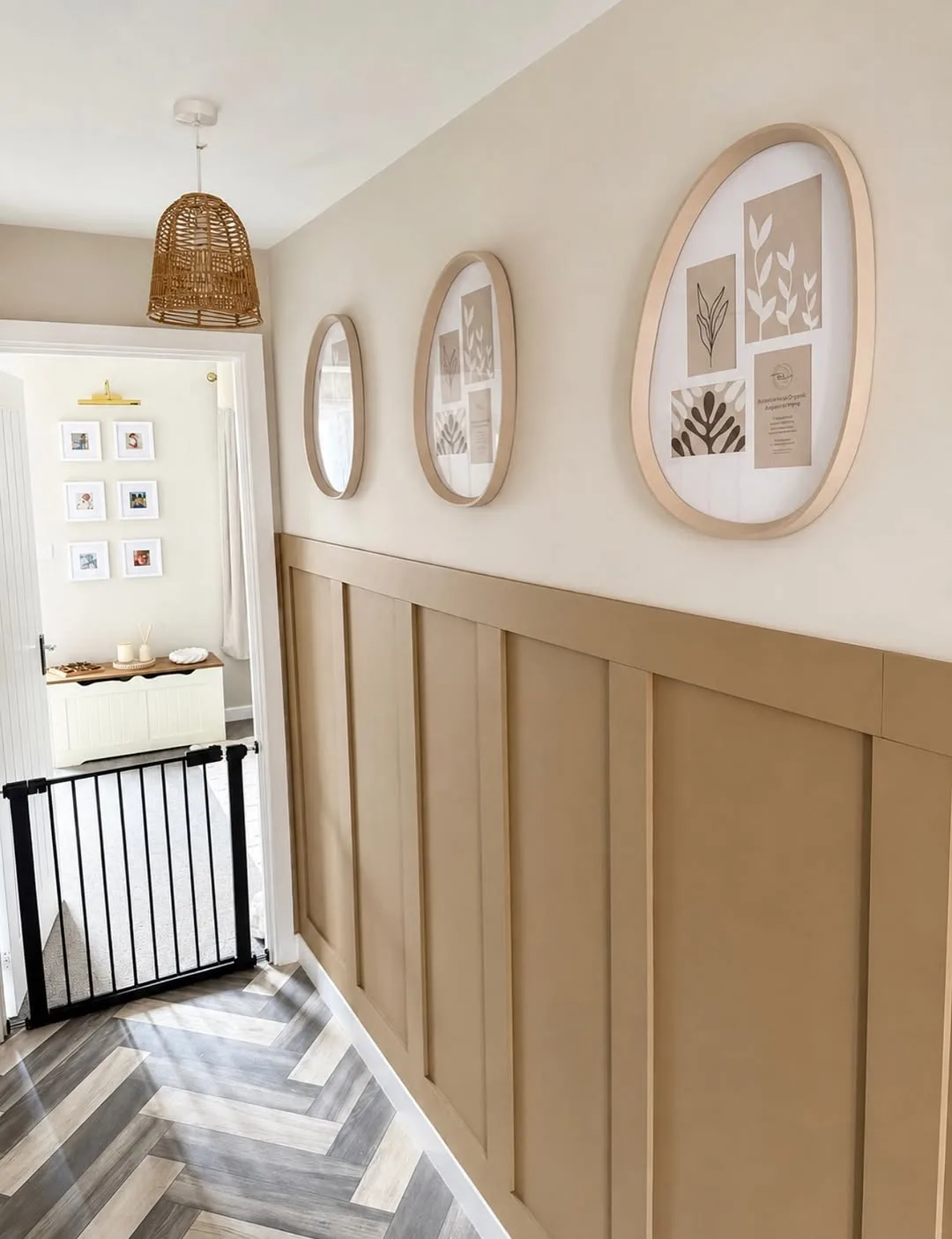
Panels built from simple timber strips give flat hall walls shadow, rhythm, and a crafted feel that plain paint cannot match. Painted in one colour from skirting to rail height, the panels also protect plaster from bags, boots, and passing furniture.
Plan the spacing on paper first, with vertical strips set evenly along the wall and one horizontal rail along the top edge. Cut strips to size, fix them with adhesive and pins, fill every joint, sand lightly, and paint the whole section in washable paint.
Confident beginners with basic tools suit this project best, because the cuts stay simple and the painting hides small errors kindly. Older homes also gain, since panels echo period features and suit halls that feel too plain for their character.
Tom panelled the lower half of his hall over two weekends and painted everything a soft sage green. Guests now assume the panels came with the house, scuffs wipe off the washable paint in seconds, and the hall finally matches the age of the building.
Uneven spacing ruins panelled walls faster than any other error, because the eye spots irregular gaps the moment light falls across them. Measure twice, mark every strip position in pencil, and stand back often during fixing to check the rhythm from both ends of the hall.
Small Drop Zone with a Tray and Key Hook
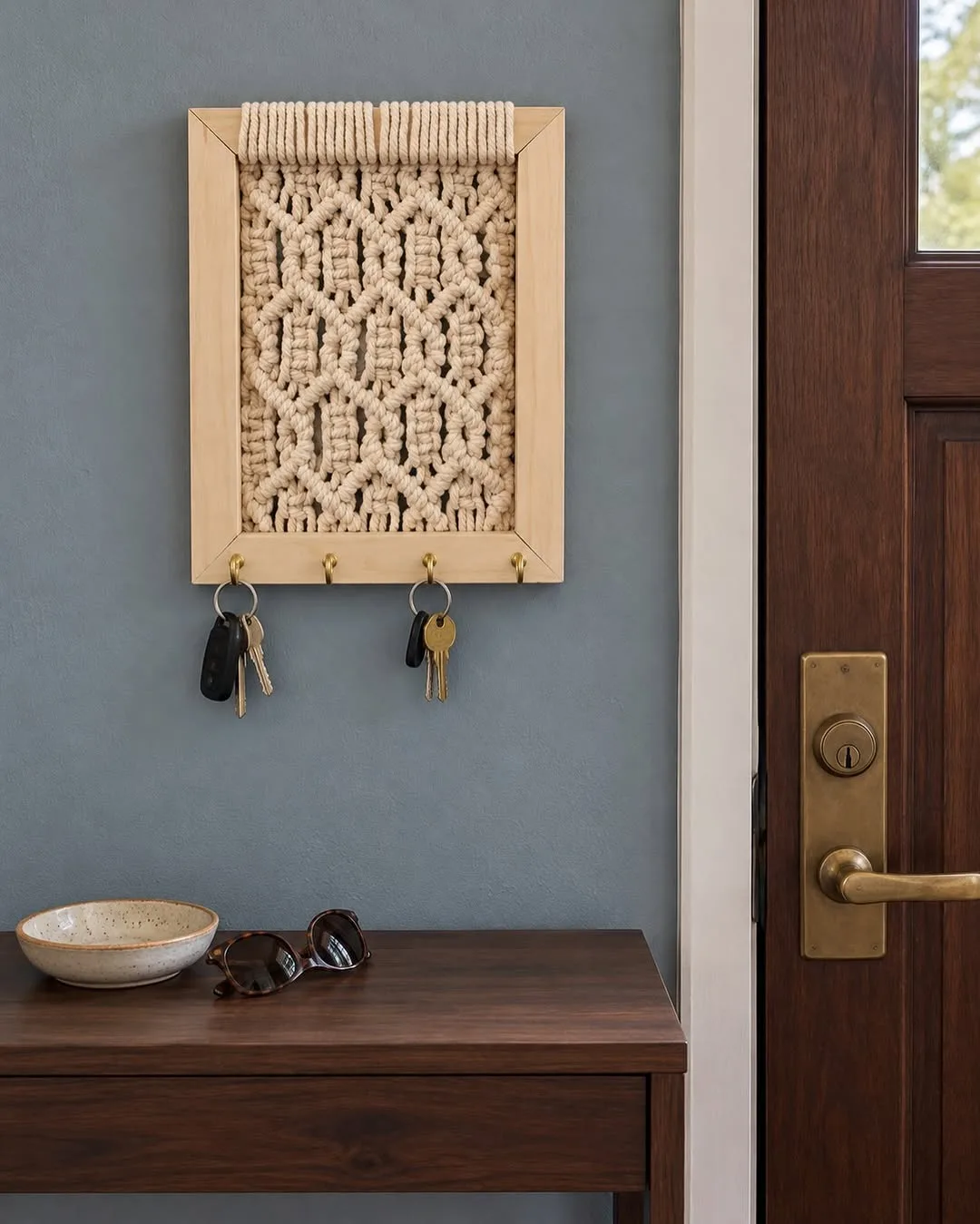
Drop zones catch the small items that otherwise scatter across every surface near the front door. One tray, one key hook, and one small bowl give post, coins, sunglasses, and keys a single home that everyone in the house can learn.
Set the zone on a console, a shelf, or a small wall mounted board right beside the door at hand height. Label nothing and explain little, because a tray beside the key hook teaches the habit by sight within the first week of daily use.
Busy professionals gain from a drop zone, and so does anyone who regularly loses keys inside their own home. Wallets, passes, and phones gather in one place by the door, ready for the next morning rush without any searching at all.
Beside the door in one family home, a brass tray and two key hooks ended years of morning searching in a single week. School passes hang beside house keys, post waits in the tray for evening sorting, and leaving the house now takes half the time.
Tiny zones overflow when every pocket item in the family lands in one tray without any weekly sorting. Empty the tray each weekend, return coins and receipts to their real homes, and keep the zone small on purpose so clutter has nowhere to hide.
Common Mistakes to Avoid
Crowding the walkway with furniture causes more hallway regret than any colour choice ever could in a small space. Pieces that suit a living room often block doors, radiators, and the natural path through the hall. Measure the route people actually walk, then choose furniture that respects that line every day.
Ignoring light leaves even pretty halls feeling flat, because one weak ceiling bulb cannot flatter walls, faces, and floors at once. Add a lamp, wall lights, or a mirror before buying more objects, since better light improves everything already in the space without costing much at all.
Buying every item in one shopping trip creates a hall that matches too perfectly and feels like a shop display. Pieces gathered slowly from markets, gifts, and other rooms carry more character and spread the cost across months. Patience also prevents the classic error of duplicate hooks, frames, and baskets.
Forgetting daily dirt undoes good styling quietly, because halls collect mud, grit, and damp faster than any other room in the house. Choose washable paint, washable rugs, and surfaces that wipe clean in seconds. Small weekly habits protect the whole look far better than rare deep cleaning sessions.
Budget Friendly Hallway Decor Ideas
Second hand shops and market stalls overflow with frames, mirrors, trays, and small tables at a fraction of shop prices. Solid older pieces often outlast cheap new imports and carry more warmth into the bargain. Wash finds well at home, check fixings and glass, and buy one piece at a time.
Paint offers the biggest change for the least money in almost every hallway project at home. One tin covers a lower wall, a door, or the backs of shelves, and leftover paint refreshes old frames to match. Sample pots cost very little and protect the budget from the wrong shade.
Shop your own home before buying anything new for the hall this month or next. Plants from windowsills, bowls from kitchen cupboards, and spare frames from bedrooms can fill gaps beautifully at zero cost. Moving pieces between rooms also reveals which gaps truly need spending and which ones never did.
Spend first where hands and eyes land daily, such as lighting, hooks, and the surface beside the door. Save on spare ornaments and extra matching sets, where looks matter more than lasting quality. Small savings repeated each month free money for the one piece everyone touches every single day.
Tips for Styling a Hallway
Measure the hall, the doors, and the swing of every door before choosing a single piece of furniture. Numbers written in your phone prevent the classic mistake of buying a console that blocks the post flap or a bench that crowds the stairs.
Keep the floor as clear as possible, because clear floors make narrow halls feel wider and safer at night. Hooks, shelves, and ledges move storage upward, while one basket by the door catches anything that still lands at ground level during busy days.
Test paint colours and picture layouts with samples and paper templates before committing to holes or full walls. Living with a plan for one full day shows how light changes the idea from morning to evening, and adjustments cost nothing at that stage.
Repeat one colour or material three times along the hall to tie separate pieces into one calm scheme. Wood tones on a bench, a frame, and a tray echo quietly, while one colour in a runner, a cushion, and a print does the same job.
Edit the hall little and often instead of restyling everything once a year in one exhausting push. Move one stray item back to its home each evening, wipe one surface each week, and swap one picture each season to keep the space feeling cared for.
FAQ
How wide should a hallway runner be?
Leave about ten centimetres of floor visible on each side of the runner for a balanced and calm look. Runners that touch both skirting boards make a hall feel narrower, while very thin runners look lost on wide floors and slide around more easily.
What colors make a narrow hallway feel bigger?
Pale shades on the upper walls reflect light and lift the whole passage, especially warm whites, soft cream, and light sage. Deeper colour works well below a rail or on the end wall, where it adds depth without closing in the sides around you.
How high should hallway art hang?
Centers of frames should sit near one hundred and fifty centimetres from the floor, which matches eye level for most standing adults. Groups of frames count as one picture, so measure to the centre of the whole group rather than the centre of each frame.
Can a hallway hold storage without looking messy?
Yes, storage looks tidy when every item type owns one clear home and nothing shares space with unrelated clutter. Hooks for coats, one basket for shoes, and a tray for keys cover most daily needs while keeping surfaces calm and floors clear for walking.
Which light bulbs suit a hallway best?
Warm white bulbs give halls a welcoming glow that flatters skin tones, paint colours, and wooden furniture at the same time. Bright cold bulbs make small passages feel harsh and clinical, so save those for workrooms and choose warm light for every evening at home.
How do I decorate a hallway with no natural light?
Borrow light from every source available, using mirrors opposite doorways, pale paint on upper walls, and lamps at both ends of the passage. Glass panels in doors also help where building rules allow, and warm bulbs keep the space cheerful through the darkest winter weeks.
Conclusion
Small spaces reward simple choices, and honest hallway decor ideas show that warmth comes from light, order, and a few loved objects rather than size or spending. One mirror, one runner, and one tidy drop zone can change how a whole home feels at the door.
Start with the idea that solves your biggest daily annoyance, whether that means hooks for coat piles or a bench for shoe chaos. Finishing one small project properly teaches more than planning ten at once, and early success makes the next change easier to begin.
Daily habits keep a styled hall looking good long after the decorating weekend ends for the household. Returning keys to the hook, shaking the runner weekly, and wiping the console take minutes, yet those small acts protect the calm you worked to create.
Enjoy arriving home through a hall that welcomes you properly every single day of the year. Clear floors, warm light, and familiar photos turn a plain passage into part of the home you love, and guests feel that welcome from the moment the door opens.