Living Room Wall Decor Ideas That Fill Blank Walls with Character
Blank walls make even a comfortable living room feel unfinished. Sofas, rugs, and lamps can all sit in the right places, yet the room still looks flat when nothing meets the eye above shoulder height. Walls carry the personality of a home, and bare ones quietly waste that chance.
Good news is that walls respond well to simple changes. One strong print, a shelf with objects you already own, or a coat of paint in a soft shape can shift the mood of the whole room. Most living room wall decor ideas in this guide cost little and ask for basic tools only.
Inside this guide, you will find fifteen ways to dress living room walls, from classic framed art to woven baskets and trailing plants. Each idea explains why it works, gives practical details, notes who it suits best, shares one real example, and names one mistake worth avoiding. Pick two or three ideas and start there.
What Are the Best Living Room Wall Decor Ideas for Blank Walls?
Strong walls mix one large anchor piece with smaller pieces that support it. Simple living room wall decor ideas work best when colors echo the sofa and rug, frames repeat one or two finishes, and every piece hangs at a height people can enjoy while seated. Balance matters more than quantity.
Picture a plain wall above a three seat sofa. One large framed print fills the center, two small shelves hold plants and books at the sides, and a round mirror catches light from the window. Nothing feels random, because each piece has space around it and a reason to be there.
Large Framed Print Above the Sofa
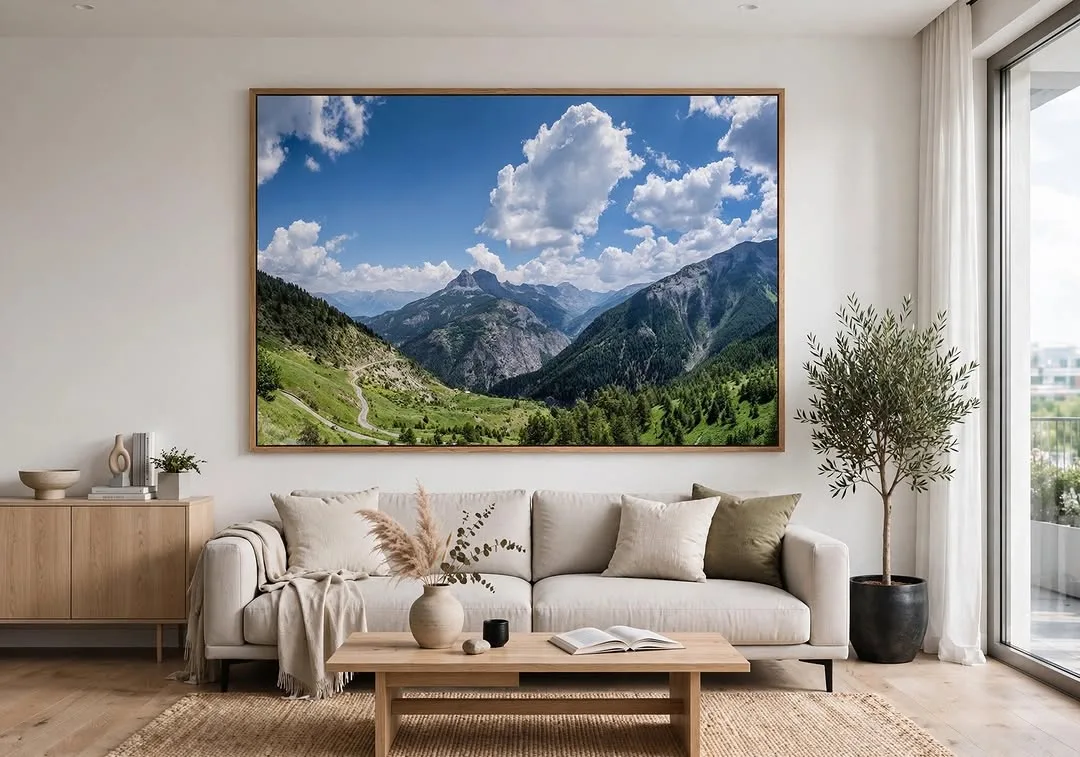
One large print gives the main wall a clear focal point and stops the eye from wandering. Scale does the heavy lifting here, because a generous piece fills the wide space above a sofa in a way small frames never manage. Rooms feel calmer when one strong image leads and everything else follows quietly.
Choose a print that spans roughly two thirds of the sofa width, and hang it so the bottom edge sits about twenty centimeters above the sofa back. Landscapes, calm abstracts, and botanical prints suit most rooms. Frames in black, oak, or white keep the look clean and let the art carry the color.
Busy family rooms suit this idea best, because one piece means one decision and very little arranging. People who feel unsure about styling also do well here. One confident print removes the pressure of building a whole arrangement and still makes the wall feel finished within an afternoon.
When Sara moved into her flat, she hung a large framed print of coastal cliffs above her grey sofa and stopped there. Friends assumed she had hired help, and the room finally felt settled. She later added two small plants on a side table and never needed more wall pieces at all.
Small prints floating high above a sofa cause the most common problem. Tiny art hung near the ceiling looks lost and makes the sofa below feel disconnected. Go bigger than feels safe, hang lower than instinct suggests, and rest the frame on the sofa back briefly to judge the height before drilling.
Gallery Wall of Mixed Frames and Art
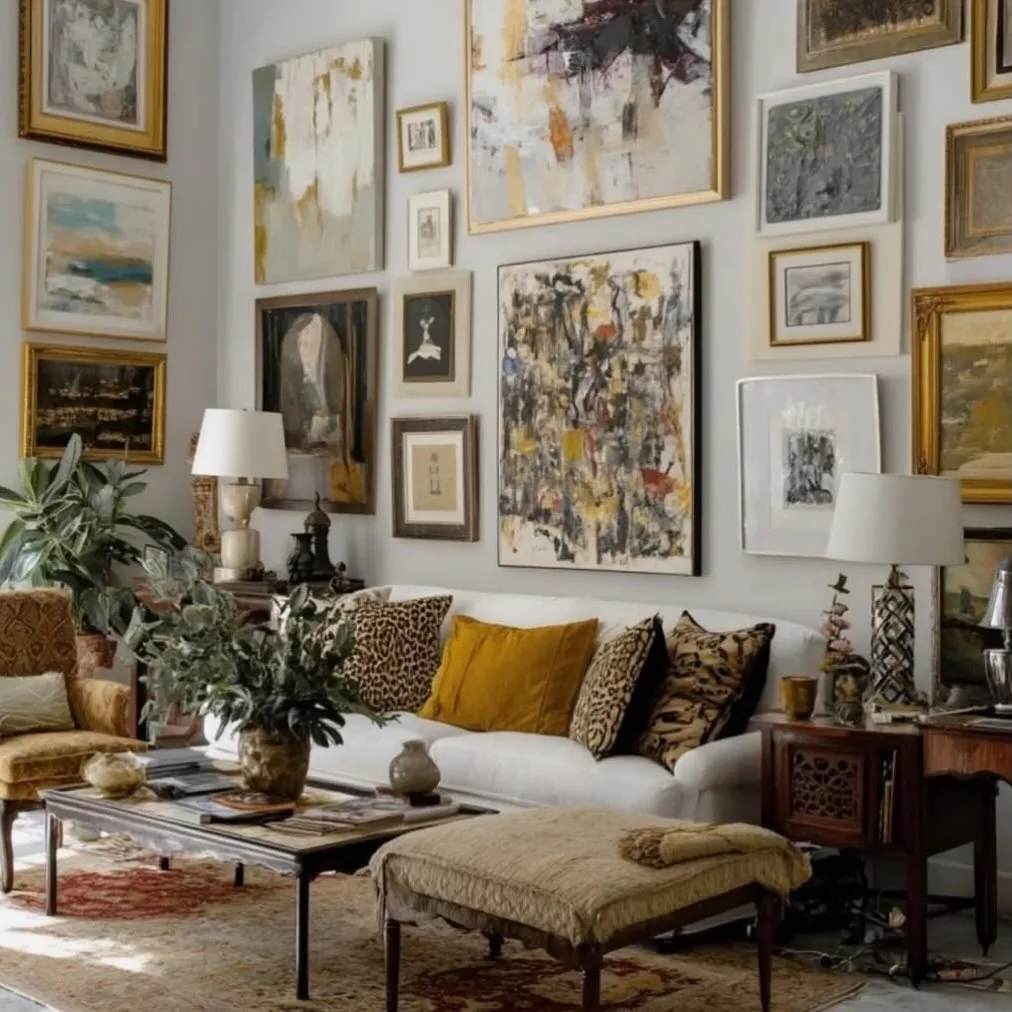
Gallery walls turn many small pieces into one large statement. Prints, photos, postcards, and small paintings gain strength when they hang together inside one clear outline. Personal pieces shine here, because the mix tells the story of the people who live in the room better than any single bought print.
Plan the layout on the floor first, keeping the whole group inside one rectangle or a soft square shape. Mix two frame finishes at most, and keep gaps between frames near five centimeters. Start from the center piece and build outward, checking balance from the doorway as you go.
Collectors of postcards, tickets, drawings, and family photos suit gallery walls best because they already own the content. Hallways and stair walls also reward this treatment. Anyone patient enough to plan on paper first will enjoy the process and avoid a wall full of regret holes.
Mark and his sister gathered prints from trips, markets, and their childhood home, then arranged twelve frames above the sofa over one weekend. Guests now stop and ask about pieces, and the wall changes slowly as new finds replace old ones. Their rule is simple: one piece enters only when another leaves.
Random spacing makes gallery walls look messy within days. Frames hung at uneven gaps or drifting heights lose the shared outline that holds the group together. Trace each frame on paper, tape the papers to the wall, and live with the plan for a day before making any holes.
Woven Wall Hanging with Soft Texture
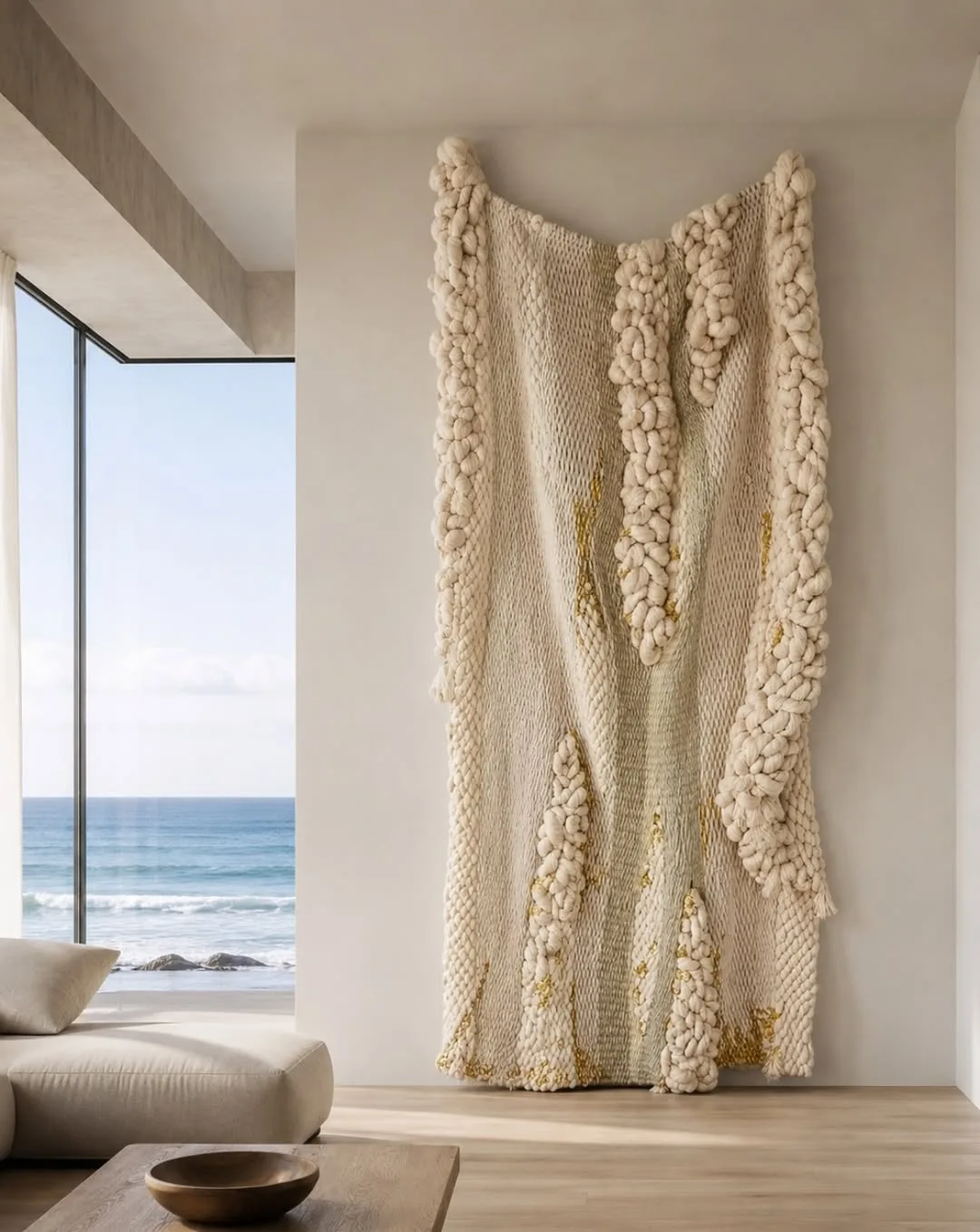
Woven hangings soften rooms full of hard surfaces like leather sofas, glass tables, and wooden floors. Fibers add warmth and quiet texture without adding color noise. Large woven pieces also fill tall walls gently, which suits rooms where bold art would feel too loud or too formal.
Hang the piece from a wooden dowel or a simple branch, and let the bottom edge fall somewhere between the sofa back and the seat cushions. Cotton, wool, and jute all work, and natural shades of cream and sand blend with nearly every palette. Steam creases out gently before hanging.
Calm, neutral rooms suit woven hangings best, especially spaces styled around natural materials and soft light. People who dislike framed glass and sharp edges also enjoy fabric on walls. Reading corners gain a gentle backdrop that feels handmade rather than bought in a hurry.
Lena bought a cream woven hanging at a craft market and placed it behind her reading chair. The corner, once the coldest spot in the room, became her favorite place to sit with tea. Her cat approved too, though she moved the chair slightly so paws could not reach the fringe.
Dust settles into fibers quietly and dulls the texture over time. Hangings placed above radiators also gather rising grime faster than owners expect. Shake the piece outside each month, vacuum it gently with a brush attachment, and keep it away from cooking smells that cling to fabric.
Wooden Wall Shelves with Collected Objects
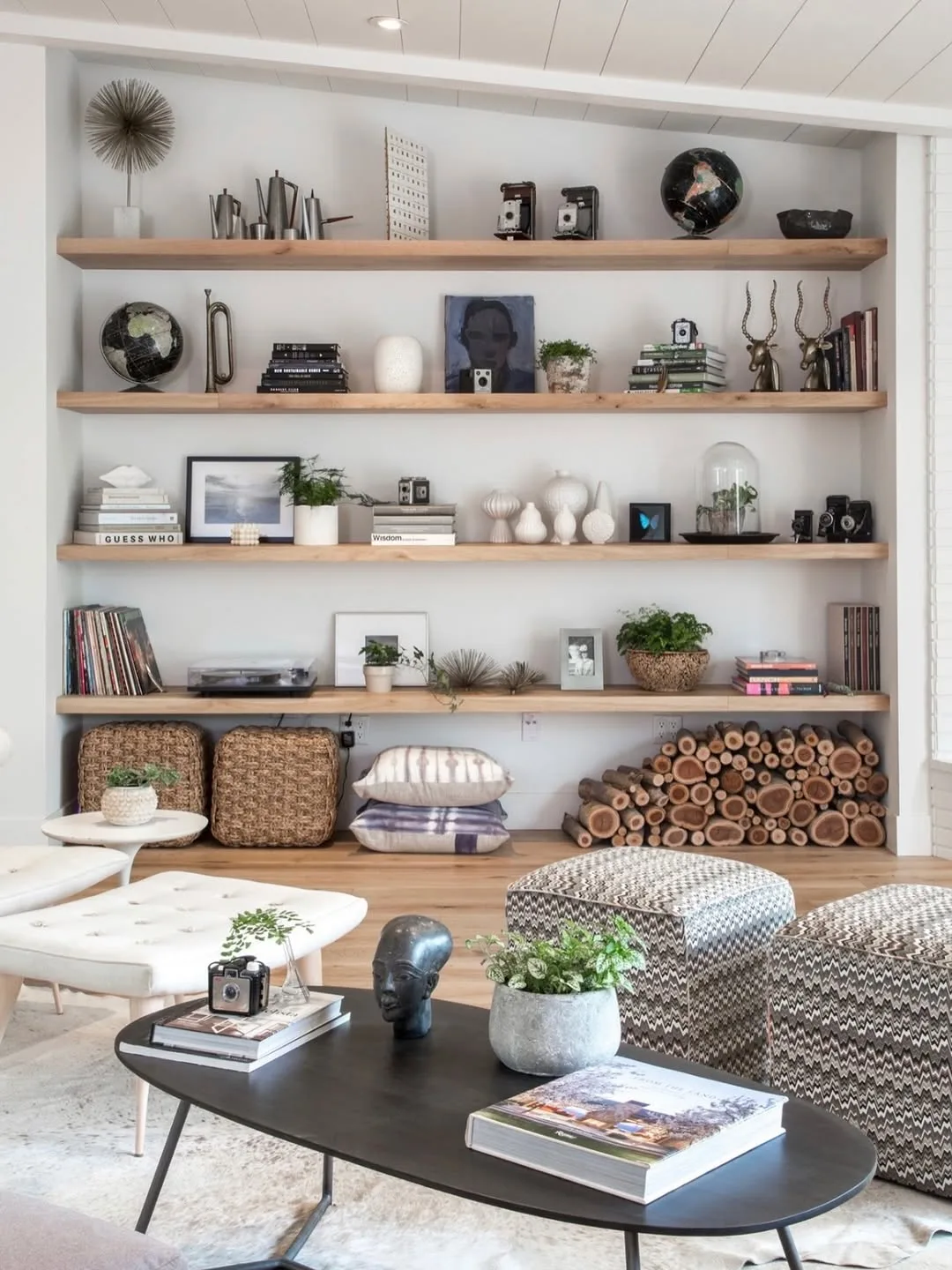
Shelves turn a flat wall into useful display space and storage at once. Books, small plants, bowls, and framed photos sit together in changing groups. Wood adds warmth against painted walls, and open shelves invite small updates whenever you find something worth showing.
Fit shelves into studs or solid wall anchors, because books and ceramics weigh more than they look. Keep each shelf arrangement loose, with one tall item, one low item, and breathing room between groups. Stop adding pieces while the shelf still looks slightly empty, since clutter creeps in fast.
People who own many small treasures suit wall shelves best, because shelves give those pieces a rotating home. Small living rooms also gain, since shelves store upward without eating floor space. Anyone who enjoys restyling will find shelves endlessly forgiving, because nothing is fixed in place.
Tom fitted two oak shelves beside his fireplace and filled them with pottery from his travels, stacked books, and one trailing plant. The wall now holds his memories without a single cabinet. He swaps pieces each season, and friends say the shelves reveal more about him than any photograph could.
Overloading shelves ruins the effect faster than any other error. Rows packed edge to edge read as storage, not display, and dusting becomes a chore nobody keeps up. Leave gaps, group in threes, and move spare pieces to a cupboard so the shelf keeps its calm.
Large Round Mirror That Bounces Light
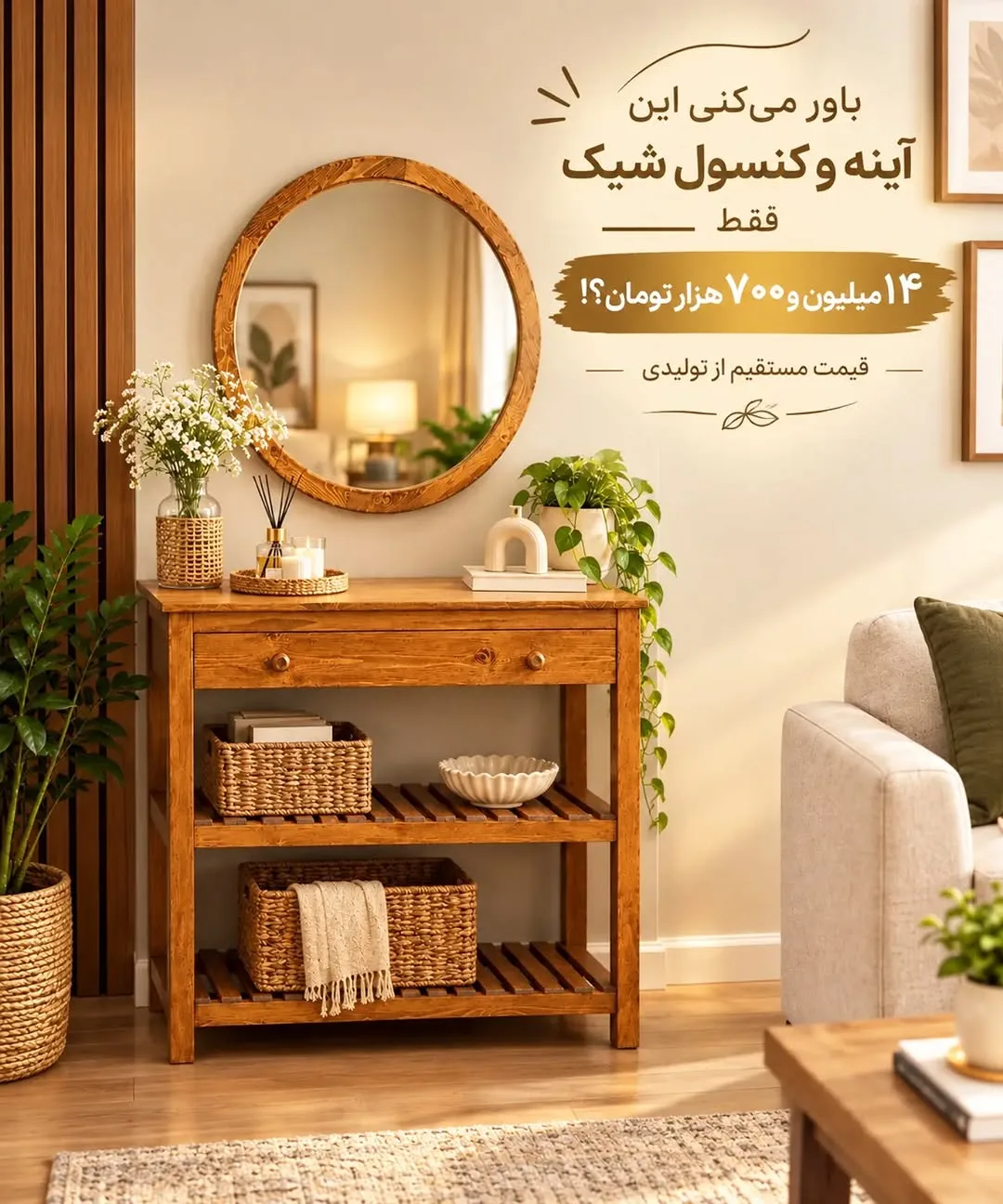
Round mirrors break up the straight lines of sofas, shelves, and door frames, and the soft shape feels friendly in family rooms. Among living room wall decor ideas, mirrors earn special praise because they decorate and brighten at the same time. Reflected daylight reaches corners that lamps miss during the day.
Place the mirror where it reflects something worth seeing, like a window, a plant, or the nicest view in the room. Frames in black metal, brass, or pale wood suit most styles. Diameter near eighty centimeters works above sofas and sideboards without overwhelming nearby pieces.
Dark rooms and north facing living rooms suit a large mirror best because they need borrowed light most. Small rooms also gain, since reflections stretch the sense of space. Anyone with a blank wall opposite a window owns the perfect setup already, whether they realize it or not.
Priya hung a round mirror opposite her only window, above a low bookcase. Afternoon light now reaches the reading corner for the first time, and the room feels wider in the evening too. She jokes that the mirror gave her a second window for the price of a dinner out.
Glare spoils mirrors placed without thought. Mirrors facing a television screen or a harsh lamp bounce discomfort straight back at seated guests. Sit in every chair and check the reflection before fixing the mirror, and tilt it slightly downward if ceiling lights flare in the glass.
Painted Arch Behind a Reading Corner
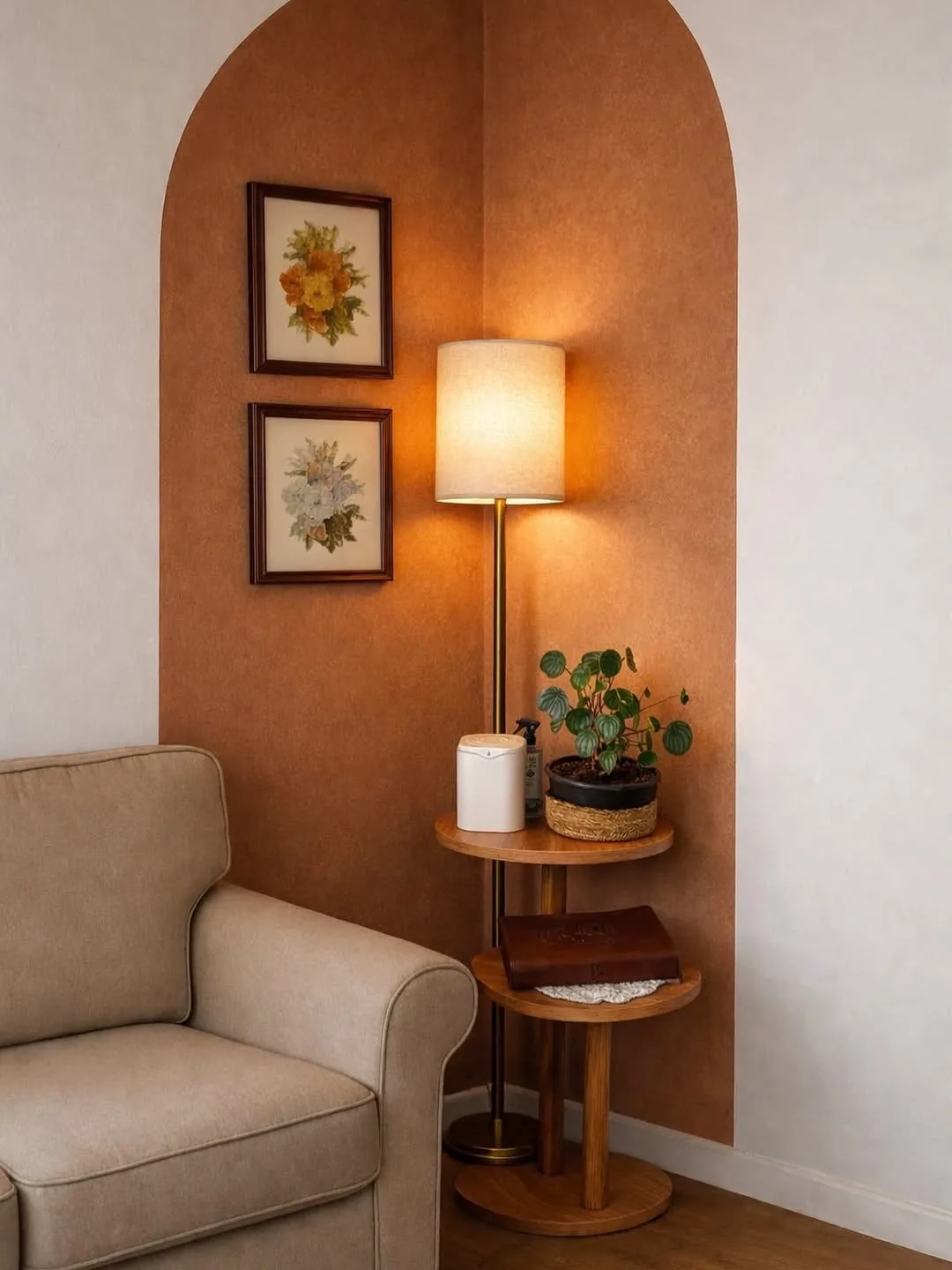
Painted arches create a soft backdrop that frames furniture like a picture. Color shapes the zone, so a chair and lamp inside an arch read as a deliberate corner. Paint also suits people who want change without buying objects, since one tin and a free afternoon do the whole job.
Draw the arch with a pencil line using string and a pin at the center point, then paint inside the line with a small brush at the edges. Width slightly wider than the chair works well. Soft clay, sage, dusty blue, and warm sand all sit kindly behind fabric and wood.
Anyone craving color without commitment suits a painted arch, because paint covers easily when taste changes. Reading corners, desk nooks, and the wall behind a sideboard all take arches well. Bold decorators can try a half circle sunrise shape instead, in the same calm way.
Jonas painted a sage arch behind his worn leather chair and placed a small lamp inside the curve. The corner looks designed, though nothing in it is new. His guests keep choosing that chair first, and he credits the arch for the quiet pull it has on visitors.
Wobbly edges ruin painted shapes faster than wrong color choices. Rushed lines and drips show against flat wall paint and draw the eye for the wrong reasons. Work slowly at the border with a small angled brush, keep a damp cloth for slips, and step back often to check the curve.
Decorative Plate Wall Arrangement
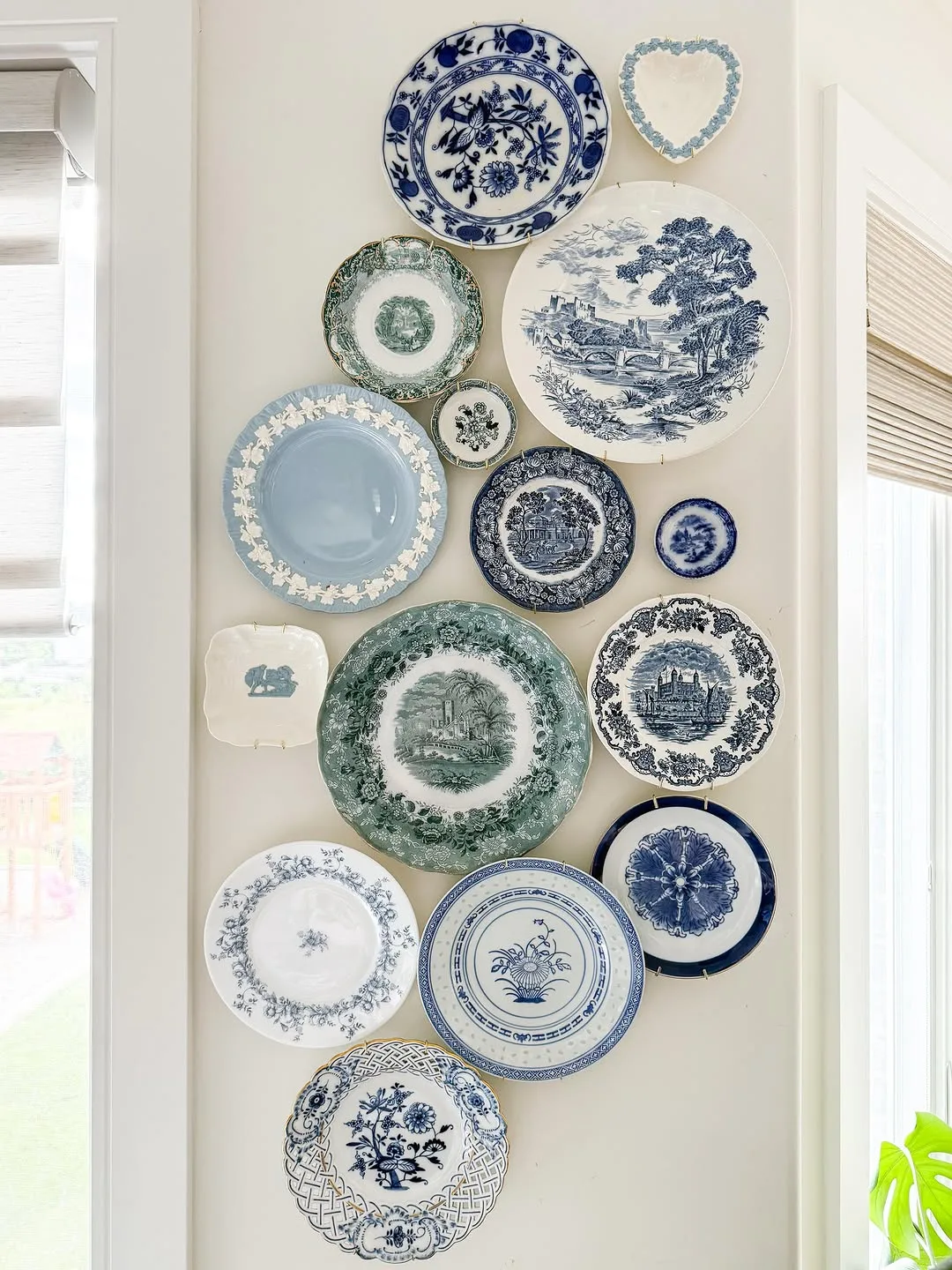
Plates bring pattern, shine, and gentle color to walls, and many homes already own pretty ones hidden in cupboards. Grouped well, plates read as art with a handmade feel. Vintage china, plain stoneware, and hand painted pieces all mix happily when colors share one family.
Arrange plates on the floor first, mixing sizes and keeping the largest near the center or the bottom for weight. Plate hangers and disc adhesive hangers both hold pieces safely; choose hangers rated for each plate weight. Leave small even gaps so each rim keeps its own clean outline.
Dining corners inside living rooms suit plate walls especially well, because the theme matches the table below. Collectors of flea market china also gain a display that changes whenever a new find arrives. Sentimental pieces, like a grandmother platter, earn a place where everyone sees them daily.
Rosa hung nine plates she had collected from markets across twenty years above her sideboard. Meals now happen under her travel history, and grandchildren hear the story of the blue plate from Lisbon at every visit. Two plates came from her mother, which makes the wall her favorite inheritance.
Falling plates cause the heartbreak in this idea, nearly always from hangers chosen too weak for the weight. Test each hanger, clean the plate back before applying adhesive types, and keep the arrangement away from doors that slam. Heavy platters deserve proper wire hangers with springs, not sticky discs.
Woven Baskets Hung in a Loose Group
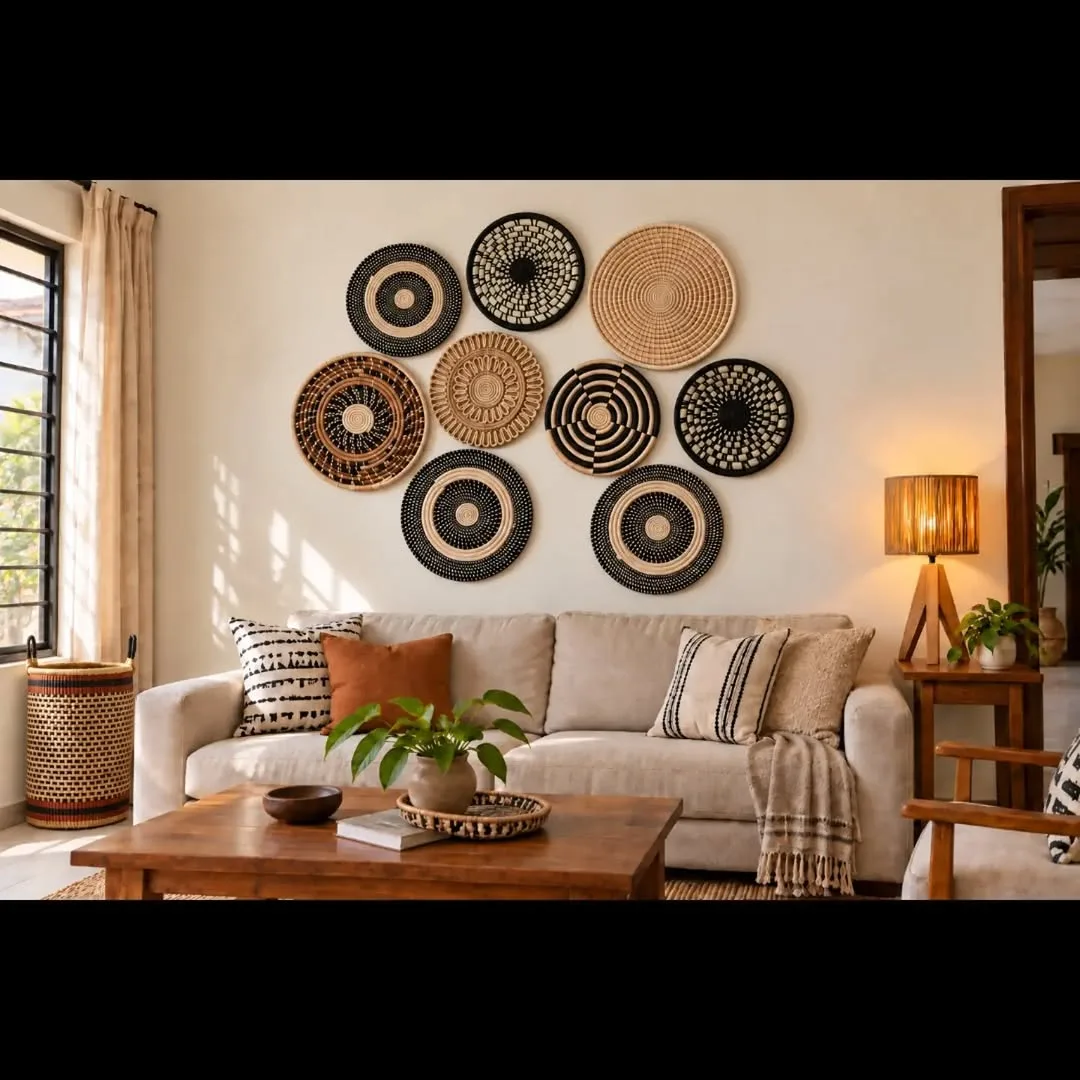
Baskets add round shapes, natural fiber, and gentle shadows to plain walls. Shallow baskets made for carrying or serving turn into light, easy decor that suits relaxed rooms. Groups of baskets fill wide walls cheaply, which helps anyone decorating a large space on modest money.
Mix three to seven baskets in varied sizes and weaves, and overlap one or two slightly for a gathered feel. Small nails or picture hooks hold them, since shallow baskets weigh very little. Start with the largest basket at the center and let smaller ones drift outward like ripples.
Relaxed, natural styles suit basket walls best, from coastal rooms to country inspired spaces. People who shop at markets and craft fairs will find baskets everywhere at kind prices. Walls above sofas and in entry corners of the living room both take basket groups well.
Amara gathered five baskets from market stalls during one summer and hung them above her sofa in an afternoon. The wall, once the dullest in her home, now draws compliments before guests even sit down. She adds one basket from each trip, and the group keeps growing gracefully around them.
Flat, strict rows make basket walls look stiff and planned in the wrong way. Even spacing fights the casual charm that makes baskets appealing. Aim for a loose cluster with uneven edges, and step back several times while hanging to keep the shape organic and relaxed.
Framed Textile Art Full of Pattern
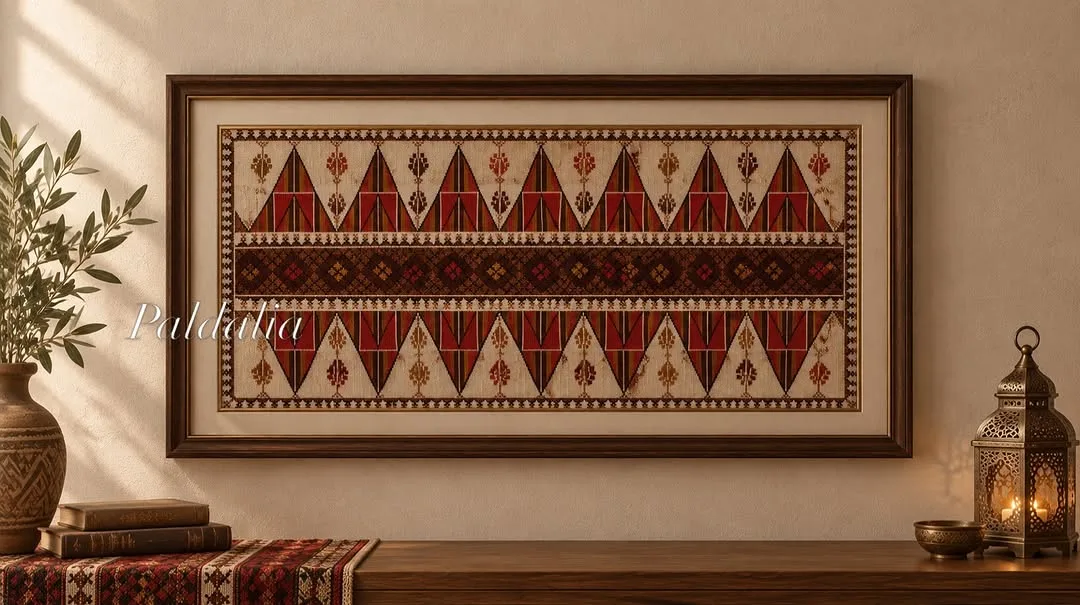
Textiles carry pattern and color that paint and prints rarely match. Framing fabric stretches the material smooth and treats it with the respect of art. Scarves, quilting pieces, embroidery, and woven cloth from travels all become one of a kind wall pieces inside simple frames.
Stretch fabric over a board or inside an embroidery hoop, keeping the pattern straight and the surface free of wrinkles. Deep frames and shadow boxes suit thicker weaves, while flat cotton sits happily behind glass. Iron gently before framing, and check how the pattern aligns with the frame edges.
Sewers, knitters, and anyone with a drawer of beloved fabric scraps suit framed textiles perfectly. Families also gain, because a piece of a grandmother quilt or a child drawing printed on cloth becomes lasting decor. Pattern lovers who find plain walls dull will enjoy the rich surface fabric provides.
Mei framed a piece of indigo cloth she bought on a trip years ago and hung it beside her sofa. Visitors ask where the artwork came from, surprised that fabric alone can hold a wall so well. The frame cost little, and the cloth finally left the drawer where it had slept for years.
Sunlight fades fabric faster than most owners expect, especially deep dyes and old fibers. Hang textile art away from direct sun, or accept gentle fading as part of its life. Glass with ultraviolet protection helps for precious pieces, and rotating pieces between rooms evens out the wear.
Picture Ledges with Layered Frames
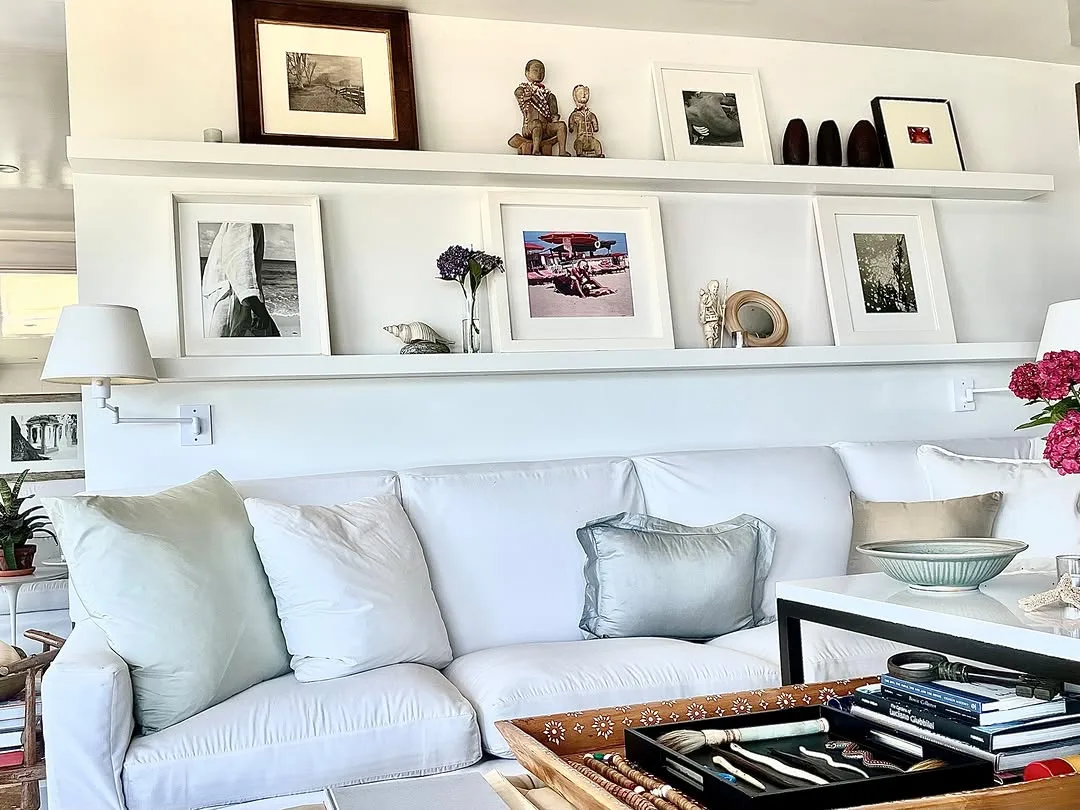
Ledges hold frames that lean instead of hang, so art can change without new holes. Layers of tall and short frames create depth that flat hanging rarely achieves. Small objects like tiny plants, candles, and postcards join the frames and keep the display feeling alive.
Mount the ledge at seated eye level or above a sideboard, using fixings rated for the combined weight of frames and objects. Start with the tallest frame at the back, overlap corners slightly, and keep the front layer low. Leave one empty stretch of ledge so the arrangement keeps breathing room.
Indecisive decorators suit ledges best because nothing commits for long. Families enjoy swapping photos after trips and holidays without tools or mess. Anyone building an art collection slowly also gains, since new pieces join the ledge the day they arrive home.
Omar installed one long ledge above his sofa and filled it with prints, a small clock, and a trailing plant. He restyles it in minutes whenever mood strikes, and the wall never shows a single spare hole. Friends treat the ledge like a small exhibition that changes with his life.
Crowding ledges until frames hide each other defeats the point of layering. Too many pieces also raise the dust load and the risk of knocks. Keep layers to two deep at most, give each frame a visible share, and store spare art flat in a cupboard for future swaps.
Statement Wall Clock with Quiet Style
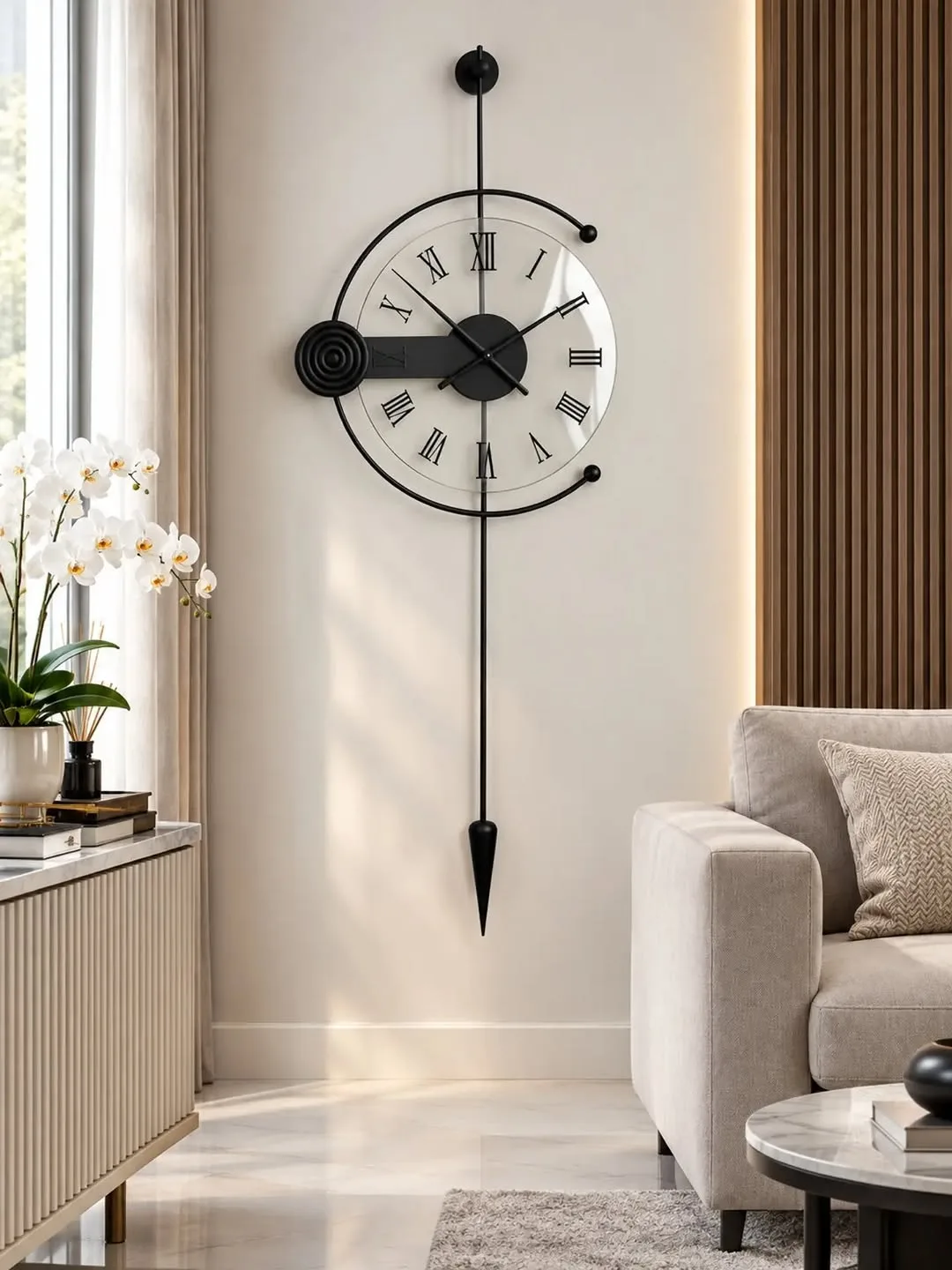
Clocks earn their wall space twice, once as timekeepers and once as round, sculptural decor. Large faces with simple marks suit modern rooms, while wooden and metal designs warm traditional spaces. One well chosen clock can anchor a wall that holds nothing else at all.
Pick a size that matches the wall, usually between forty and sixty centimeters across for living rooms. Hang the center near eye level when standing, roughly one hundred fifty centimeters from the floor. Silent sweep movements suit open plan homes where ticking would echo through quiet evenings.
Minimalists suit a statement clock well, because one useful object replaces several decorative ones. Busy households also benefit, since everyone reads the time at a glance during rushed mornings. Walls between windows or above a fireplace often hold clocks gracefully without crowding art nearby.
Henry chose a wide wooden clock for the wall above his fireplace after years of bare brick. The room gained a heartbeat, as his wife puts it, and guests check the time without reaching for phones. He picked warm oak tones that echo the floor, so the clock feels built for the space.
Tiny clocks on big walls look like mistakes rather than choices. Scale fails quietly and the wall still feels empty around the small face. Measure the wall, tape a paper circle of the planned size in place, and live with it for a day before spending money.
Plants Trailing from Wall Shelves
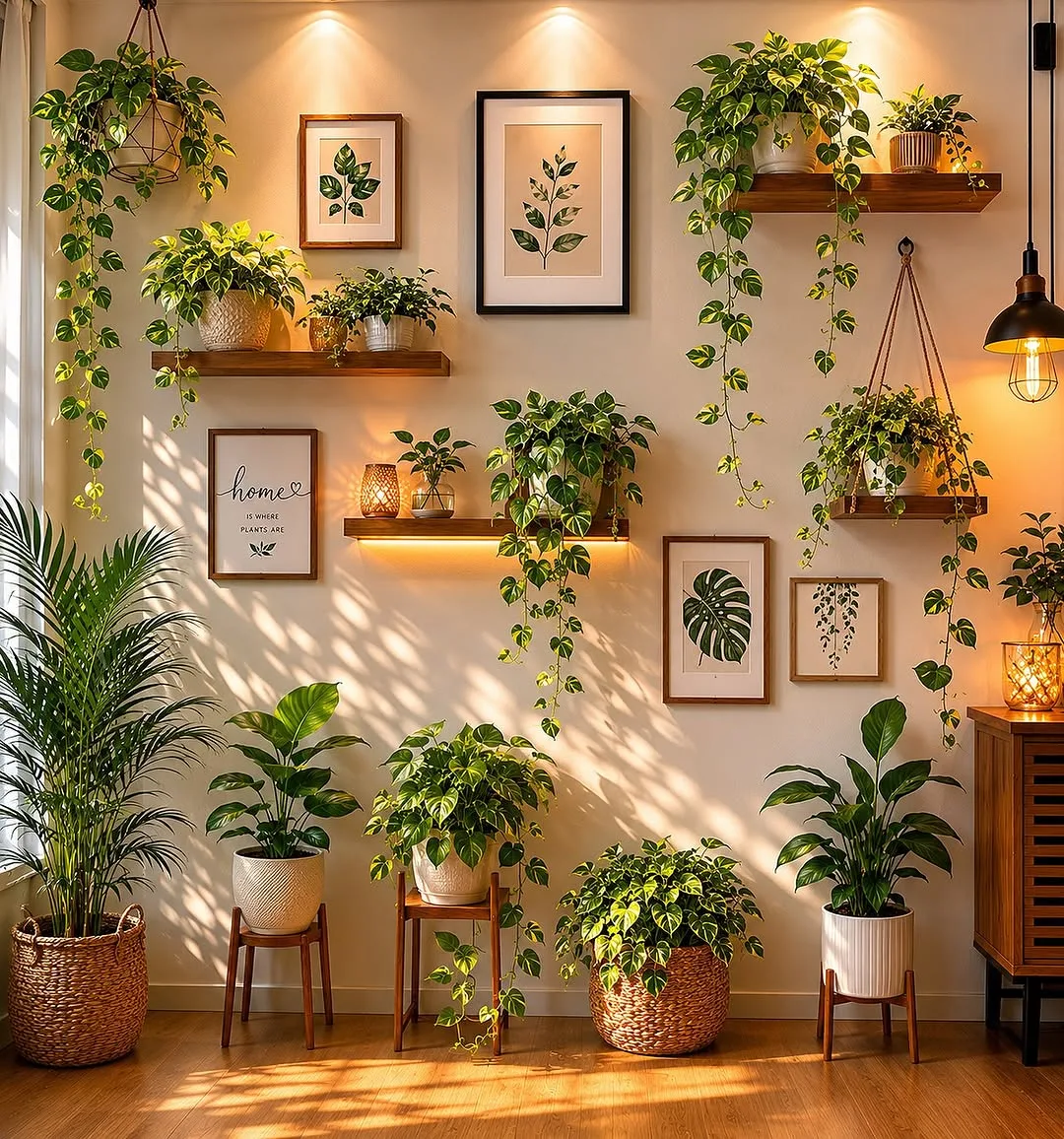
Plants bring moving, living shapes that no framed piece can copy. Trailing stems soften shelf edges and draw the eye upward, which makes ceilings feel higher. Green also rests the eye in rooms full of screens, fabric patterns, and warm wood tones competing for attention.
Choose forgiving plants like pothos, string of pearls, and trailing philodendron, which tolerate indoor light and missed waterings. Place pots on high shelves or wall planters where stems can fall freely. Keep soil light, use pots with drainage, and protect the wall behind from splashes with a small tray.
Gardeners and plant lovers suit this idea naturally, but beginners also do well with one hardy pothos. Bright rooms with a spare high shelf gain the most. Anyone who finds their walls neat but lifeless will feel the change within weeks as new leaves lengthen the green curtain.
Sofia set three pots of pothos along a high shelf above her television, and the stems now frame the screen like a green border. Her living room feels calmer during films, and watering day takes ten minutes with a small jug. Cuttings root in jars along the shelf, ready as gifts.
Neglect shows on wall plants faster than on floor plants, because high pots dry out and owners forget them. Brown tips and bare stems spoil the whole display. Set a weekly watering reminder, trim stragglers monthly, and rotate pots so each side gets light and grows evenly.
Vintage Signs and Finds with History
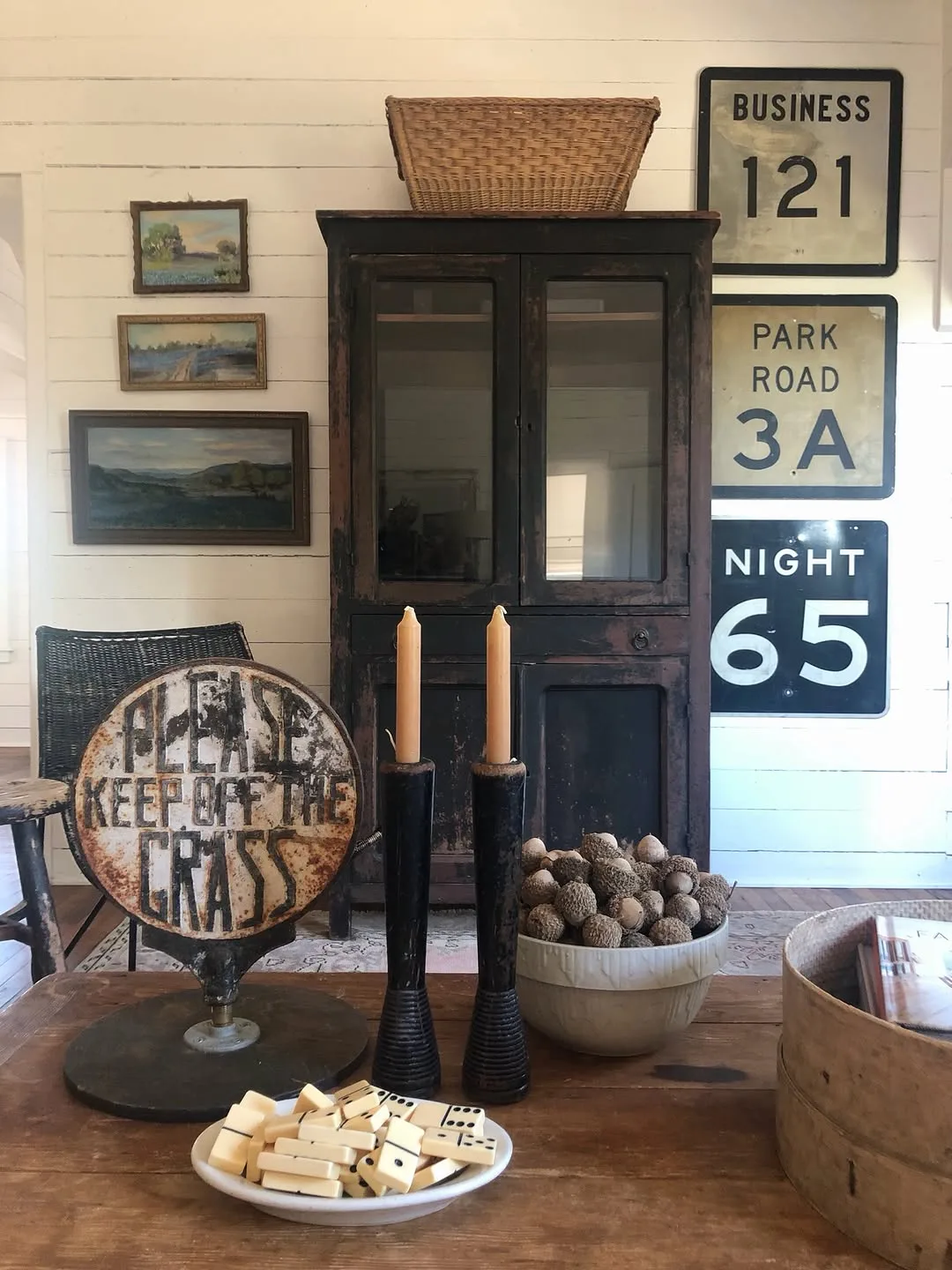
Vintage signs, old letters, and worn metal pieces give walls a sense of story that new decor cannot fake. Faded paint and honest scratches suggest years of life before the piece reached your wall. One strong find often carries more character than a whole set of matching new frames.
Hunt at flea markets, estate sales, antique shops, and family sheds, choosing pieces with colors that echo your room. Clean finds gently and leave patina alone, since over restoring erases the charm you bought. Check edges for sharp metal and hang heavier pieces on solid fixings.
History lovers and collectors suit vintage wall pieces best, because the search itself brings joy. Industrial, farmhouse, and eclectic rooms all welcome old signs warmly. Anyone bored by shops full of identical decor will enjoy owning pieces nobody else can copy exactly.
Walter hung a faded enamel sign from an old railway above his reading chair, a gift from his father who worked the line for decades. The sign starts conversations with every visitor and anchors the room with family memory. He refuses offers to buy it each year at the village fair.
Fakes flood the vintage market, with new pieces distressed to look old and priced like genuine finds. Disappointment follows when owners learn the truth later. Buy from sellers who explain origins, compare prices across stalls, and choose pieces you love even if their age stays uncertain.
Family Photo Wall in Matching Frames
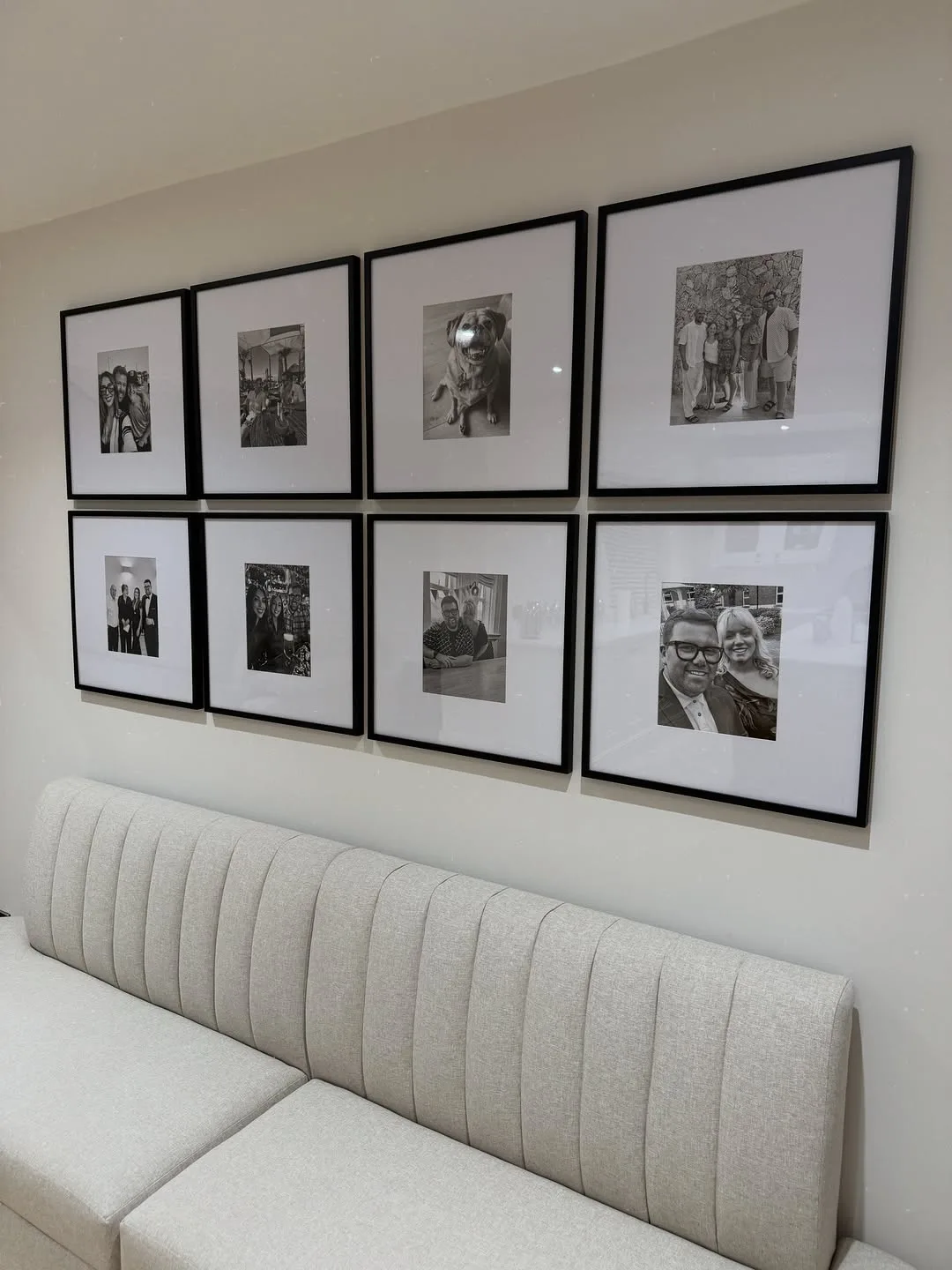
Family photos turn walls into the story of the household, and matching frames keep many different moments looking calm together. Black, white, or natural wood frames unify weddings, holidays, muddy dogs, and newborn portraits in one steady rhythm. Guests read these walls slowly, which few bought artworks achieve.
Print photos at two or three sizes only, and lay the arrangement out on paper before hanging. Keep faces at varied heights but inside one shared outline, like a wide rectangle above the sofa. Leave one or two empty frames ready for future moments, so the wall can grow with the family.
Sentimental households suit photo walls best, especially families with children whose years pass quickly in pictures. Grandparents enjoy walls that showcase the whole clan in one place. Hallway walls and the stretch above a long sideboard both hold family collections gracefully.
Grace arranged thirty years of family photos above her staircase landing in matching oak frames. Grandchildren study the wall on every visit, asking who each baby became. She adds one frame each Christmas, chosen by vote at dinner, which keeps the tradition alive and the wall current.
Cluttered mixes of frame styles, colors, and sizes make photo walls feel chaotic even when photos are lovely. Random additions over years cause most of the mess. Commit to one frame family, buy spares while the style sells, and edit old prints out as new favorites arrive.
Oversized Canvas Art Without a Frame
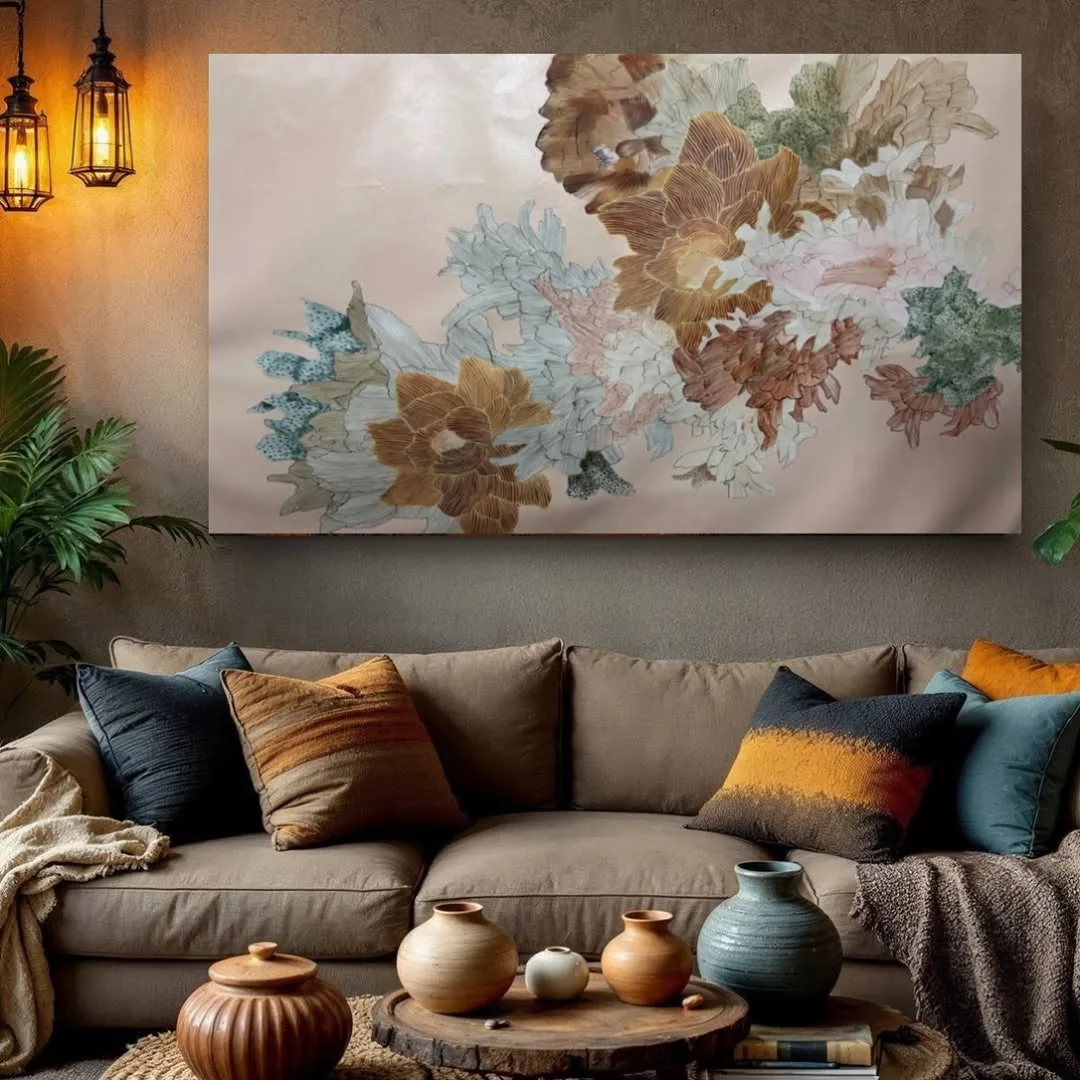
Canvas art without a frame feels modern and relaxed, with the image wrapping softly around the edges. Large canvases cover serious wall space for less money than framed pieces of equal size. Soft edges also suit rooms where sharp black frames would feel too formal or heavy.
Look for calm subjects with colors drawn from your sofa, rug, and cushions, so the canvas settles into the room. Hang the center at seated eye level and leave clear space on all sides. Lightweight canvases hang from one or two pins, which makes trying positions pleasantly easy.
Modern rooms and anyone decorating a first home suit oversized canvas well, because one purchase finishes a whole wall. People who move homes often also appreciate how light canvases travel. Large blank walls in open plan spaces gain warmth fastest from one generous piece.
Ben bought a wide canvas of misty hills for the wall behind his sofa, after months of staring at blank paint. The room felt furnished the same evening, and the soft greys matched cushions he already owned. He later added a single wall lamp, and the corner needs nothing more.
Warped frames and sagging fabric spoil cheap canvases within a year or two. Corners twist, the surface ripples, and the piece looks tired fast. Check the wooden stretcher bars for sturdiness before buying, keep canvas away from damp walls, and choose the best build your budget allows.
Common Mistakes to Avoid
Hanging art too high tops every mistake list. Pieces floating near the ceiling disconnect from the furniture they should partner, and seated guests crane to see them. Aim for centers near eye level when seated, and let large pieces sit close above sofa backs so the group reads as one.
Ignoring scale ruins walls quietly. Small pieces scatter across wide walls like crumbs, while one huge piece can crush a narrow wall. Match the total arrangement width to the furniture below, usually two thirds of its length, and the wall will feel balanced without any measuring genius.
Mixing too many frame finishes, colors, and styles at once creates visual noise. Each new finish asks the eye to adjust, and calm disappears. Limit frames to two finishes, repeat one accent color across pieces, and let texture vary instead of everything varying at once.
Forgetting light and reflection causes daily annoyance. Glass frames opposite windows flare at certain hours, mirrors bounce television glare, and dark corners swallow dark art. Live with paper templates through a full day, notice the light, and only then commit to holes and hooks.
Budget Friendly Living Room Wall Decor Ideas
Start with what your home already holds. Spare prints in drawers, plates in cupboards, fabric in sewing boxes, and books on shelves can all move to the walls this weekend. Walking room to room with fresh eyes often fills a whole wall before any money changes hands at all.
Second hand shops and market stalls carry frames, mirrors, baskets, and plates for a fraction of shop prices. Strong budget friendly living room wall decor ideas often begin in these aisles, where solid older pieces wait for paint and purpose. Bring wall measurements and a photo of your room on your phone.
Paint costs little and changes walls completely. One tin covers an arch, a color block, or the backs of shelves, and leftover paint refreshes old frames to match. Sample pots cost very little and protect the budget from the classic waste of a full tin in the wrong shade.
Making your own art saves money and adds meaning. Pressed leaves, children drawings, maps from trips, and your own photographs all frame beautifully. Print shops enlarge phone photos cheaply, and a strong frame from a charity shop can make a simple print look like gallery work.
Tips for Hanging and Arranging Wall Decor
Measure the wall and the furniture below before choosing any piece, and write the numbers in your phone. Guessing sizes in shops leads to pieces that nearly fit, which look worse than honest small ones. Numbers keep every later decision calm and quick.
Use paper templates and painter tape to test positions at full size. Tape the outline of each frame or shelf to the wall, then live with the plan through morning and evening light. Adjustments cost nothing at this stage and save walls from regret holes.
Hang pieces at seated eye level in living rooms, since people view walls from sofas far more than while standing. Many living room wall decor ideas fail only on height, with good pieces floating far above the furniture they belong with. Lower nearly always looks better.
Group smaller pieces so they read as one unit with a shared outline and even gaps. Single small frames scattered alone look lost and restless. One strong group above the sofa beats six lonely frames spread across every wall in the room.
Step back to the doorway and judge the wall from the distance guests see first. Close up views hide balance problems, glare, and crowding. Fresh eyes after a short break also help, so hang in stages, rest, and return before final fixing.
FAQ
How high should art hang above a sofa?
Centers of frames should sit near seated eye level, and the bottom edge of a large piece usually rests fifteen to twenty five centimeters above the sofa back. Gaps larger than that break the link between art and furniture, which makes both look lost.
How do I choose the right size of wall art?
Aim for an arrangement that spans about two thirds of the furniture width below it. Paper templates taped at full size reveal scale honestly before money moves. When torn between two sizes, the larger one usually settles the wall better in living rooms.
Can I mix frames of different colors?
Two finishes mix safely, like black with oak or white with brass, especially when each finish repeats at least twice. More finishes than that start to quarrel. Keep frame widths similar as well, because calm rhythm matters as much as color in a grouped wall.
What can I hang without making holes?
Adhesive hooks and strips hold light frames, woven pieces, and small plates when walls are clean and smooth. Check the weight rating on the pack and clean the wall with alcohol wipes first. Heavy mirrors and loaded shelves still deserve proper screws for safety.
How many pieces belong on one wall?
Most living room walls look best with one main arrangement rather than many scattered groups. One group above the sofa, plus perhaps one piece on a side wall, keeps the room calm. Living room wall decor ideas succeed through focus, so give each wall one clear job and let the rest stay quiet.
Where should I start on a totally blank wall?
Begin with the largest piece or group your budget allows and place it above the main furniture. Everything else can follow slowly as you find pieces you love. Living with one strong anchor for a month teaches you what the wall still needs, if anything at all.
Conclusion
Walls decide whether a living room feels finished or forgotten, and small thoughtful pieces usually beat grand gestures. Honest living room wall decor ideas share one habit: they suit the people, the furniture, and the light already in the room, instead of copying a showroom photograph.
Choose two or three ideas from this guide and finish them properly before adding more. One strong print, a shelf of loved objects, and a mirror placed with care can change how the whole room welcomes you home. Slow decorating settles better than a weekend rush.
Trust your own eye as the collection grows. Pieces found on trips, made by family hands, or saved from markets carry meaning that no matching set can offer. Your walls will gather character year by year, which is exactly how homes become personal.
Enjoy the process and the pauses between changes. Bare patches today become the perfect spot for next year find, and walls stay interesting because they keep evolving. Start with one wall, one afternoon, and pieces you already love, and let the room tell its story.