Open Kitchen Shelving Ideas That Stay Pretty and Practical
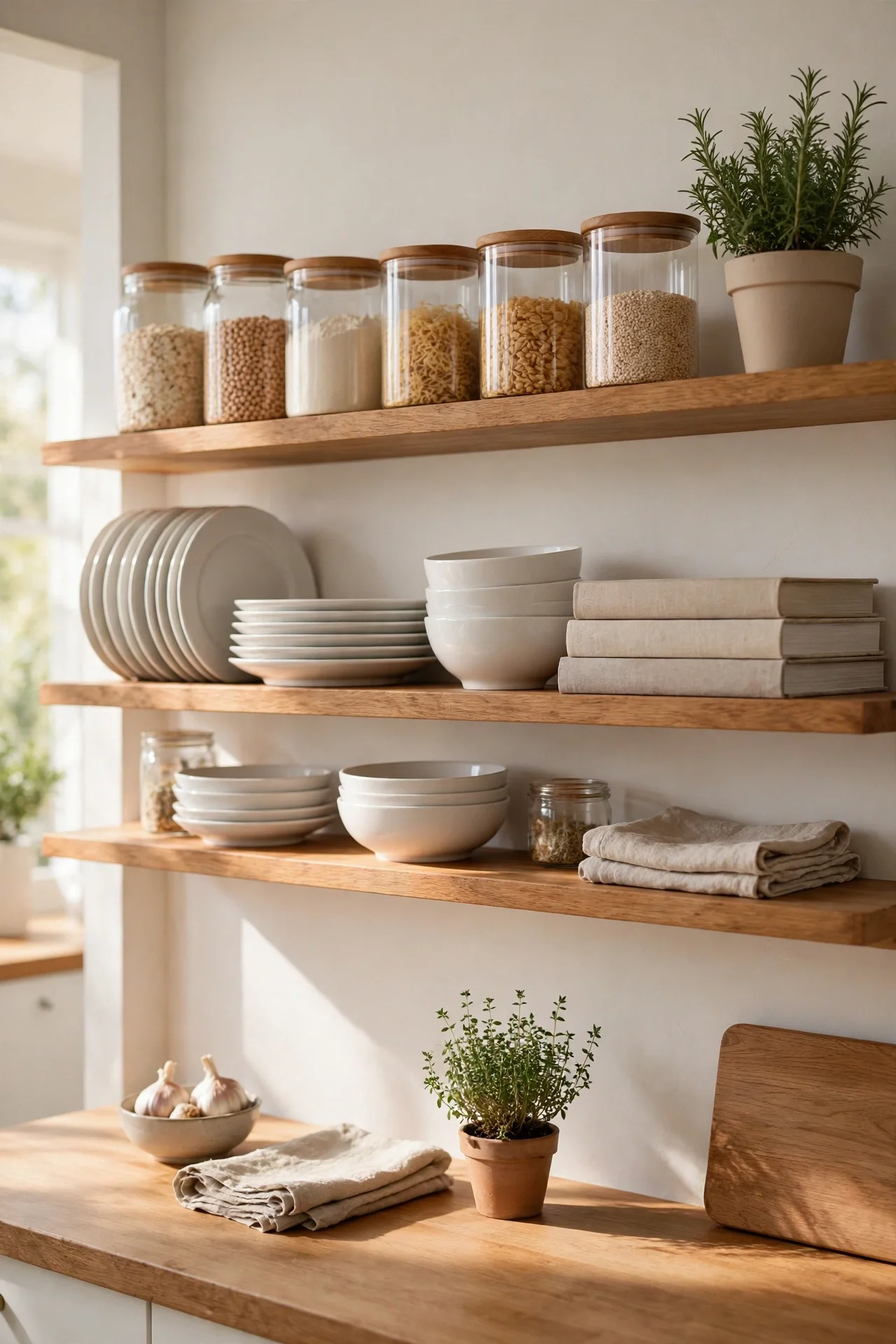
Open shelves promise a bright, airy kitchen, yet they can just as easily turn into dusty ledges crowded with jars nobody opens. Shelves expose everything you own, so they reward honest choices and punish clutter within a week. Success mostly depends on where each piece sits and how much space you leave around it.
Strong shelves work like good kitchen counters. Everything earns its place, daily tools sit within reach, and cleaning takes minutes instead of an hour. When each shelf holds one clear job, the whole wall looks calm even during busy cooking. Guests notice the order without knowing why the room feels easy.
Inside this guide, you will find fifteen practical ways to arrange open shelves, from the lowest shelf up to small styling touches. Each idea explains why it works, how to set it up, who it suits best, and one mistake to skip. Pick two or three ideas, try them for a week, and build from there.
What Are the Best Open Kitchen Shelving Ideas for Most Kitchens?
Simple groupings beat styled displays almost every time. The best open kitchen shelving ideas keep everyday dishes on the lowest shelf, group similar pieces together, store tall items at the back, and leave real gaps between groups. Shelves stay pretty because they stay easy to use and easy to wipe.
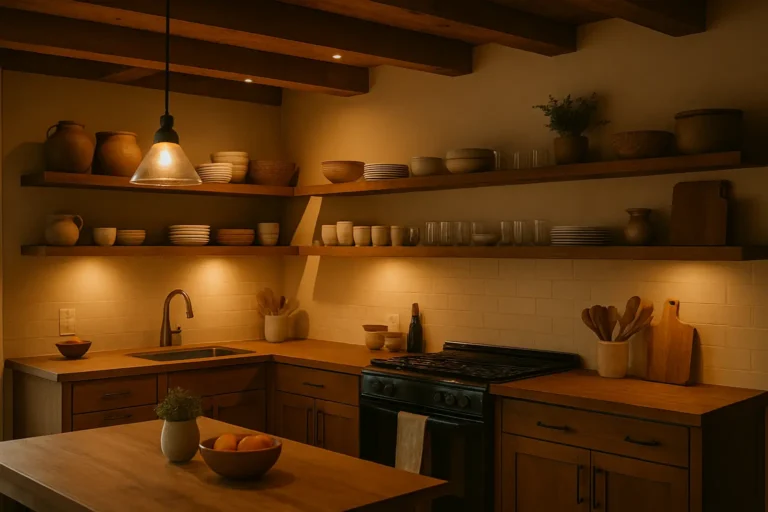
Picture one wall of shelves holding white plates below, jars and mugs in the middle, and cookbooks with a plant up top. Nothing matches perfectly, yet everything belongs to a group with room around it. Cooking feels calmer because your hands learn exactly where each thing lives.
Everyday Dishes on the Lowest Shelf
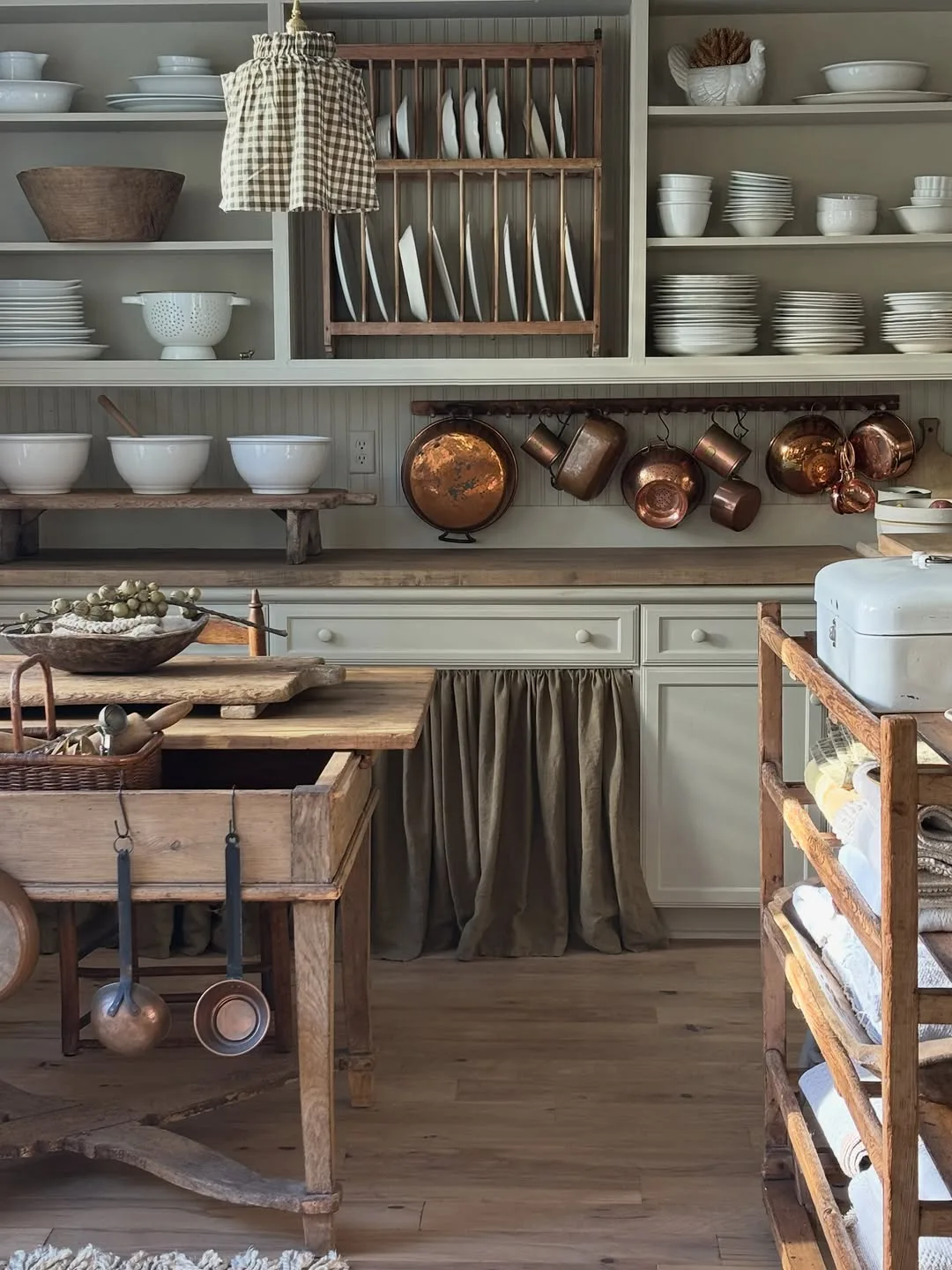
Daily plates, bowls, and glasses deserve the lowest shelf because your hands reach for them more than anything else in the kitchen. Low storage keeps the daily rhythm smooth, from breakfast bowls to dinner plates. Reaching down slightly also feels safer than stretching up while holding a stack of dishes.
Keep stacks short, with six to eight plates or bowls in each pile, and group similar sizes together. Place the shelf roughly at chest height so you can lift a stack with both hands without rising on your toes.
Families and anyone who cooks at home most days benefit most, because dishes move on and off the shelf all day long. Small households with one main set of dishes also love the simplicity. Guests can help set the table without opening a single cupboard door or asking where things belong.
One mother of three moved her plates from a high cupboard to the lowest shelf and timed her mornings for a week. Table setting dropped to half the time, and her children could finally reach their own bowls safely. Chipped rims nearly disappeared because nobody stretched or rushed anymore.
Heavy stacks placed too high cause the classic problem here. People grab one plate from a wobbling pile above shoulder height and eventually drop or chip pieces. Store the heaviest dinner service low, keep party dishes you use twice a year in a cupboard, and let the shelf carry only what hands lift daily.
Glass Jars in a Calm Row
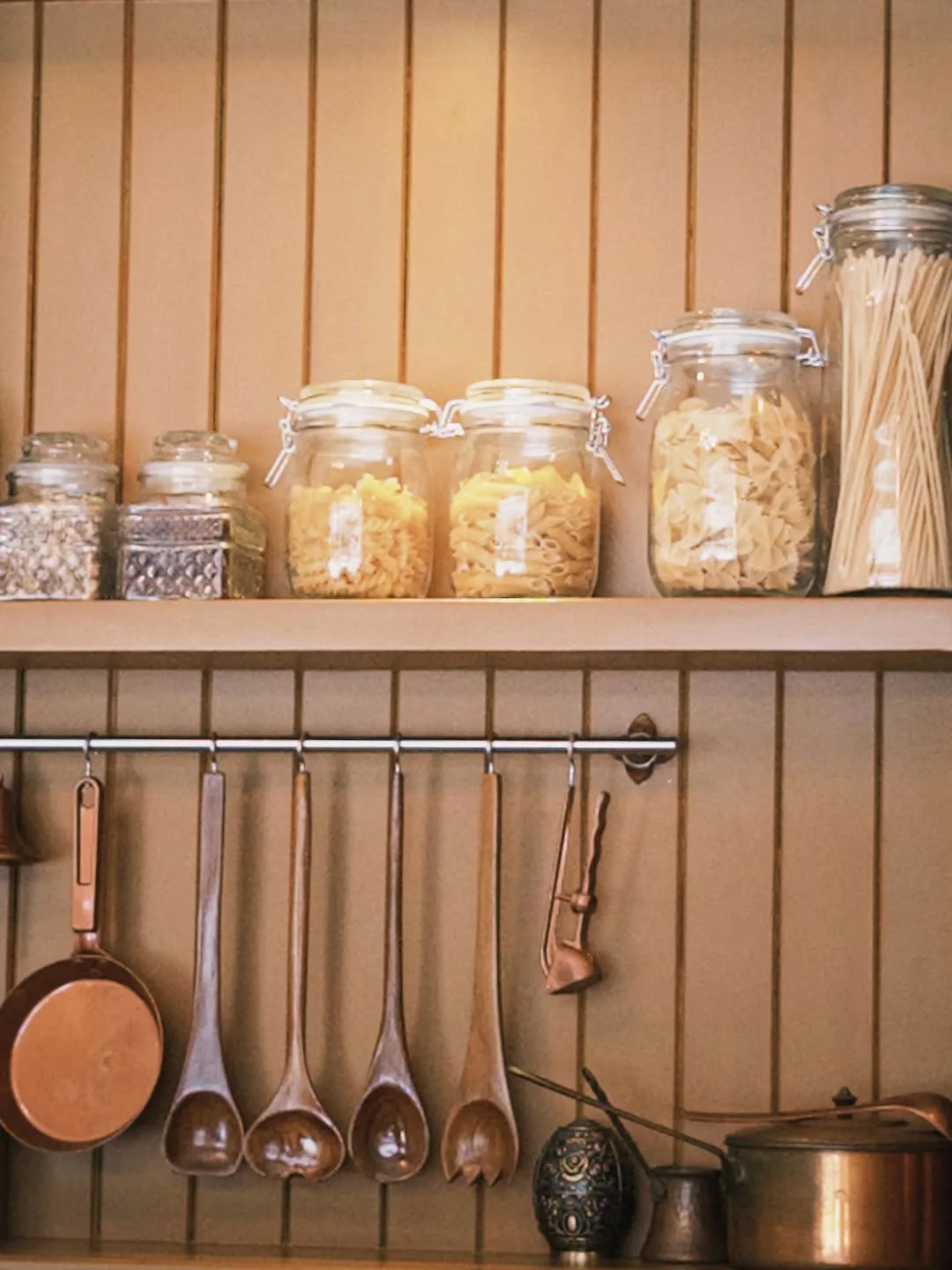
Clear glass jars calm a shelf because you can see exactly what you own and how much remains. Flour, rice, coffee, and pasta look tidy behind glass, and matching shapes turn loose supplies into one neat row. Shopping gets easier too, since low levels show at a glance.
Choose jars in two or three sizes at most, with lids that seal well and mouths wide enough for a scoop. Fill tall jars with pasta and cereal, medium jars with flour and rice, and small jars with nuts, seeds, or coffee. Simple paper labels or plain writing on the glass keep contents clear.
Bakers and cooks who buy staples in bulk suit jars best, because ingredients move fast and stay fresh in sealed glass. People who decant groceries the day they buy them also keep rows tidy without effort. Anyone who hates mystery bags in cupboards will enjoy the shelf within days.
One couple replaced nine half open bags and boxes with seven matching jars along one shelf. Their counter cleared, their shopping list shrank, and pancake mornings stopped involving spills. Friends assumed they had paid for a kitchen makeover when they had really spent one afternoon with jars and a funnel.
Mismatched jars in every size undo the calm quickly. Tiny jars hide behind tall ones, lids vanish, and the row turns into a jumble that looks worse than cupboards. Buy or gather one jar family, test the row for a month, and keep jars away from stove steam, which clouds glass and spoils dry goods.
Grouping Items by Color
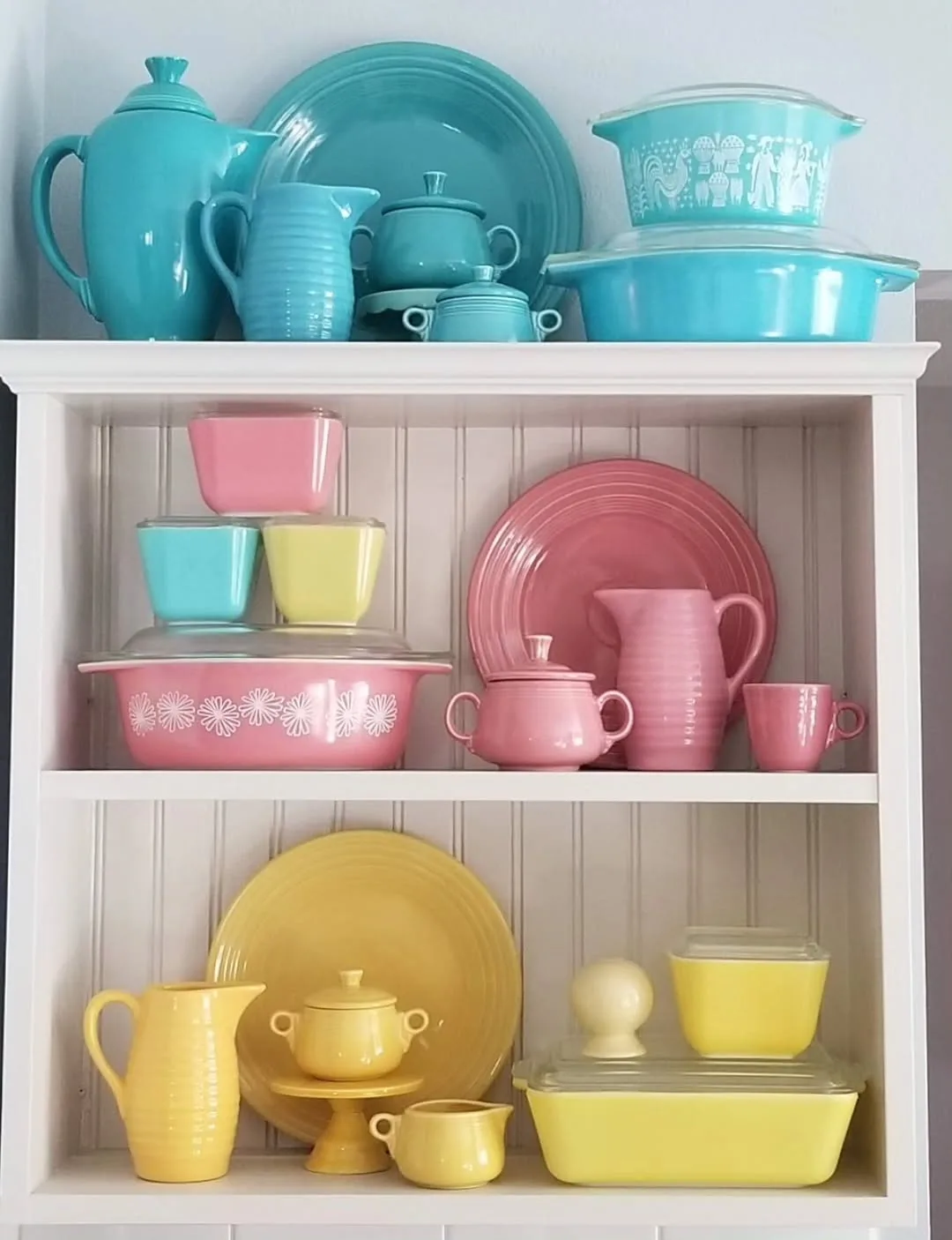
Color grouping makes mixed collections look planned instead of random. White dishes read as one calm block, wooden boards form a warm block, and one accent color ties the wall together. Your eyes rest because each group asks for attention once, not piece by piece.
Start with the colors you already own most, usually whites, creams, wood tones, and glass. Give each color its own shelf section, then add one accent, like deep green plants or blue jars, repeated two or three times. Keep strong colors in the minority so the wall stays restful.
Owners of mixed, inherited, or slowly gathered dish sets suit this idea best, because color creates order without buying matching sets. Small shelves benefit too, since two or three clear groups look tidier than ten single items. Collectors can rotate one color group each season for a fresh feel.
She sorted her shelves on a rainy Sunday, moving every white piece together and every wooden piece beside them. Friends later asked which of the open kitchen shelving ideas she had copied, and she laughed because she had only grouped what she owned. Nothing new entered the kitchen that weekend.
Strict color rules can backfire when people buy new pieces just to complete a set. Shelves then serve a color scheme instead of daily cooking. Group loosely, let a few odd pieces live where they get used, and remember that clean and reachable beats perfectly matched every time.
Small Plants Between Useful Pieces
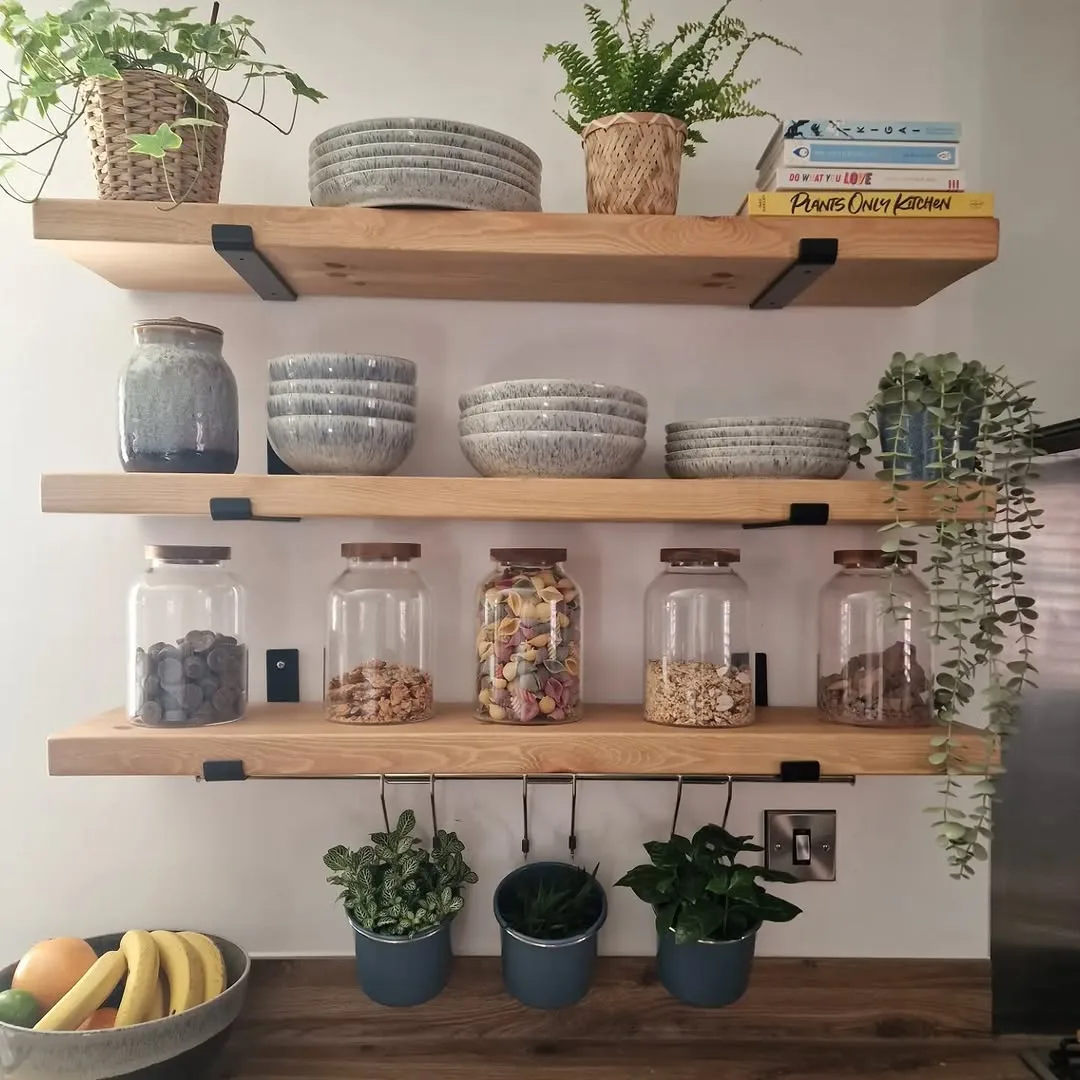
Green leaves soften the hard lines of shelves, plates, and jars. Small plants tucked between useful pieces make the wall feel alive without giving up storage. Herbs even earn their keep, since a snip of basil or mint goes straight into dinner.
Pick plants that forgive busy owners, like pothos, small herbs, or a compact spider plant. Use pots with drainage and a saucer or tray under each one to catch water. Place plants where light reaches them, usually near the window end of the shelf, and keep them clear of stove heat.
Bright kitchens with a window over the sink suit shelf plants best, because light does most of the work. Gardeners and herb lovers also thrive with this setup, since watering joins the normal kitchen routine.
One cook keeps basil, mint, and a trailing pothos along her top shelf, spaced between jars and a stack of bowls. Watering takes two minutes on Sunday, and the green breaks up the white so well that guests ask about the plants before anything else in the kitchen.
Oversized plants cause the usual trouble, swallowing shelf space and dripping water onto dishes below. Vines also creep behind jars and hide items you need. Keep plants small, prune trailers monthly, and move any plant that starts shading out the pieces you reach for every day.
Cookbooks Standing Between Bookends
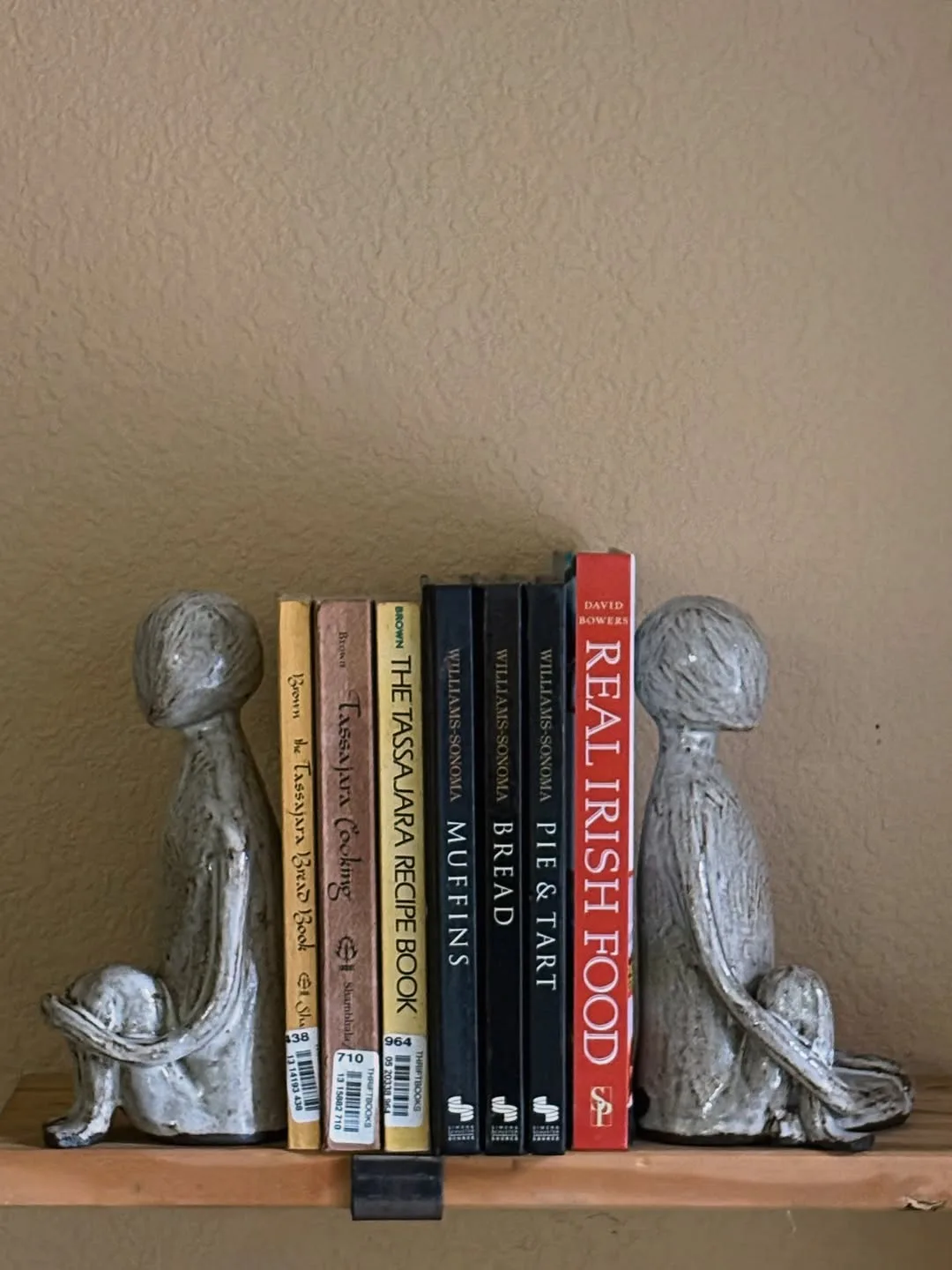
Cookbooks bring color, personality, and real help to open shelves. Standing upright between bookends, favorite titles sit within reach of the stove while their covers decorate the wall. Browsing while water boils also sparks ideas that cupboard storage never offers.
Choose four to eight books you actually open, and stand them where splashes rarely reach, usually one shelf above the main work zone. Heavy bookends in metal, wood, or stone keep the row firm. Leave the book you use most at the end nearest your prep space for one handed grabbing.
Keen cooks and anyone learning new cuisines suit shelf books best, because recipes stay visible and inviting. Families also enjoy swapping one seasonal book to the front each month.
One home baker lined up six well used books between two stone bookends beside her mixing bowls. Dinner planning moved from phone scrolling to page flipping, and two forgotten family recipes returned to weekly rotation. Her shelves gained the most personal corner in the whole kitchen.
Grease and steam punish books stored too close to the stove. Pages yellow, covers warp, and leaning piles without bookends slide and fall. Keep books at least one shelf away from cooking steam, wipe covers monthly, and retire damaged paperbacks to a bedroom shelf instead of the kitchen wall.
Baskets That Hide the Messy Items
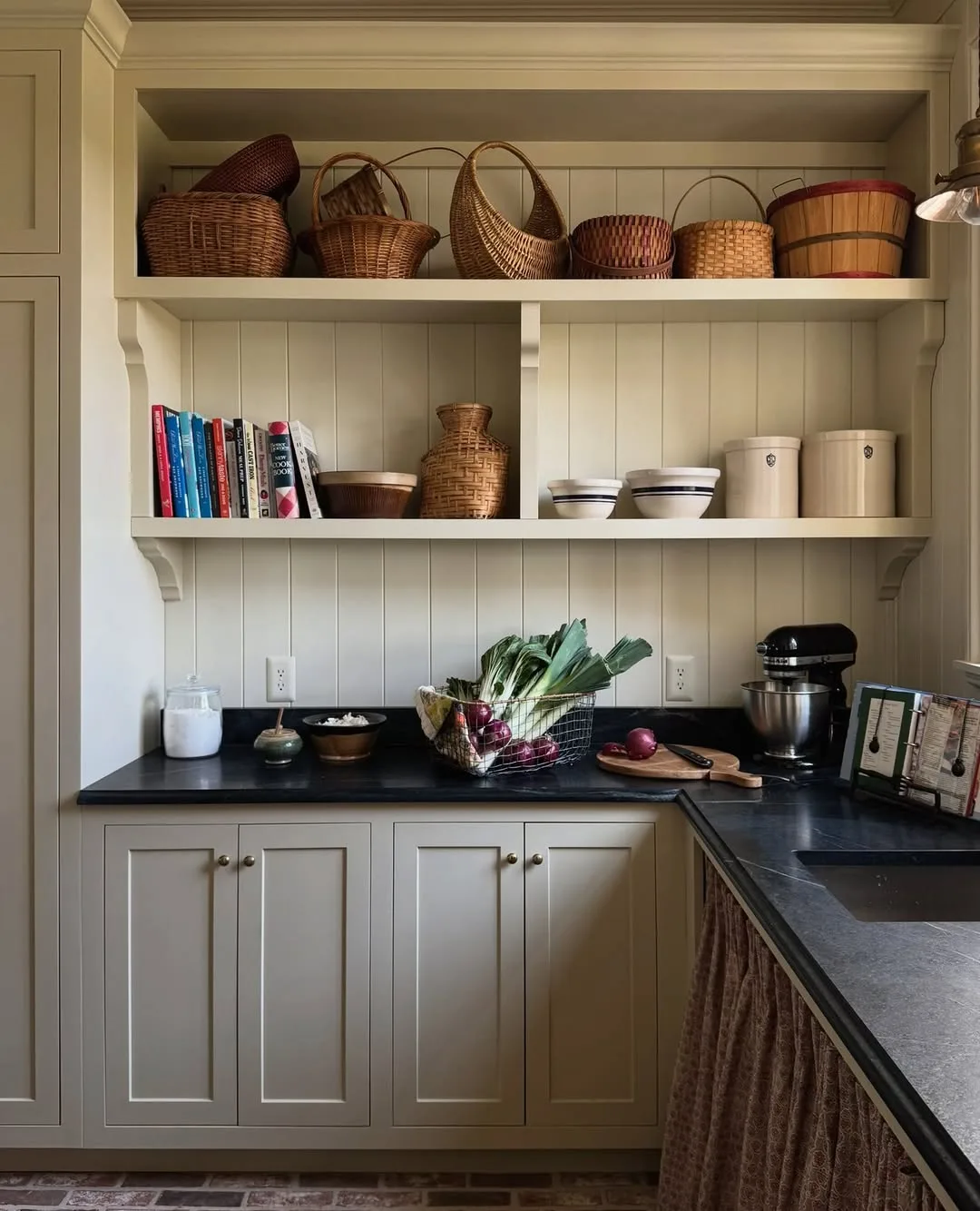
Baskets hide the small messy things every kitchen collects, from medicine bottles to packet soups and spare batteries. One basket turns visual noise into a single calm shape on the shelf. Reaching in beats digging through a junk drawer across the room.
Give each basket one clear job, like lids, packets, or cleaning cloths, and choose sizes that slide fully onto the shelf. Lined fabric baskets protect shelf paint, while woven baskets add texture. Label the inside rim if several people share the kitchen, so items return to the right basket.
Households with children, shared cooks, or lots of small supplies suit baskets best. Busy families gain most, because small items multiply fastest in busy homes.
One father placed three baskets on the middle shelf for lunch supplies, coffee extras, and household bits like tape and batteries. School mornings stopped involving searches through four drawers. His shelves looked styled in photos, yet every basket worked hard behind the scenes.
Deep baskets become junk drawers standing upright. Items sink, expire, and vanish at the bottom while the top layer looks tidy. Choose shallow baskets you can see into at a glance, empty each one monthly, and let go of anything nobody has touched since the last clean out.
Mugs Hung on Hooks Under a Shelf
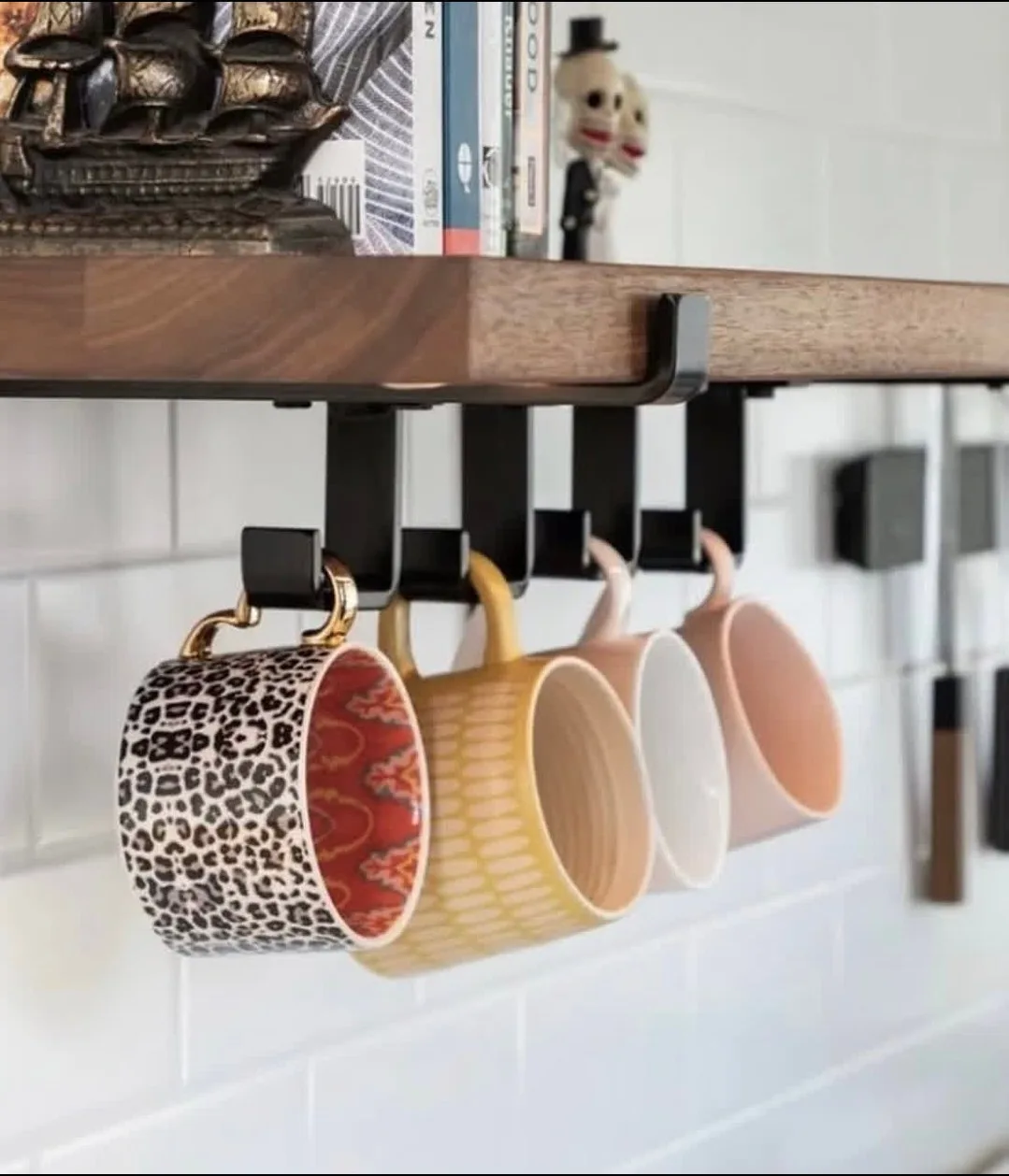
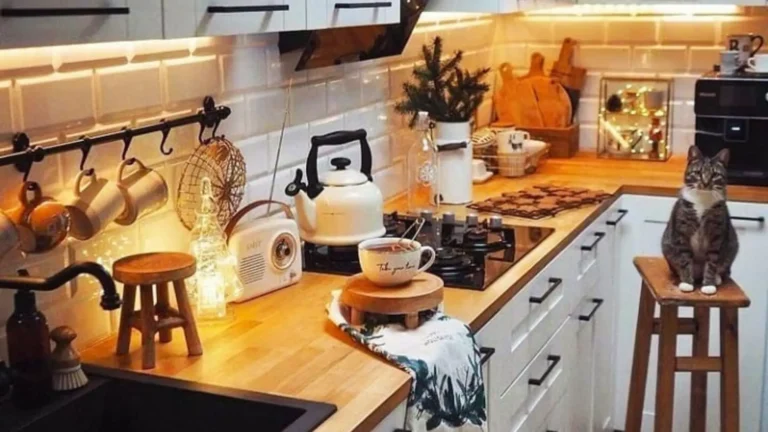
Hooks screwed beneath a shelf turn empty air into storage and free a whole shelf section. Mugs hang in a friendly row, dry quickly after washing, and wait right beside the kettle or coffee maker. Daily drinks become a grab and go pleasure.
Screw sturdy hooks into the underside of a solid shelf, spacing them four to six inches apart so mug bodies never knock together. Hang only mugs you use daily, usually four to eight, and keep the heaviest mugs nearest the shelf supports. Check that hanging mugs clear the counter and any appliances below.
Coffee and tea drinkers suit this idea best, because mugs cycle through the day at speed. Small kitchens also gain, since a row of hanging mugs uses space that otherwise holds nothing. Hosts enjoy guests helping themselves without opening cupboards.
One couple hung six everyday mugs beneath the shelf above their kettle and freed an entire cupboard for glasses. Morning drinks sped up, the shelf above gained room for jars, and the row of colored mugs quietly became the happiest detail in their small kitchen.
Thin shelf boards cause the failure here, because screws split weak material and hooks loosen under the weight of full mugs. Test the board thickness first, use short screws that stay inside the wood, and keep delicate or oversized mugs on the shelf itself instead.
Cutting Boards Layered at the Back
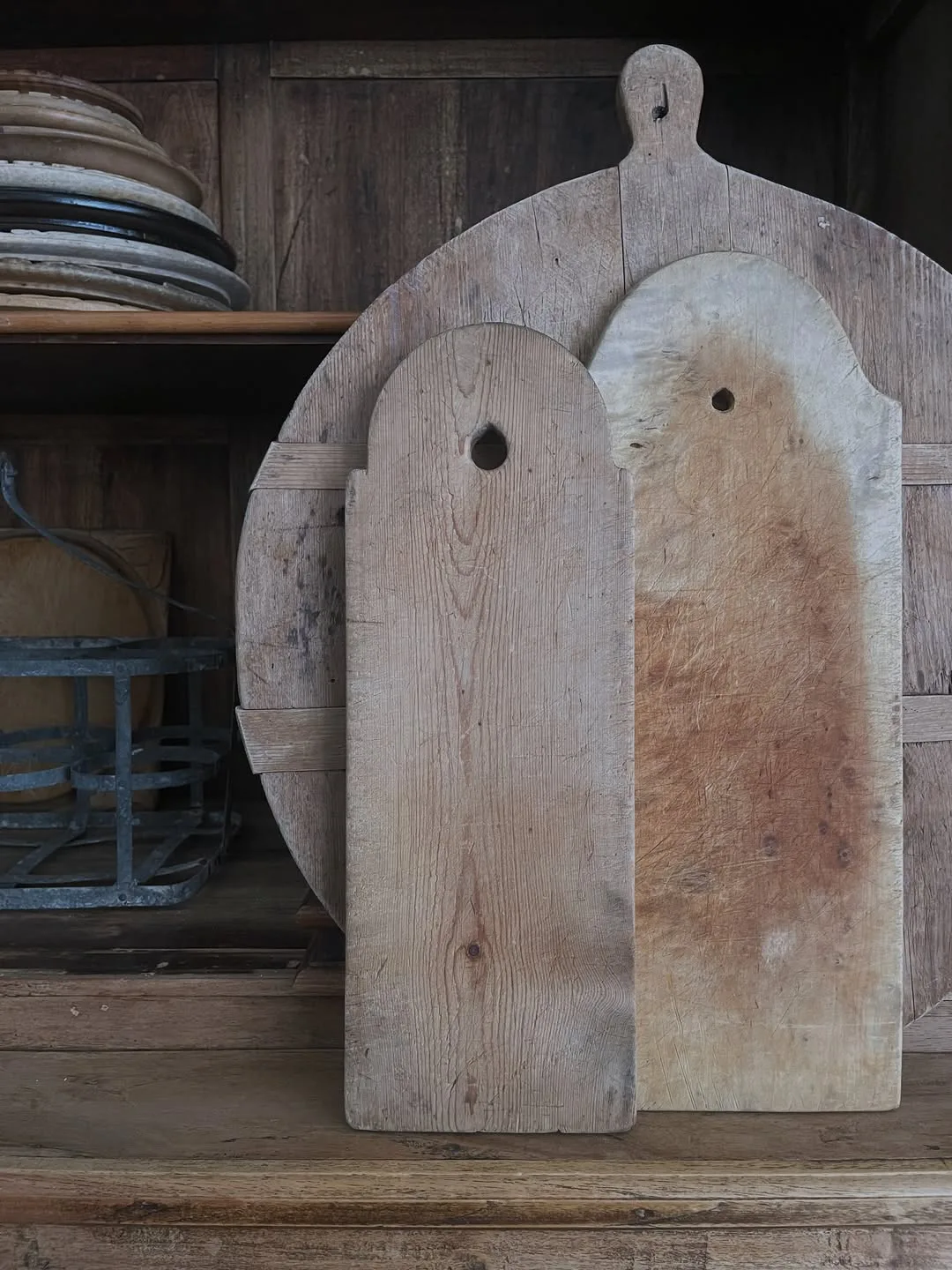
Wooden boards leaning at the back of a shelf add warm texture that plain dishes cannot match. Photos of open kitchen shelving ideas return to this trick often because boards fill tall gaps gracefully. Stored upright, boards also dry fully between uses, which keeps wood in better shape.
Lean the largest board against the wall first, then layer medium and small boards in front by height. Stand boards near your prep zone so daily chopping stays quick, and leave a small gap behind them for air. Choose boards with varied wood tones for gentle contrast.
People who own handsome wooden boards suit this idea best, because good boards deserve daylight instead of a dark cupboard. Cooks who chop daily also benefit, since upright boards grab faster than stacked ones.
One cook propped three boards behind her everyday bowls, tallest at the back like a small wooden skyline. Meal prep sped up because the daily board stood at the front, and the shelf suddenly looked layered instead of flat. Guests kept touching the wood, surprised it was storage.
Wet boards stored upright still warp when they lean while dripping. Moisture also marks shelf paint over time where boards touch. Dry boards fully on the counter first, oil wooden boards every few months, and keep the plastic board for raw meat inside a cupboard where it belongs.
Everyday Pieces Mixed with One Pretty Piece
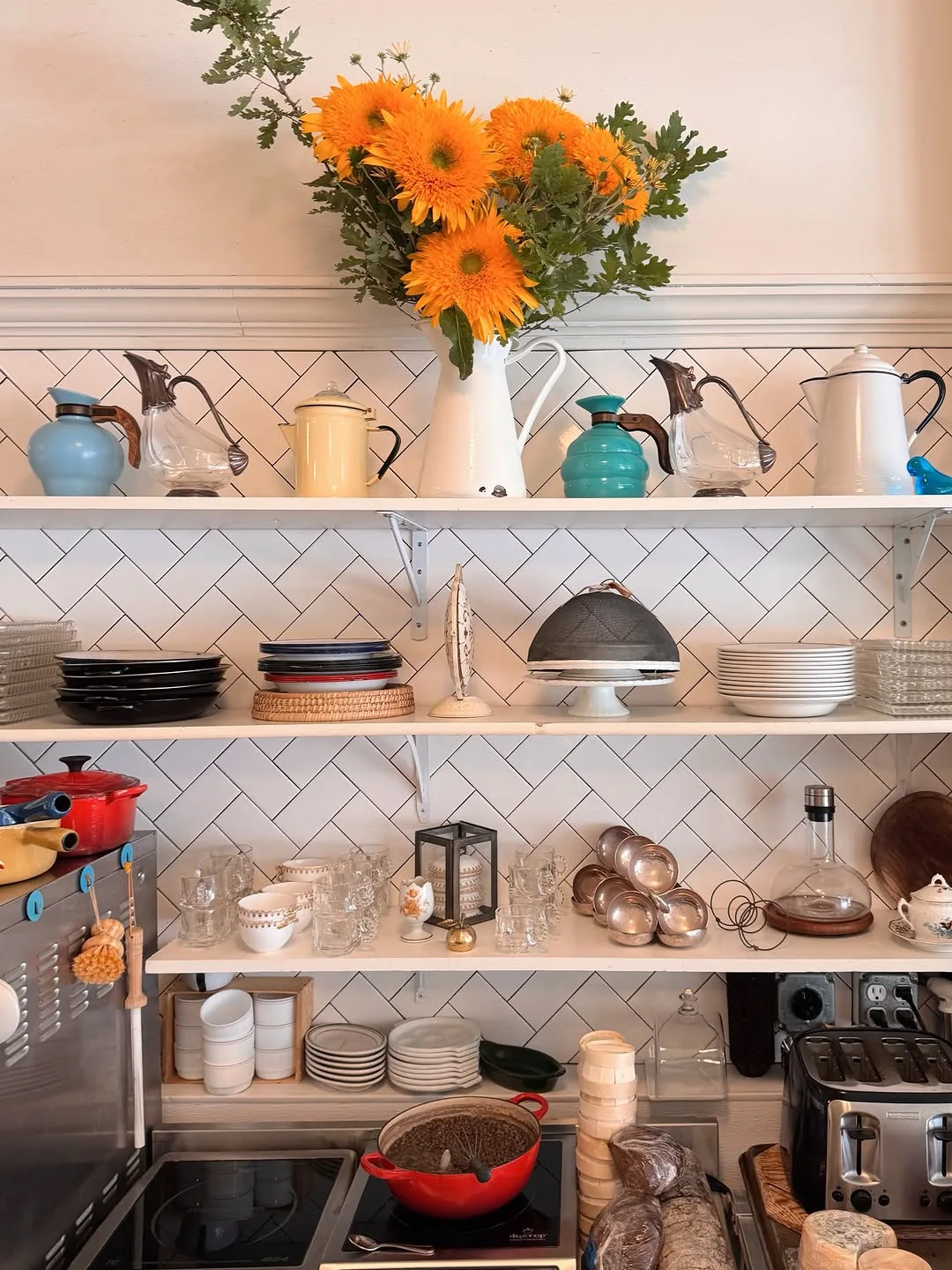
One special piece lifts a whole shelf of plain everyday dishes. Handmade jugs, patterned bowls, or a small framed print give eyes a place to land. Shelves feel styled without losing a single useful item.
Keep the ratio honest, with roughly nine everyday pieces for every special one. Place the pretty piece where it catches light but never blocks daily reaching, often at the end of a shelf or beside a plant. Rotate the special piece seasonally if you own several favorites.
Small shelves suit this balance best, because one strong piece does the decorating for the whole wall. People with a few loved objects gain too, since those pieces finally get seen every day. Basic white dish sets look deliberate and calm beside one beautiful handmade object.
Her grandmother's blue pitcher stands at the end of one shelf of plain white plates in a small city kitchen. Everything else works daily, yet the pitcher makes the shelf feel personal. Visitors always ask about it, and the owner loves seeing it every morning.
Too many special pieces push useful ones off the shelf and turn storage into display. Fragile treasures also suffer in a working kitchen, where steam and elbows pass daily. Keep display to one piece per shelf, store true keepsakes in safer rooms, and let pretty earn its place beside practical.
Matching Containers for Dry Goods
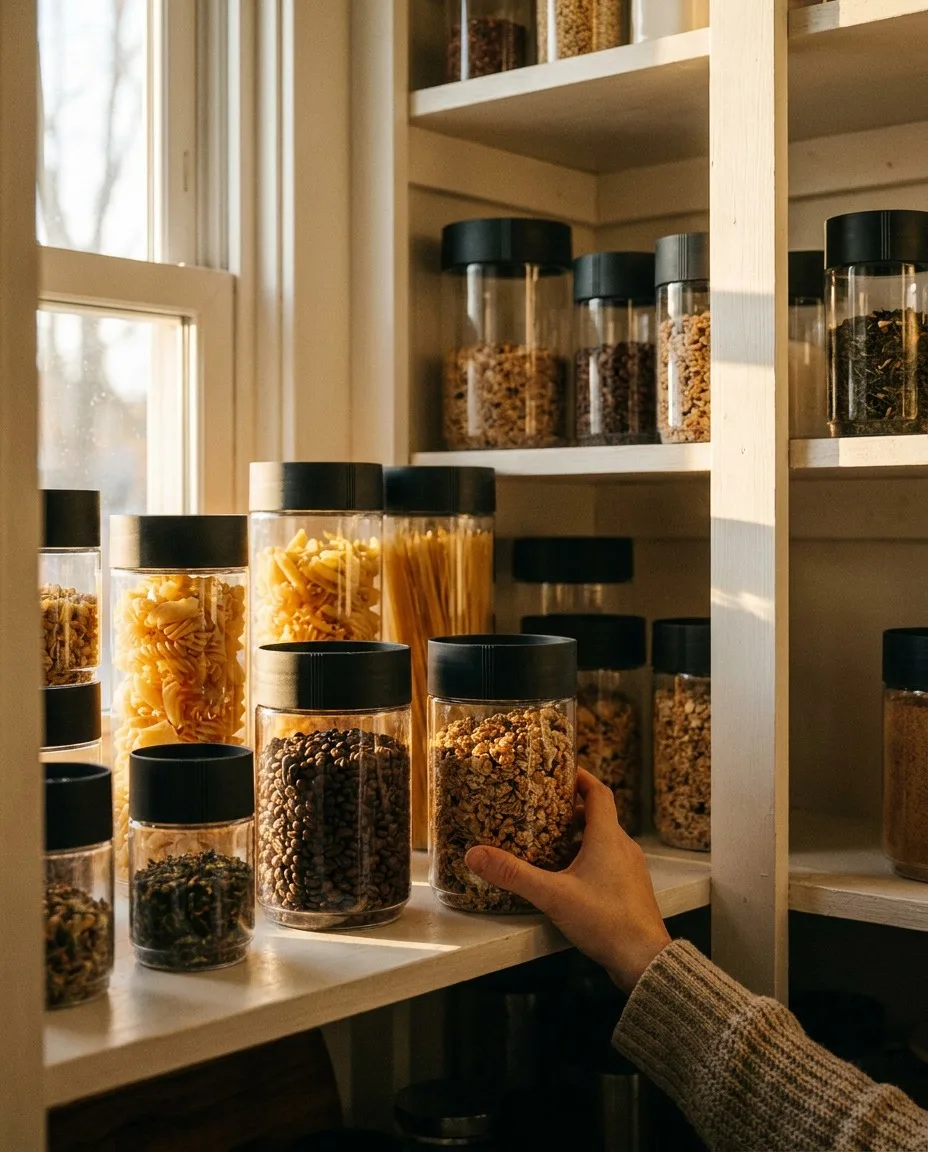
Matching containers calm shelves the way a uniform calms a crowd. Same shapes and lids line up neatly, stack safely where needed, and make supplies easy to read at a glance. Dry goods also stay fresher in sealed containers than in torn bags.
Pick one container family in three sizes and buy slowly, testing a single container for two weeks before ordering more. Choose airtight lids for flour and sugar, clear bodies where levels matter, and shapes that fit your shelf depth with room to lift them out one handed.
Bulk buyers and big households suit matching sets best, because supplies move in volume and order saves real time. Bakers also love uniform containers, since flour types stop getting confused mid recipe.
One family swapped a chaos of bags and tubs for twelve matching containers across two shelves. Refill day became one simple routine with a funnel and a list, and spills nearly vanished. Their pantry staples now read like a small shop shelf, tidy and easy to scan.
Buying a huge set before testing causes the common waste here. Lids may seal poorly, sizes may miss your real staples, and half the set ends up storing nothing. Start with four containers, live with them through two shopping cycles, and expand only where the system proves itself.
Spices in Small Uniform Jars
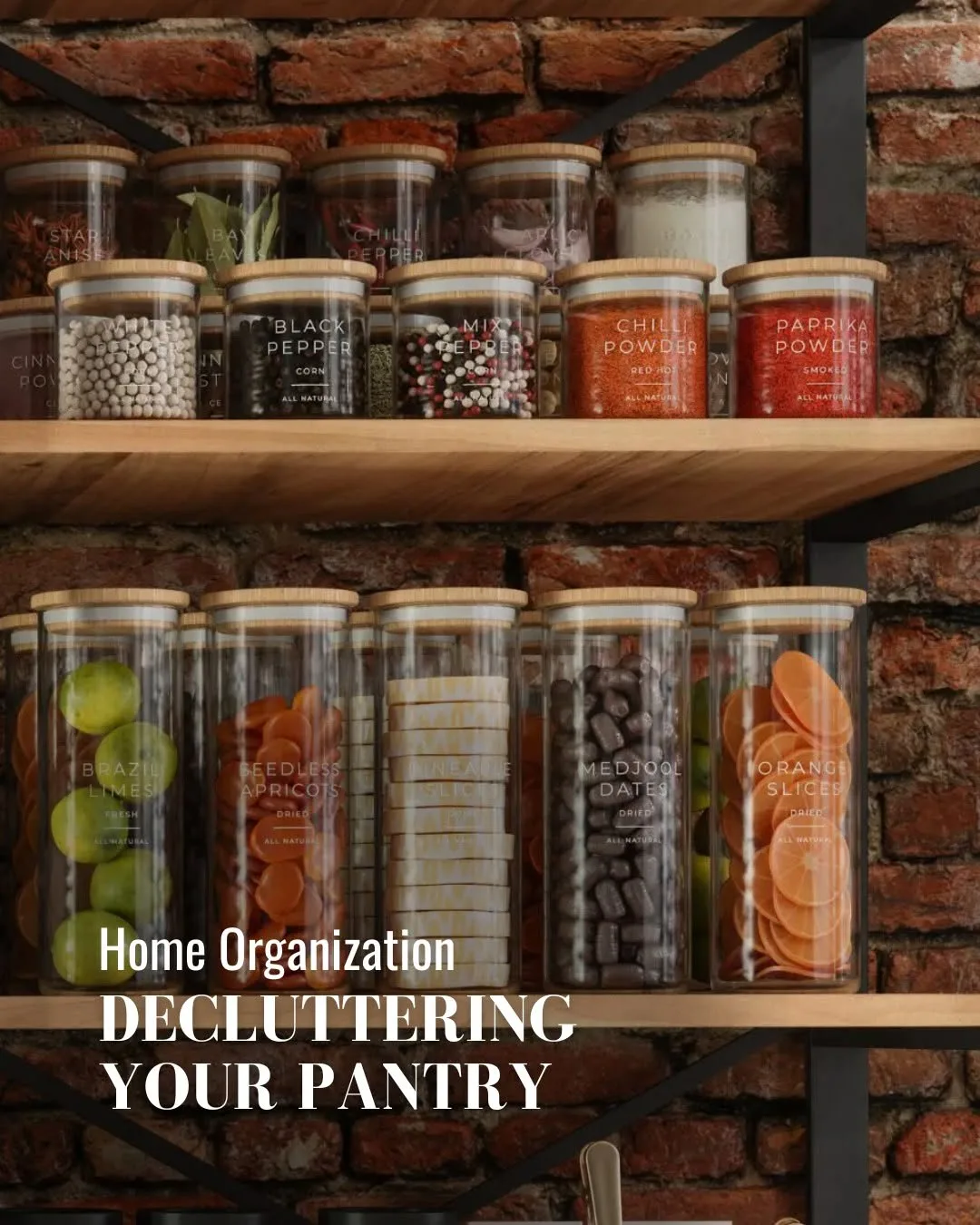
Uniform spice jars turn a scattered collection into one neat, readable row. Same size jars line up without wasted gaps, labels face forward together, and cooking speeds up when every spice announces itself. Small jars also keep spices fresher, since you refill them often from larger backup supplies.
Decant spices into jars of one size, usually holding around half a cup, and label the front or the lid in plain lettering. Group jars by how you cook, with daily spices nearest the stove end and baking spices together. Keep refill bags or tins in a cupboard below.
Cooks with growing spice collections suit uniform jars best, because order prevents duplicate buying. People who cook dishes from many cuisines also gain, since thirty jars stay readable in one row. Small kitchens benefit because a spice row needs only a few inches of shelf depth.
One cook moved twenty six spices into matching jars along a narrow shelf above her prep counter. Shopping lists shrank because she could see levels at a glance, and weeknight cooking lost the usual drawer digging. Meals genuinely got faster within the first week.
Heat and steam quietly ruin spices stored directly above the stove. Flavor fades within months, and lids grow sticky from cooking grease. Place the row near the stove but off to one side, wipe jars monthly, and buy spices in small amounts you will finish while they still taste alive.
Empty Space Left on Purpose
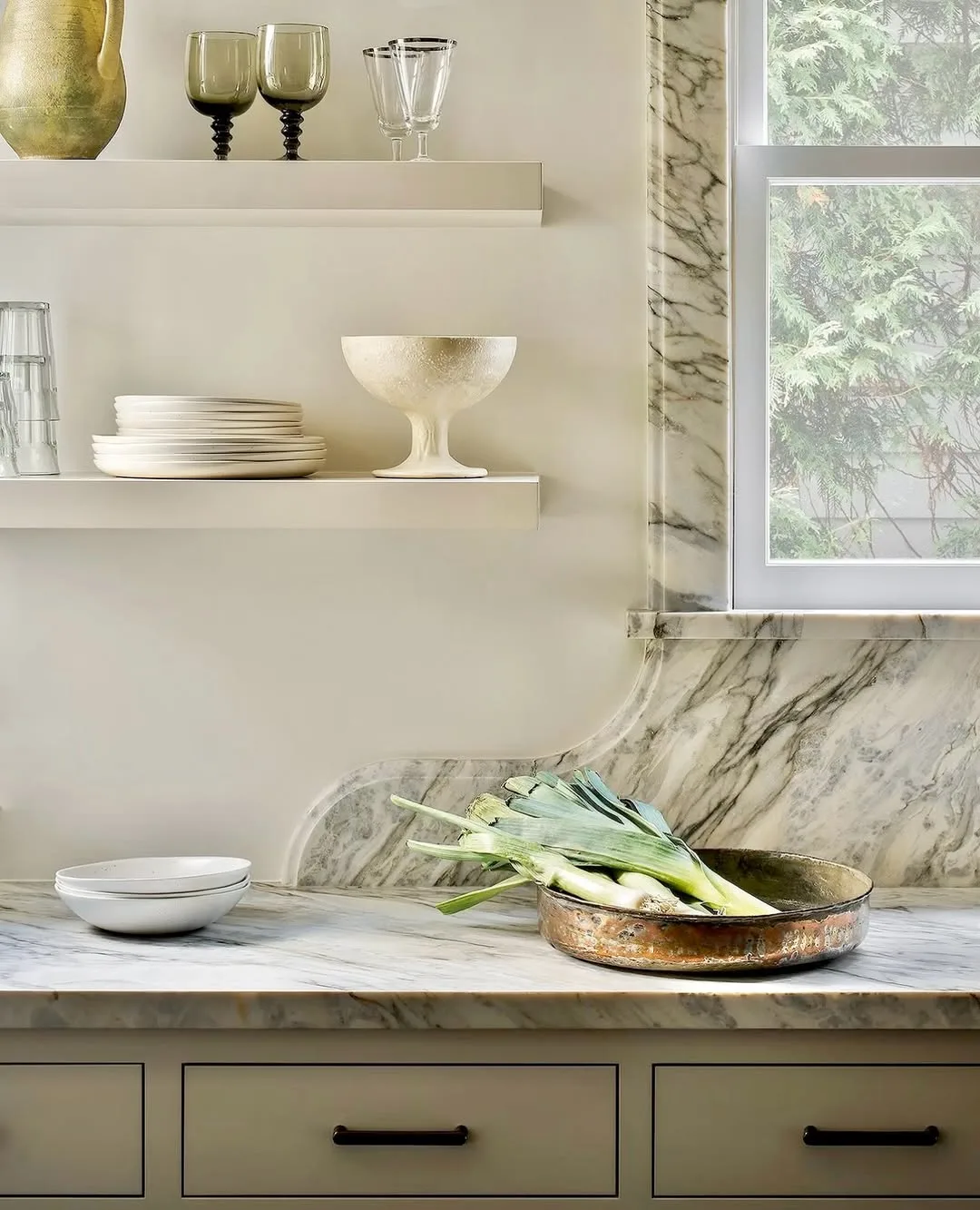
Empty space separates crowded shelves from calm ones more than any styling trick. Gaps between groups let each group read clearly, make items easy to lift out, and stop the wall from shouting. Many open kitchen shelving ideas fail quietly at this point, cramming every inch until calm disappears.
Leave roughly one third of each shelf empty, spreading groups with a hand width or more between them. Tall items stand at the back, short items at the front, and nothing doubles up in depth unless it truly must. Step back to the doorway and judge the wall from where guests see it.
Crowded kitchens gain the most from deliberate gaps, because shelves in small rooms fill faster and feel heavier. People who feel stressed by visual noise also calm down quickly with emptier shelves. Anyone can try this idea today for free by simply removing a few pieces.
One woman removed just five pieces from each of her three shelves and stored them in a cupboard below. Nothing else changed, yet friends asked what paint color she had used because the wall looked new. Reaching for jars also stopped knocking neighboring items over.
Slowly, gaps tend to vanish as new purchases creep onto the shelves one by one. Within months the wall looks crowded again and nobody remembers when it happened. Defend the empty space like storage for your eyes, review shelves monthly, and give every newcomer a cupboard home first.
Vintage Finds Mixed with New Basics
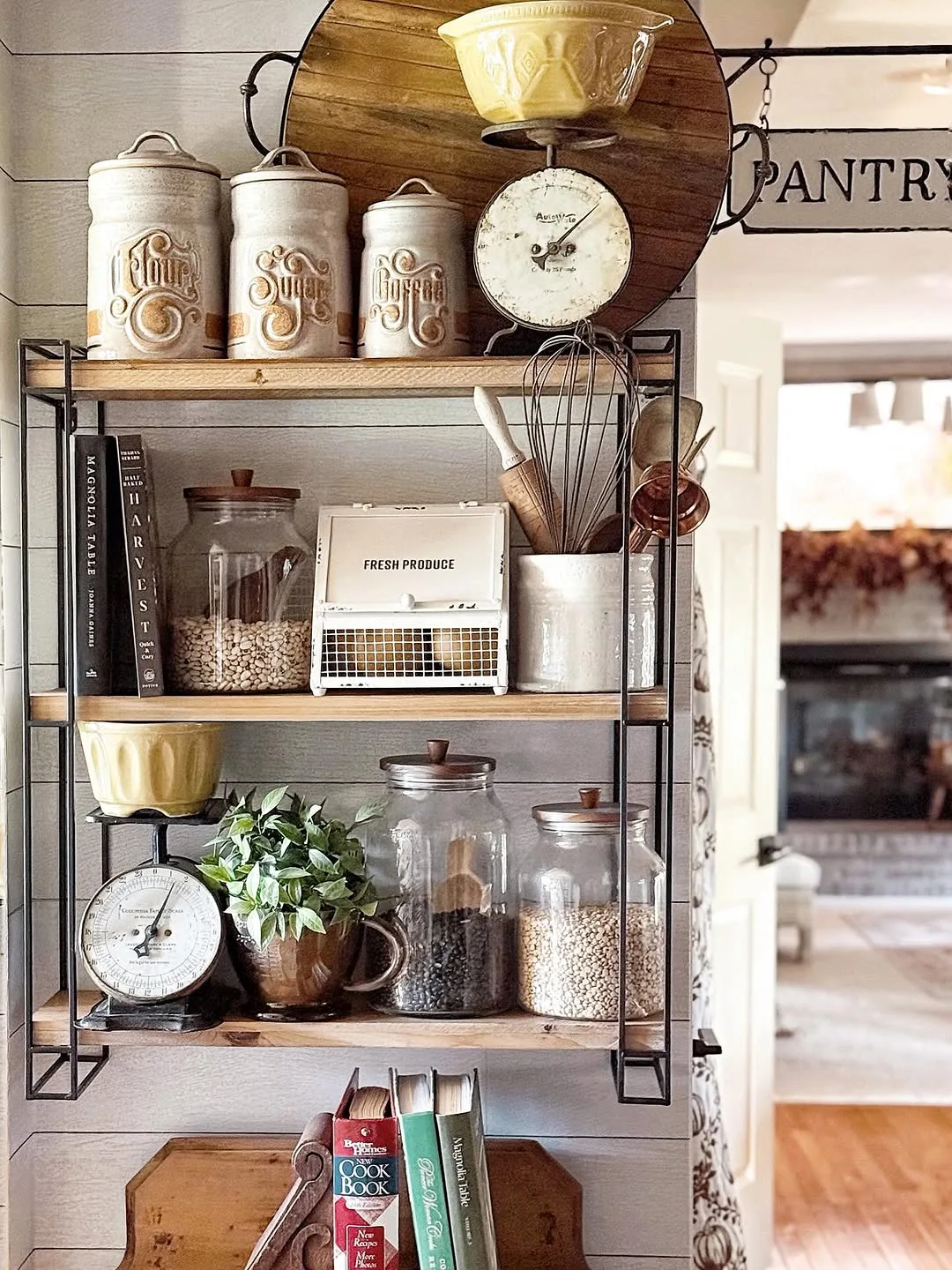
Old pieces give open shelves a character that new sets rarely match. Weathered scales, chipped enamel jugs, or a grandmother's bowls beside plain modern basics tell a story across the wall. Mixing eras also keeps shelves from looking like a shop display.
Hunt slowly at second hand shops, markets, and family cupboards, choosing pieces that still work hard. Wash finds well, check enamel and glass for cracks, and use older pieces for dry storage, fruit, or display where safety matters most.
Collectors and sentimental cooks suit this mix best, because loved pieces finally live in the open. Small budgets also gain, since second hand shelves and crocks often cost very little. Plain modern kitchens warm up fastest, gaining history without a renovation.
One cook displays her father's old bread bin beside new white canisters and a plain wooden board. Breakfast feels personal every single morning, and the bin still stores bread perfectly. Her shelves cost little yet look richer than many styled showroom kitchens.
Fragile finds suffer when pressed into daily service. Thin old glass chips, worn handles loosen, and one of a kind pieces break during busy cooking. Use sturdy vintage items for daily jobs, keep delicate pieces on the highest shelf, and photograph treasures so memories survive even if crockery does not.
Trays That Corral Small Items
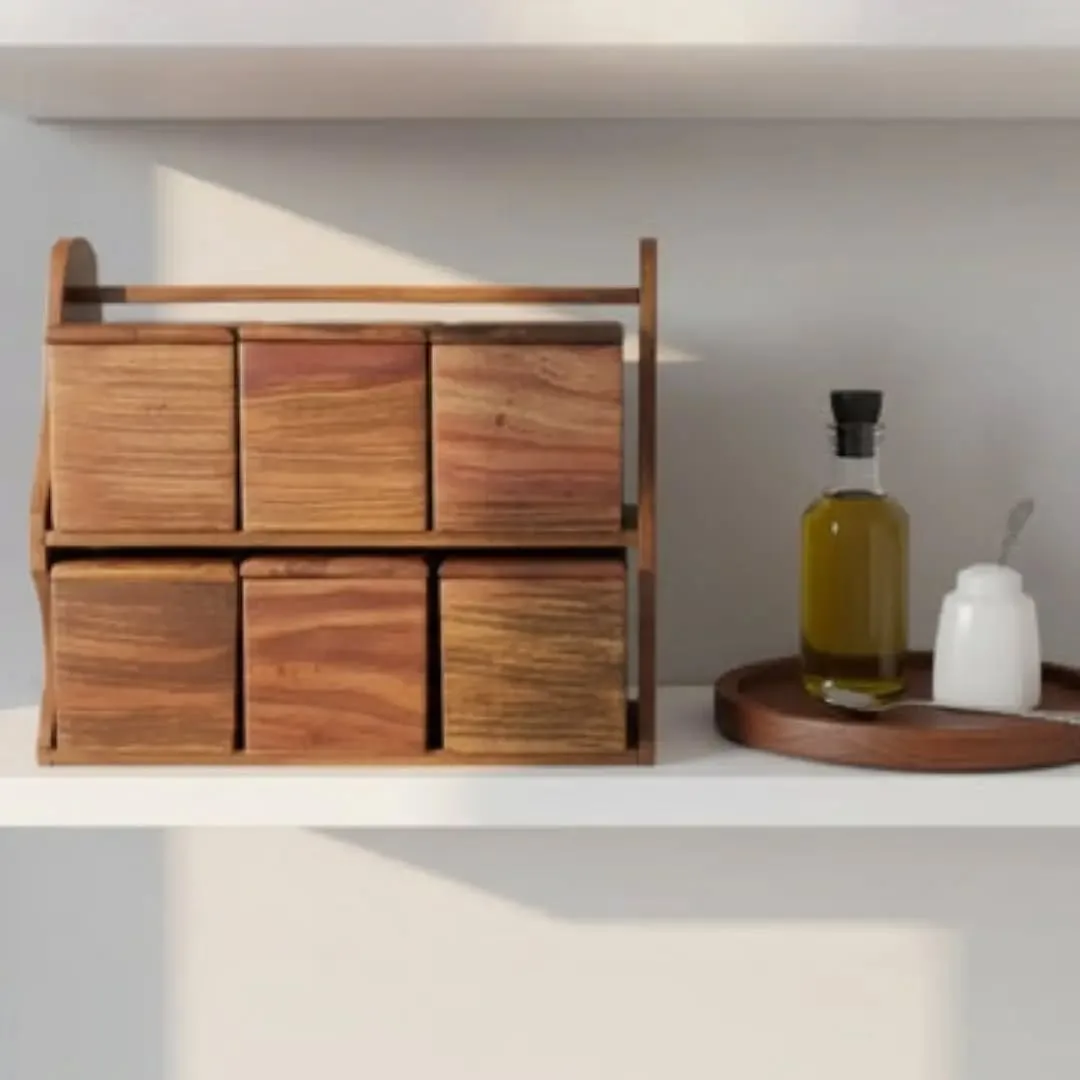
Trays gather loose small items into one movable group that looks deliberate. Oils, salt, a small plant, and a stack of coasters stop scattering across the shelf when a tray holds them. Lifting one tray also makes wiping the shelf underneath take seconds.
Choose a tray that fits your shelf depth with an inch to spare and low edges that keep bottles upright. Materials like wood, metal, or woven fibers wipe clean easily and suit most kitchens. Group only items used together, like cooking oils near the stove or tea supplies near the kettle.
Busy cooks suit trays best, because small bottles multiply around any stove. People with deep shelves also gain, since a tray pulls back items within reach. Anyone tired of rings and drips under oil bottles will appreciate the cleanup difference.
One cook set her oils, salt cellar, and pepper mill on a small wooden tray at the end of a shelf. Drips landed on wood instead of paint, the group slid aside for wiping in seconds, and her shelf stayed clean through a whole season of heavy cooking.
Oversized trays defeat the purpose when they swallow half the shelf and collect random clutter. Trays also fail when people pile items two layers deep inside them. Keep each tray to one job, edit its contents monthly, and choose the smallest tray that holds the group comfortably.
Seasonal Swaps That Refresh the Shelves
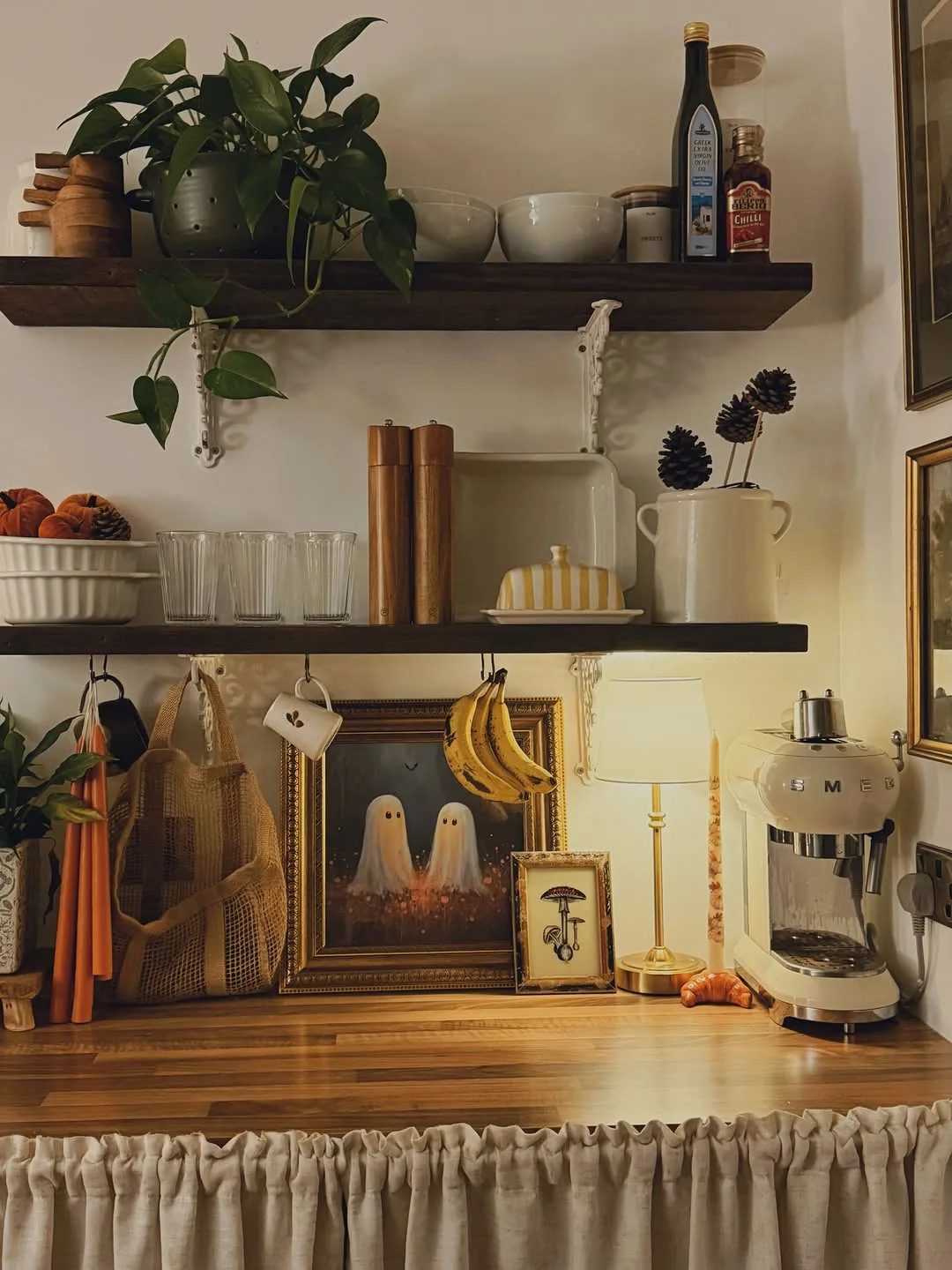
Small seasonal swaps keep shelves feeling fresh without spending or restyling everything. Bowls of lemons in summer, pinecones or oranges in winter, and a different plant each season change the mood quietly. Your eyes notice novelty even when ninety percent of the shelf stays the same.
Swap one or two items per shelf at most, such as the fruit bowl contents, a folded linen, or one colored jar. Keep swapped out pieces in one labeled box in a cupboard so changes take ten minutes. Food swaps work best because they get eaten instead of stored.
People who tire of a fixed look suit seasonal swaps best, because change arrives before boredom does. Hosts also enjoy matching shelves loosely to holidays and gatherings.
One family changes only a wooden bowl through the year, filling it with eggs in spring, peaches in summer, apples in autumn, and walnuts in winter. The ritual costs almost nothing, children watch for each change, and the whole shelf feels renewed four times a year.
Buying new decor every season fills cupboards with swapped out clutter and drains money quietly. Novelty also fades fast when everything changes at once. Limit swaps to items you eat, use, or already own, and let one small change carry the whole season.
Common Mistakes to Avoid
Overfilling shelves tops every mistake list, because people add pieces until no gap, no calm, and no easy reaching remains. Shelves meant to simplify the kitchen start creating work instead. Remove one item in five and the wall usually breathes again within minutes.
Storing rarely used items on open shelves wastes prime space and guarantees dusty regrets. Platters and gadgets touched twice a year collect grease and grime in the open air. Give daily pieces the shelves and send occasional items to closed cupboards where they stay clean.
Cleaning often gets forgotten until shelves feel sticky and jars look dull. Kitchen air carries grease that settles on everything open, especially near the stove. Wipe one shelf each week while the kettle boils, wash jars monthly, and the job never grows into a dreaded deep clean.
Weak brackets and shelves hung too high cause the dangerous mistakes. Heavy jars and stacks belong on strong fixings at comfortable heights, never above shoulder level. Check bracket screws yearly, respect the weight your wall can hold, and keep a small step stool for the top shelf instead of stretching.
Budget Friendly Open Kitchen Shelving Ideas
Start with what you already own, because most kitchens hide shelf worthy pieces inside cupboards. Gather every dish, jar, and board you own onto the counter, choose the best groups, and return the rest. Many shelves look finished after this free step alone.
Plain pine boards and simple metal brackets carry most budget friendly open kitchen shelving ideas for very little money. Hardware shops cut boards to length, and a coat of food safe oil or leftover paint finishes them kindly. Two honest boards often look better than pricey shelving units.
Second hand shops and markets sell jars, baskets, crocks, and boards for a fraction of new prices. Solid older pieces often outlast cheap new ones, and small chips hide happily in busy kitchens. Buy one piece at a time and live with it before adding more.
Spend first on the fixings, because strong brackets protect everything the shelves hold. Save on jars, trays, and decor, where looks matter more than engineering. Paint also earns its money here, since one small pot refreshes shelf boards and tired walls for very little.
Tips for Styling Open Kitchen Shelves
Begin with the shelf you use most and style it for real mornings, not for photographs. Daily dishes, mugs, and jars in easy reach will teach you what the other shelves need. Function settled first makes every later styling choice simple.
Group items in small clusters of three or five, with a little air around each cluster. Odd groupings please the eye and stop the shelf reading as one long line of clutter. Tall pieces at the back and short pieces at the front keep every item visible.
Treat open kitchen shelving ideas as a working system rather than a finished picture. Shelves serve breakfasts, baking days, and holiday cooking across the year, so they must bend with real life. Edit one shelf whenever reaching starts to feel annoying.
Wipe shelves little and often instead of waiting for a big clean. One shelf per week takes two spare minutes and keeps grease from building into a film. Clean shelves also make plain pieces look better than dusty fancy ones.
Keep a small step stool folded nearby if your top shelf sits high, and store only light, rarely used pieces up there. Daily items belong between waist and shoulder height where hands work happily. Comfort keeps systems alive long after styling fades in importance.
FAQ
How do I keep open shelves from looking messy?
Groups, gaps, and one job per shelf keep shelves looking calm. Put similar pieces together, leave real space between groups, and remove anything you have not touched in a month. A weekly two minute wipe and a monthly edit stop mess before it settles in.
What belongs on open kitchen shelves?
Everyday dishes, glasses, mugs, jars of staples, cookbooks, and a few boards belong on open shelves because hands use them constantly. Items touched twice a year gather dust in the open and belong behind doors. When in doubt, ask whether you used the piece this week.
How often do open shelves need cleaning?
Most open shelves stay fresh with a quick weekly wipe and a monthly wash of jars and pieces near the stove. Kitchens that fry food often may need wiping twice a week near the hob. Small regular cleaning always beats rare heroic scrubbing sessions.
Can open shelves work in a very small kitchen?
Yes, small kitchens often gain the most, because shelves use wall space that cupboards would fill more heavily. Keep shelves shallow, store only daily pieces, and leave generous gaps so the room feels open. One short shelf can still hold every breakfast item a household needs.
How much weight can open shelves hold?
Weight limits depend on the shelf board, the brackets, and the wall itself, so check the ratings for your fixings before loading jars and stacks. Spread heavy items across brackets rather than centering them between supports. When a shelf bows or screws feel loose, unload it and refit stronger hardware.
Where should the first open shelf go?
Place the first shelf where daily work happens, usually near the prep counter or above the space beside the stove, at a height your hands reach without stretching. Live with one shelf for a month before adding more. Early lessons about dust, reach, and habits will shape every shelf that follows.
Conclusion
Honest open kitchen shelving ideas begin with daily life rather than photographs. Dishes you use, jars you refill, and boards you chop on will always look right when they sit in calm groups with room around them. Pretty follows practical closely on a working shelf.
Choose two or three ideas from this guide and set them up properly before adding more. Small finished changes beat a whole wall attempted in one tiring weekend. Live with each change through a week of real cooking before judging it.
Shelves stay lovely because someone edits them little and often. Remove what stops earning its place, wipe away the week, and let gaps defend the calm. Ten minutes a month protects the whole system better than any styling product.
Enjoy the shelf you reach for every morning, the jar that never hides, and the mug waiting by the kettle. Open shelves reward households that keep them honest, useful, and lightly filled. Start with the lowest shelf today and let the calm spread upward.