Kitchen Countertop Decor Ideas That Keep Counters Pretty and Useful
Kitchen counters collect clutter faster than any other surface in the home. Mail lands beside the toaster, keys slide next to the fruit bowl, and soon the space where you cook feels crowded and dull. Many people clear everything away, then find the room looks bare and cold instead of calm. Cooking in a messy or empty feeling kitchen drains the pleasure out of simple meals.
Good news is that counters do not need much to look cared for. A few useful pieces, chosen on purpose and grouped with care, make the whole room feel warm while daily cooking stays easy. Smart kitchen countertop decor ideas treat beauty and function as partners, so nothing pretty blocks the work and nothing useful looks like clutter.
Inside this guide, you will find fifteen simple ways to style counters of every size, from wide farmhouse counters to narrow galley layouts. Each idea comes with practical details, a note on where it works best, one real example, and one mistake worth avoiding. Pick two or three ideas, start small, and let the rest wait.
What Are the Best Kitchen Countertop Decor Ideas for Most Kitchens?
Grouping useful pieces in a few calm zones is the answer that works in nearly every kitchen. Strong kitchen countertop decor ideas keep daily tools, food, and one or two pretty touches inside trays, bowls, and rows, leaving wide clear space for real cooking between the groups. Zones near the stove, the sink, and the drink area usually carry the whole effect.
Picture a plain counter with a wooden tray of oils beside the stove, lemons in a bowl near the window, and jars of coffee above the kettle spot. Nothing cost much, everything earns its place, and two long stretches of bare counter wait ready for chopping boards and hot pans.
Wooden Tray with Oils and Salt Near the Stove
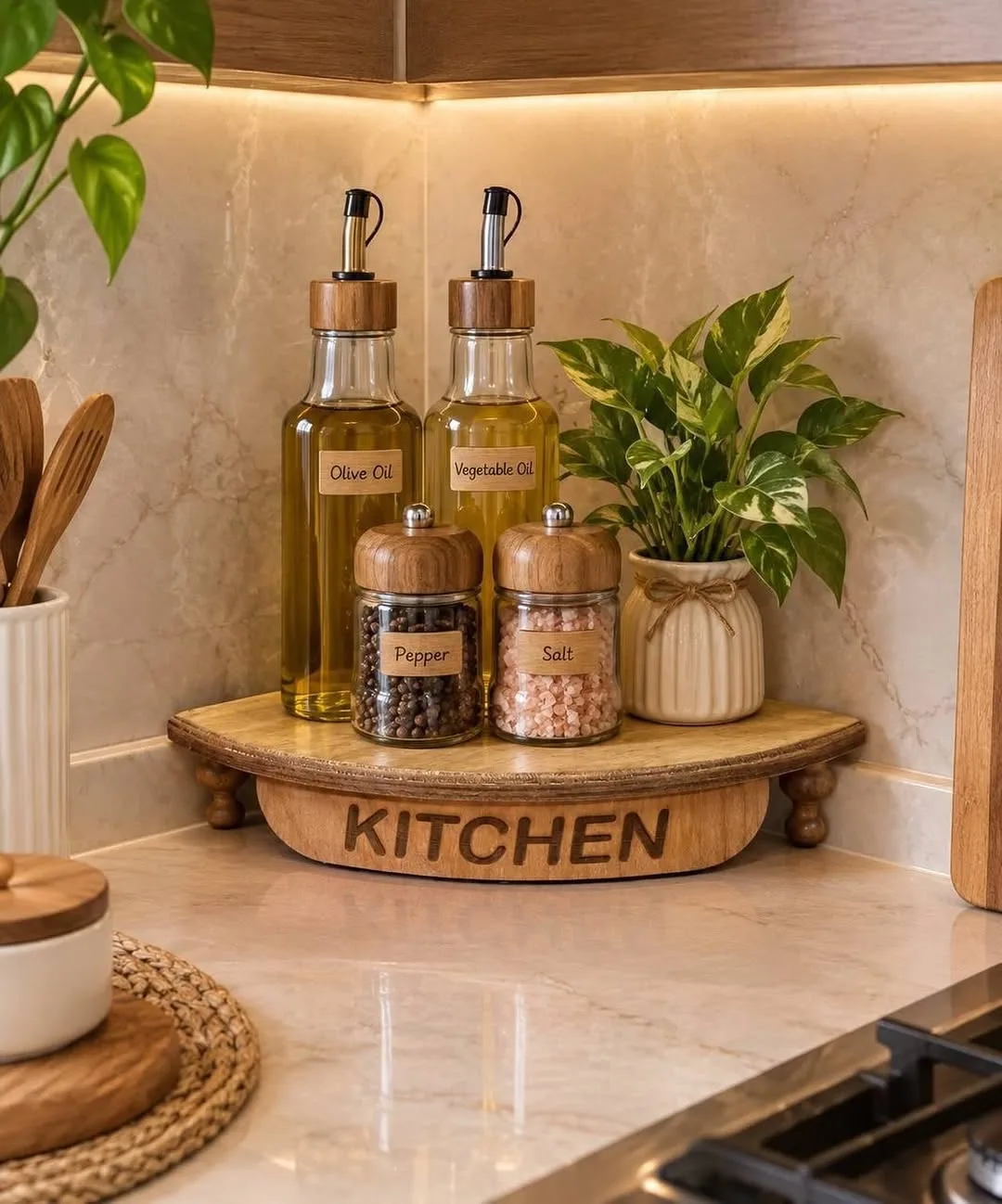
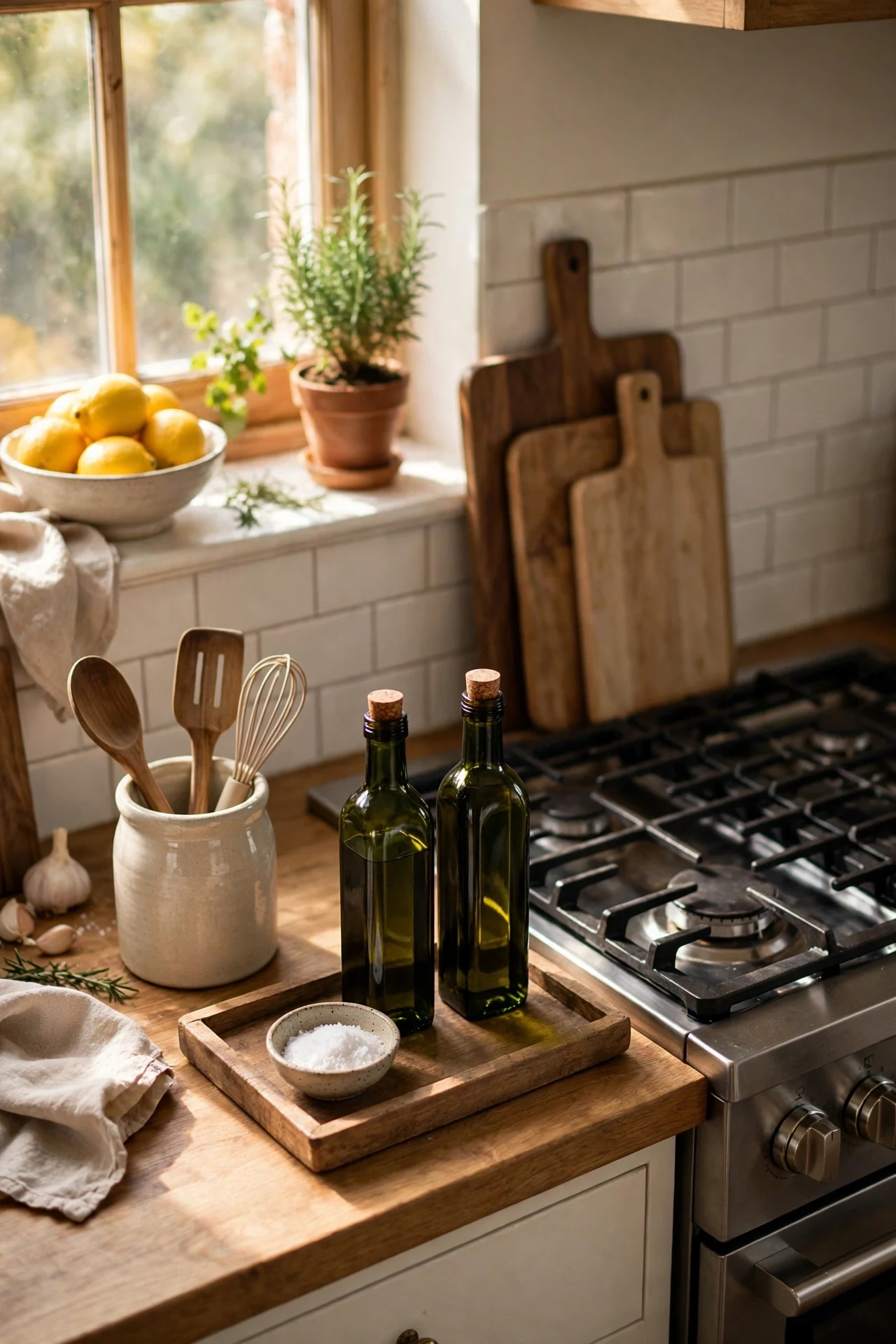
Cooking oils, salt, and a pepper mill earn their place beside the stove because you reach for them daily. Standing loose, they look like clutter and spread drips across the counter. Gathered on one wooden tray, the same bottles suddenly read as a styled corner, and the tray catches every drip before it stains the surface.
Choose a tray with low raised edges and enough room for three or four bottles, no more. Keep olive oil, one cooking oil, salt in a small bowl or cellar, and pepper where your hand lands while pans heat. Wipe the tray weekly, because oil rings build quietly and turn a pretty grouping sticky.
Busy home cooks and small kitchens suit this idea best because the tray shrinks the cooking zone into one tidy footprint. One cook replaced a scattered row of six bottles with a thrifted wooden tray holding three, and the freed counter space beside the stove fit a resting spoon and a small trivet.
Oversized trays cause the common failure here. Hosts fill every spare inch with vinegar bottles, spice jars, and decorative tins until the tray becomes a shelf that blocks wiping and crowds the burners. Edit the group monthly, return extras to a cupboard, and keep heat sensitive oils away from direct burner heat.
Ceramic Utensil Crock Beside the Cooktop
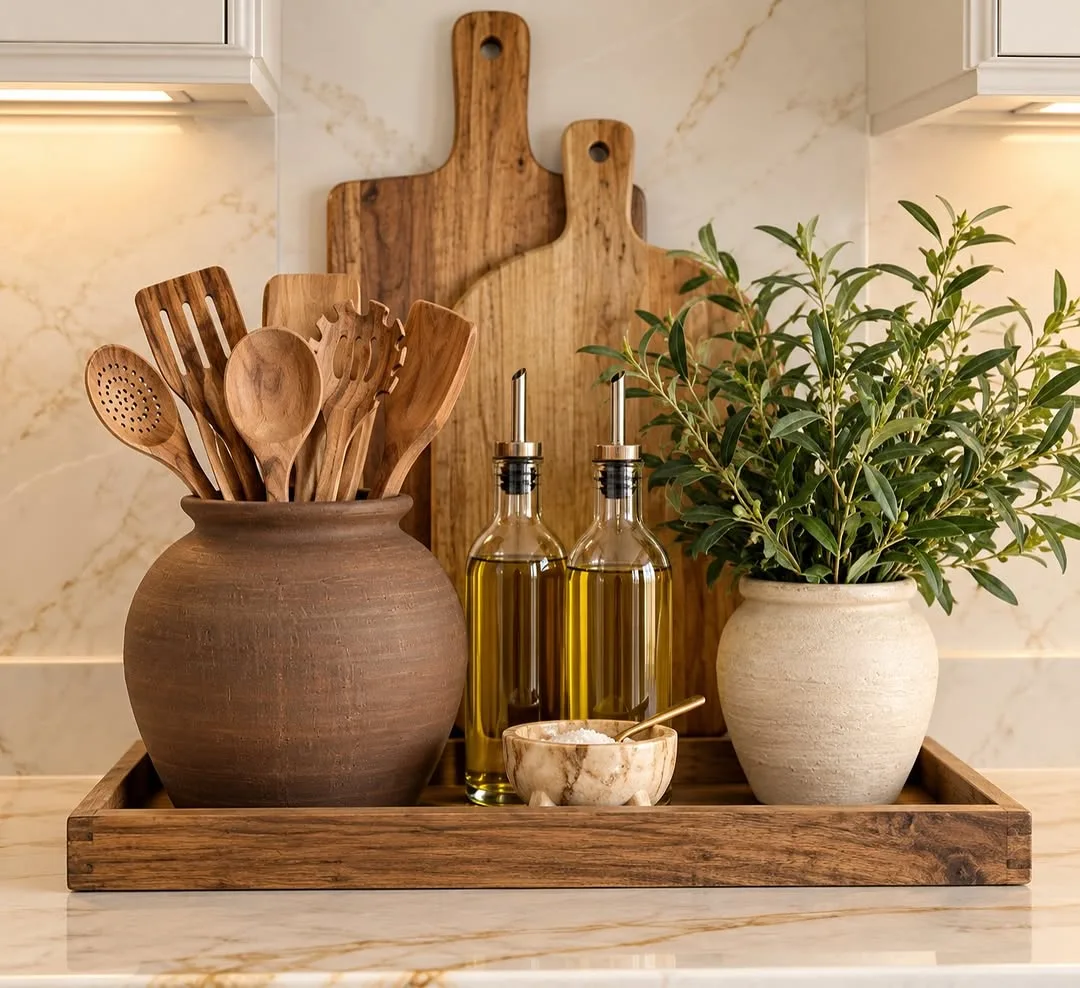
Utensils stand ready in a ceramic crock instead of hiding in a drawer you open with messy hands. Spoons, spatulas, and tongs gathered upright add height and color to the counter while real cooking gets faster. Heavy ceramic also stays put when you grab a tool in a hurry during a busy dinner.
Pick a crock wide enough for eight to ten tools with handles down and heads up, then edit ruthlessly. Keep only tools you use weekly, like a turner, a wooden spoon, a ladle, and tongs. Store the spare mashers and novelty gadgets in a drawer where they stop crowding the pieces that matter.
Daily cooks and households feeding families suit a crock best, because speed matters more than display. One parent chose a deep blue crock that matched the kitchen towels, moved seven core tools into it, and found counter prep calmer within one week since nothing hid at the back of a drawer.
Crammed crocks defeat the whole purpose. Tools jammed at angles chip ceramic edges, trap grease, and force you to pull out three pieces to reach one. Wash the crock monthly, since steam and splashes coat the inside, and let the collection shrink whenever a new tool arrives. One tool in and one tool out keeps the group honest.
Potted Herb on the Windowsill

Fresh herbs bring living color to the sink area and flavor to weeknight meals at the same time. Basil, mint, or parsley in a simple pot softens hard counter edges and makes the window spot feel tended. Snipping leaves while you cook also connects the garden to the plate in a small daily pleasure.
Set the pot where morning light lands, usually the sill above the sink, and choose a pot with drainage plus a saucer to protect the surface. Water from the bottom when the soil feels dry on top, and pinch growth tips weekly so plants stay bushy instead of tall and thin.
Gardeners, salad lovers, and cooks who buy fresh herbs often suit this idea best. One cook kept basil, mint, and chives in three matching clay pots along one sill, and the row cost less than two packets of cut herbs per month once the plants settled in and started growing well.
Neglect kills counter herbs faster than any pest. Pots forgotten during busy weeks dry out, drop leaves onto the counter, and start to look sadder than no plant at all. Start with one hardy herb, learn its water rhythm, and add a second pot only when the first one thrives.
Fruit Bowl as a Color Accent
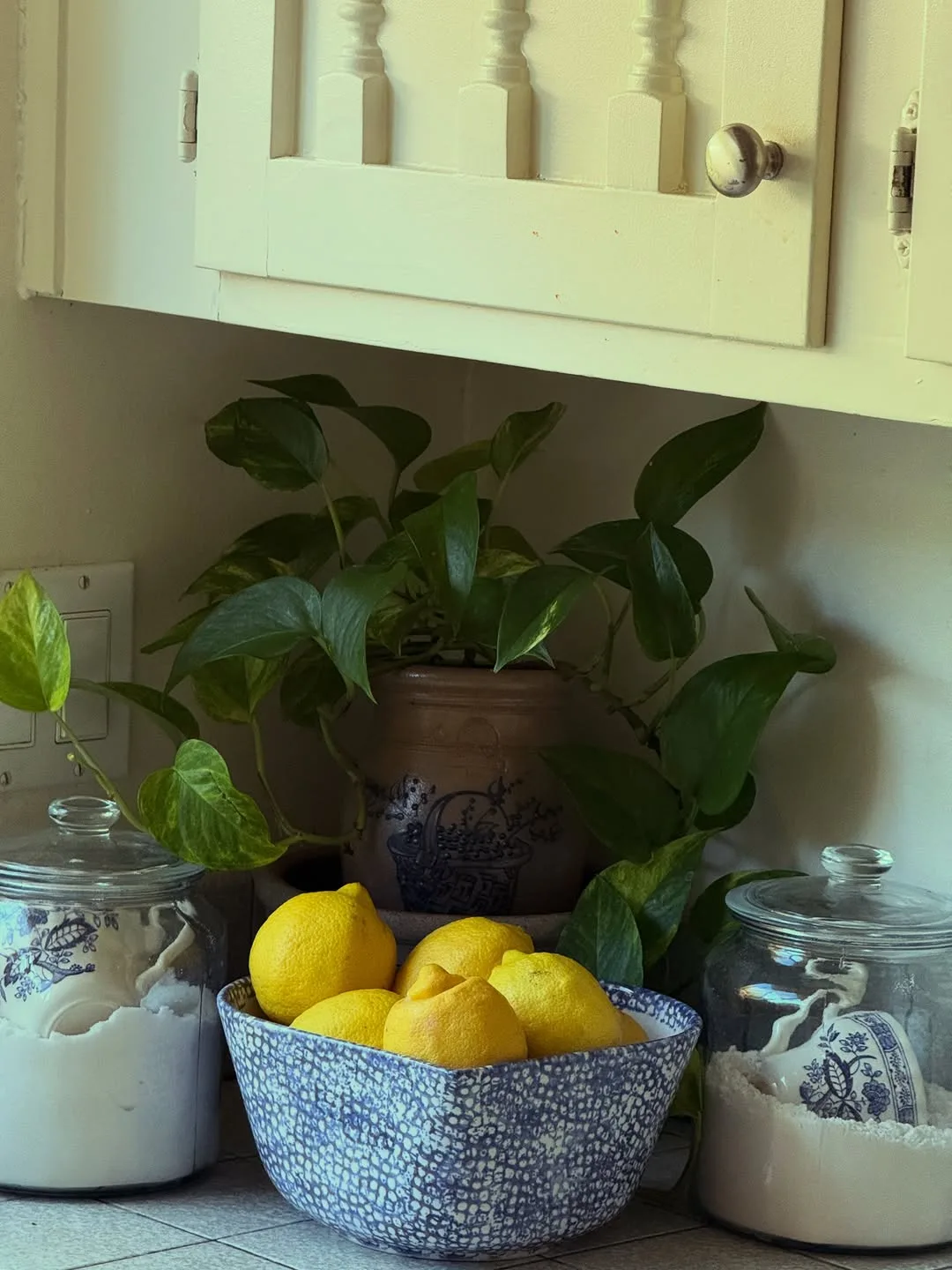
Fruit bowls do double duty because the food itself becomes the decoration. Oranges, lemons, apples, and pears bring color that changes with the seasons and the shopping list. Among simple kitchen countertop decor ideas, few beat a bowl that looks generous on Monday and feeds people all week without any styling effort.
Place the bowl where guests and family pass often, like the end of an island or beside the coffee maker, so fruit gets eaten before it softens. Pick a bowl with some weight and a wide mouth, ceramic, wood, or woven wire, and fill it two thirds full for a relaxed look.
Families with kids and hosts who entertain often suit a fruit bowl best because the display renews itself. One host keeps lemons and limes in a white bowl all summer for drinks and cooking, then swaps to pears and pomegranates when the weather cools and guests gather more indoors.
Overfilled bowls bruise the fruit at the bottom and invite fruit flies within days. Bananas also speed ripening of nearby fruit, so give them their own hook or small plate. Check the bowl every few days, move soft pieces to the fridge, and wash the bowl weekly with warm soapy water.
Cookbook Stand with a Favorite Cookbook
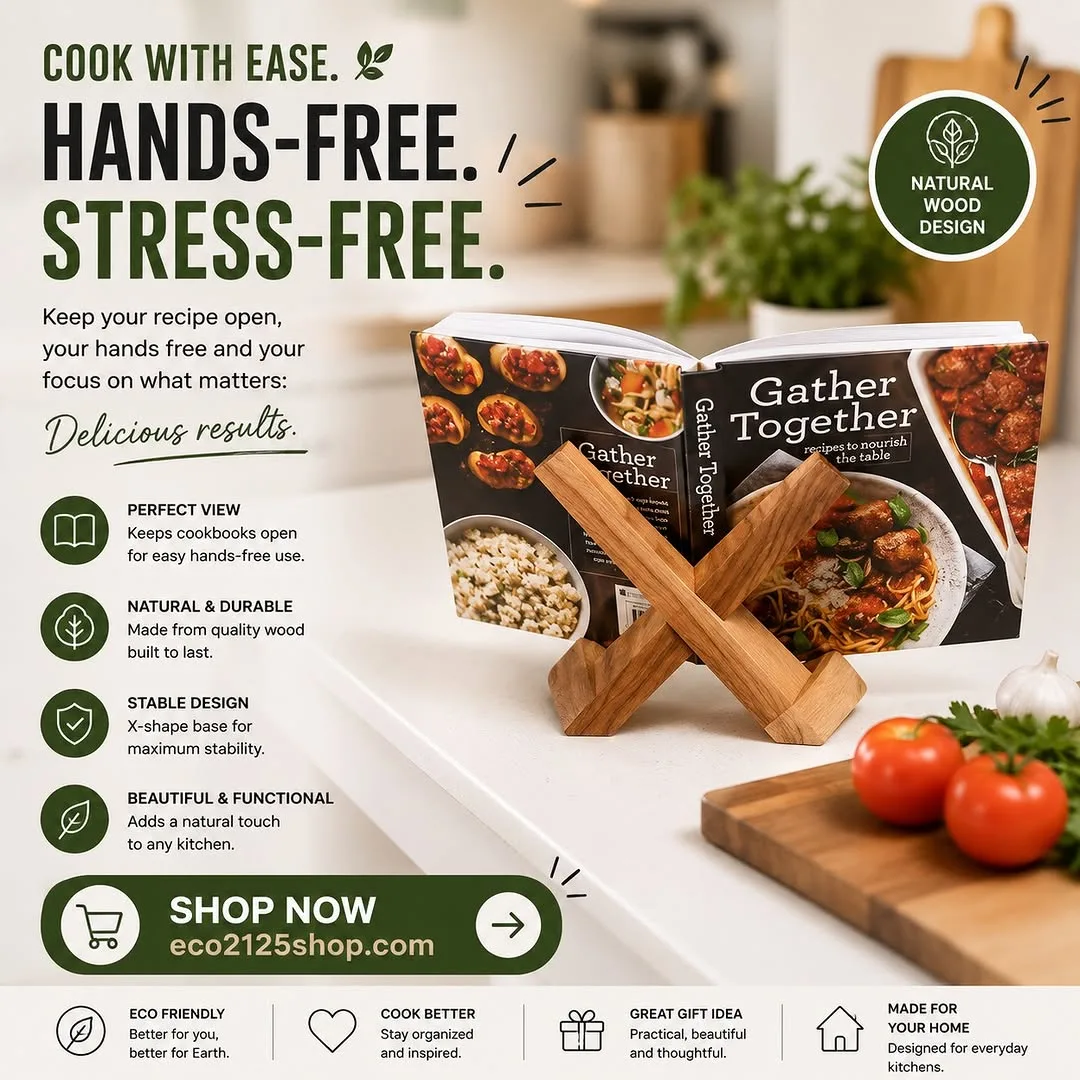
Cookbooks deserve better than a cupboard shelf where nobody sees their covers. One favorite book on a stand adds color, pattern, and personality to a quiet stretch of counter. Open pages also invite browsing while water boils, and the stand keeps recipes at eye level during cooking.
Prop the stand near your main prep zone but away from direct splashes and steam. Rotate the book every few weeks, or open it to a seasonal page with a photo you love. Wooden and metal stands both work, so match the finish to your cabinet handles for a calm link.
Bakers, collectors, and cooks learning new cuisines suit this idea best. One home baker displays a worn family cookbook with handwritten notes in the margins, and guests always stop to read the comments while dinner finishes. The book starts more conversations than any bought decoration in the room.
Precious first editions and signed copies belong somewhere safer. Counter stands expose pages to flour dust, oil mist, and sunlight that fades covers over months. Display sturdy everyday books on the counter, keep treasures on a shelf, and wipe the stand when you clean the counters each week.
Glass Jars for Coffee and Tea
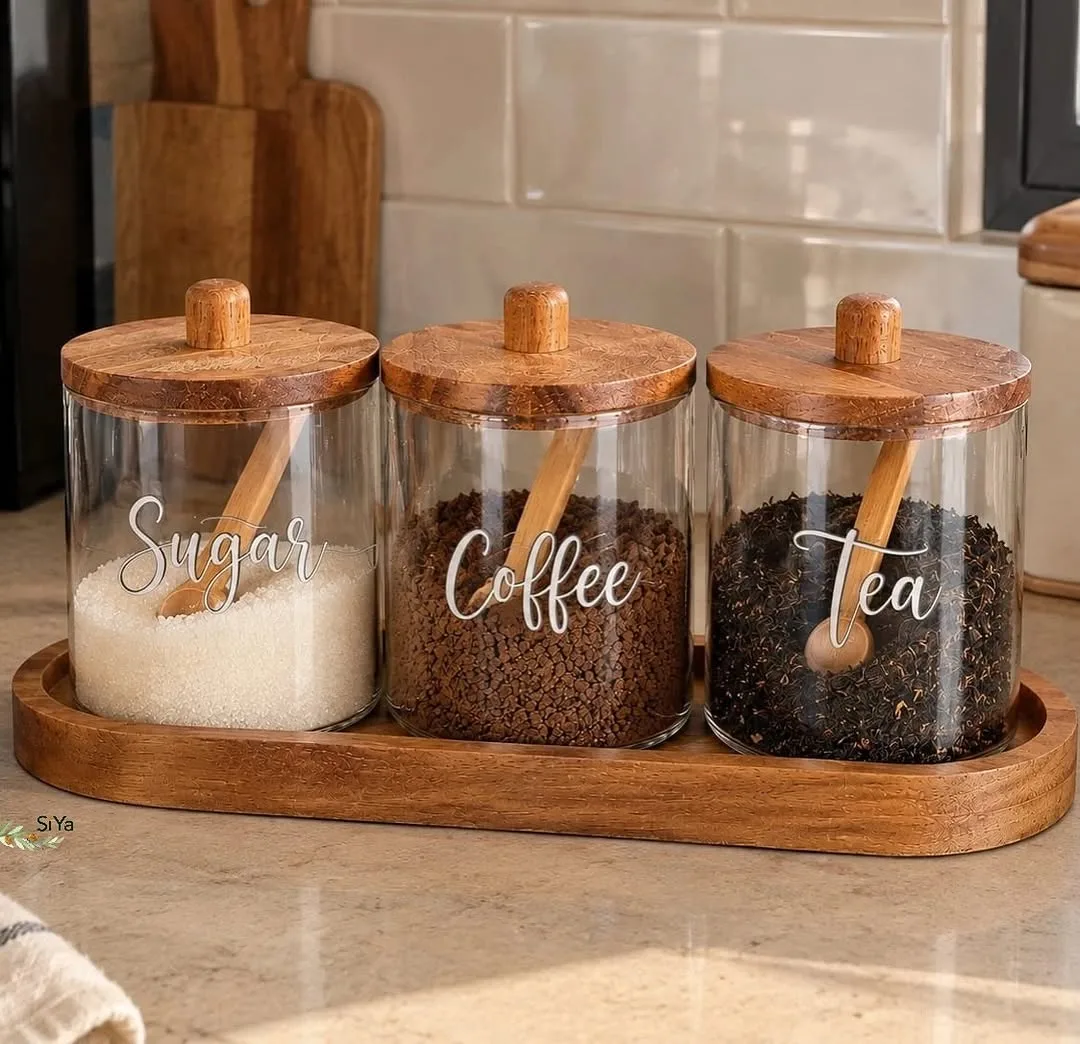
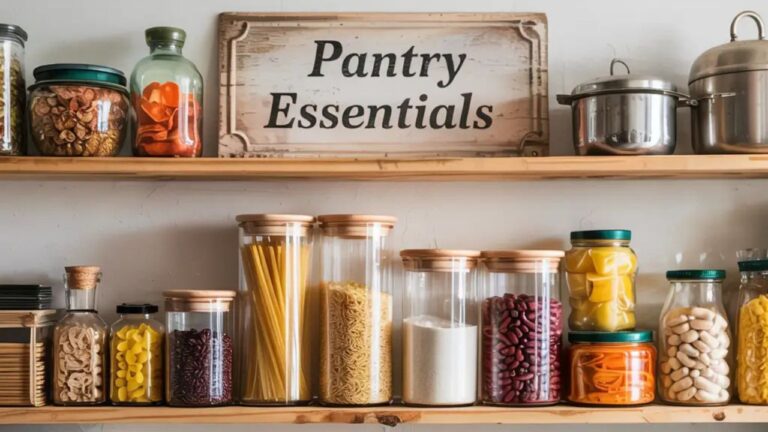
Glass jars turn daily staples into a calm display of texture and color. Coffee beans, loose tea, sugar, and oats look neat behind glass, and you see at a glance when supplies run low. Matching jars also end the visual noise of torn bags and mismatched boxes stuffed beside appliances.
Line up three or four jars of similar height on one short stretch of counter near the drink station. Choose lids in one finish, like wood or brushed metal, and fill jars only with things you use weekly. Label the backs if family members mix up sugar and salt lookalikes.
Coffee drinkers and tea lovers suit jars best because the display sits exactly where the morning routine happens. One couple decanted beans, filters, and sugar into three jars beside their machine, and the small change made rushed weekday mornings feel orderly before the first cup even poured.
Sunlight and steam quietly spoil jar contents. Coffee beans stale faster in bright light, and sugar clumps near a steamy kettle or dishwasher vent. Keep jars on the shaded side of the counter, seal lids firmly, and wash jars fully dry before refilling so old crumbs never linger.
Soap Dispenser and Brush Set by the Sink

Sink zones look messy fastest because bottles, sponges, and brushes pile up around the taps. One refillable dispenser, a brush with a handle, and a small tray or dish pull the whole area into order. Matching pieces turn a chore corner into a spot that looks planned and calm.
Stand the dispenser and brush on a narrow tray or a small ceramic dish that catches drips and protects the counter from constant water. Pick a brush with replaceable heads and a dispenser with a pump that works one handed. Keep one folded cloth nearby in a color that suits the room.
Households washing dishes by hand suit this set best, though any sink benefits from fewer plastic bottles. One family replaced three supermarket bottles with a glass dispenser, a wooden brush, and a stoneware dish, and the sink corner finally matched the care they had given the rest of the kitchen.
Standing water ruins this idea quietly. Trays left wet grow slippery film, brush heads sour, and wooden handles split over time. Empty and dry the tray twice a week, stand the brush bristles up to drain, and replace sponges on a schedule instead of waiting for smells to decide.
Cutting Boards Layered Against the Backsplash
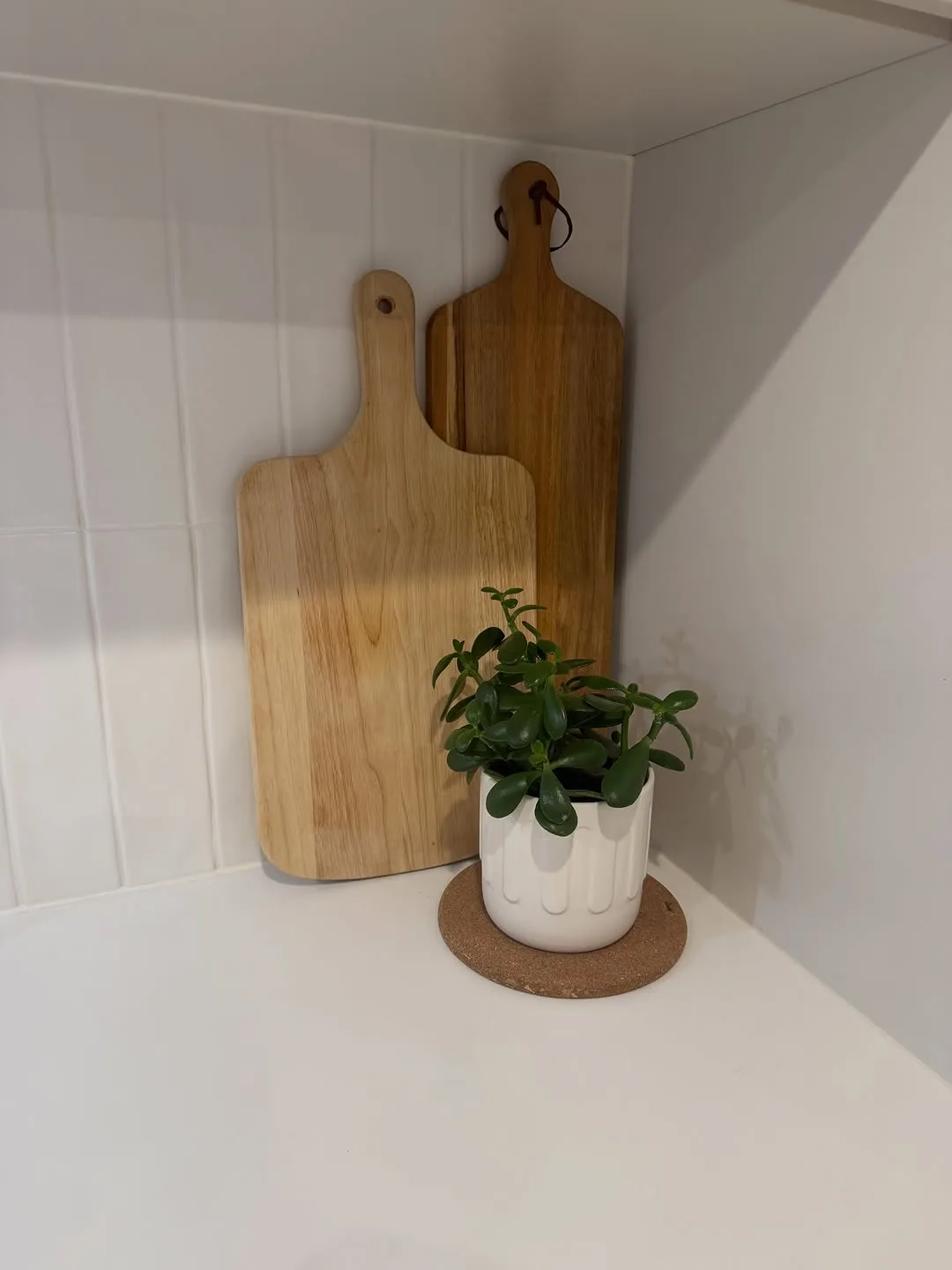
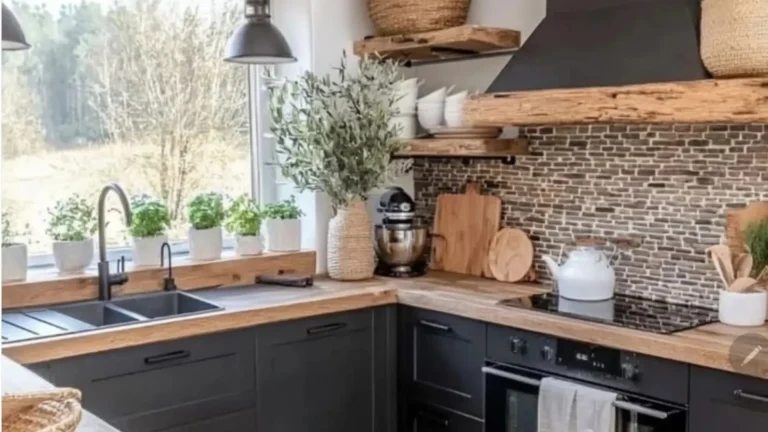
Wooden cutting boards earn counter space because you use them daily, yet their warm grain also works as decor. Leaning two or three boards against the backsplash adds height and texture behind the prep zone. Boards stored upright dry fully between uses, which keeps them in better shape than flat stacks.
Lean the largest board at the back, a medium one in front, and keep the smallest within easy reach for quick jobs like lemon halves and garlic. Choose boards with varied tones for depth, and leave air space behind them so moisture escapes. Slide them aside in seconds when you wipe counters.
Cooks who chop daily and kitchens with plain backsplashes suit layered boards best. One cook paired a dark walnut board from a market with a pale everyday board, and the simple pair warmed up white tiles more than the framed print that hung there before ever did. Guests often ask about the walnut grain.
Boards used for raw meat need stricter care than display allows. Keep one plastic board for poultry and fish inside a cupboard, wash wooden boards promptly, and oil them monthly so cracks never open. Rotate which board stands in front so sunlight and steam wear them evenly across the year.
Cake Stand for Fruit and Onions
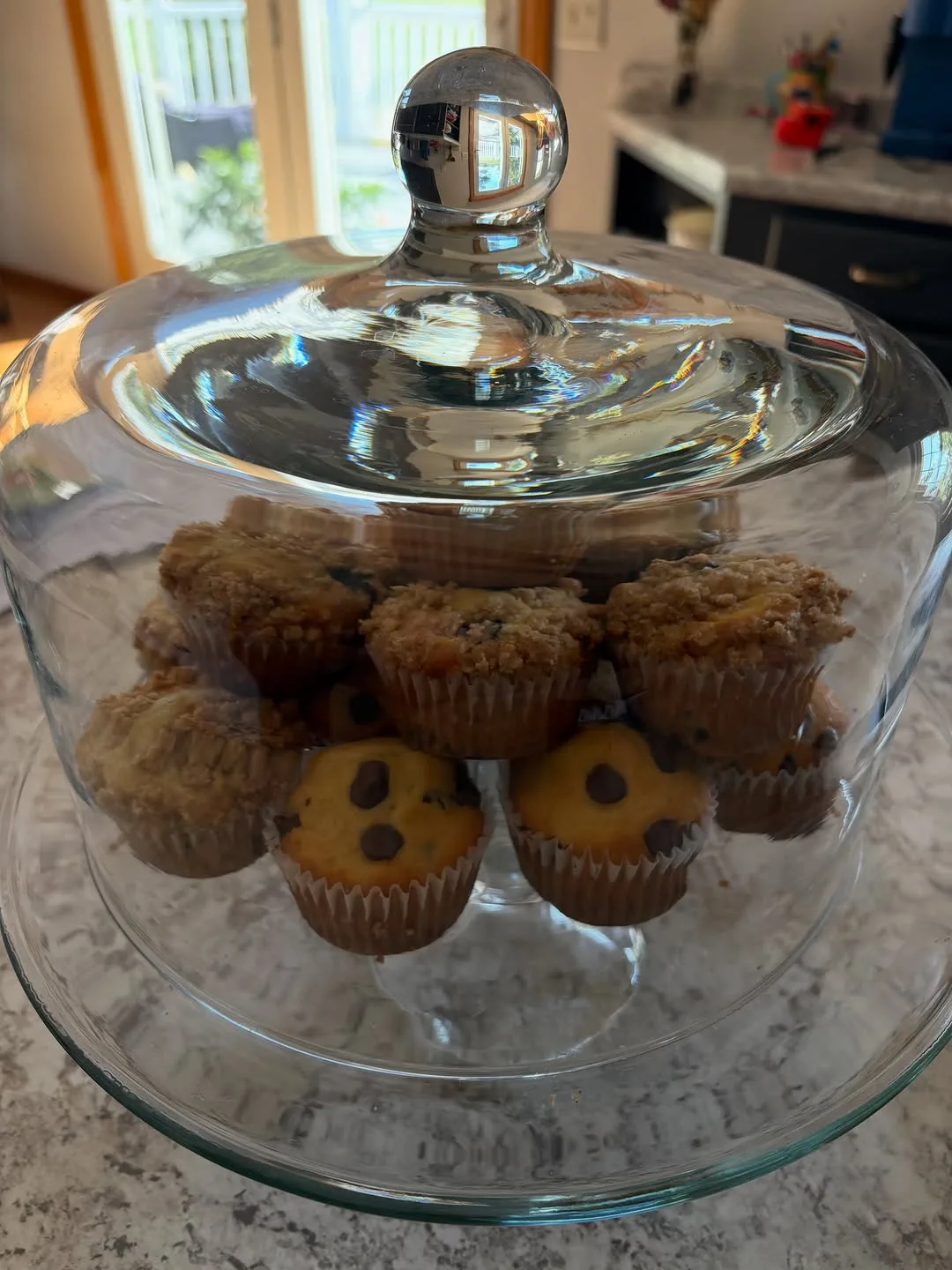
Raised stands add height to flat counters and turn ordinary food into a small display. Cake stands hold fruit, onions, garlic, or baked goods with a sense of occasion that a plain bowl cannot match. Vertical storage also frees work space below, which makes stands one of the hardest working kitchen countertop decor ideas for small kitchens.
Use the stand where its contents get eaten or cooked within days, like beside the stove for onions and garlic or near the door for grab and go fruit. Glass domes suit cakes and muffins, while open stands suit produce that needs air. Keep the stand light enough to move for cleaning.
Small kitchens and bakers suit stands best because height replaces footprint. One baker keeps muffins under a glass dome on a marble stand, and breakfast guests help themselves without opening cupboards or asking where anything hides. Weekend baking became a small ritual that the whole household now expects.
Heavy stands stored fully loaded become a hazard when you slide them for cleaning. Chips and cracks also spread fast once a rim knocks against tiles or taps. Empty the stand before moving it, wash it by hand, and skip stands with wobbly stems that rock under uneven loads.
Small Lamp in a Dark Corner
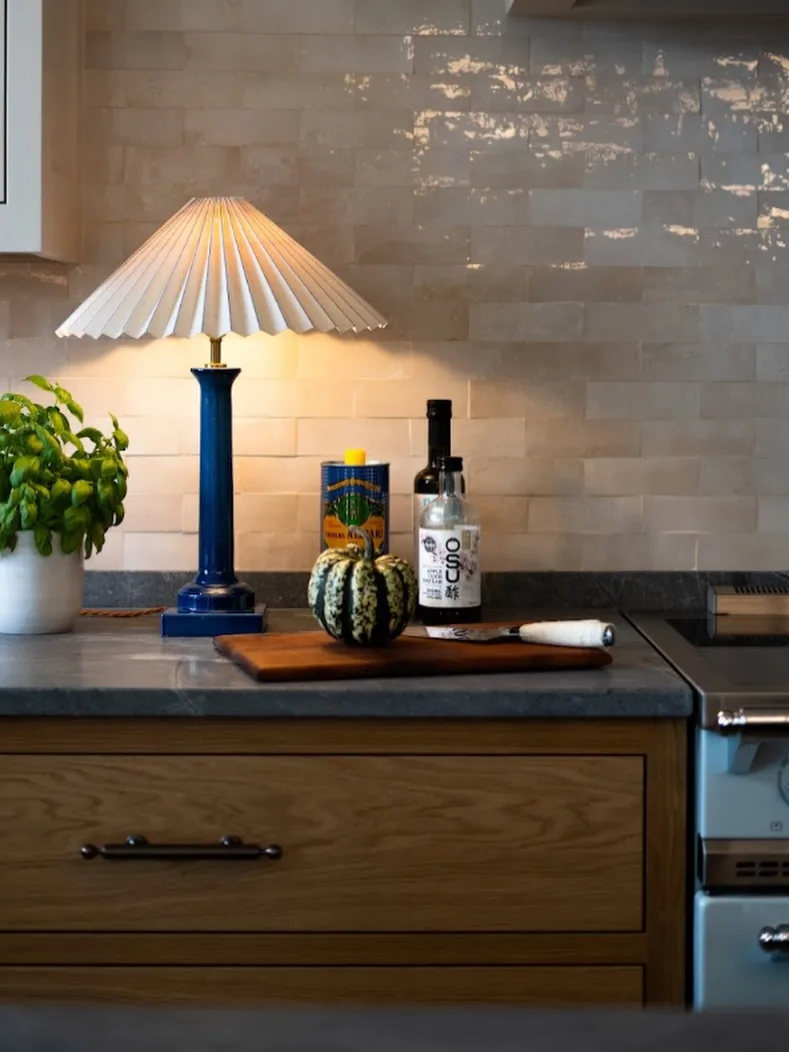
Corners far from windows and ceiling lights often sit in shadow all day, and everything placed there looks dull. One small lamp warms that dead zone, pools light over nearby objects, and makes evening kitchen time feel gentle. Lamp light also flatters wood, stone, and plants better than overhead bulbs.
Pick a lamp with a small base, like a pharmacy style lamp, a ceramic mini lamp, or a rechargeable model where sockets are scarce. Keep the shade at or below cabinet height so doors open freely. Warm bulbs around the color of candlelight flatter food and faces far better than blue white light.
Evening cooks and homes where the kitchen doubles as a gathering spot suit a counter lamp best. One family added a small brass lamp beside their cookbook stand, and the corner became the favorite place to read recipes, charge phones, and talk while dinner simmered on slow nights.
Cords cause the real trouble with counter lamps. Loose cords trail through water near sinks and across hot zones near stoves, where they melt or trip hands carrying pans. Route cords tight against the backsplash, keep lamps well away from the sink and burners, and switch them off during deep cleaning.
Stoneware Mixing Bowl on Display
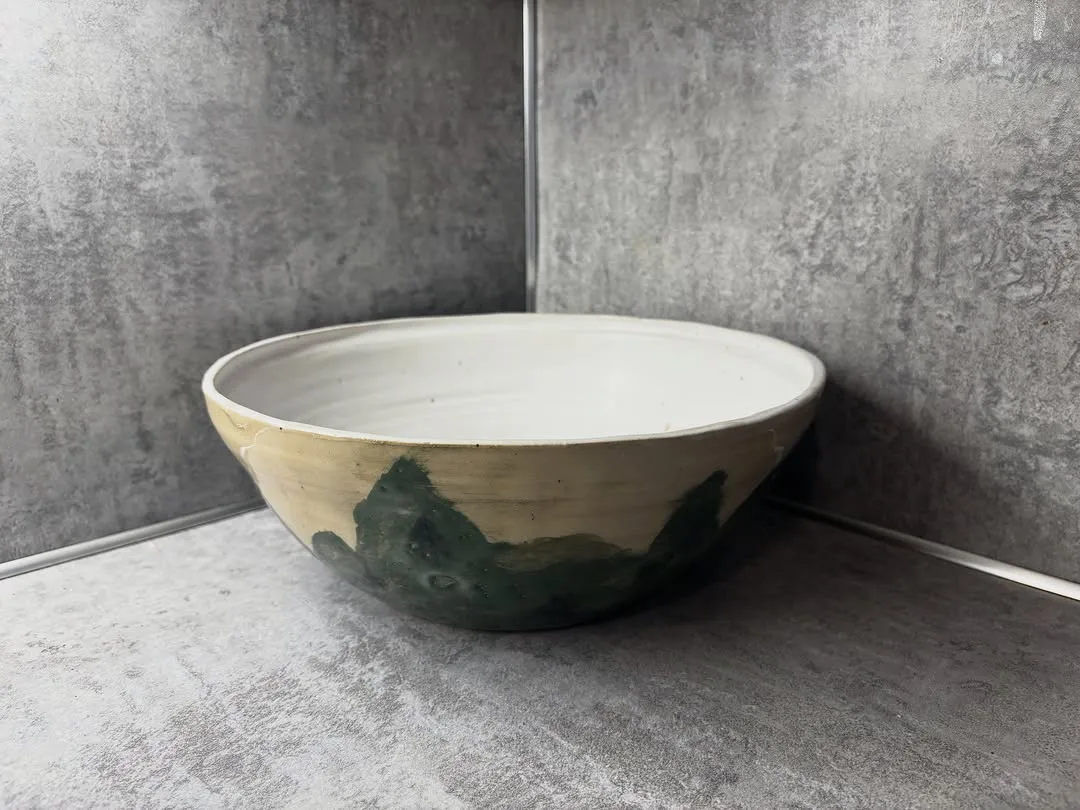
Bowls with good shape and glaze deserve daylight instead of a dark cupboard. One large stoneware mixing bowl on the counter holds fruit, bread rolls, or salad at serving time and rests as a quiet centerpiece between meals. Handmade pieces especially carry marks and color that factory decor rarely matches.
Rest the bowl on a folded linen or a small wooden board to protect both the glaze and the counter from scratches. Choose one bowl with real presence, wide, heavy, and colored to suit your cabinets. Fill it loosely when in use and leave it empty without guilt between big meals.
Potters, market shoppers, and hosts who serve family style suit a display bowl best. One cook bought a speckled stoneware bowl at a craft fair, and it now holds lemons on weekdays and warm rolls whenever friends come for soup. Compliments arrive weekly, and the bowl never sits idle long.
Chips multiply when a display bowl becomes a drop zone for keys, coins, and phone chargers. Metal on glaze leaves grey marks and tiny cracks that grow with every knock. Give keys a hook by the door instead, wash the bowl with soft cloths, and keep it for food and gentle duties.
Matching Canisters in a Neat Row
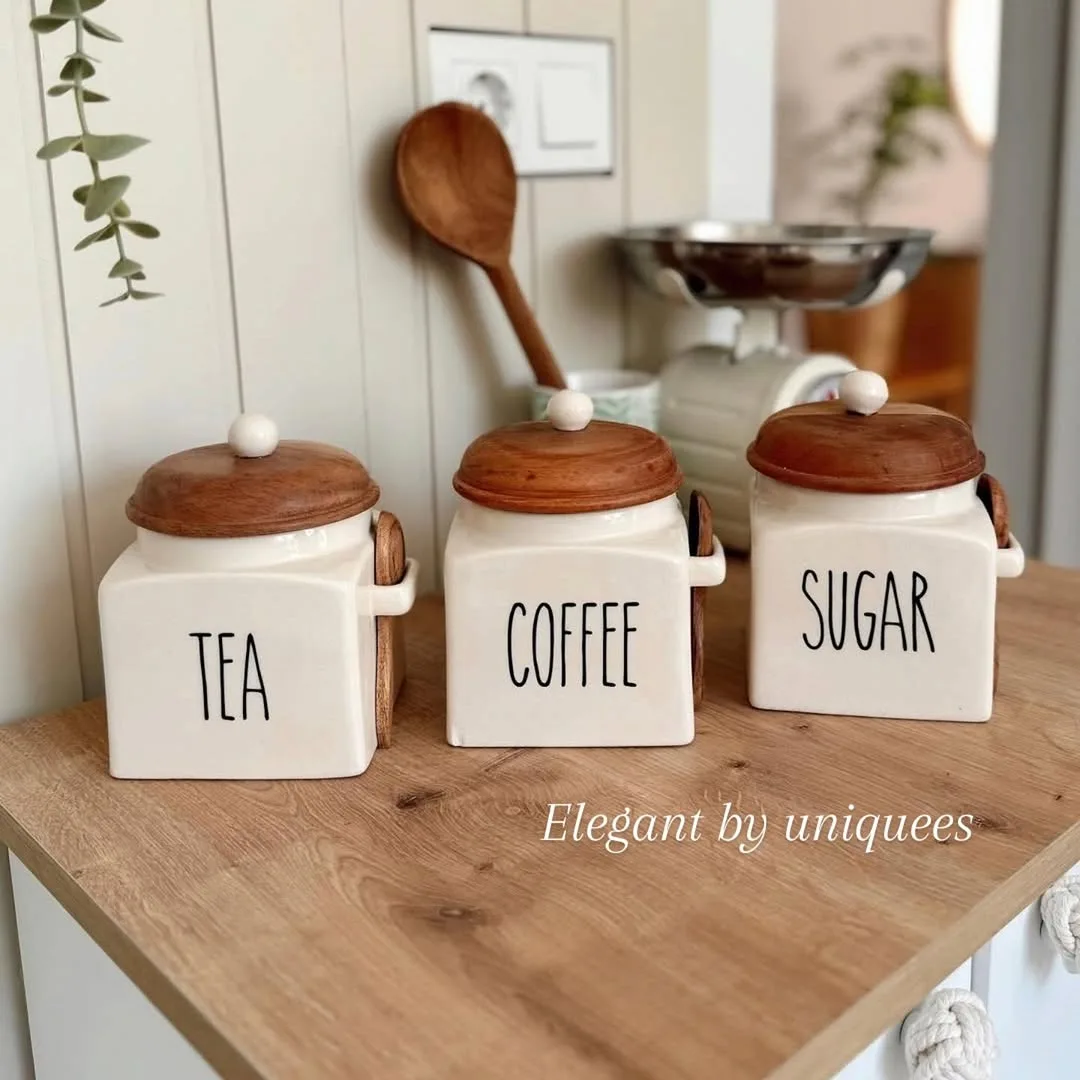
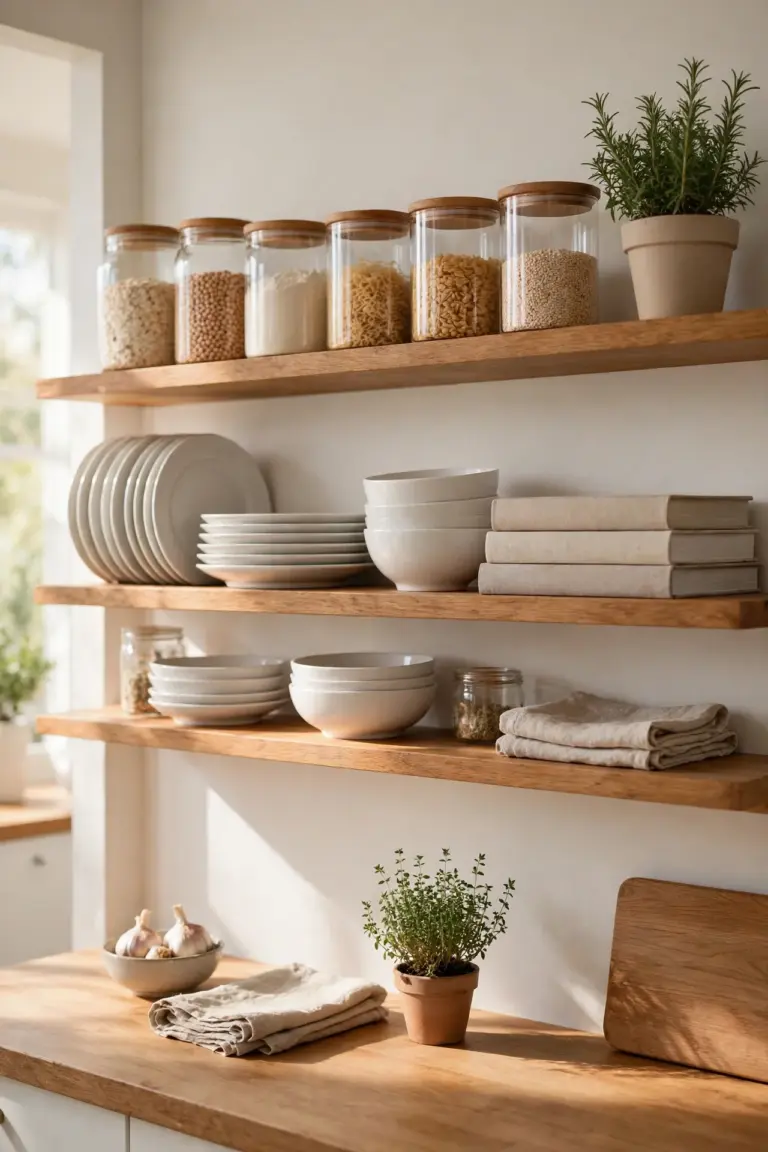
Canisters bring order to the staples that otherwise sprawl in bags and boxes across cupboards and counters. Flour, sugar, rice, and pasta in matching containers create a calm rhythm along the backsplash. Uniform shapes also stack visual weight evenly, so the counter feels stocked without feeling busy or random.
Group three or four canisters in one row near your baking or prep zone, tallest at the back if sizes vary. Choose one material across the set, like ceramic, glass, or metal with matching lids, and keep contents to staples you refill monthly. Leave clear counter in front for actual work.
Home bakers and busy breakfast households suit canisters best because daily scooping stays fast and tidy. One family swapped five torn bags for four white canisters with wooden lids, and cereal, flour, sugar, and oats finally had fixed homes that younger kids could manage without spills across the floor.
Seals decide whether canisters protect food or betray it. Loose lids let flour stale and invite pantry pests, especially in warm months. Test seals before buying, wash and dry canisters fully between refills, and date the bottoms with a pencil note when you store staples longer than a month.
Woven Basket for Bread
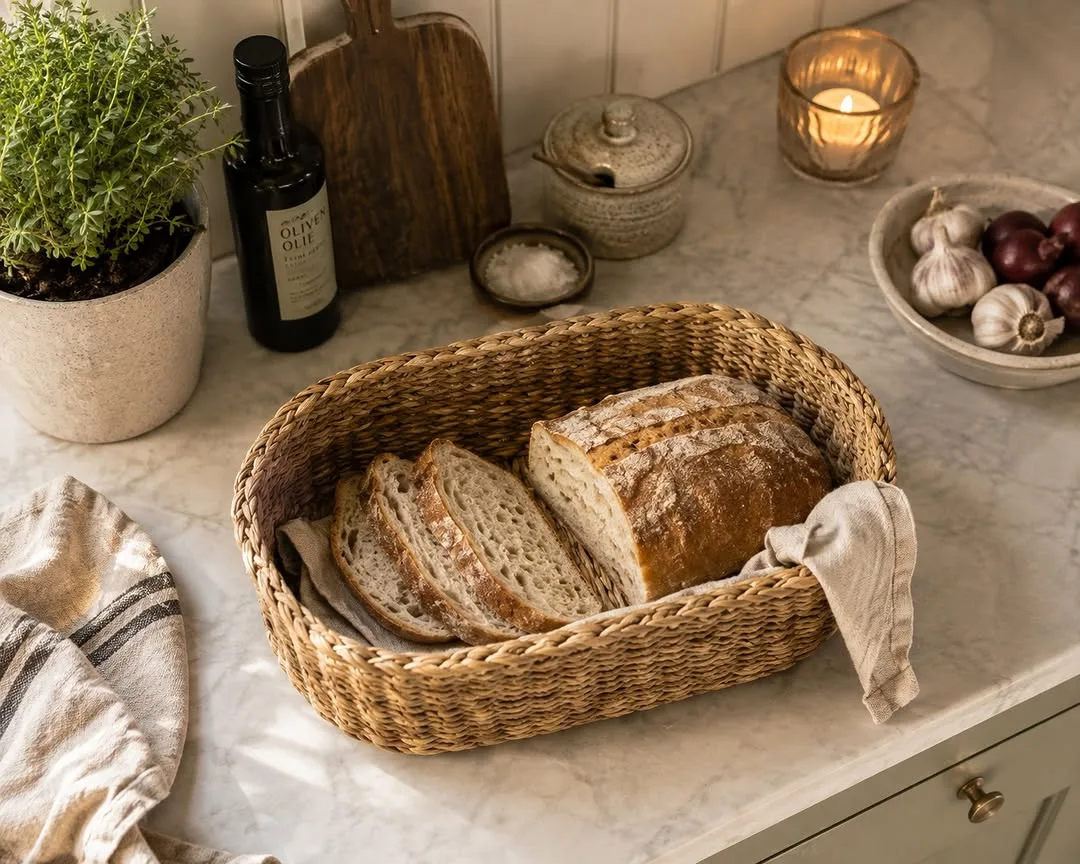
Bread left in plastic bags looks like clutter even on a clean counter. One woven basket corrals loaves, rolls, and wraps into a warm textured bundle that suits almost any kitchen style. Breathable fibers also treat crusts kindly, so bread keeps its bite longer than it does sealed in plastic.
Tuck a clean cotton or linen cloth inside the basket and fold it over the bread to keep dust off while air still moves. Size the basket to your real habit, one loaf plus rolls for most homes, and set it near the toaster or board where breakfast happens.
Breakfast households and bakery fans suit a bread basket best. One dad keeps sourdough, bagels, and tortillas in one wide basket beside the coffee station, and sleepy teenagers now build their own breakfasts without opening every cupboard in search of food during the early morning rush before school.
Crumbs gather in woven fibers and draw ants if the basket never gets cleaned. Shake the basket outside weekly, wash the cloth often, and never store bread beside the stove where heat dries loaves within a day. Stale pieces belong in a freezer bag, not aging slowly in the basket.
Vase with Fresh or Dried Stems
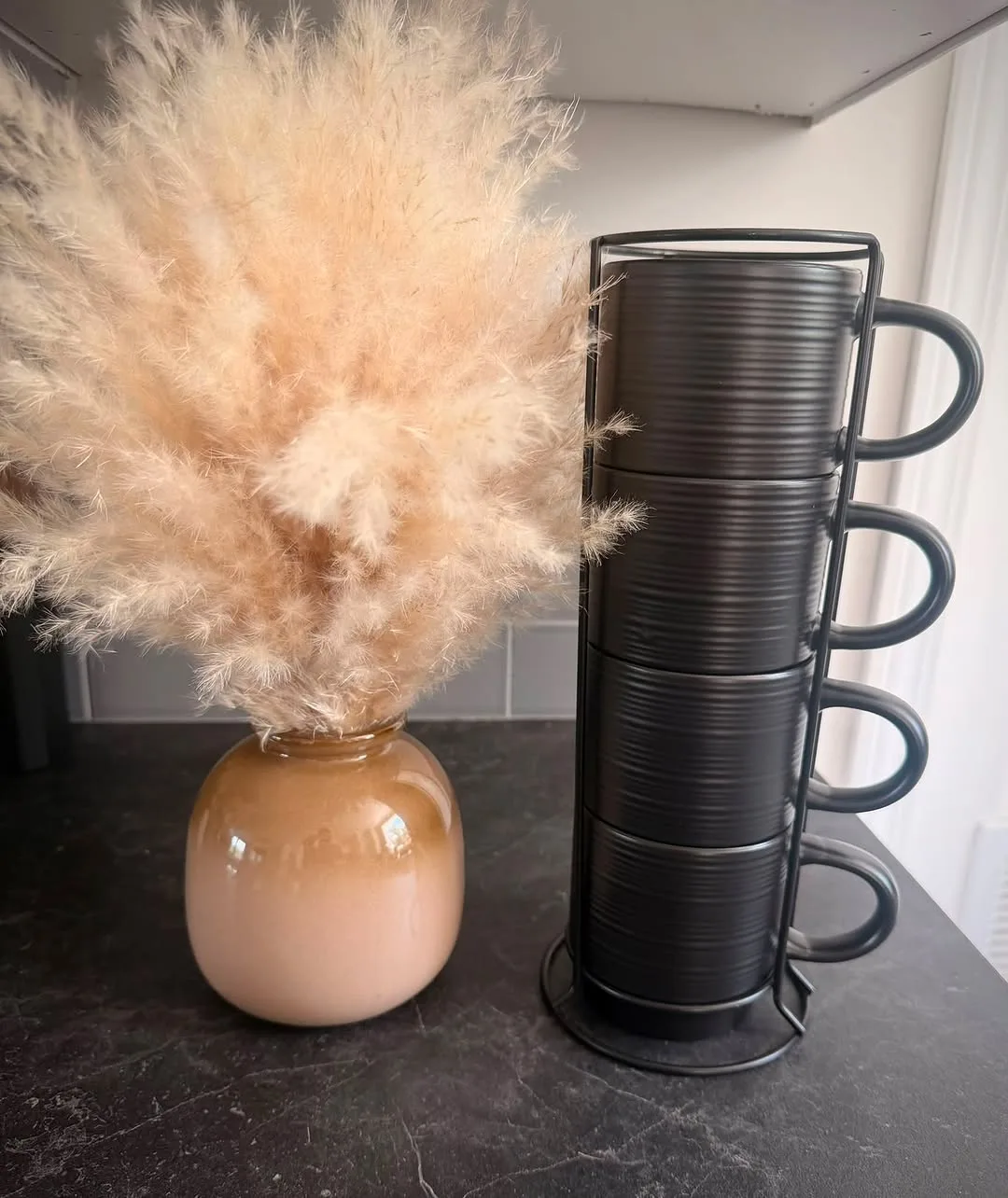
Flowers soften the hardest working room in the house. One vase of fresh stems, dried grasses, or eucalyptus lifts the mood of the whole counter line for the price of a coffee. Among cheerful kitchen countertop decor ideas, a vase asks the least space and gives back the most color per inch.
Keep the vase small and heavy so it never tips, and place it where it escapes splash zones, like beside the window or at the end of a run. Trim stems short enough to clear cabinet doors above. Fresh stems need water changes every two days, while dried stems only need dusting.
Hosts, garden owners, and anyone who buys market flowers suit a counter vase best. One gardener fills a cream jug with whatever blooms that week, dahlias in summer and branches of berries in winter, and the counter always shows the season without a single shopping trip for decor.
Tall arrangements cause the everyday failures here. Stems block cabinet doors, petals drop into food prep, and vases crowd the very space they meant to cheer. Keep arrangements below cabinet height, move the vase before big cooking sessions, and compost wilting stems early instead of nursing a sad display.
Coffee Station Tray with Mugs
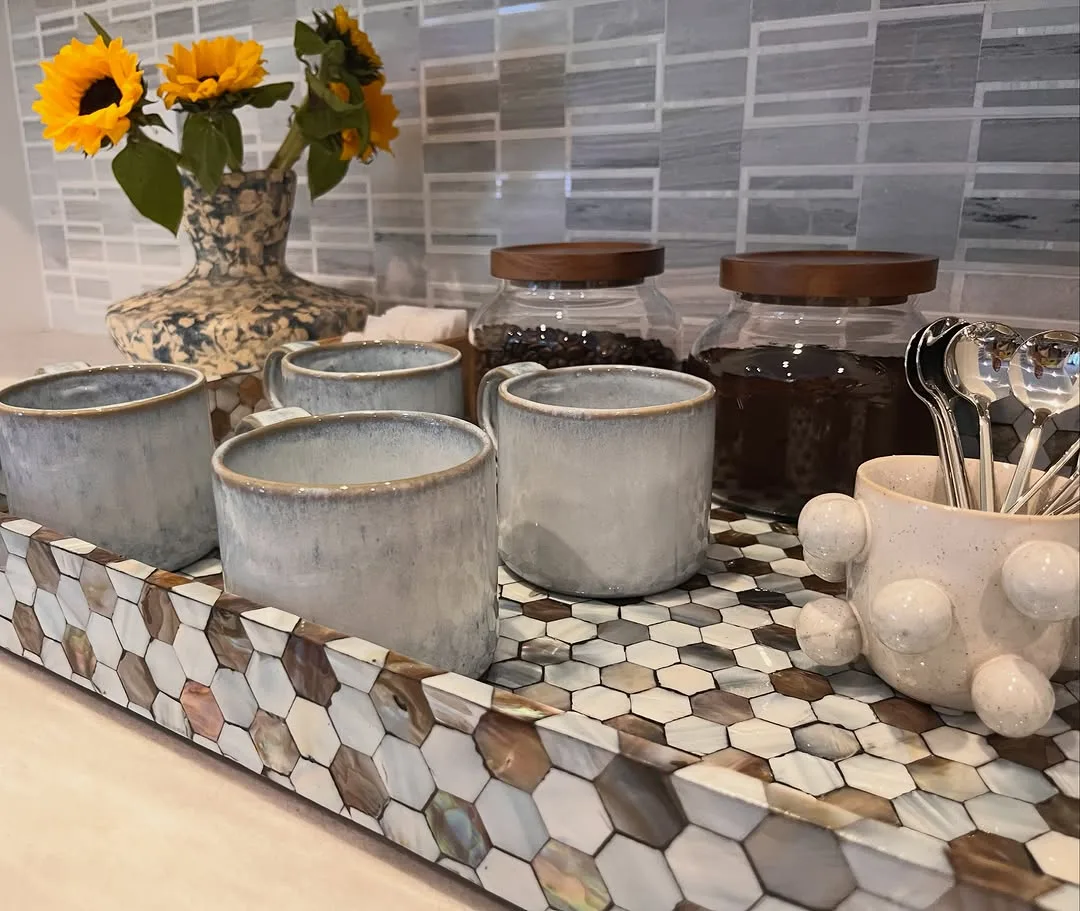
Morning routines run smoother when the coffee maker, mugs, and supplies live in one defined station. One tray or board under the setup gathers drips, grounds, and spoons into a single easy clean zone. Guests also help themselves happily when the station reads clearly at a glance.
Build the station on a tray, a wooden board, or a small mat that fits your machine with room for two to four mugs. Add a jar for beans or pods, a small dish for spoons, and sugar within reach. Hang mugs on hooks under the cabinet if counter depth runs tight.
Early risers and homes with frequent guests suit a coffee station best. One couple set up a simple station on a bamboo tray for visiting parents, and guests made their own drinks at dawn without waking the house or hunting through cupboards for mugs, filters, and spoons in the dark.
Grounds and drips sour a station that never gets wiped. Coffee oils stain pale counters, and damp mats grow musty smells beneath machines. Lift the machine weekly and wash everything under it, dry the tray fully, and descale the maker on schedule so the pretty station also pours good coffee.
Common Mistakes to Avoid
Covering every inch of counter with decor leaves no room to cook, and cooks end up moving decorations just to set down a hot pan. Working space is the whole point of a counter. Protect one clear stretch beside the stove and one beside the sink before styling anything at all.
Buying decor before measuring causes the second common failure. Oversized trays, tall vases, and wide canisters crowd small counters instantly and end up stored in guilt piles. Measure your counter depth and cabinet clearance first, then shop with those numbers saved in your phone notes. Returns waste more money than patience ever does.
Matching everything too perfectly makes counters look like a shop display instead of a lived in kitchen. Rows of identical items with no personal piece feel cold fast. Mix one handmade, vintage, or family piece into bought sets, and let small differences in tone keep the room human.
Ignoring water, heat, and grease ruins good pieces within months. Wood swells beside steamy kettles, fabrics sour near sinks, and glazes stain under oil bottles. Place each item with its enemies in mind, and move anything that suffers during your first month of watching how the kitchen really runs.
Budget Friendly Kitchen Countertop Decor Ideas
Start with what you already own before spending anything. Most kitchens hide trays, bowls, jars, and boards inside cupboards that could work beautifully on the counter. One Saturday morning spent shopping your own shelves often produces half a new look for free, plus a donation bag of true clutter.
Thrift shops and market stalls sell wooden trays, ceramic crocks, and stoneware bowls for a few coins each. Solid older pieces often outlast new bargain imports, and small chips hide easily in busy kitchens. Buy one piece at a time and live with it before adding the next.
Plants give the cheapest color on any counter. One herb pot from the grocery store costs little, grows for months, and pays you back in flavor. Cuttings from a friend plant, rooted in a jar of water, cost nothing at all and still bring green life to the sink.
Swap and rotate before you shop again. Moving the fruit bowl to the island, the plant to the stove end, and the boards to a new wall refreshes the whole room for free. Seasonal swaps, like citrus in winter and garden stems in summer, keep counters interesting all year.
Tips for Styling Kitchen Countertops
Group items in twos and threes instead of spacing single pieces along the whole run. Clusters read as one calm moment, while scattered singles read as clutter no matter how pretty each piece is.
Leave at least one full stretch of counter completely empty near the stove. Hot pans, big boards, and grocery bags all need a landing zone, and clear space is what makes the styled zones look intentional.
Repeat one material or color three times across the counter, like wooden boards, a wooden tray, and wooden lids. Small echoes link separate corners into one plan, and many lasting kitchen countertop decor ideas rely on that quiet repetition more than on any single statement piece.
Clean counters fully once a week with every item lifted. Crumbs and grease gather behind canisters and trays where daily wipes never reach, and styled corners only stay pretty when the surface under them stays truly clean.
Change one small thing with the seasons instead of restyling everything. Citrus in the bowl for winter, herbs in summer, and a warmer lamp glow in dark months keep the room feeling cared for without fresh spending.
FAQ
How Much Counter Space Should Stay Empty?
Roughly half of your main run should stay clear in most kitchens, with a landing zone beside the stove and another beside the sink. Small kitchens can style the ends and corners while the middle stays open. When in doubt, clear more space, because cooking comfort beats display every single day.
What Decor Works Best in a Very Small Kitchen?
Small kitchens do best with decor that works for its place, like a utensil crock, a fruit bowl, and one herb pot. Skip purely decorative pieces until the useful ones look good together. Extra ornaments crowd tiny counters fast, so let function carry the beauty in compact rooms.
How Often Should Counter Decor Change?
Most counters feel fresh with small changes every season rather than full restyles. Swap the fruit, the stems, the cookbook, and the cloth under the bowl, and the room feels new. Big pieces like trays, canisters, and lamps can stay for years once they suit your cooking habits well.
Can Decor Sit Near the Stove Safely?
Wood trays, oils in moderation, and utensils sit safely near most stoves when they keep clear of open flame and burner edges. Keep paper, cloth, and dried stems far away from heat, and never let decor crowd the space where pan handles turn. Heat resistant materials earn the spots closest to cooking.
How Do I Keep Styled Counters Easy to Clean?
Fewer, larger pieces clean faster than many small ones, because each item gets lifted and wiped under in seconds. Trays help most, since one lift clears a whole group for a proper wipe. Choose smooth glazes, sealed wood, and washable cloths, and cleaning stays a small job instead of a project.
Where Should I Start If My Counters Feel Hopeless?
Clear everything off, clean the bare counters, and live with them empty for one full day of cooking. Notice where your hands want things to land, then return only the tools and food you truly reach for daily. Style those into groups last, and the order will finally make sense.
Conclusion
Counters set the mood of the whole kitchen because eyes land there first. Calm groups of useful, handsome pieces tell everyone the room is cared for, and honest kitchen countertop decor ideas always protect the cooking before they chase the pretty. Start where your hands work, and style grows naturally from there.
Pick two ideas from this guide and try them for one week before adding more. Small trials reveal what your kitchen truly needs, and pieces that fail your routine can move to cupboards without regret. Patience builds better rooms than shopping sprees ever will, and your counters will prove it.
Keep editing as seasons and habits change. Counters serve breakfasts, homework, holidays, and midnight snacks across the years, and the right mix shifts with your life. One quick monthly look keeps groups honest, useful, and pleasant to work around every day.
Enjoy the small daily pleasure of a counter that looks good and works hard. Coffee tastes better beside a tidy station, chopping feels calmer near grouped tools, and guests drift toward kitchens that feel warm. Your counters can carry all of that with less effort than you expect.