Entryway Decor Ideas for Small Spaces That Welcome You Home
Small entryways work harder than any other corner of the home. Coats, shoes, keys, bags, and wet umbrellas all land in the same few square feet, often in a hallway barely wide enough for two people to pass. When that space looks messy, the whole home feels messy before anyone reaches a proper room.
Good news is that a small entryway does not need more space, it needs better decisions. Pieces sized for tight walls, storage that hides daily clutter, and one or two warm touches can turn a cramped pass through into a welcome that sets the tone for the rest of the home.
Inside this guide, you will find entryway decor ideas for small spaces that lean on walls, corners, and the backs of doors instead of floor space you do not have. Each idea comes with practical details, a note on who it suits best, one worked example, and one mistake worth avoiding. Pick three or four ideas that fit your layout, and let the rest wait.
What Are the Best Entryway Decor Ideas for Small Spaces?
Strong entryway decor ideas for small spaces share three habits. They use vertical wall space instead of floor space, they give every daily item one fixed home, and they add light or reflection so the area feels wider than it measures. One mirror, one set of hooks, and one slim surface cover most of what a small entry needs.
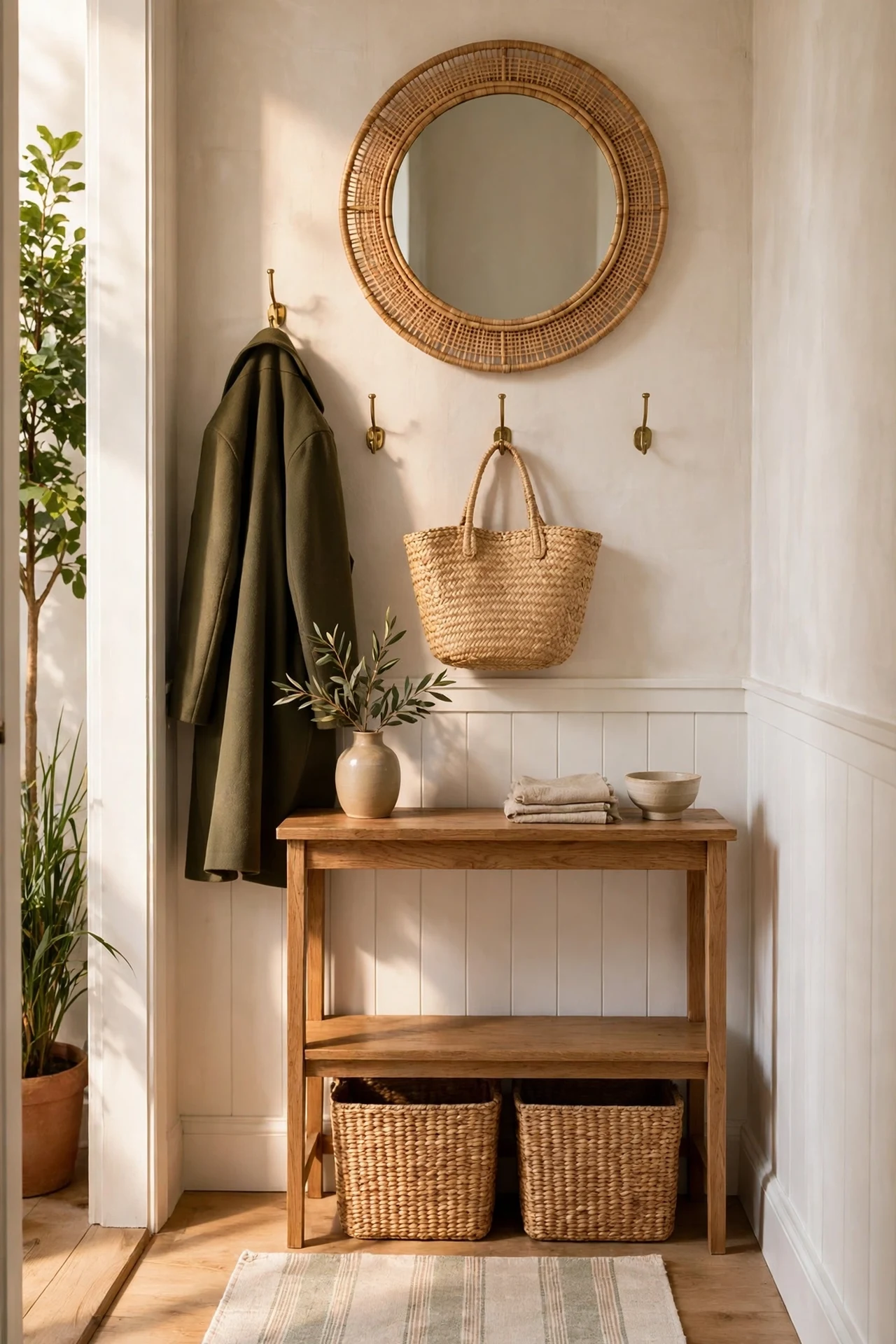
Picture a narrow hallway entry in a small apartment. Six hooks hold coats and bags above a shoe cabinet only eight inches deep, a round mirror hangs over a slim shelf with a key bowl, and a washable runner leads the eye toward the living room. Nothing crowds the walkway, yet everything a busy morning needs sits within reach of the door.
Slim Console Table with a Shallow Profile
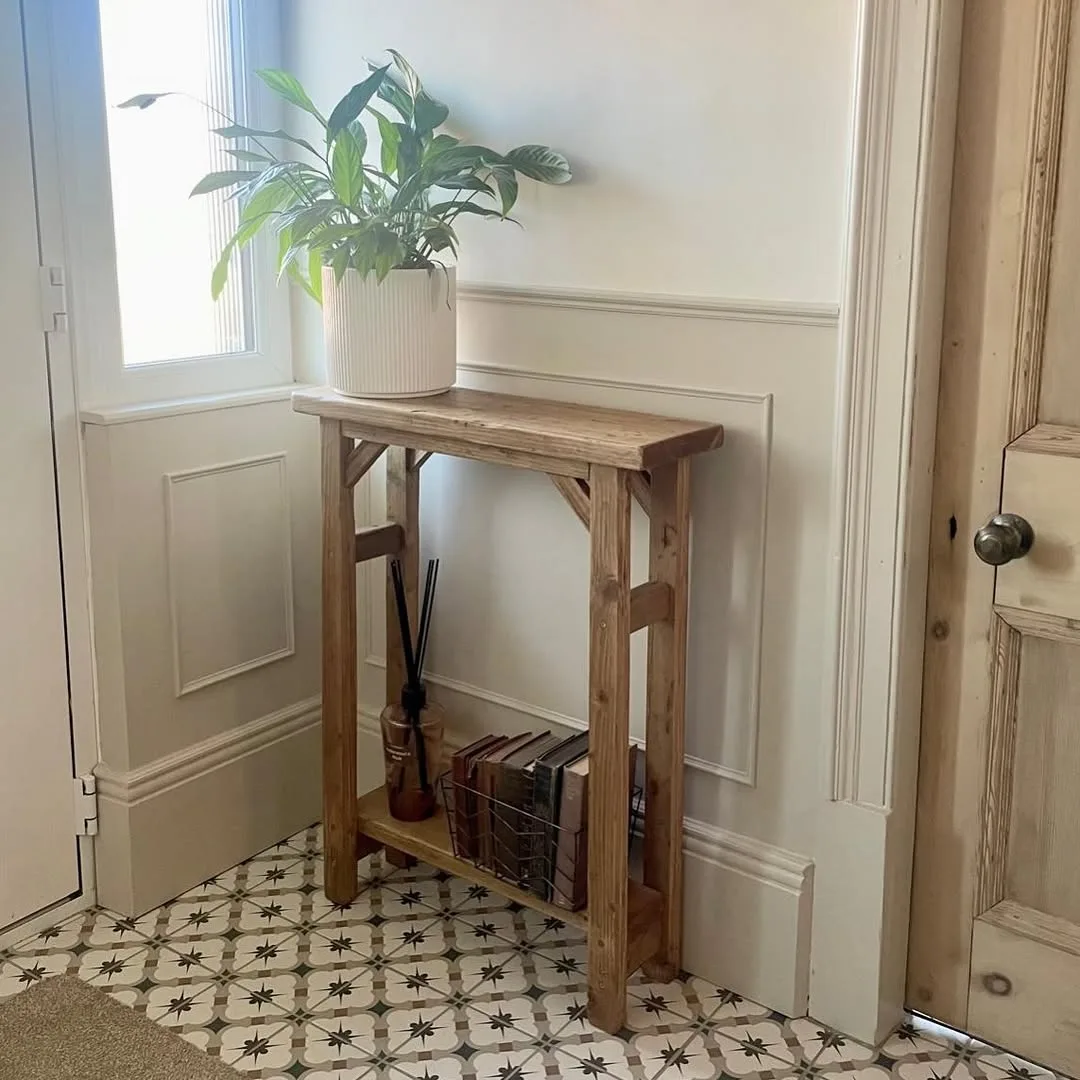
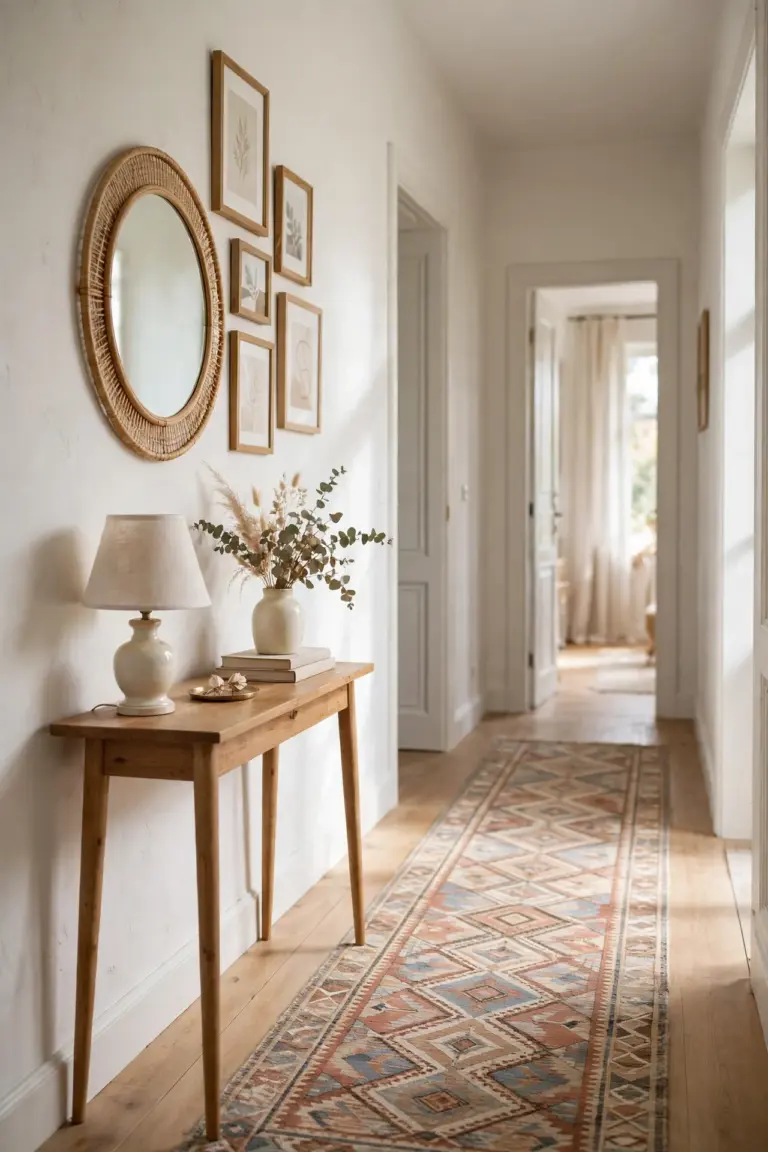
Slim console tables give a small entry a landing surface without eating the walkway. Depths around ten to twelve inches hold keys, mail, sunglasses, and a small plant while leaving room for people to pass with grocery bags in both hands. Legs keep the floor visible underneath, and open floor always makes a tight space feel calmer.
Choose a table a few inches narrower than the wall section it stands on, and check that the front door swing clears it with room to spare. Wood warms up pale walls, black metal suits modern halls, and a lower shelf adds a spot for baskets or a row of shoes. One drawer, even a shallow one, hides chargers, spare keys, and dog leads.
Busy households and anyone tired of pockets emptied onto kitchen counters suit a console table best. One family placed a forty inch console along the only free wall in their entry, added a ceramic bowl for keys and a tray for mail, and ended the daily hunt for lost items within a week.
Oversized tables cause the classic small entry mistake. A deep or long table turns a narrow hall into an obstacle course, and corners near hip height collect bruises. Measure the walkway after the table, not before, and keep at least thirty inches of clear passing space.
Round Mirror Above the Console Table
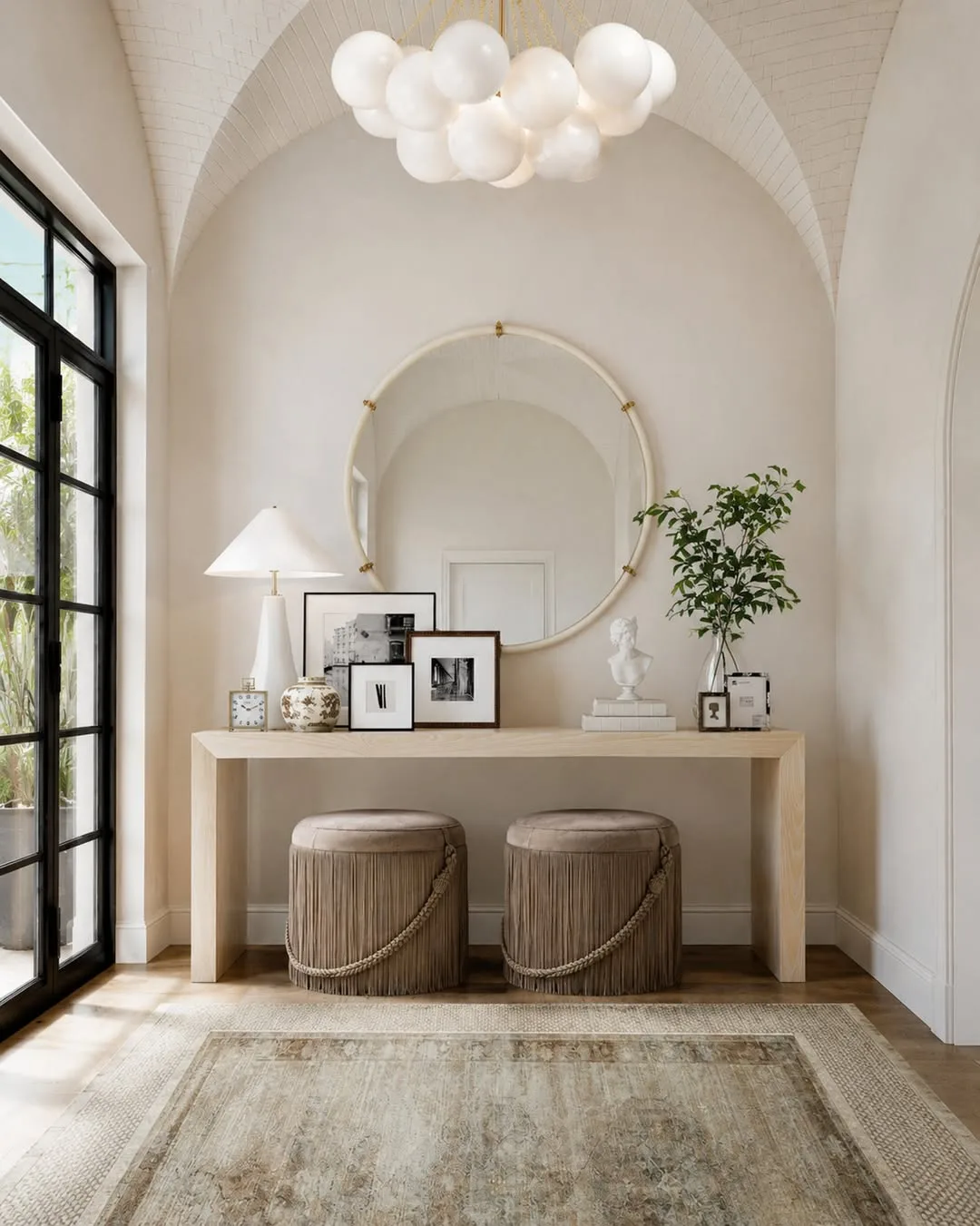
Mirrors lead most entryway decor ideas for small spaces for one plain reason: they bounce light into corners that windows never reach. Round shapes soften the straight lines of doors and trim, and a mirror gives everyone a final check of hair and collars on the way out.
Hang the mirror so its center sits near eye level, roughly fifty seven to sixty inches from the floor, and leave a hand span of space between the mirror and the tabletop below. Diameters between twenty four and thirty two inches suit most small entries. Thin frames in wood, black, or brass keep the look light, while a small ledge under the glass catches keys when no console fits.
Entries with no window and homes where people get ready in a rush suit a mirror best. One homeowner hung a round mirror opposite her front door sidelight, and the reflected daylight doubled the brightness of her whole hallway without a single new lamp.
Glare ruins a mirror placed without thought. Facing a bright window head on can throw harsh light into eyes, and low placement behind a bench collects splashes and smudges. Test the spot with a cheap mirror first, check the reflection at different hours, and keep glass cleaner in a nearby drawer.
Wall Hooks for Coats and Bags
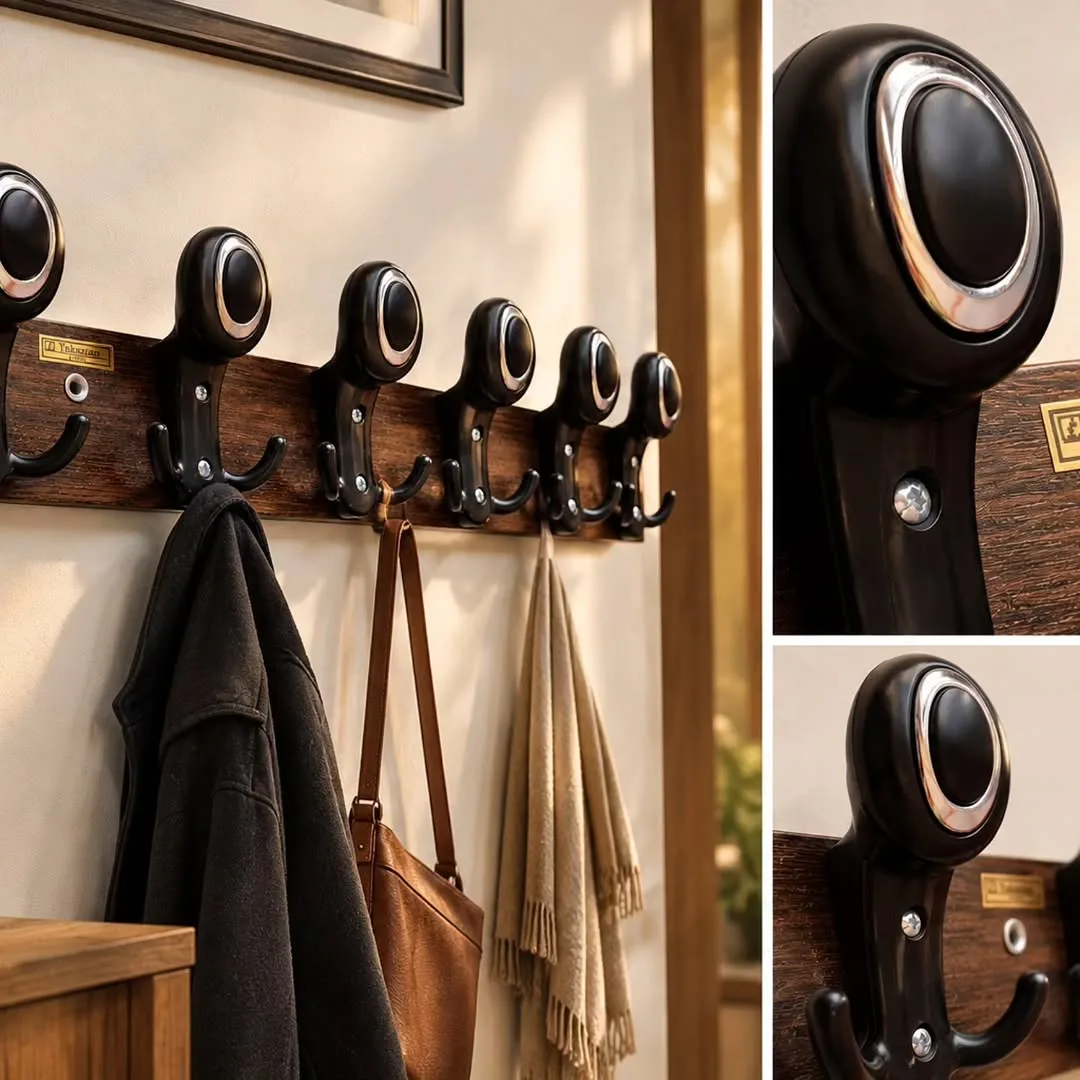
Hooks turn dead wall into hardworking storage and cost less than almost any other entry upgrade. Coats, hats, bags, scarves, and umbrellas all hang in one row, off the floor and away from chair backs in the kitchen. Guests gain an obvious place to hang things the moment they step inside.
Mount four to six hooks on a wooden rail screwed into studs, or use individual hooks with proper wall anchors rated for real weight. Heights near five feet suit adults, with one lower row around three feet for children and small bags. Space hooks eight to ten inches apart so bulky winter coats hang without crushing each other.
Families with school bags and couples who host often suit a hook rail best. One couple installed six brass hooks above their shoe bench, labeled nothing, and still watched every guest use the system correctly on the first visit because the layout explained itself.
Weak anchors cause the failure everyone remembers: a loaded rail pulling out of drywall during a party. Screws belong in studs whenever possible, and heavy coats belong on the hooks nearest those studs. Limit each hook to one or two items, because piles on a single hook bend hardware and bury the piece someone needs.
Narrow Shoe Cabinet with Tilt Out Drawers
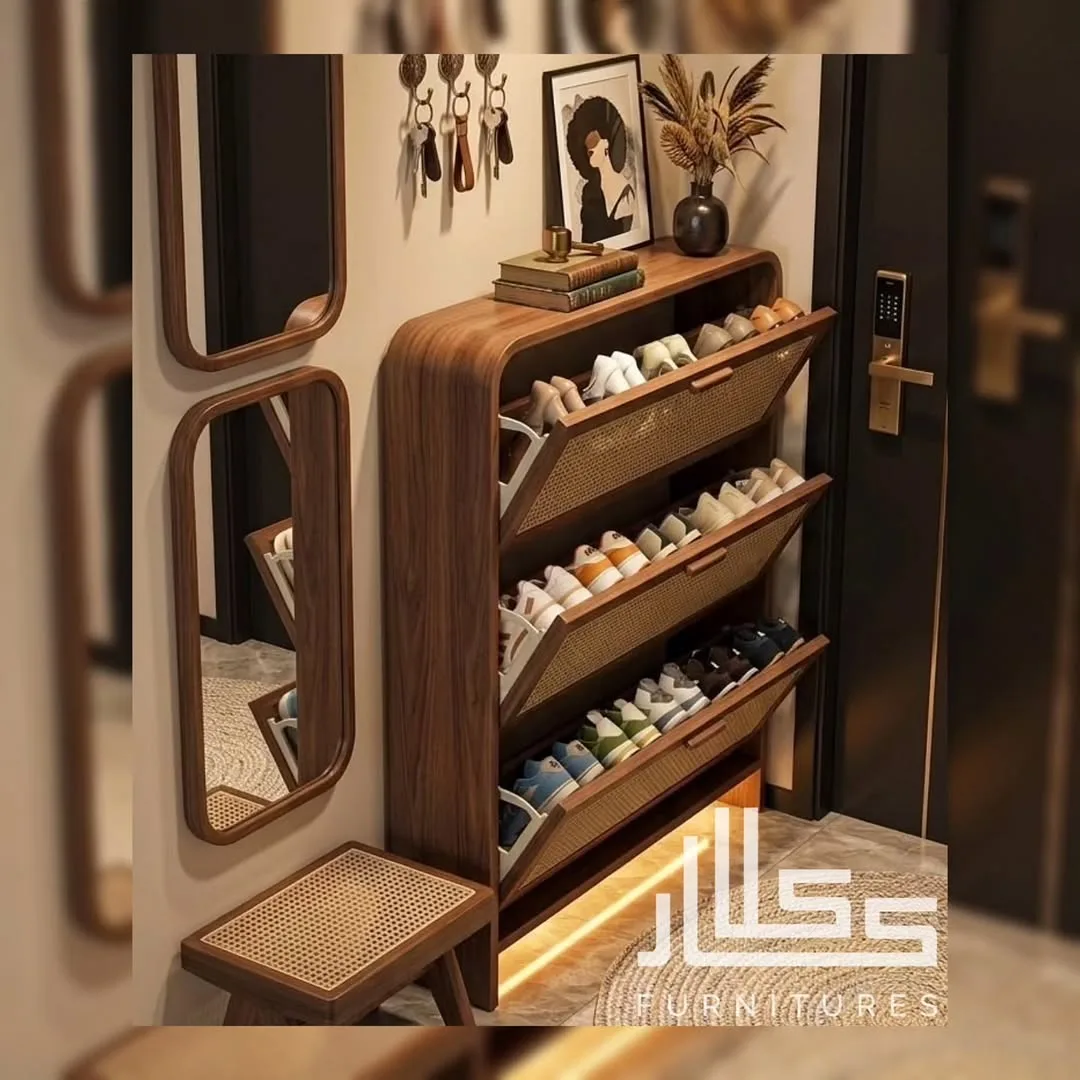
Shoe cabinets with tilt out drawers hide the messiest part of any entry behind a clean front only six to eight inches deep. Pairs stand upright inside the tilted bins, so even a tiny footprint swallows eight to twelve pairs. Doors closed, the cabinet reads as plain furniture instead of storage.
Look for models around thirty inches wide with two or three compartments, and measure your largest shoes before ordering because tilt out bins fit sneakers better than tall boots. Wall anchoring matters with these cabinets, since an open loaded drawer shifts the balance forward. Leave boots on a tray beside the cabinet and keep daily pairs inside.
Homes without a coat closet and anyone who trips over shoe piles suit a tilt out cabinet best. One homeowner fit a two drawer cabinet into a recessed nook beside her door, painted it to match the trim, and guests assumed it was part of the original build.
Stuffing bins past their comfort point bends hinges and cracks the tilt mechanism over time. Keep the cabinet for shoes worn weekly, move seasonal pairs to a closet, and wipe the bins monthly because grit from soles collects fast in a closed space.
Small Bench with Storage Baskets Beneath
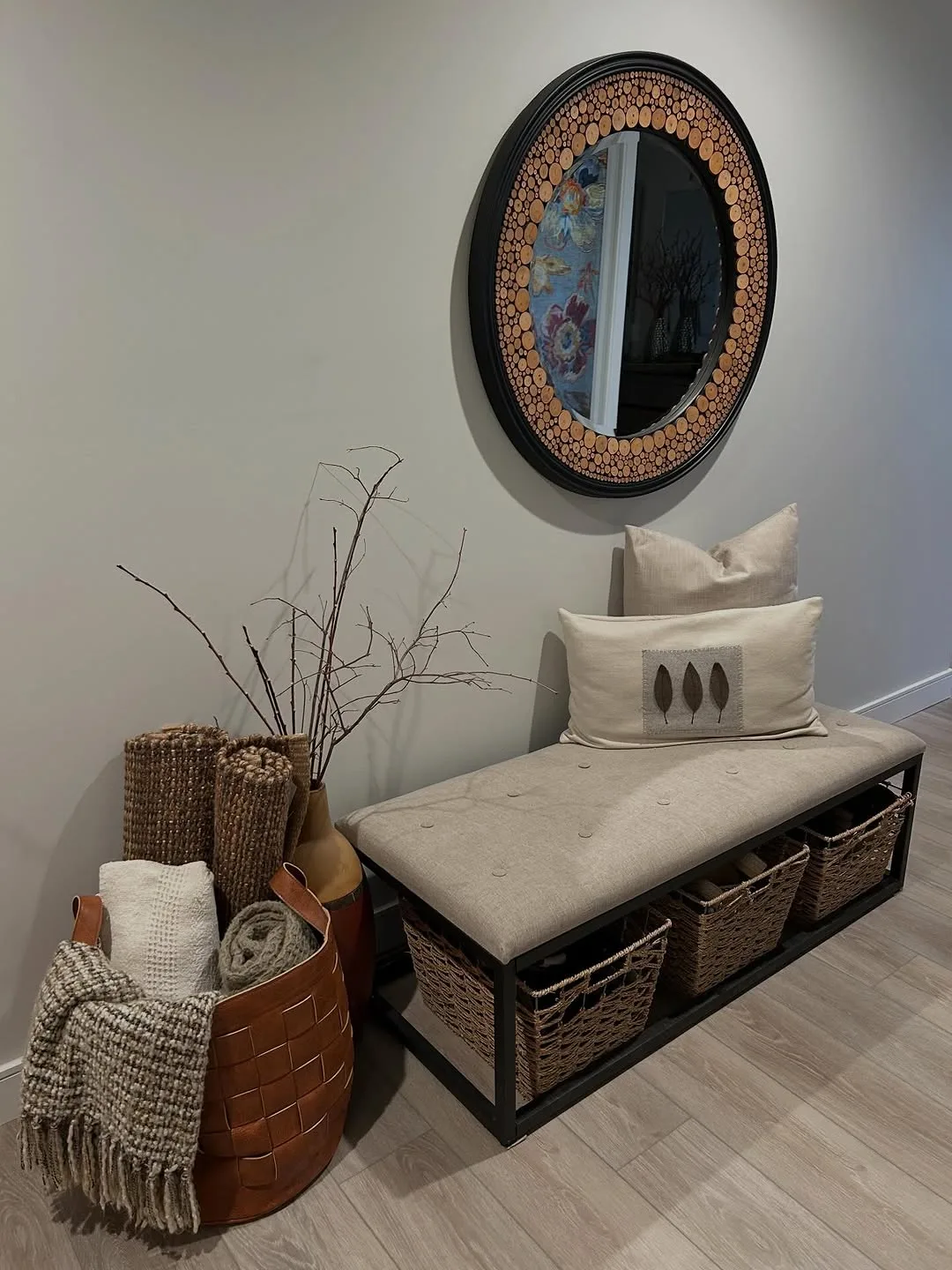
Benches give people a place to sit while pulling on shoes, and sitting changes how rushed a morning feels. Models under forty inches long fit most small entries, and the open space beneath holds baskets for the clutter that usually spreads across the floor.
Slide two or three woven or fabric baskets under the bench, one for shoes, one for gloves and scarves, one for whatever your household drops at the door. Cushions in washable covers soften wooden tops, and a bench with a lower shoe shelf doubles its storage without growing its footprint. Keep total depth near fourteen inches so knees and walkways stay clear.
Parents of young children and older adults who dislike balancing on one foot suit a bench best. One grandfather built a simple bench from a leftover stair tread and two side panels, and his grandchildren now race to sit on it for shoe time every visit.
Baskets without a system turn into junk drawers at floor level. Assign each basket one job, label the insides if children use them, and empty the catch all basket every Sunday. Benches also fail when piled with coats, so pair the bench with hooks and keep the seat clear for sitting.
Washable Runner Rug with a Low Pile
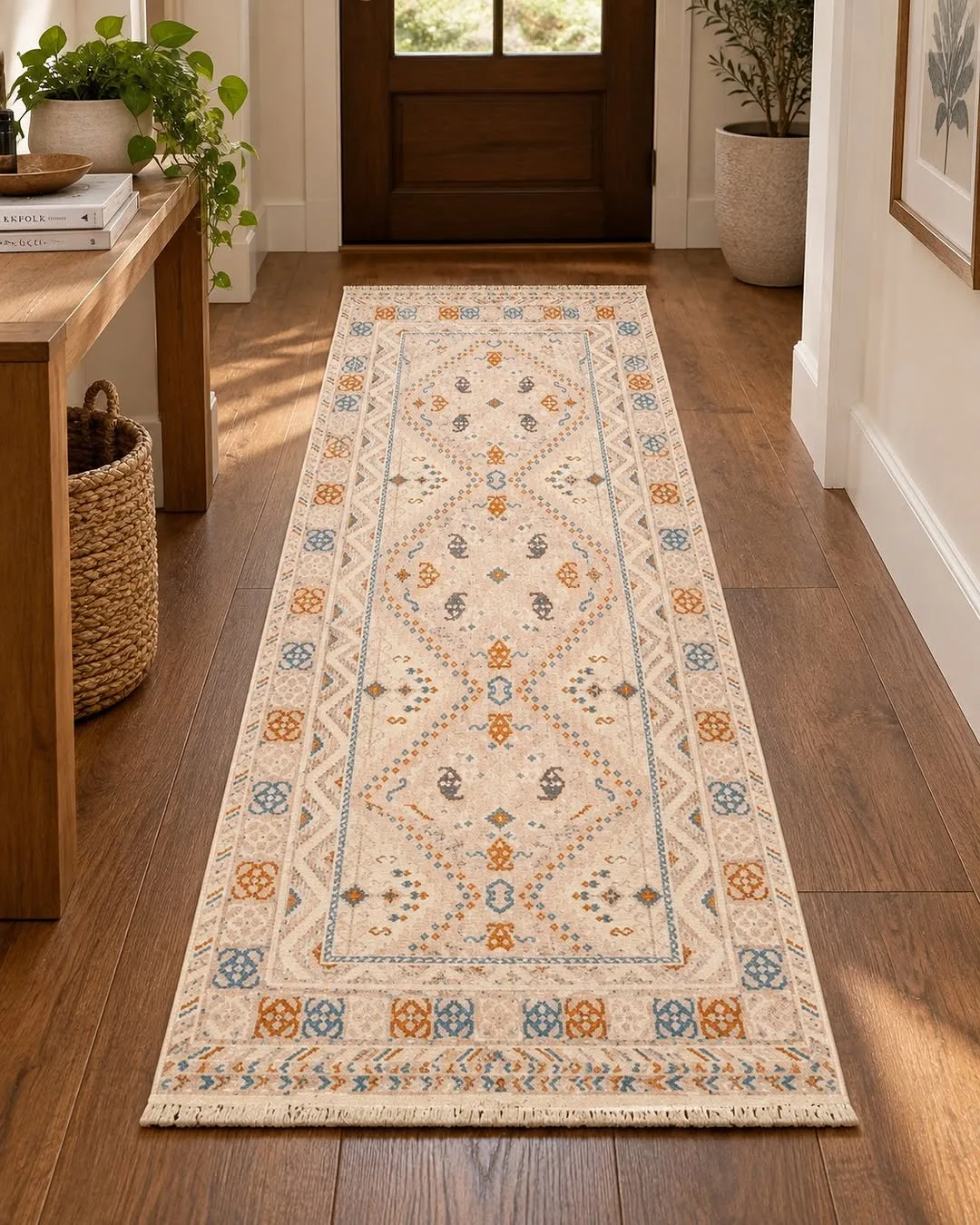
Runners define the entry, catch dirt before it travels, and add the color many small halls lack. Length matters more than width here: a runner stretching most of the walkway pulls the eye forward and makes a short entry feel longer. Among the stronger entryway decor ideas for small spaces, few change a room this fast for this little money.
Choose low pile or flat woven styles the door can swing over without catching, and measure the door clearance before ordering. Washable cotton or synthetic runners handle mud, snow melt, and pet paws, and nonslip pads underneath stop the corners from creeping. Patterns in mid tones hide daily dust between washes better than pale solids do.
Households with dogs, children, or snowy winters suit a washable runner best. One homeowner laid a vintage style washable runner in her narrow hall, shook it outside on Saturdays, and washed it monthly, and the pale wood floors beyond the entry stayed clean through two winters.
Thick plush runners cause doors to drag and corners to curl into tripping hazards. Skip underlay that adds height, tape nothing to the floor, and shake the runner weekly because trapped grit grinds fibers and scratches hard floors underneath.
Wall Mounted Shelf with a Key Bowl
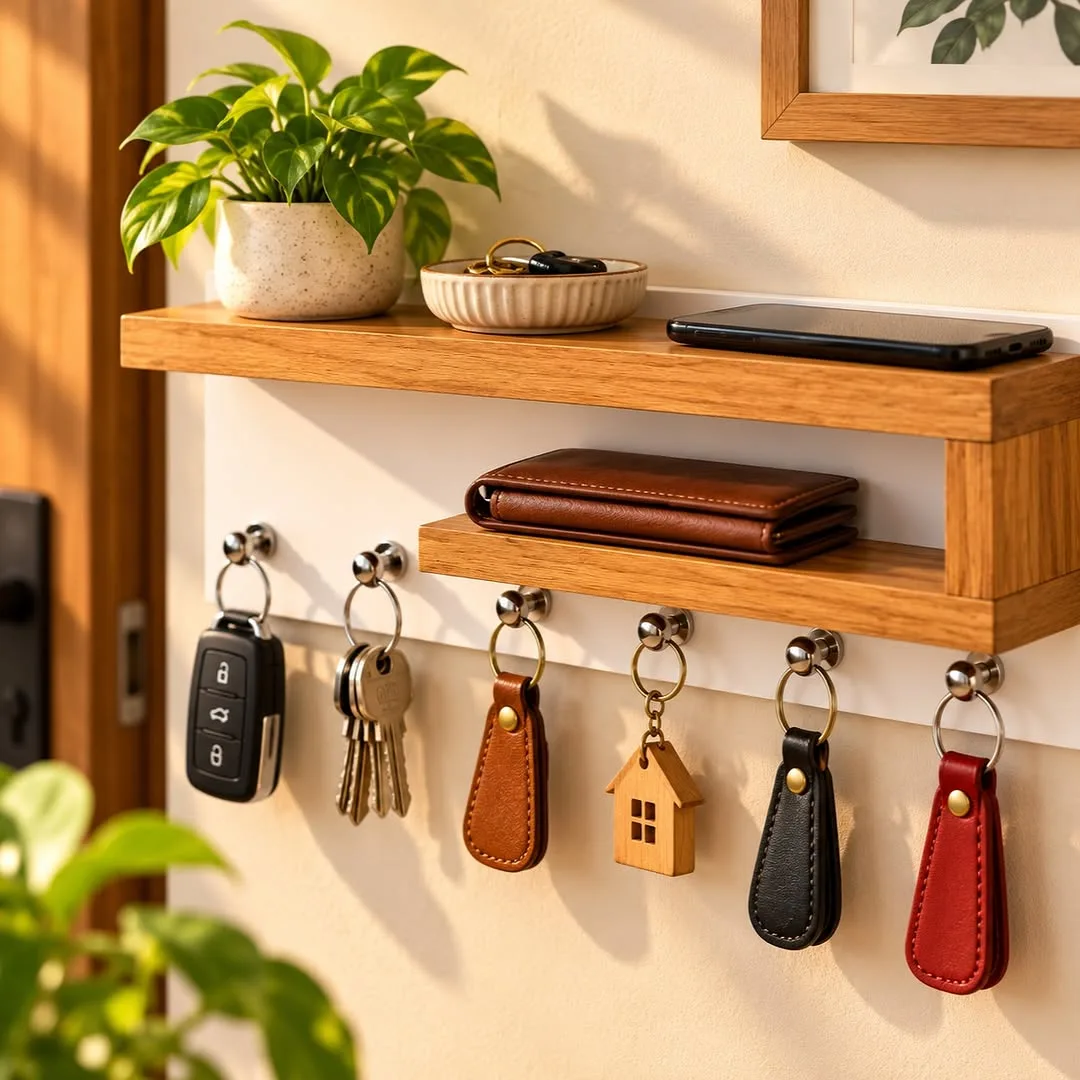
Where no floor space exists at all, a wall mounted shelf does the work of a console table in eight inches of depth. Keys, wallets, sunglasses, and mail land on the shelf, and a small bowl keeps the smallest items from wandering toward the edge.
Install the shelf at counter height near the door, screwed into studs or solid anchors, because people lean keys and bags onto it with real force. Shelves twenty four to thirty six inches long hold a bowl, a small plant, and a stack of outgoing mail. Raised trim along the front edge keeps items from sliding off when the door slams.
Tiny entries in studios and older homes with hallway doors suit a shelf better than any furniture. One studio owner mounted a walnut shelf beside her door with a brass bowl and a hook strip underneath, and her entire entry station took less room than a shoebox.
Overloading a small shelf turns a tidy station into a shelf of shame within a month. Keep only daily items on it, give mail a standing file or a wall pocket, and clear the surface every Sunday night so Monday starts with an empty, calm landing strip.
Small Gallery Wall of Framed Prints
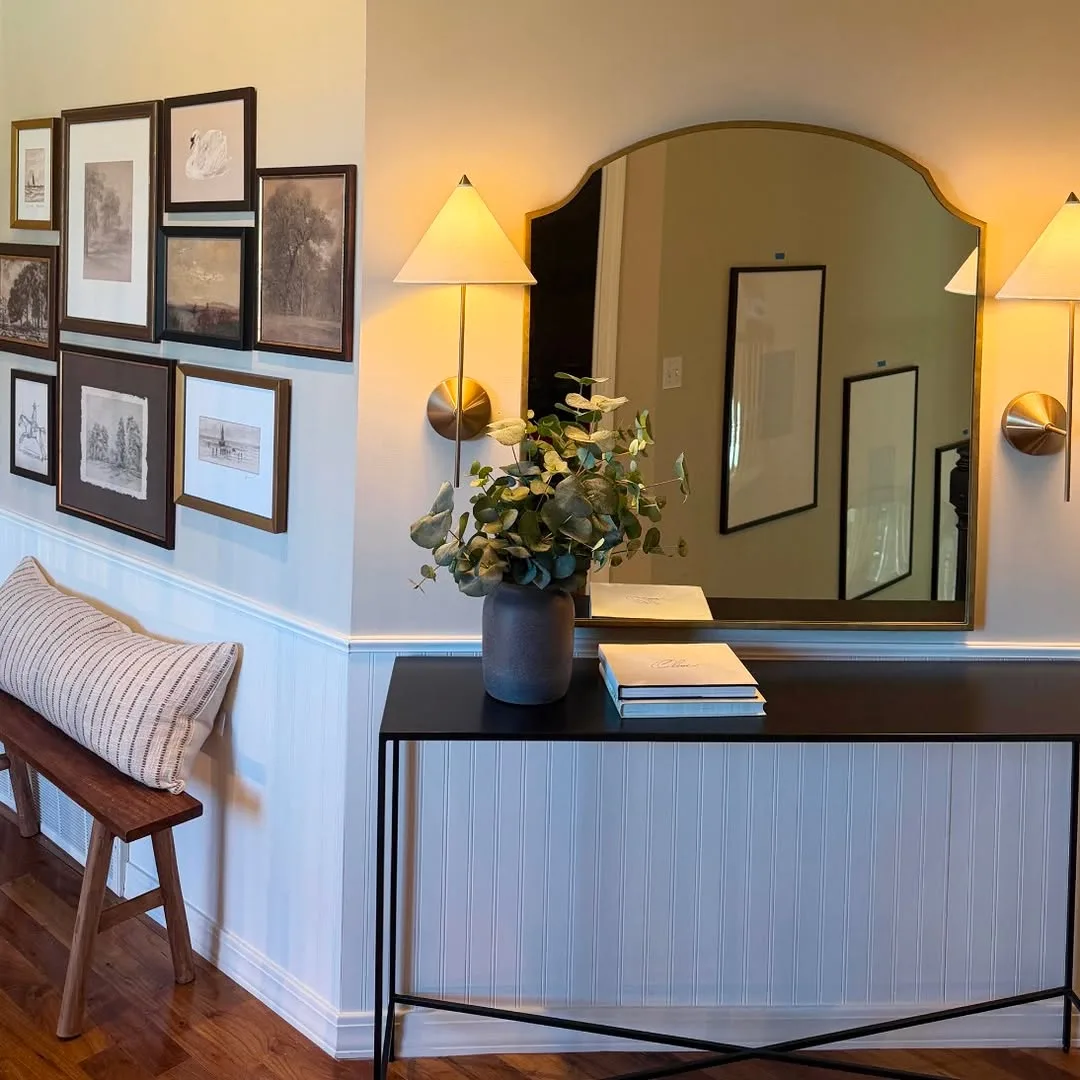
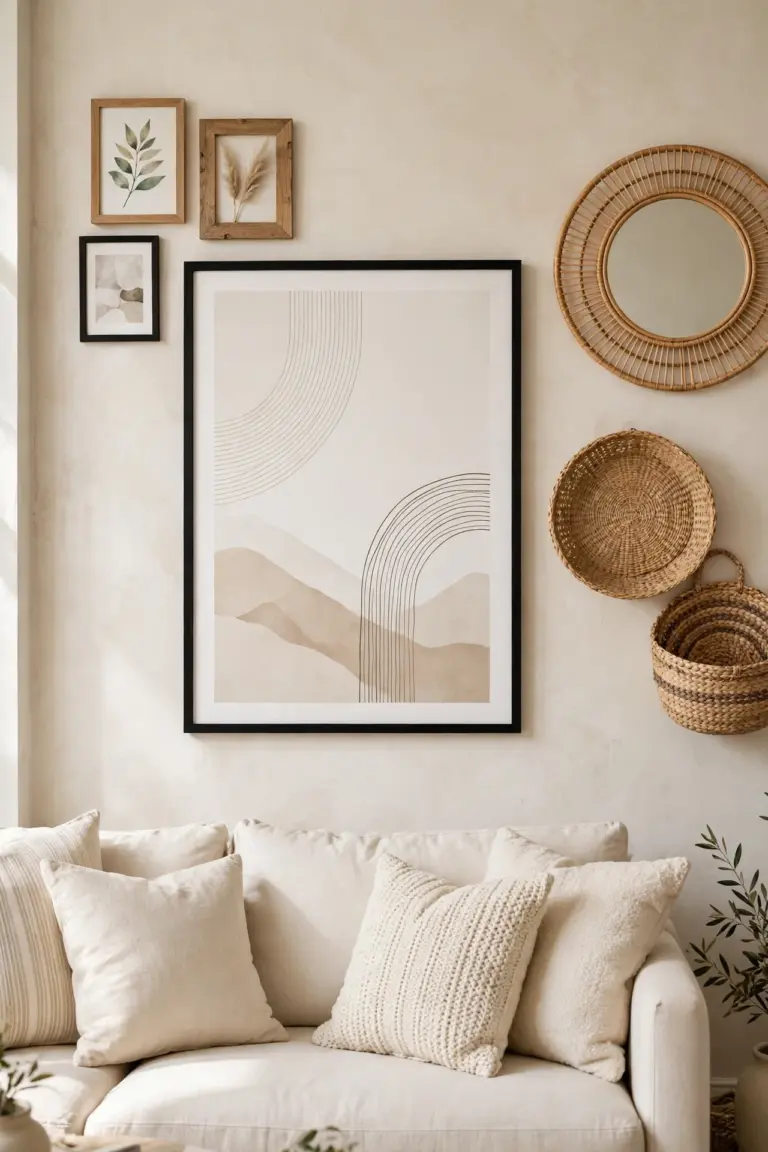
Walls in small entries often stay bare because people fear clutter, yet a tight group of framed prints adds personality without touching the floor. Gallery walls draw the eye upward and give guests something warm to look at while shoes come off.
Plan the layout on the floor first, keeping the whole group within one rectangle roughly the width of the wall space. Four to six frames in matching or mixed wood and black finishes work well, with prints in two or three shared colors. Start the lowest frame above hook or bench height so bags never knock against glass.
Collectors of postcards, family photos, and small prints suit a gallery wall best. One couple framed six snapshots from trips taken over ten years, hung them in two neat columns, and now watch visiting friends stop to ask about the stories behind each one.
Crooked frames and scattered spacing make small walls look chaotic fast. Use paper templates taped to the wall before drilling, keep gaps between frames near two inches, and hang the center of the group at eye level. Nails sized for the frame weight matter more than extra holes patched later.
Statement Ceiling Light or Wall Sconce
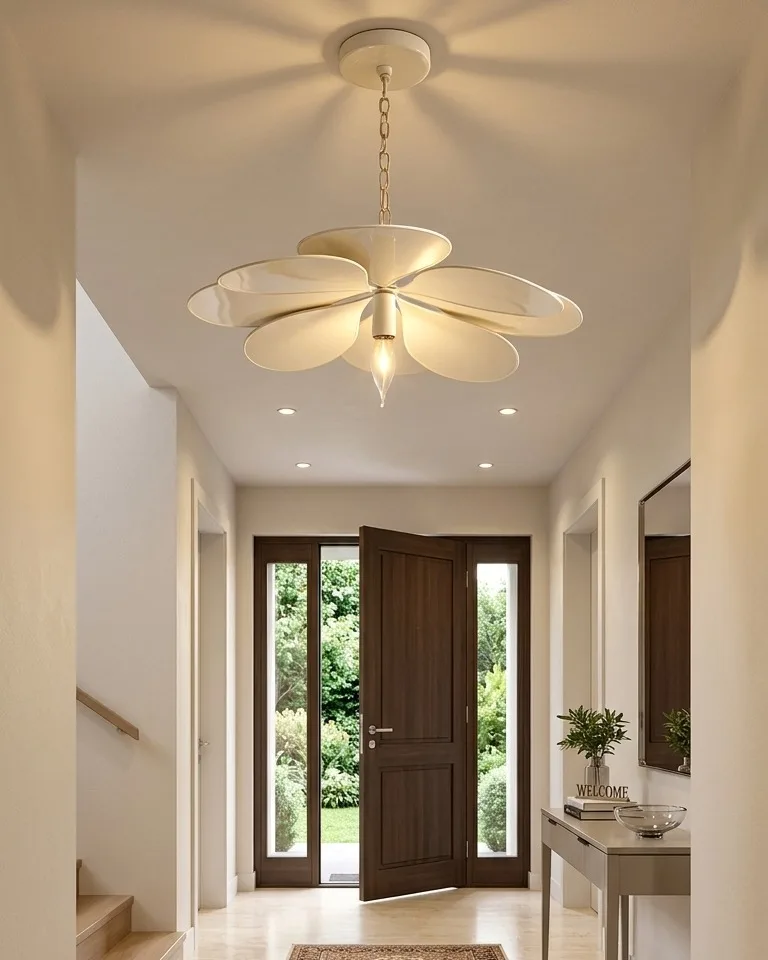
Lighting shapes a small entry more than any decoration, because dim corners shrink a space that has no room to spare. One handsome ceiling fixture or a pair of sconces lifts the whole area, warms faces, and makes colors read richer at night.
Flush and semi flush fixtures suit low ceilings, while sconces free up sight lines in entries too narrow for a hanging piece. Bulbs in warm white near 2700 kelvin flatter skin and wood tones, and output close to a sixty watt bulb keeps small spaces bright without glare. Put entry lights on a switch by the door whenever wiring allows.
Evening arrivals and windowless halls suit upgraded lighting best. One homeowner swapped a bare bulb holder for a woven shade fixture costing less than dinner out, and guests began complimenting her entry the same week though nothing else had changed.
Cold blue toned bulbs make small entries feel like offices and wash out warm paint colors. Oversized pendants hang too low in tight halls and collect heads and raised arms. Keep fixture bottoms above six feet eight inches in walkways, and test bulb color in one socket before buying for the whole home.
Tall Plant in the Corner
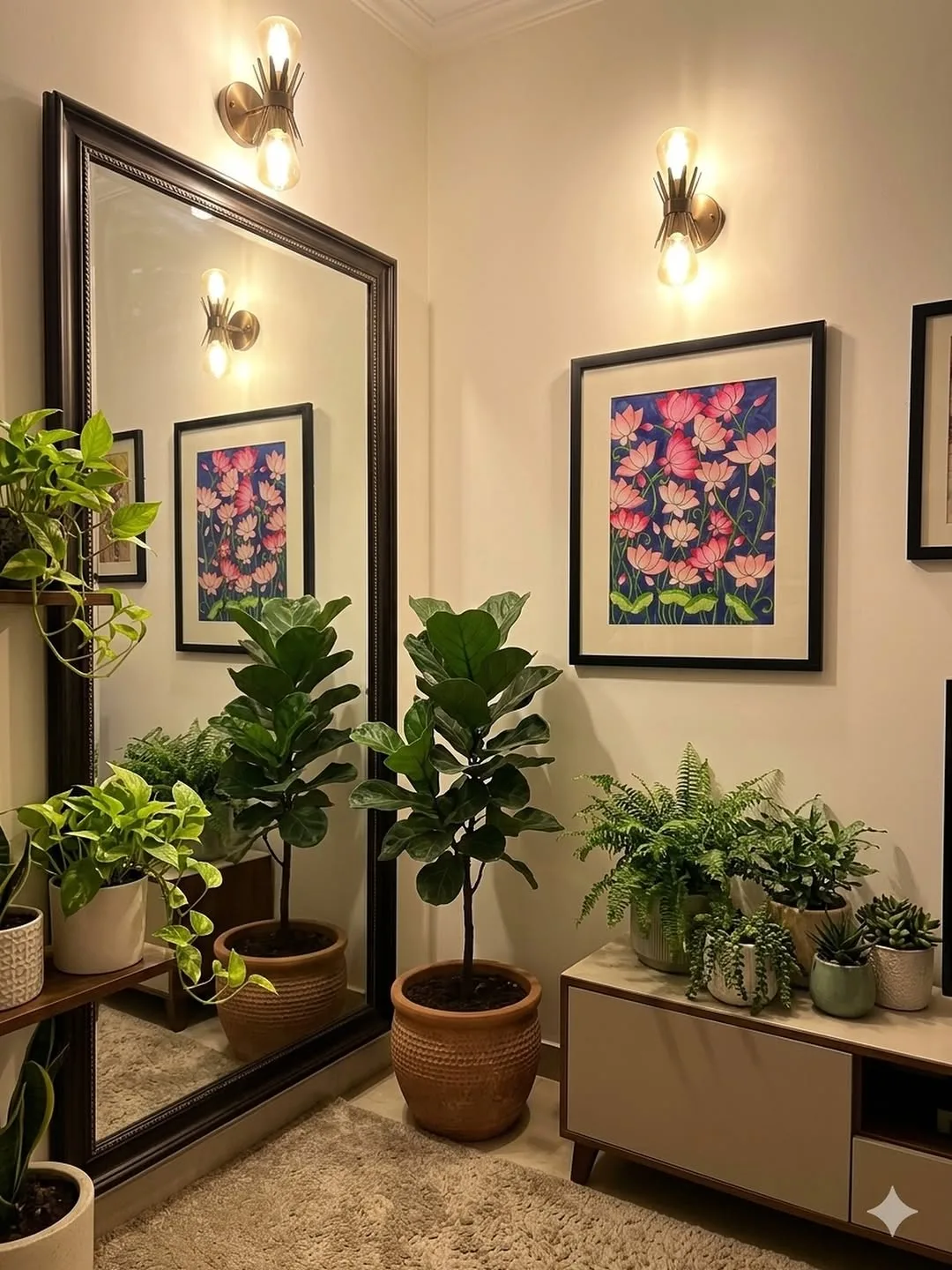
Corners beside doors collect dust and nothing else in most small entries, and a tall plant fills that vertical gap with life. Slim upright plants draw the eye up, soften hard angles, and need only a square foot of floor.
Snake plants, ZZ plants, and slim fiddle leaf figs tolerate the mixed light most entries offer, from bright sidelights to dim halls. Pots with a narrow footprint and a slightly heavy base resist knocks from bags and dogs. Raise the pot on a low stand when the corner gets little light, and rotate the plant monthly so growth stays even.
Green loving households and entries with a window or sidelight suit a tall plant best. One homeowner placed a snake plant in a woven pot beside her shoe cabinet, watered it twice a month, and the corner guests once ignored became the backdrop of every goodbye photo.
Oversized bushy plants crowd walkways and drop leaves across the exact path people use with arms full. Keep total plant width in mind at mature size, not nursery size, and move thirsty high maintenance varieties to brighter rooms where daily care is easier.
Woven Baskets for Shoes and Scarves
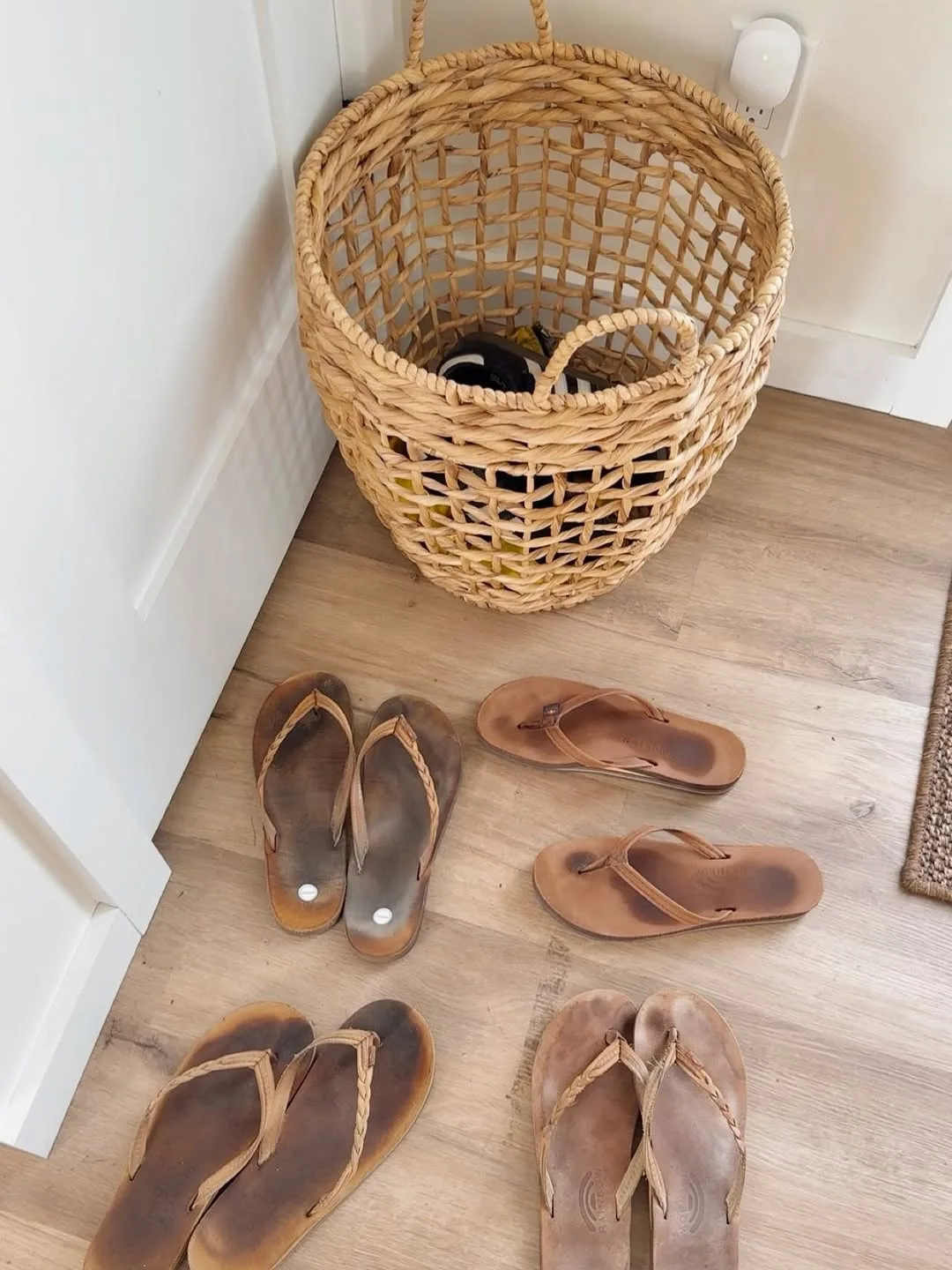
Baskets bring texture and warmth to small entries while swallowing the clutter that makes them look small. Shoes, scarves, gloves, umbrellas, and dog leads all disappear into woven sides, and the whole entry reads tidy even on chaotic mornings.
Match basket sizes to jobs: one large basket near twenty inches wide for shoes, smaller ones for accessories on a shelf or bench. Lids hide contents fully, open tops suit daily grab and go items, and handles make Saturday shaking and cleaning simple. Natural seagrass and cotton rope soften modern spaces, while darker weaves hide scuffs in busy homes.
Households without closets and families who rotate seasonal gear suit baskets best. One parent keeps three baskets under her entry bench, one per child, and school mornings run on each child checking their own basket instead of shouting for lost gloves.
Dumping everything into one giant basket recreates the junk drawer problem at ankle height. Cap each basket at one category, shake out grit weekly, and keep damp items out because trapped moisture smells fast in woven fibers and stains pale rugs beneath.
Painted Door Interior in a Warm Color
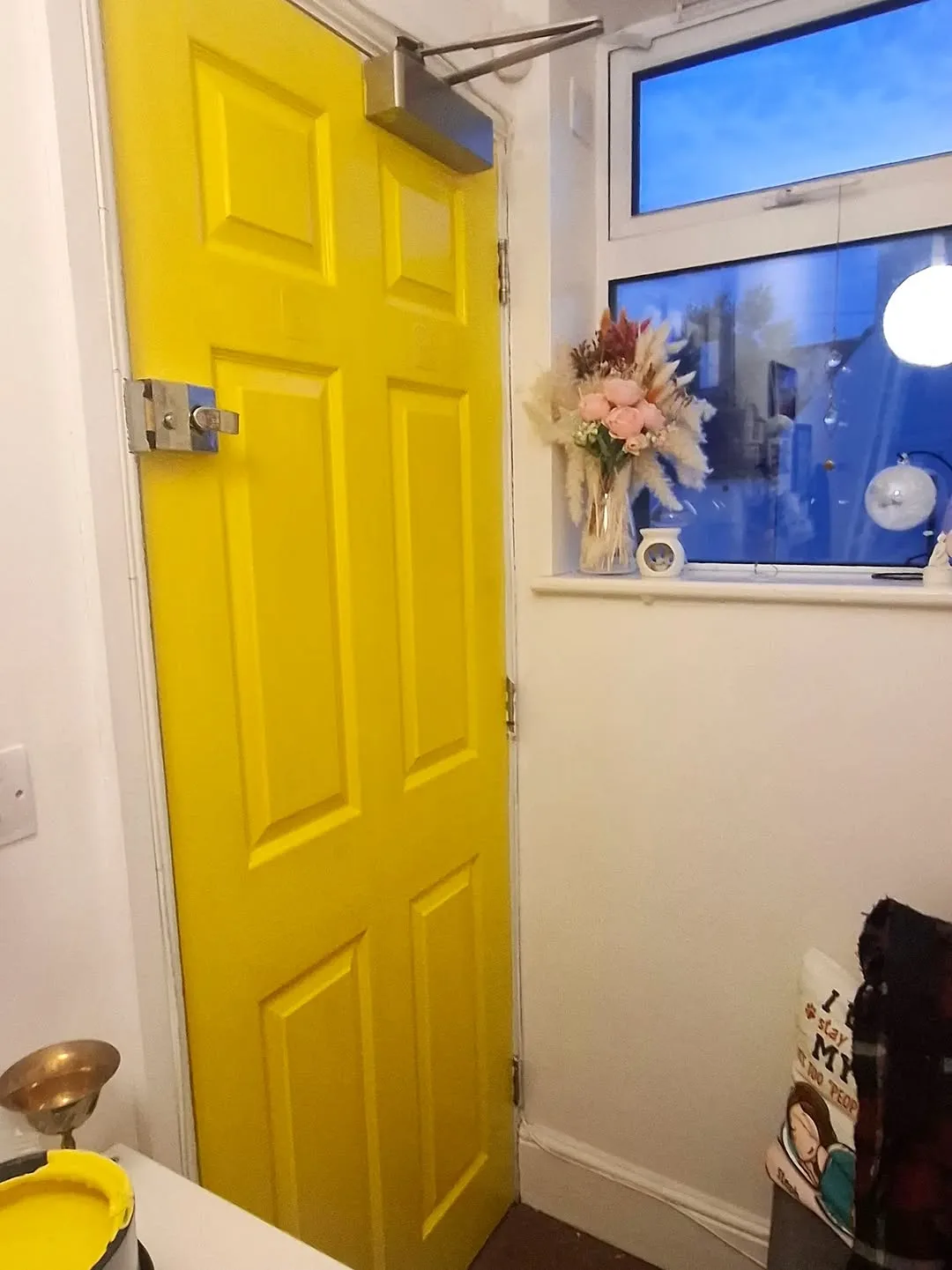
Painting the inside of the front door turns the largest flat surface in a small entry into its strongest feature. Warm color on the door makes white or pale walls feel deliberate, gives guests a cheerful first sight, and costs one quart of paint and an afternoon.
Deep sage, warm navy, muted terracotta, and soft black all read well in small doses and hide scuffs better than white. Use satin or semi gloss paint for wipeable durability, tape the edges carefully, and paint the door on its hinges with the hardware removed or masked. Match or deliberately contrast the trim, because half matching trim looks like a mistake.
Plain builder grade entries and anyone craving color without commitment to a whole room suit a painted door best. One homeowner painted her door a deep green on a Saturday morning, and the brass hooks and pale runner already in place suddenly looked like parts of a planned design.
Skipping prep causes peeling at the edges where hands and keys strike daily. Wash the door with a degreasing cleaner, sand glossy patches lightly, and prime over dark or stained finishes before color goes on. Rush jobs show within months in exactly the spots everyone touches.
Floating Shelves Styled Simply
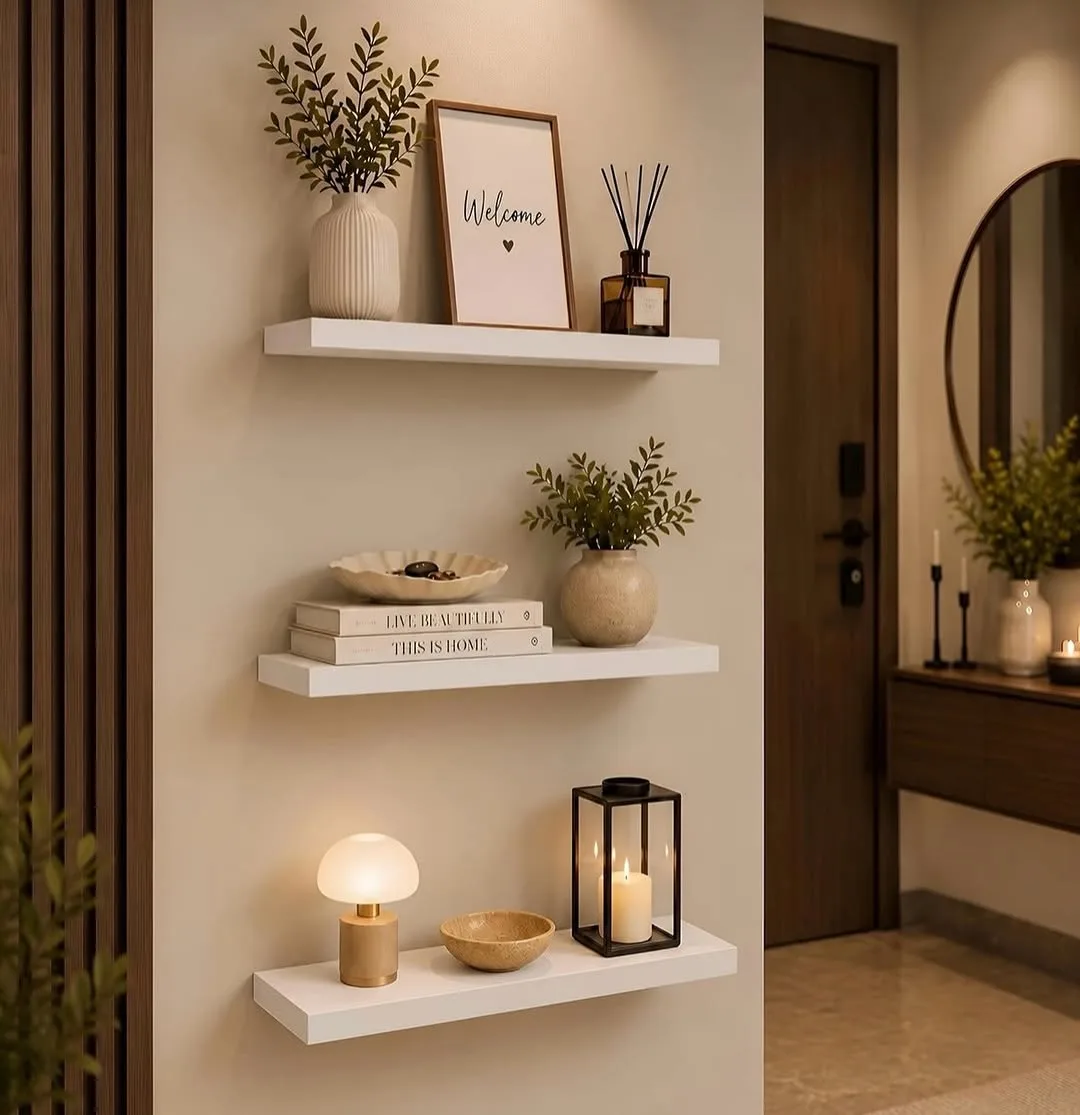
Two floating shelves on an empty entry wall hold decor, a small plant, and a catch all tray while leaving every inch of floor open. Vertical styling spreads the eye upward, and shelves let you change the look seasonally without moving furniture.
Keep shelves near twelve inches deep or less, mount them into studs, and leave fourteen to eighteen inches between levels so tall items fit. Style each shelf with three groups at most: something tall, something green, something personal like a framed photo. Empty space between groups keeps small shelves feeling curated rather than crowded.
Minimalists and anyone whose entry doubles as a hallway suit floating shelves best. One homeowner installed two oak shelves on the only blank wall of her entry, set a trailing plant and three art books on top, and kept the lower shelf for a tray and a small bowl.
Loading shelves with heavy books and ceramics invites sagging brackets and dangerous falls in a high traffic spot. Respect the weight rating, save heavy storage for low closed furniture, and dust shelves weekly because open ledges in entries collect grit blown in with every door opening.
Boot Tray Beside the Door
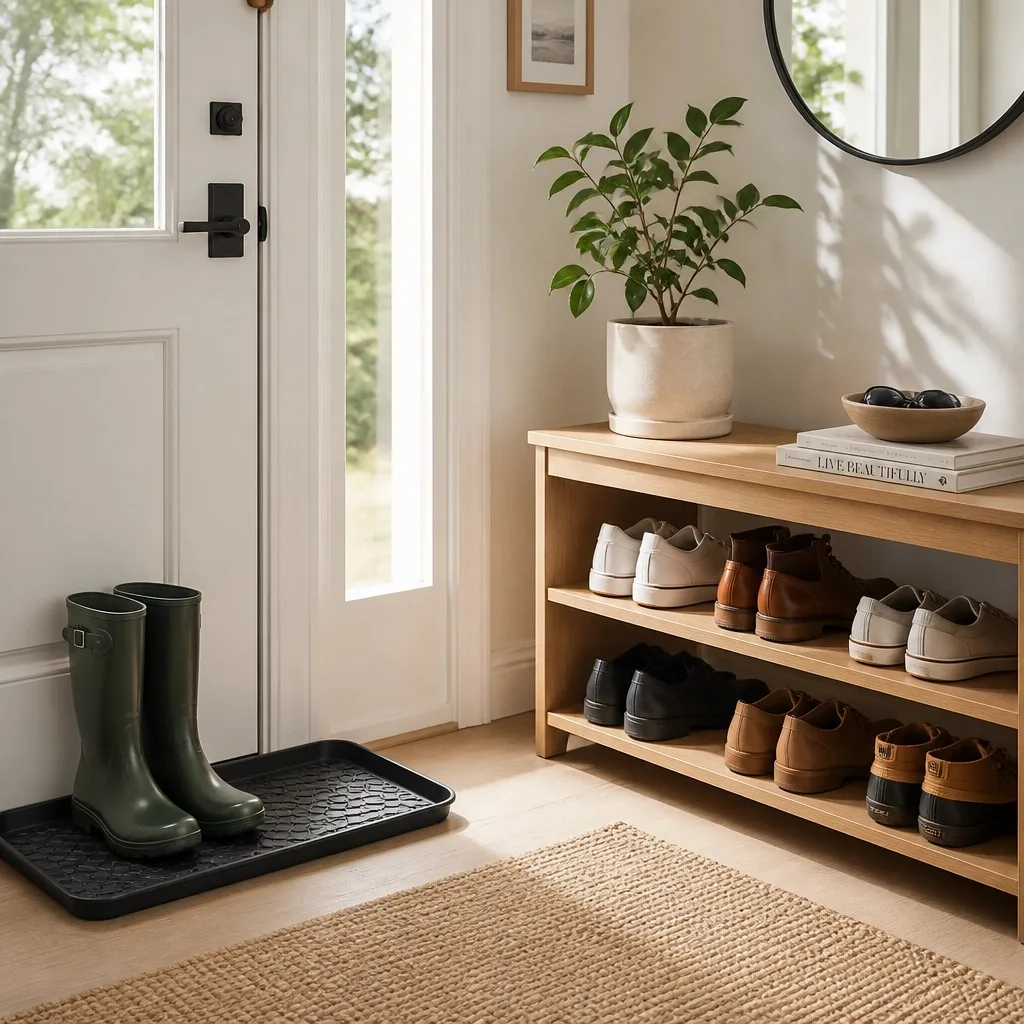
Wet boots and melting snow ruin floors and rugs faster than any other entry habit, and a boot tray confines the damage to one washable square. Trays with raised edges hold water and grit where it lands, and dark floors beyond the tray stay clean through the whole wet season.
Trays in metal, rubber, or molded plastic around thirty inches long fit two adult pairs, while longer versions serve families. Pebble or stone fill inside the tray lifts soles above puddles so socks stay dry, and a lip near one inch keeps meltwater off the floor. Slide the tray half under a bench to save space and empty it outdoors weekly.
Snowy climates, muddy gardens, and homes with pale floors suit a boot tray best. One family lined their tray with smooth river stones from their own yard, and guests began copying the setup after watching their own boots drip safely through a whole dinner party.
Forgetting to empty the tray turns a tidy tool into a murky puddle that smells and splashes. Set a weekly emptying habit, rinse stones monthly, and skip trays with sharp metal edges in homes with crawling babies or curious pets.
Painted Accent Section Behind the Entry Wall
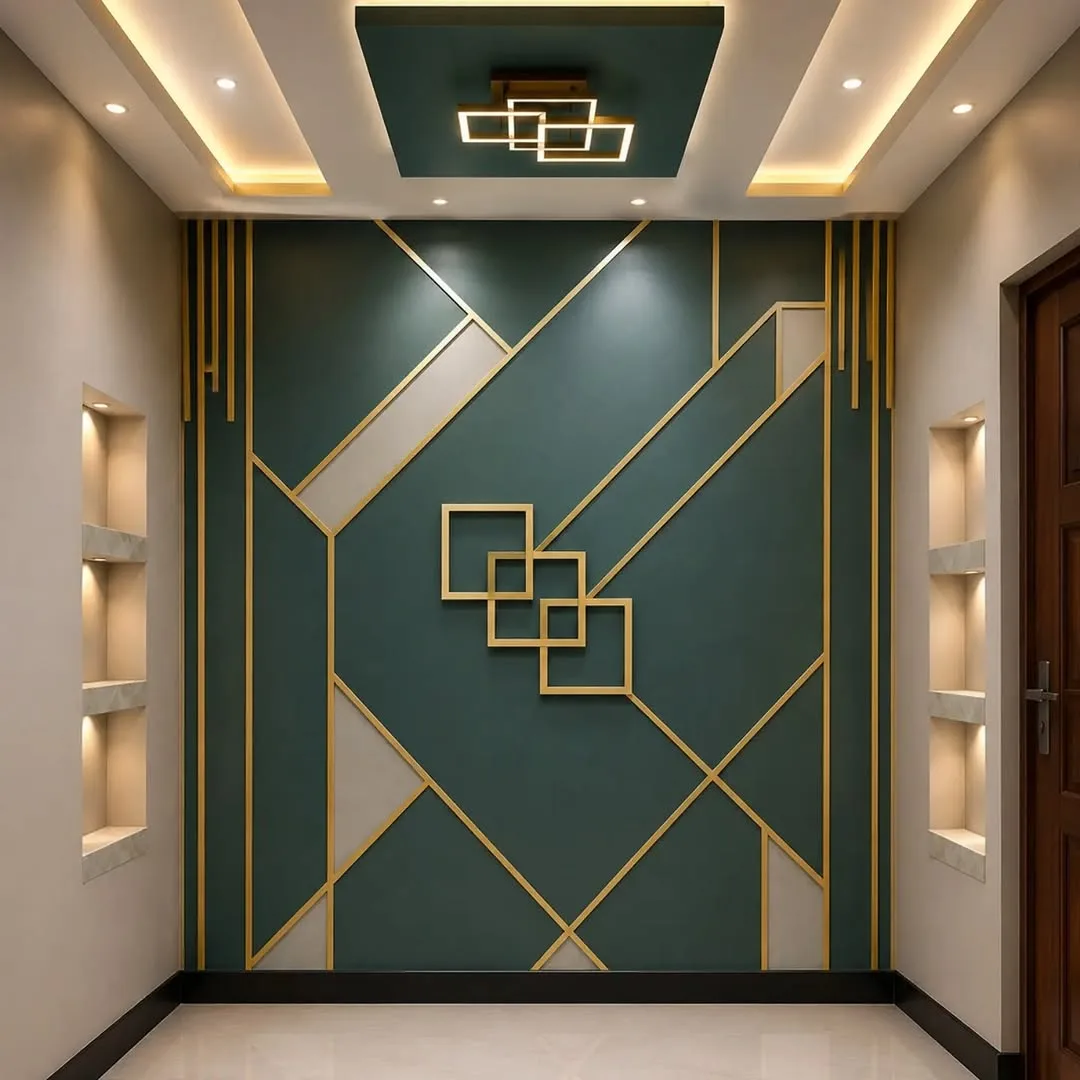
Color blocked paint on the entry wall section behind hooks or a console creates a defined zone in homes where the entry opens straight into the living room. Paint tells everyone where the entry begins and ends, and the eye reads the painted area as a separate small room.
Paint a rectangle or arch shape from floor to ceiling in a color two shades deeper than the main walls, wide enough to cover the hook rail and bench below. Use masking tape along the edges, roll two coats for even depth, and echo the same color in one cushion or basket so the zone feels finished rather than random.
Open plan homes and studio apartments suit a painted zone best because they lack a true hallway. One studio owner painted a soft clay rectangle behind her hooks and mirror, and visitors now walk straight to that wall to hang coats without a word of direction.
Bold color across the whole wall overwhelms small entries and fights every coat and bag hung against it. Limit paint to the entry zone, test a large swatch at different times of day, and choose mid tones that flatter both daylight and evening lamplight.
Common Mistakes to Avoid
Furniture sized for big houses causes most small entry failures. Deep benches, wide cabinets, and chunky tables shrink walkways until daily life feels like squeezing past obstacles. Every piece in a small entry must earn its footprint, and anything blocking the door swing or the walking lane has to go.
Ignoring the walls wastes the largest storage surface a small entry owns. Hooks, shelves, mirrors, and cabinets mounted at the right heights hold coats, keys, and shoes without touching the floor. Entries decorated only at floor level look busy and store almost nothing.
Storage without assigned jobs collapses within weeks. Baskets catch random junk, shelves gather homeless objects, and the entry returns to chaos no matter how pretty the setup looked in week one. Give every item one home, label systems children use, and reset the space weekly.
Dark paint, heavy furniture, and one dim bulb shrink small entries further. Pale walls alone cannot fix gloom when lighting stays weak and corners stay cluttered. Add the strongest lighting the ceiling allows, keep surfaces mostly clear, and let one mirror carry daylight deeper into the space.
Budget Friendly Entryway Decor Ideas for Small Spaces
Spending less on entryway decor ideas for small spaces starts with a tape measure and a list. Most small entries need only four pieces: hooks, a mirror, one surface, and shoe storage. Buy those first in solid basic versions, and let decoration grow slowly from things you already own.
Second hand shops and online marketplaces overflow with mirrors, small benches, and wooden shelves at a fraction of store prices. Solid wood pieces take paint well, and one afternoon with a brush unifies mismatched finds into a set. Check mirror glass for dark spots and test drawer slides before paying.
Paint delivers the largest change per coin in any small entry. One quart covers a door interior or an accent section, leftover wall paint refreshes tired trim, and spray paint updates hooks and frames in an afternoon. Keep one small pot of touch up paint near the entry because scuffs arrive weekly in busy homes.
Plants, baskets, and framed prints already living in other rooms move to the entry for free and instantly make it feel considered. Rotate decor between rooms each season instead of buying new pieces, and spend saved money on the one item used daily, like sturdy hooks or a washable runner that survives real life.
Tips for Decorating a Small Entryway
Measure first and buy second, because honest numbers protect every later choice. Note wall width, door swing, ceiling height, and walkway depth, and keep entryway decor ideas for small spaces grounded in those figures instead of wishes.
Keep the floor as clear as your storage allows. Shoes inside cabinets, coats on hooks, and bags off the ground make even a tiny entry feel twice its size and far easier to sweep.
Repeat one or two materials and colors across the whole entry. Matching wood tones between bench and shelf, or black hooks echoing a black frame, tie small pieces into one calm scheme.
Light the entry like a room people live in, not a corridor they pass through. Warm bulbs, a mirror to spread daylight, and clean fixture glass lift mood and make finding keys at dawn painless.
Reset the space every Sunday in five minutes. Return stray items to their homes, shake the runner, wipe the shelf, and restock the basket jobs, so Monday morning starts at a calm door instead of a cluttered one.
FAQ
How Much Space Does a Console Table Need in a Small Entry?
Consoles between ten and twelve inches deep suit most small entries, as long as the walkway keeps thirty inches of clear passing room. Measure with the front door fully open, because door swing steals more space than people expect. Narrower wall shelves work when even a slim table crowds the lane.
What Colors Make a Small Entryway Feel Bigger?
Pale walls in warm white, soft cream, or light greige reflect light and push walls outward visually. Depth belongs on one accent like the door interior or a painted section, where color adds character without shrinking the whole space. Satin finishes bounce a little more light than flat matte paints.
How Do I Add Storage Without a Closet?
Walls carry the load when no closet exists. Hooks hold coats and bags, tilt out cabinets hide shoes in inches of depth, baskets under a bench swallow accessories, and a shelf with a key bowl replaces a table. Stacking these four systems covers nearly everything a closet once held.
Can a Bench Fit in a Very Small Entryway?
Benches under forty inches long and fourteen inches deep fit most entries with a free wall section. Measure seated knee room as well as the bench itself, because people sit sideways in tight halls. Fold down seats mounted on the wall serve entries where even a small bench blocks the walkway.
Where Should I Hang a Mirror in a Small Entry?
Beside the door or above the console works better than directly facing the door in most homes, because side placement catches sidelight and avoids a startling head on reflection at night. Center the glass near eye level and leave space below for a shelf or table surface.
How Many Decor Pieces Does a Small Entryway Need?
Fewer than most people buy. One surface, one mirror, hooks, shoe storage, a runner, and one personal touch like a plant or framed print complete a small entry fully. Extra decor only earns a place when storage and walkway comfort already work.
Conclusion
Small entries set the tone for the whole home, and they reward care more than size. Hooks that hold real coats, a mirror that borrows light, storage that hides daily clutter, and one warm color or texture turn a tight corner into a genuine welcome.
Start with the problems your mornings actually have, because honest entryway decor ideas for small spaces solve daily friction first and decorate second. Lost keys point to a shelf and bowl, shoe piles point to a cabinet, and a gloomy corner points to a mirror and better light.
Build the entry in layers over a few weekends instead of in one expensive sweep. Hooks and shoe storage first, then a surface and mirror, then color, lighting, and the personal touches that make the space feel like your household and nobody else.
Guests will feel the difference before they can name it: a clear floor, a place for their coat, and warm light at the door. Households feel it every single day, in calmer mornings and a kinder homecoming. Small space, properly loved, was never the problem.